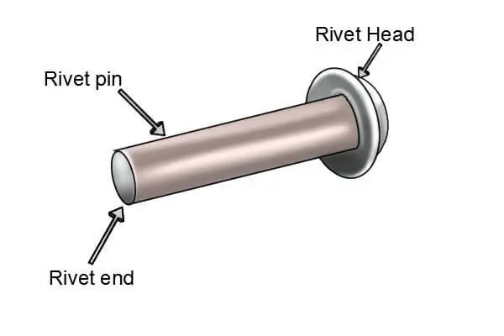
Riveting is a better choice for lightweight vehicle structures primarily because it is a cold-joining process that excels at fastening dissimilar materials, such as aluminum and high-strength steel, without compromising their structural integrity. Unlike welding, riveting does not create a Heat-Affected Zone (HAZ), preserving the material’s original strength, corrosion resistance, and temper. This makes it an indispensable technology for modern automotive manufacturing, where reducing vehicle weight to improve fuel efficiency and electric vehicle (EV) range is a paramount goal. As car bodies increasingly become a complex mix of advanced alloys, composites, and polymers, riveting provides a reliable, fast, and high-performance solution that traditional joining methods cannot match.
The automotive industry is undergoing a revolution driven by the need for sustainability and performance. This has led to a dramatic shift away from traditional, heavy steel construction towards a multi-material approach. Automakers are now engineers of intricate puzzles, strategically using aluminum, advanced high-strength steels (AHSS), carbon fiber, and other lightweight materials to build safer, more efficient vehicles. However, joining these diverse materials presents a significant engineering challenge. Riveting, particularly advanced methods like Self-Piercing Riveting (SPR), has emerged not just as an alternative, but as a foundational technology enabling this lightweight revolution.
In this comprehensive guide, we will explore the fundamental reasons why riveting has become the preferred choice for assembling modern vehicle bodies-in-white (BIW). We will delve into its technical advantages over welding, examine the specific riveting technologies used in high-volume production, and discuss how this method contributes to overall vehicle performance, durability, and manufacturing efficiency. This analysis will clarify why understanding riveting is crucial for anyone involved in vehicle design, manufacturing, or repair.
Table of Contents
- The Fundamental Challenge: Why Joining Dissimilar Materials is Critical
- Preserving Material Integrity: The “No Heat-Affected Zone” Advantage
- Which Riveting Technologies Dominate Automotive Manufacturing?
- Beyond Strength: The Tangible Benefits of Riveting in Production
- Riveting vs. Other Joining Methods: A Comparative Analysis
- The Critical Role of Precision Tooling in Riveting Success
- The Final Verdict: Why Riveting Drives the Future of Vehicle Assembly
The Fundamental Challenge: Why Joining Dissimilar Materials is Critical
One of the most significant hurdles in modern vehicle design is joining materials with vastly different metallurgical and physical properties. For example, attempting to weld an aluminum door panel to a high-strength steel frame is fraught with problems. The extreme temperature differences required to melt each metal lead to the formation of brittle intermetallic compounds at the joint, creating a weak point that is highly susceptible to cracking and catastrophic failure. Furthermore, issues like galvanic corrosion arise when dissimilar metals are in direct contact, especially in the presence of moisture, accelerating the degradation of the vehicle structure.
Riveting elegantly bypasses these issues. As a mechanical fastening process, it does not rely on melting and fusing materials together. Instead, it creates a strong mechanical interlock by deforming the rivet and the parent materials. This allows for the robust and reliable joining of aluminum to steel, steel to magnesium, or even metals to composite materials like carbon fiber reinforced polymer (CFRP). The famous aluminum-intensive body of the Ford F-150, for instance, relies heavily on riveting and adhesives to achieve its weight savings and strength, a feat that would be impossible with traditional welding techniques alone. This capability is the primary driver behind riveting’s widespread adoption in lightweight vehicle construction.
Preserving Material Integrity: The “No Heat-Affected Zone” Advantage
Beyond the challenge of dissimilar materials, the very nature of heat-based joining processes like welding poses a threat to the advanced materials themselves. High-strength steels and heat-treatable aluminum alloys derive their superior properties from precise and carefully controlled thermal processes during their manufacturing. When you introduce the intense, localized heat of welding, you create what is known as a Heat-Affected Zone (HAZ). Within this zone, the material’s microstructure is altered, effectively undoing the beneficial strengthening processes. This can lead to a significant reduction in tensile strength, hardness, and fatigue resistance in the area immediately surrounding the weld, creating an inherent weak point in the structure.
Riveting, being a cold-forming process, completely eliminates the creation of a HAZ. The materials being joined are not heated to their critical temperatures, so their engineered properties remain intact right up to the edge of the joint. This is also critically important for pre-coated materials. Many automotive components are made from galvanized or zinc-coated steel to provide corrosion protection. Welding burns off these protective coatings, requiring costly and often incomplete post-processing steps to re-apply protection. In contrast, riveting fastens through these coatings without damaging them, preserving the built-in corrosion resistance and simplifying the entire manufacturing workflow. This preservation of both mechanical properties and protective coatings results in a more durable, reliable, and longer-lasting vehicle structure.
Which Riveting Technologies Dominate Automotive Manufacturing?
Not all rivets are the same. The automotive industry has largely standardized on a few highly advanced riveting techniques designed for automation, speed, and exceptional joint quality. Understanding these specific technologies reveals how sophisticated the science of mechanical fastening has become.
Self-Piercing Rivets (SPR): The Industry Standard
Self-Piercing Riveting (SPR) is the workhorse of modern lightweight vehicle assembly. The process involves a C-frame press, a specially designed semi-tubular rivet, and a forming die. The rivet is driven with high force through the top layer(s) of material but does not fully penetrate the bottom layer. Instead, the die on the opposing side forces the bottom layer of material to deform and spread into the hollow cavity of the rivet, creating a strong, button-like mechanical interlock. This entire process takes only a couple of seconds and requires no pre-drilled holes, making it incredibly fast and efficient for automated production lines.
The strength of an SPR joint is exceptional, offering high shear and peel resistance. Because the process is continuously monitored by sensors measuring force and distance, it provides a high degree of quality control and repeatability. The resulting joint is watertight, airtight, and maintains the integrity of any surface coatings. This combination of speed, strength, and quality assurance is why millions of self-piercing rivets are used daily by leading automakers like Tesla, Jaguar Land Rover, and Audi to assemble their aluminum-intensive vehicle bodies.
Flow Drill Screwing (FDS): A Hybrid Thermal-Mechanical Method
Flow Drill Screwing (FDS), sometimes called friction-element welding, is another advanced technique used for joining lightweight materials, especially in situations where single-sided access is required or when joining high-strength materials. The process uses a specialized screw that rotates at a very high speed. The friction generates intense localized heat, which plasticizes, or softens, the sheet materials without melting them. The screw is then pushed through the softened layers, forming a threaded bushing as the displaced material flows. Finally, the screw engages with these newly formed threads, creating a tight and secure mechanical joint.
While FDS does involve heat, it is much more controlled and localized than traditional welding, minimizing the impact on the surrounding material properties. Its key advantage is the ability to create a strong, threaded connection in thin sheets without the need for a pre-drilled hole or a nut on the backside. This makes it ideal for attaching components, brackets, and modules to the vehicle structure where access is limited to one side.
Blind Rivets: Essential for Repairs and Access-Limited Assembly
While SPR and FDS dominate initial manufacturing, blind rivets (often known by the trade name “Pop” rivets) are indispensable for assembly and, critically, for post-sale collision repair. A blind rivet is designed to be installed when you only have access to one side of the workpiece. The rivet is placed in a hole, and a special tool pulls on a central stem, or mandrel. This action causes the blind end of the rivet body to expand and flare out, clamping the material sheets together. Once the joint is secure, the mandrel breaks off at a pre-determined weak point.
In a manufacturing context, blind rivets are used in areas where a C-frame for SPR cannot reach, such as inside closed sections like pillars or rocker panels. In the collision repair industry, they are the certified method for re-attaching panels on many aluminum vehicles, as portable welding equipment cannot replicate factory conditions. Their versatility and ease of use make them a crucial part of the entire vehicle lifecycle.
| Technology | Mechanism | Key Advantage | Common Applications |
|---|---|---|---|
| Self-Piercing Rivet (SPR) | Mechanical interlock via rivet piercing top layer and flaring into the bottom layer. | Extremely fast, no pre-drilling, high-quality repeatable joints, joins dissimilar materials. | Main body-in-white (BIW) assembly, closures (doors, hoods), structural frames. |
| Flow Drill Screwing (FDS) | Frictional heat softens material, screw forms threads and fastens in one step. | Single-sided access, creates a strong threaded connection, good for high-strength materials. | Attaching components, brackets, electrical grounding points, areas with limited access. |
| Blind Rivet | Mandrel pulls up to deform and expand the rivet body, clamping materials. | Single-sided access, highly portable installation tools, essential for repairs. | Collision repair, final assembly in enclosed sections, attaching non-structural trim. |
Beyond Strength: The Tangible Benefits of Riveting in Production
The advantages of riveting extend far beyond the technical merits of the joint itself. For an automotive plant producing thousands of vehicles a day, the impact on the production process is a massive factor in its adoption. Riveting offers compelling benefits in speed, quality control, and workplace environment.
Unmatched Speed and Automation
Modern automotive assembly lines are monuments to efficiency, where every second of cycle time counts. Robotic riveting cells, particularly those using SPR technology, are incredibly fast. A single robot can set a rivet in 1-3 seconds. This includes positioning, clamping, inserting the rivet, and verifying the joint. Compared to the setup and execution time for spot welding, especially when dealing with aluminum which requires higher currents and precise electrode maintenance, the speed of riveting provides a significant throughput advantage. Furthermore, the process is clean with no sparks or spatter, meaning robots and surrounding equipment require less maintenance and shielding, contributing to higher uptime.
Enhanced Joint Performance and Durability
Riveted joints exhibit excellent performance characteristics, particularly in terms of fatigue resistance. A welded joint is rigid, concentrating stress at the weld’s edges. In contrast, a mechanical joint from a rivet allows for microscopic levels of movement, which helps to distribute stress more evenly across the joint area. This makes riveted structures highly resistant to the vibrations and cyclical loads experienced by a vehicle over its lifetime. The quality of each rivet placement can also be monitored in real-time using the force and travel data from the setting tool. Any deviation from the established parameters immediately flags a potential issue, ensuring a level of process control that is more direct and reliable than post-process inspections often required for welds.
A Cleaner, Safer, and More Eco-Friendly Process
From a workplace and environmental perspective, riveting is a far superior process to welding. Welding generates harmful fumes, ozone, and intense ultraviolet radiation, requiring extensive ventilation systems and heavy personal protective equipment (PPE) for any nearby workers. Riveting, on the other hand, is a mechanical process that produces no fumes or light emissions. It is also significantly quieter than processes like spot welding. Furthermore, the energy consumption of a riveting system is considerably lower than that of a resistance spot welding setup, which demands massive amounts of electrical current. This reduction in energy use and elimination of harmful byproducts makes riveting a greener, safer, and more worker-friendly manufacturing technology.
Riveting vs. Other Joining Methods: A Comparative Analysis
To fully appreciate the role of riveting, it’s helpful to see how it stacks up directly against other common joining methods and, importantly, how it works in conjunction with them to create the optimal vehicle structure.
How Does Riveting Compare to Spot Welding?
Resistance spot welding has been the backbone of steel car body manufacturing for decades. It is fast, cheap, and effective—for steel. However, its limitations become glaringly obvious with lightweight materials. As discussed, it is fundamentally incapable of joining dissimilar materials like aluminum and steel and creates a Heat-Affected Zone that weakens advanced metals. It also struggles with aluminum due to its high thermal and electrical conductivity, requiring much higher currents and more frequent maintenance of the copper welding electrodes. Riveting overcomes all these limitations, making it the default choice for any multi-material structure. While spot welding remains relevant for steel-to-steel connections, riveting is the key that unlocks true lightweight design freedom.
What is the Role of Riveting Alongside Adhesives?
Riveting is rarely used in isolation. The gold standard in modern vehicle assembly is a hybrid technique known as rivet-bonding. In this process, a structural adhesive is applied between the material layers before they are joined by rivets. This combination is synergistic, delivering performance greater than the sum of its parts. The adhesive spreads the load over the entire bonded area, dramatically increasing joint stiffness and fatigue life, while also acting as a sealant against moisture and a barrier to prevent galvanic corrosion. The rivets provide immediate clamping force while the adhesive cures, eliminating the need for complex and slow fixturing. They also provide immense peel resistance, preventing the joint from being “unzipped” in a crash scenario—a potential weakness of a purely adhesive joint. This powerful combination is what gives modern vehicles their incredibly rigid, safe, and quiet chassis.
The Critical Role of Precision Tooling in Riveting Success
The reliability and performance of an advanced riveting process like Self-Piercing Riveting are not just dependent on the rivet and the press—they are fundamentally reliant on the quality and precision of the tooling, particularly the forming die. This die is the anvil that shapes the final interlock. Its geometry must be perfectly engineered for the specific material stack-up (the types and thicknesses of the materials being joined). The die’s profile dictates how the bottom sheet material flows into the rivet, ensuring a fully formed, defect-free “button” that provides the joint’s strength.
The manufacturing of these dies requires an exceptional level of expertise in high-precision molding and tool steel metallurgy. The die must be machined to micron-level tolerances and made from hardened tool steels that can withstand the immense, repeated forces of the riveting process without wear or deformation. Any inconsistency in the die can lead to an improper joint, compromising the safety and integrity of the vehicle structure. This is where the expertise of a specialized manufacturer, accustomed to creating complex, high-tolerance molds and tooling, becomes invaluable. The success of a multi-million dollar automotive assembly line can hinge on the quality of a tool steel component no larger than a thimble, highlighting the critical link between advanced manufacturing processes and the precision tooling that enables them.
The Final Verdict: Why Riveting Drives the Future of Vehicle Assembly
In the quest for lighter, more efficient, and safer vehicles, riveting has proven to be more than just a fastening method; it is a critical enabling technology. Its ability to join dissimilar materials without damage, its preservation of material integrity by avoiding heat, and its synergy with structural adhesives have made it indispensable. The speed, reliability, and cleanliness of the process align perfectly with the demands of modern, high-volume, automated manufacturing.
From body-in-white structures to battery enclosures for electric vehicles, riveting provides the design flexibility and manufacturing efficiency that automakers need to innovate. As materials continue to evolve and vehicle structures become even more complex, the role of advanced mechanical fastening will only grow. Riveting is not a relic of the past; it is the sophisticated, high-tech solution that is quietly and securely holding the future of the automotive industry together.