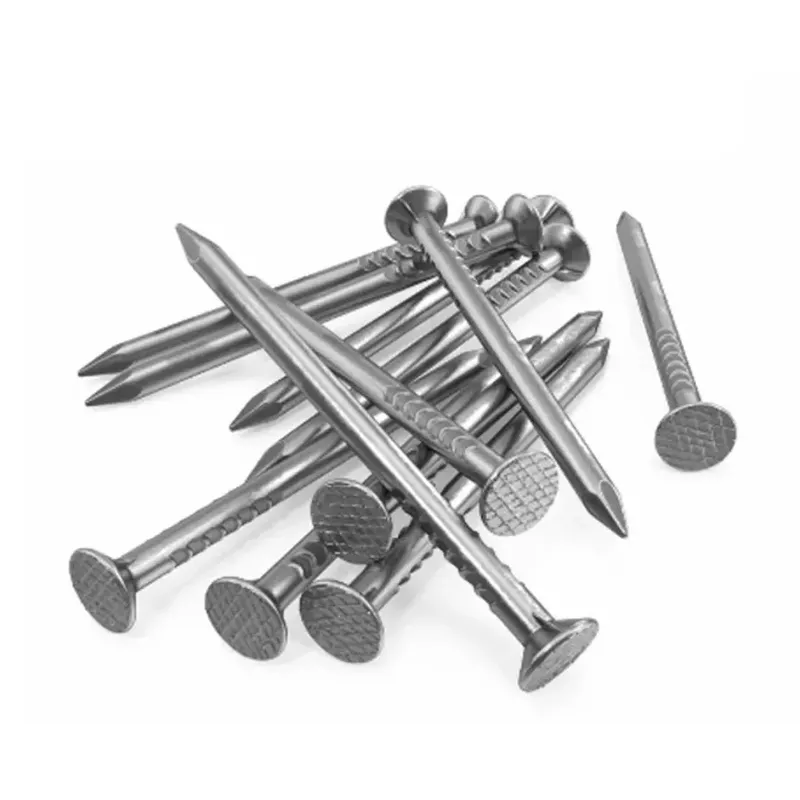
In the world of industrial manufacturing and construction, fasteners are often viewed as simple commodities. However, when an assembly line halts or an outdoor structure begins to fail prematurely, the root cause is rarely the major components; it is almost always the fasteners. This is especially true for nail screws—a highly engineered hybrid product designed to deliver the rapid installation speed of a nail combined with the superior holding power of a threaded screw.
Because of their dual nature, purchasing nail screws requires a deeper level of technical evaluation than buying standard hardware. The most severe nail screw buying mistakes do not stem from receiving “bad metal,” but rather from fundamental errors in engineering selection and supply chain judgment. When procurement teams treat these specialized fasteners like generic inventory, the results are inevitable: assembly instability, corrosion, and ballooning maintenance budgets.
If you want to protect your production line and improve your product’s lifespan, you must approach fastener procurement as an engineering decision. This comprehensive industrial fastener buying guide will walk you through the top seven common nail screw mistakes and provide a continuous, logical framework for making the right sourcing decisions.
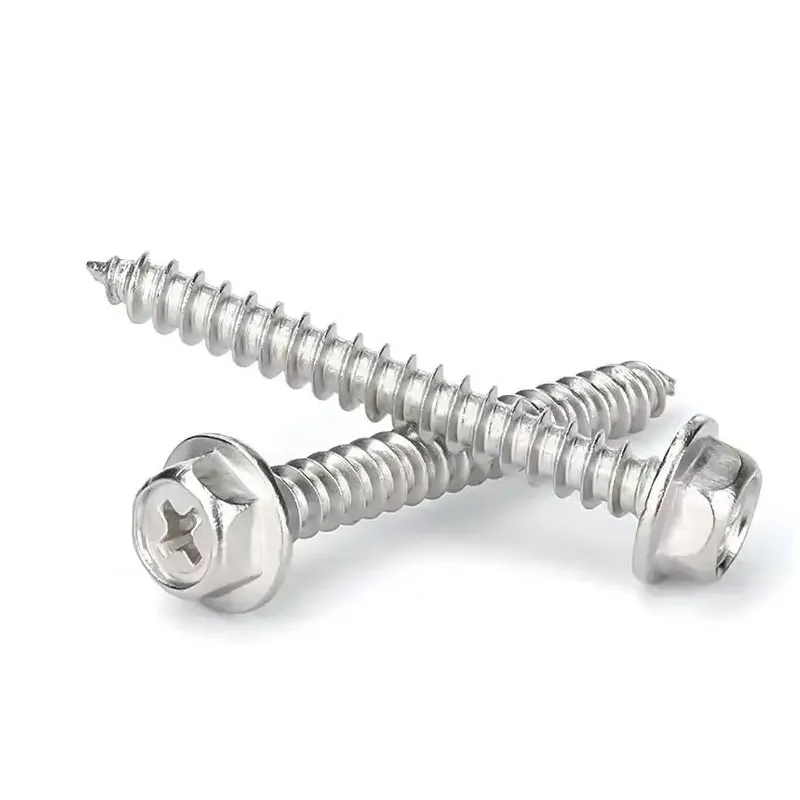
Table of Contents
- Why Do Environmental Oversights Lead to the Most Common Material Failures?
- How Does Neglecting Thread Design Compromise Your Structural Integrity?
- Are You Failing to Align Your Fastener with Your Specific Assembly Method?
- Why Does Chasing the Lowest Unit Price Actually Increase Your Lifecycle Costs?
- What Are the Dangers of Sourcing From Traders Rather Than Direct Manufacturers?
- Is Relying on Standard Catalog Sizes Limiting Your OEM Potential?
- How Can Treating Your Supplier as a Seller Rather Than an Engineering Advisor Hurt Your Project?
1. Why Do Environmental Oversights Lead to the Most Common Material Failures?
The foundational step in how to choose nail screws is analyzing the environment where the fastener will live. Shockingly, industry data reveals that over 40% of all fastener failures are directly linked to improper material selection, specifically the misuse of carbon steel in corrosive environments.
Many buyers fall into the trap of assuming that higher strength is always better. This leads to profound nail screw material selection mistakes. While carbon steel is exceptionally hard and provides excellent shear strength for heavy-duty indoor applications, it possesses virtually no natural resistance to rust. On the other hand, stainless steel offers a built-in chromium oxide layer that actively fights corrosion, though it may not reach the extreme peak hardness of heat-treated carbon steel.
Case Study: The Cost of Environmental Mismatch
A commercial construction firm recently specified standard carbon steel nail screws for an outdoor timber framing project, prioritizing the initial shear strength and low unit cost.
- The Problem: Exposed to high humidity and fluctuating weather, the carbon steel oxidized rapidly. Within months, the screws rusted, causing unsightly stains and compromising the structural integrity of the wood joints.
- The Solution: The engineering team intervened, switching the specification to a stainless steel vs carbon steel nail screw selection protocol. By utilizing a 300-series stainless steel nail screw, or heavily zinc-plated alternatives, they aligned the material with the environment.
- The Result: The structural lifespan increased dramatically, and the recurring maintenance costs associated with replacing rusted fasteners dropped to zero.
Understanding the environment naturally leads to the next physical requirement: how the fastener grips the material.
2. How Does Neglecting Thread Design Compromise Your Structural Integrity?
Once the correct material is selected to survive the environment, the fastener must be physically capable of holding the assembly together. A nail screw relies heavily on its unique thread engagement to provide pull-out resistance after being driven into a substrate.
One of the most dangerous wrong screw selection problems is assuming that a standard thread pitch works for every material. Driving a fine-thread nail screw into soft wood will result in the threads shredding the material, offering zero grip. Conversely, driving a coarse, aggressive thread into a dense, brittle plastic or metal can cause the receiving material to crack.
Case Study: Industrial Assembly Vibration Loosening
An OEM industrial equipment manufacturer used standard catalog nail screws to assemble machine housing panels.
- The Problem: Because the standard thread design was not optimized for the specific vibration frequencies of the machinery, the panels experienced severe vibration loosening over time, leading to assembly instability.
- The Solution: By consulting with a custom fastener engineer, they modified the thread geometry to feature a specialized asymmetrical profile designed specifically for vibration resistance.
- The Result: The improved pull-out resistance stabilized the equipment completely, reducing field rework rates and enhancing overall machinery safety.
The physical design of the screw must match the material it grips, but this also dictates how the fastener must be installed on your production line.
3. Are You Failing to Align Your Fastener with Your Specific Assembly Method?
Even with the perfect material and optimal thread design, bulk nail screw purchasing mistakes often occur when buyers ignore the actual installation process on the factory floor.
Are your operators manually driving these screws with pneumatic tools, or are they being fed through a high-speed, automated robotic assembly line? The tolerances required for these two methods are entirely different. Manual assembly can forgive slight variations in screw head diameter or drive recess depth. Automated assembly cannot. If a batch of screws has inconsistent head dimensions, the automated feeding bowl will jam, halting the entire production line.
Selecting a fastener without matching the head style, drive type, and dimensional tolerance to your specific assembly equipment inevitably leads to production bottlenecks and damaged components.
4. Why Does Chasing the Lowest Unit Price Actually Increase Your Lifecycle Costs?
When procurement teams face budget pressures, the immediate reaction is often to hunt for the lowest unit price. However, in the realm of precision industrial components, cheap hardware is a financial illusion. Focusing solely on the initial invoice while ignoring the Total Cost of Ownership (TCO) is a critical financial error.
If you purchase low-cost, low-quality nail screws, the upfront savings will quickly be eclipsed by hidden costs. Cheap screws are prone to stripping during installation, snapping under load, or rusting prematurely. This leads directly to increased product failure rates, expensive field rework, and skyrocketing warranty claims.
A high-quality, application-specific nail screw may cost slightly more per unit, but it significantly reduces your TCO by guaranteeing faster installation, zero assembly line jams, and long-term durability.
Table 1: The Hidden Costs of Poor Nail Screw Selection
| Fastener Purchasing Mistake | Immediate Consequence | Long-Term Hidden Cost (TCO Impact) | The Engineered Solution |
| Choosing based only on lowest price | Poor quality control and high defect rates | High assembly downtime and tool wear | Invest in precision-machined, QA-tested fasteners. |
| Ignoring environmental exposure | Rapid oxidation and rust | Expensive field maintenance and warranty claims | Match material (e.g., Stainless Steel) to the environment. |
| Using generic thread designs | Weak pull-out resistance | Vibration loosening and structural failure | Customize thread geometry for the specific substrate. |
| Inconsistent dimensional tolerances | Jammed automated assembly lines | Lost manufacturing hours and delayed shipping | Source from manufacturers with automated optical inspection. |
Understanding these lifecycle costs highlights the importance of where your fasteners are actually coming from.
5. What Are the Dangers of Sourcing From Traders Rather Than Direct Manufacturers?
One of the most impactful OEM fastener sourcing errors is purchasing through a trading company rather than partnering directly with a manufacturer. While traders can offer convenience and a wide catalog of standard items, they fundamentally lack control over the production process.
Industry data shows that over 30% of supply chain errors in the fastener market—including inconsistent batch quality, mixed materials, and a lack of quality control traceability—stem from trader inconsistencies. Traders source from multiple third-party factories to fill orders, meaning the screws you buy in January might perform entirely differently than the screws you buy in June.
When you require batch-to-batch consistency and long-term supply stability, factory-direct sourcing is non-negotiable. A direct manufacturer provides stable quality control, faster engineering feedback, and the ability to trace every single batch back to its raw material source.
6. Is Relying on Standard Catalog Sizes Limiting Your OEM Potential?
For Original Equipment Manufacturers (OEMs), product designs are becoming more compact, complex, and specialized. Relying on standard catalog fasteners forces your design engineers to compromise their vision to fit an off-the-shelf screw.
One of the most vital nail screw supplier selection tips is to evaluate the supplier’s customization depth. In actual industrial applications, a nail screw frequently requires a custom length (ranging anywhere from 10mm to 150mm), a proprietary thread design for unique plastics or woods, a specific protective coating (like heavy zinc or nickel), or a custom head type to match a proprietary installation tool.
If your supplier only offers what is currently sitting on their warehouse shelf, they do not have the capability to support your long-term OEM growth. The demand for custom fasteners continues to rise precisely because application-specific designs drastically reduce assembly failure risks. A comprehensive custom nail screw manufacturer guide will always recommend auditing a supplier’s CNC machining and cold heading capabilities before signing a bulk contract.
7. How Can Treating Your Supplier as a Seller Rather Than an Engineering Advisor Hurt Your Project?
The final, and perhaps most profound, mistake is a psychological one. Many buyers treat their fastener suppliers simply as vendors—someone to negotiate a price with and send a purchase order to.
High-conversion, successful B2B partnerships are built on a different premise: the supplier must act as an engineering advisor. When you approach a fastener requirement, the conversation should not start with “How much for a million carbon steel screws?” It should start with, “Here is our fastening scenario, the vibration frequency of our equipment, and the humidity of the environment. What material and thread design do you recommend?”
The best manufacturers understand your application. They focus on failure risk reduction rather than just price saving. If a supplier lacks application knowledge and just wants to push inventory, you are taking on all the engineering risk yourself. Partnering with a manufacturer who can guide your selection process ensures that your final product is assembled safely, efficiently, and permanently.
Optimize Your Assembly with the Right Fastener Partner
Selecting the perfect nail screw is an exercise in balancing material science, mechanical design, and supply chain reliability. By avoiding these seven common buying mistakes, you protect your production line from costly downtime and ensure your end products survive in the real world.
If you are struggling with inconsistent fastener quality, assembly line jams, or environmental corrosion, it is time to upgrade your supply chain. At RivetJL, we are more than just a manufacturer; we are your dedicated engineering advisors. We specialize in designing and producing custom nail screws tailored to your exact industrial application, ensuring you get the perfect balance of material, thread design, and batch consistency every single time.
Do not let standard fasteners compromise your custom engineering. Contact the RivetJL technical team today to discuss your specific assembly challenges and receive a tailored fastening solution.
Frequently Asked Questions (FAQ)
1. What is the main advantage of a nail screw over a regular screw?
A nail screw combines the fast, impact-driven installation process of a traditional nail with the threaded, high pull-out resistance of a screw. This allows assembly workers to install them rapidly using pneumatic tools while ensuring the joint remains tightly secured over time.
2. How do I know if I need stainless steel or carbon steel nail screws?
The choice depends entirely on your environment. If the fastener will be exposed to outdoor weather, high humidity, or corrosive chemicals, stainless steel is required for its rust resistance. If the fastener is used in a dry, indoor environment and requires maximum structural shear strength, carbon steel is the better, more cost-effective option.
3. Why is my automated assembly line jamming with standard screws?
Standard screws bought from traders often have loose dimensional tolerances across different batches. If the screw head diameter or length varies even slightly, the automated feeding bowls and robotic drivers will jam. You need to source from a direct manufacturer that uses automated optical inspection to guarantee tight tolerances.
4. Can a custom thread design really prevent vibration loosening?
Yes. Standard threads can back out under continuous vibration. A custom manufacturer can engineer a specialized asymmetrical thread profile or alter the thread pitch to grip the specific substrate (like hardwood or sheet metal) more aggressively, absorbing vibrations and preventing the fastener from backing out.
5. What is Total Cost of Ownership (TCO) in fastener procurement?
TCO goes beyond the initial price per screw. It includes the cost of labor for installation, the cost of replacing tools damaged by poor-quality screws, the cost of production downtime when screws jam, and the cost of warranty claims when fasteners rust or fail in the field.
6. How quickly can a custom nail screw manufacturer produce a prototype?
While lead times vary based on complexity, a dedicated custom manufacturer with in-house engineering and CNC capabilities can often produce and ship custom prototypes for testing within a few weeks, allowing your engineering team to validate the design before committing to a bulk cold-heading production run.
7. Why should I avoid buying industrial fasteners from a trading company?
Trading companies do not control the manufacturing process. They source from multiple factories, leading to inconsistent quality, mixed material batches, and a lack of traceability. Buying direct from a manufacturer guarantees batch-to-batch consistency and provides direct access to engineering support if an assembly issue arises.
How is your current assembly line dealing with fastener tolerances, and are you currently facing any specific bottlenecks we can help analyze?