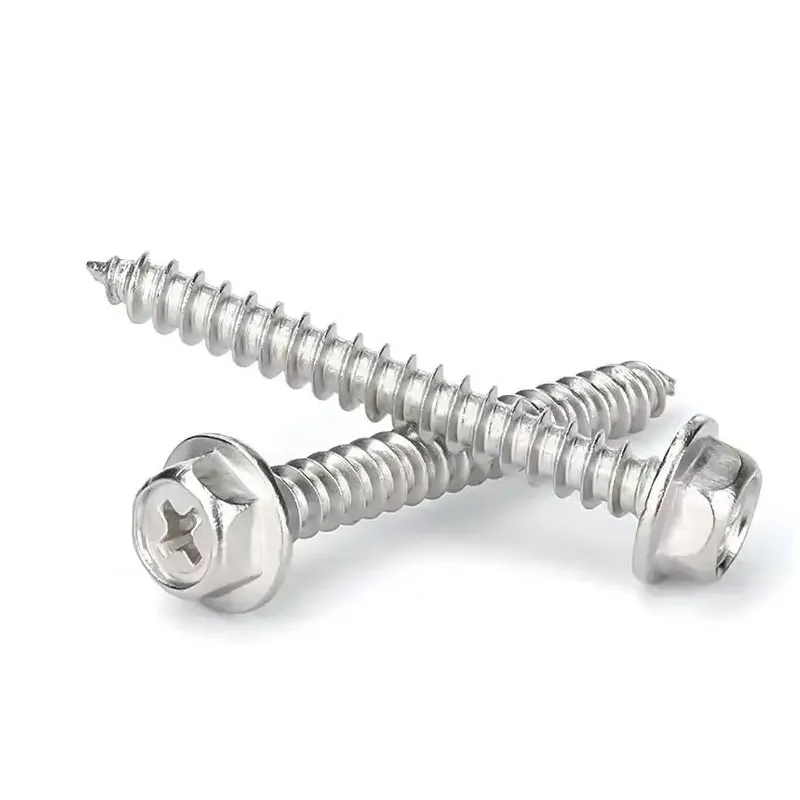
The global industrial fastener market is undergoing a profound structural transformation as it moves through 2026. For decades, screws and nails were treated as simple, interchangeable commodities purchased entirely based on unit volume and lowest price. Today, the landscape looks vastly different. Engineers, architects, and procurement teams are facing increasingly complex assembly requirements, shorter product development cycles, and stricter performance standards. They are no longer simply buying hardware; they are sourcing engineered fastening solutions to solve specific mechanical challenges.
From the rise of hybrid components to the integration of artificial intelligence in quality control, the fastener industry trends 2026 point toward customization, precision, and application-driven design. This shift is redefining how Original Equipment Manufacturers (OEMs) and construction firms select their supply chain partners. This comprehensive guide explores the core trends, manufacturing technologies, and engineering philosophies that are shaping the future of fasteners industry.
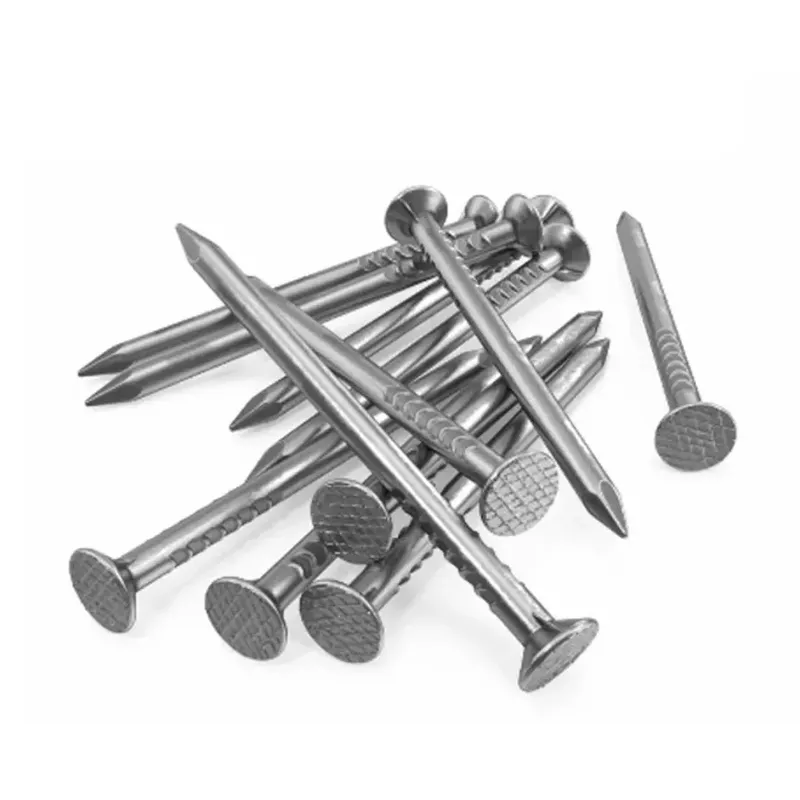
Table of Contents
- Why Are Manufacturers Shifting From Standard Commodities to Application-Driven Fasteners?
- How Is the “Hybrid Fastener” Trend Solving Modern Assembly Challenges?
- What Role Does Industry 4.0 Play in Ensuring Mass Production Stability?
- How Are Material Upgrades and Coatings Lowering the Total Cost of Ownership?
- Why Is Engineering Agility the New Benchmark for Fastener Supply Chains?
- What Does the Future Hold for Smart and Sustainable Fastening Solutions?
1. Why Are Manufacturers Shifting From Standard Commodities to Application-Driven Fasteners?
In the past, the procurement process for industrial fasteners was relatively static. A buyer would consult a standard catalog, identify an existing SKU, and place a bulk order. However, as advanced manufacturing, electric vehicles, and modular construction evolve, standard catalog components frequently fail to meet specialized mechanical demands.
Today, the purchasing logic has fundamentally changed. Customers no longer ask a supplier, “Do you have this exact screw in stock?” Instead, the conversation begins with engineering parameters: “Can you provide a fastener that matches the dynamic shear loads, vibration frequencies, and material density of our specific assembly?”
This marks the transition to application-driven design. The decision-making process is now centered on specific engineering parameters rather than generic sizing. Procurement and engineering teams rigorously evaluate thread geometry, material grades, advanced coating systems, and precise torque and pull-out resistance metrics. As a result, standard parts are steadily being replaced by custom fasteners manufacturing. Suppliers who can analyze a customer’s specific structural environment and engineer a fastener to match those exact conditions are rapidly capturing market share from traditional volume-based traders.
2. How Is the “Hybrid Fastener” Trend Solving Modern Assembly Challenges?
As industries strive to maximize assembly line throughput and on-site construction efficiency, traditional single-purpose fasteners often present frustrating limitations. For example, standard nails offer rapid installation speeds, allowing workers to frame structures quickly, but they lack long-term holding power and are susceptible to pulling out under shifting loads. Conversely, traditional screws provide exceptional structural stability and grip, but their slower installation process can bottleneck a fast-paced production environment.
The solution emerging in the market is the development of “multi-function hybrid fasteners.” A prime example shaping custom nail screw manufacturer trends is the engineered nail screw. By merging the rapid, impact-driven installation profile of a nail with the threaded retention and high pull-out resistance of a screw, manufacturers have created a component that solves two problems simultaneously.
Consider a recent case within the commercial building sector. A construction project team was struggling with timber framing efficiency; standard screws were taking too long to drive, while regular nails failed to meet the required wind-load uplift codes. By transitioning to a hybrid nail screw design, the contractor retained the rapid installation speed of pneumatic nailing while utilizing the optimized thread geometry to anchor deeply into the wood. The result was a measurable increase in overall assembly speed, enhanced structural stability, and a reduction in long-term maintenance costs. This scenario perfectly illustrates how modern industrial fastener innovation is focused on functional components that replace outdated, single-purpose hardware.
3. What Role Does Industry 4.0 Play in Ensuring Mass Production Stability?
As the demand for precision screw manufacturing and custom geometries increases, the margin for manufacturing error has virtually disappeared. Industrial clients, particularly in the automotive, aerospace, and high-end machinery sectors, prioritize mass production stability above almost all other metrics. A single batch of out-of-tolerance screws can jam an automated assembly robot, leading to catastrophic production downtime.
To address this, the screw manufacturing industry is heavily investing in automation and digitalization. Industry data from recent years indicates that over 80% of top-tier fastener manufacturers have integrated smart manufacturing technologies into their production facilities. Artificial Intelligence (AI) and automated optical inspection (AOI) systems are rapidly becoming the baseline standard rather than an optional luxury.
These digital QC systems use high-speed cameras and laser measurement tools to analyze the thread pitch, head diameter, and overall length of every single screw as it comes off the cold-heading machine. This ensures strict tolerance control and drives the defect rate down to near-zero levels. For OEM buyers, this level of batch consistency is a non-negotiable requirement.
Table 1: Traditional Fastener Production vs. Smart Manufacturing Fasteners
| Production Metric | Traditional Fastener Manufacturing | Smart Manufacturing (Industry 4.0) | Impact on OEM Assembly |
| Quality Control | Manual sampling and batch spot-checks | 100% Automated Optical Inspection (AOI) | Eliminates defective parts that jam automated drivers. |
| Tolerance Control | Moderate variance accepted between batches | AI-monitored real-time precision | Ensures strict dimensional consistency across millions of units. |
| Traceability | Paper-based lot tracking | Digital traceability and data passports | Facilitates rapid root-cause analysis and compliance tracking. |
| Production Speed | Constrained by manual inspection bottlenecks | High-speed continuous automated sorting | Guarantees reliable delivery schedules for bulk custom orders. |
| Defect Rate | Standard industry acceptable margins | Near-zero defect output | Drastically lowers post-assembly failure and rework costs. |
4. How Are Material Upgrades and Coatings Lowering the Total Cost of Ownership?
In the current industrial landscape, the conversation around fastener procurement has moved past the initial unit price. Experienced buyers and engineers are now calculating the Total Cost of Ownership (TCO). A fastener that costs a fraction of a cent less but rusts prematurely or vibrates loose in the field will ultimately cost the company exponentially more in warranty claims, equipment downtime, and maintenance labor.
Because the decision logic has shifted to “long-term cost over unit price,” there is a widespread trend toward material upgrades. While basic carbon steel and standard stainless steel still hold significant market share, applications with demanding environments are upgrading to high-alloy steels, titanium, and advanced corrosion-resistant coatings.
A notable example involves an OEM industrial equipment manufacturer whose machines operated in a high-vibration, high-humidity environment. They initially utilized standard fasteners, which frequently loosened and corroded, leading to unacceptable equipment failure rates. By partnering with an OEM screw supplier, they transitioned to a custom fastener engineered from upgraded alloy steel, treated with a specialized heat process, and coated with an advanced anti-corrosion layer. Furthermore, the supplier integrated a specialized anti-loosening thread design. The upgrade resulted in a sharp decline in equipment failure rates and significantly extended the required maintenance cycles, proving that investing in high performance fasteners industry standards dramatically lowers the TCO.
5. Why Is Engineering Agility the New Benchmark for Fastener Supply Chains?
The global supply chain disruptions of recent years have permanently altered how companies source components. To mitigate risk, industries are restructuring their procurement strategies, focusing on multi-sourcing, nearshoring, and supply chain resilience. An OEM is no longer looking for a vendor who can simply deliver a container of screws; they are looking for a reliable, long-term engineering partner.
As product development cycles shrink, the demand for rapid prototyping and quick design iteration has surged. This has made “engineering agility” a primary competitive advantage. When an engineer encounters an assembly issue on a new product line, the fastener manufacturer must be capable of providing rapid design feedback, producing small-batch trial runs, and adjusting thread or head geometries on the fly.
Manufacturers that offer closed-loop engineering support—meaning they understand the customer’s mechanical application and can modify the fastener structure to optimize it—are winning the market. This application engineering capability allows suppliers to transition seamlessly from prototyping to stable, large-scale mass production, establishing deeply integrated partnerships with top-tier OEMs.
6. What Does the Future Hold for Smart and Sustainable Fastening Solutions?
Looking toward the end of the decade, two major macro-trends will continue to shape the screw manufacturing trends: sustainability and intelligent functionality.
First, as global Environmental, Social, and Governance (ESG) standards tighten, there is growing pressure to adopt sustainable fastener materials. This involves sourcing low-carbon steel, optimizing manufacturing processes to reduce energy consumption, and utilizing eco-friendly, hexavalent chromium-free coating systems. Buyers increasingly require environmental compliance documentation alongside mechanical test reports.
Second, the emergence of “Smart Fasteners” represents the next frontier of industrial assembly. The future points toward fasteners equipped with embedded sensors or specialized indicators capable of monitoring installation torque, measuring load tension, and tracking structural health over time. These smart manufacturing fasteners will play a vital role in predictive maintenance for critical infrastructure, aerospace, and energy sectors. By signaling when a joint is losing tension before a catastrophic failure occurs, these components will elevate fasteners from simple mechanical connectors to active nodes within industrial data networks.
Ready to Upgrade Your Fastening Strategy?
The era of settling for generic, off-the-shelf screws is over. As assembly lines become more automated and structural requirements grow more rigorous, your products require fastening solutions engineered for exact performance, stability, and longevity.
At RivetJL, we specialize in adapting to these industry trends by providing custom-engineered fasteners, including high-performance hybrid nail screws tailored to your specific application. From optimizing thread geometry to ensuring flawless batch consistency through automated inspection, we are equipped to be your strategic manufacturing partner. Contact our engineering team today to discuss your project requirements, request a custom prototype, and secure a resilient, high-quality fastening supply chain.
Frequently Asked Questions (FAQ)
1. What is a hybrid nail screw, and why is it trending?
A hybrid nail screw is a fastener designed to combine the rapid, impact-driven installation speed of a traditional nail with the superior holding power and pull-out resistance of a threaded screw. This trend is growing rapidly in construction and OEM assembly because it allows manufacturers to increase production speed without sacrificing structural integrity.
2. Why is mass production stability more important than unit price in 2026?
As assembly lines become highly automated, a single defective or out-of-tolerance screw can jam robotic equipment, causing expensive production halts. Therefore, buyers prioritize suppliers who can guarantee strict dimensional consistency and near-zero defect rates over those who simply offer the lowest upfront cost.
3. How does automated optical inspection (AOI) improve fastener quality?
AOI uses high-speed cameras and lasers to measure the physical dimensions (such as thread pitch, length, and head diameter) of every fastener on the production line in real-time. This ensures that any piece falling outside the specified engineering tolerance is automatically rejected, guaranteeing that the customer receives a flawless batch.
4. What does Total Cost of Ownership (TCO) mean when buying fasteners?
TCO calculates the complete lifecycle cost of a fastener, rather than just its purchase price. It includes the cost of assembly time, potential tool wear, equipment downtime, warranty claims, and field maintenance. Investing slightly more in a custom, corrosion-resistant fastener often drastically lowers the TCO by preventing future failures.
5. How are environmental regulations affecting screw manufacturing trends?
Stricter ESG regulations are pushing the industry toward sustainable fastener materials. This includes utilizing steel produced with lower carbon emissions, implementing recycling protocols for metal scrap, and shifting away from toxic surface treatments (like hexavalent chromium) to environmentally compliant anti-corrosion coatings.
6. What are “smart fasteners”?
Smart fasteners are advanced components that incorporate technologies such as embedded load sensors or visual tension indicators. They are designed for critical infrastructure and aerospace applications to monitor joint integrity in real-time, allowing maintenance teams to perform predictive maintenance before a structural failure occurs.
7. Why is engineering agility critical for an OEM screw supplier?
Modern product design cycles are very fast. OEMs frequently need to adjust component designs during the prototyping phase to solve unexpected assembly issues. A supplier with engineering agility can rapidly modify the fastener’s CAD design, produce a small batch for testing, and quickly scale up to mass production once validated.