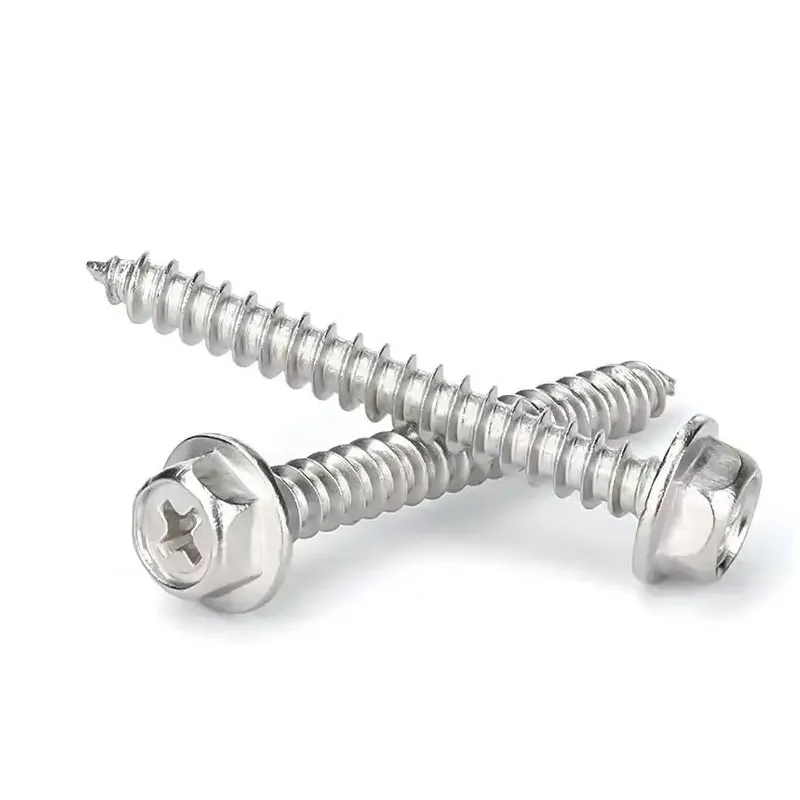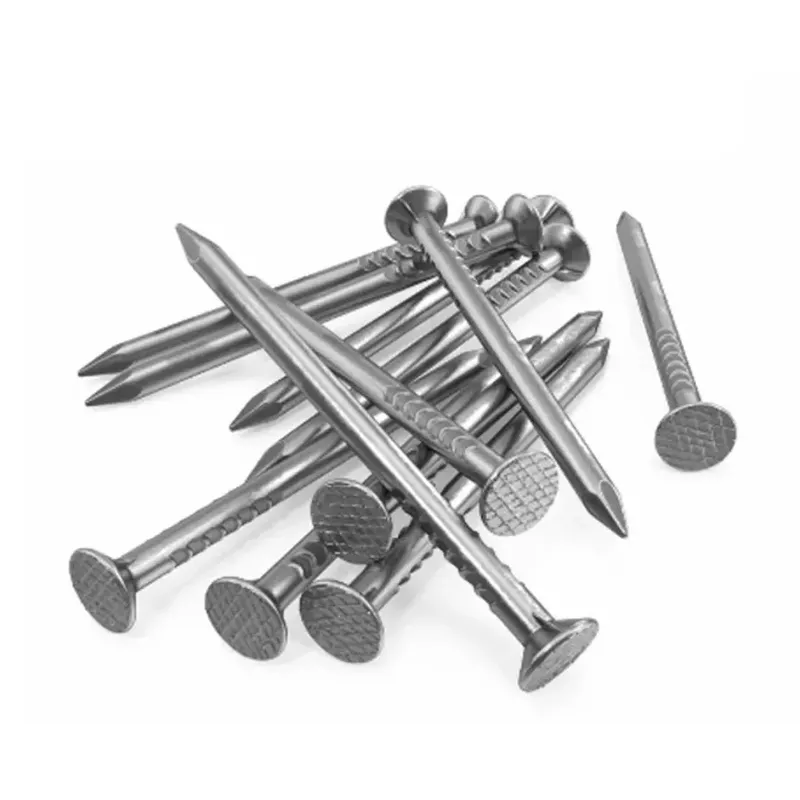
When engineers and procurement managers source fasteners for large-scale projects, they face a critical decision. Deciding between stainless steel nail screws vs carbon steel nail screws is rarely a simple matter of looking at a price list. In actual engineering and B2B purchasing scenarios, fastener material selection is a classic “trade-off triangle” balancing strength, corrosion resistance, and total cost.
Many buyers make the mistake of focusing solely on maximum strength or the lowest initial price, completely ignoring the application environment. This oversight routinely leads to premature corrosion failure in the field or wasted budgets on over-engineered parts. This industrial nail screw selection guide breaks down the mechanical properties, environmental matching, and lifecycle costs of both materials, helping you pinpoint the exact fastening solution for your next manufacturing or construction project.
Table of Contents
- What Is the Fundamental Trade-Off in Nail Screw Material Selection?
- How Do the Mechanical Properties Compare for Heavy-Duty Applications?
- When Does Corrosion Resistance Become More Important Than Ultimate Strength?
- How Do Upfront Costs Compare to the Total Cost of Ownership (TCO)?
- Can Real-World Engineering Cases Guide Your Material Choice?
- Why Is Partnering with a Custom Nail Screw Manufacturer Crucial for OEM Success?
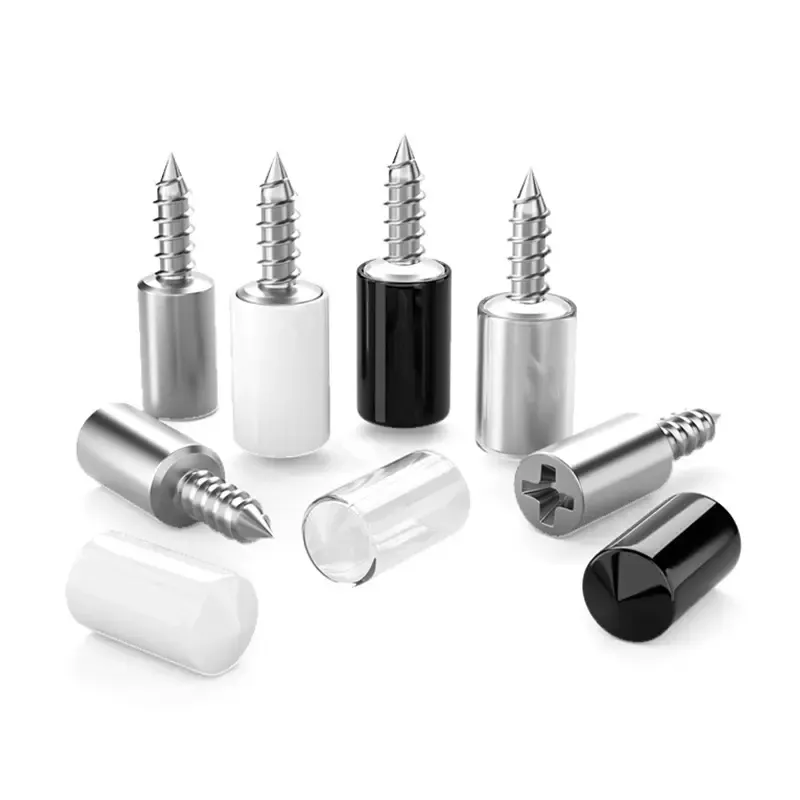
1. What Is the Fundamental Trade-Off in Nail Screw Material Selection?
To determine the best material for nail screws, you must first define the operational environment of your final product. The choice between carbon steel and stainless steel essentially forces designers to prioritize specific project needs.
Carbon steel nail screws are engineered for high-load, structural applications. Because carbon steel can be easily heat-treated, it achieves exceptional hardness and shear resistance. It is the backbone of heavy-duty industrial assembly and wood framing. However, its natural state offers zero protection against rust.
Stainless steel nail screws, conversely, are built for survival in harsh conditions. They do not rely on a temporary coating to prevent rust; instead, they have a built-in chemical defense mechanism. While they cannot reach the extreme peak hardness of heat-treated high-carbon steel, they provide incredible longevity in wet, outdoor, or marine environments.
The decision ultimately comes down to this core question: does your project demand the absolute highest shear strength for a dry indoor frame, or does it require decades of reliable, rust-free performance in the rain?
2. How Do the Mechanical Properties Compare for Heavy-Duty Applications?
When purchasing industrial components, the structural integrity of the fastener is usually the first metric evaluated. The physical data between these two metals reveals distinct behavioral differences under stress.
If your project involves heavy structural loads—such as timber framing or machinery assembly—high strength carbon steel screws are generally the superior choice. Depending on the heat treatment applied, carbon steel offers a tensile strength ranging broadly from 400 MPa to 1200 MPa. The higher carbon content makes the screw incredibly hard, allowing it to withstand massive shear forces without bending or snapping.
Stainless steel (specifically common grades like 304 and 316) behaves differently. Its typical tensile strength sits between 515 MPa and 620 MPa. While this is lower than heat-treated carbon steel, stainless steel boasts a much higher ductility (often 40% to 60%). This means that under extreme impact or dynamic loading, a stainless steel nail screw is more likely to bend slightly rather than snap outright.
Conclusion on Strength: Carbon steel provides a higher “ultimate limit strength,” making it ideal for rigid load-bearing. Stainless steel provides more stable “long-term performance,” especially under vibrating or shifting loads.
3. When Does Corrosion Resistance Become More Important Than Ultimate Strength?
Strength means very little if the fastener disintegrates over time due to rust. The environment dictates the material far more strictly than the required clamping force.
Stainless steel contains a minimum of 10.5% chromium. When exposed to oxygen, this chromium forms a microscopic, invisible passive layer of chromium oxide over the screw’s surface. If the screw is scratched during installation, this layer self-heals almost instantly. This natural chemical reaction makes stainless steel fasteners for outdoor use the undisputed champion for marine applications, outdoor furniture, and medical or food-grade equipment where hygiene and rust prevention are non-negotiable.
Carbon steel lacks this natural defense. To survive outside of a climate-controlled room, carbon steel nail screws must be coated—usually via zinc plating or hot-dip galvanization. While these coatings create excellent corrosion resistant screws for construction, the protection is only skin-deep. If the installation tool strips the zinc coating off the head of the screw, or if the wood shifts and scratches the shank, the raw carbon steel is exposed to moisture, and rust will begin to form immediately.
Therefore, if the final product will face continuous moisture, salt air, or harsh weather, corrosion resistance must supersede raw tensile strength in your purchasing criteria.
4. How Do Upfront Costs Compare to the Total Cost of Ownership (TCO)?
For procurement managers, the budget is always a primary concern. Conducting a nail screw material comparison requires looking past the initial invoice and calculating the Total Cost of Ownership (TCO).
As a baseline, carbon steel is significantly cheaper to produce and process. In industry averages, stainless steel screws command a premium of 30% to 70% over their carbon steel counterparts. If you are ordering millions of units for a dry, indoor application, carbon steel is the obvious fiscal choice.
However, the B2B purchasing logic shifts dramatically when considering long-term maintenance. If an OEM uses cheap carbon steel screws on an outdoor patio deck or a premium piece of garden furniture, those screws will eventually rust. The rust will bleed onto the wood or fabric, destroying the product’s aesthetic. The cost of warranty claims, brand reputation damage, and field maintenance far outweighs the initial 50% savings on the fastener.
In environments with high moisture, the higher upfront cost of stainless steel translates directly to a lower lifecycle cost and zero maintenance.
Table: Carbon Steel vs Stainless Steel Fastener Comparison
| Engineering Metric | Carbon Steel Nail Screws | Stainless Steel Nail Screws (304/316) | Project Impact |
| Tensile Strength | 400 – 1200 MPa (Heat treatable) | 515 – 620 MPa | Carbon steel supports heavier structural shear loads. |
| Corrosion Resistance | Low (Requires zinc/galvanized coating) | High (Self-healing Chromium oxide layer) | Stainless is essential for outdoor, humid, or marine use. |
| Ductility | Lower (Can be brittle at high hardness) | High (40% – 60% elongation) | Stainless absorbs impacts better without snapping. |
| Upfront Cost | Baseline (Lowest cost) | High (30% – 70% premium) | Carbon steel is ideal for high-volume, indoor framing. |
| Lifecycle Value (TCO) | High in dry environments | High in wet/outdoor environments | Match the investment to the environmental risk. |
5. Can Real-World Engineering Cases Guide Your Material Choice?
To illustrate how these engineering decisions play out in actual manufacturing, let us examine two distinct B2B purchasing scenarios.
Case 1: Structural Wood Framing (Prioritizing Carbon Steel)
A major construction supplier required bulk fasteners for indoor wood framing projects. They needed a fastener that could be driven quickly but hold firmly under heavy building loads. They chose carbon steel nail screws with a standard zinc coating.
- The Advantage: The high shear capacity of the carbon steel prevented the framing from shifting under the weight of the structure.
- The Result: Because the environment was enclosed and dry, the risk of rust was minimal. The supplier reduced their fastener material costs by nearly 40% compared to quoting stainless steel, optimizing their budget without sacrificing structural safety.
Case 2: Premium Outdoor Furniture (Prioritizing Stainless Steel)
An OEM furniture manufacturer designed a high-end line of outdoor patio chairs. Initially testing coated carbon steel, they found that the natural expansion of the wood during rainstorms scraped the protective coating off the screws, leading to rust streaks within a few months.
- The Advantage: The manufacturer switched to Stainless Steel 304 nail screws. The built-in chromium oxide layer ignored the scratches and easily repelled rain and morning dew.
- The Result: Despite the higher initial unit cost, the product’s lifespan increased dramatically. Maintenance complaints dropped to zero, protecting the brand’s premium reputation.
6. Why Is Partnering with a Custom Nail Screw Manufacturer Crucial for OEM Success?
The most advanced B2B buyers understand that high-volume manufacturing is never a one-size-fits-all scenario. Choosing between carbon and stainless steel is only the first step. You still need to determine the specific steel grade, the precise thread pitch for your material, and the correct head style for your automated assembly tools.
This is where working directly with a custom nail screw manufacturer becomes a competitive advantage. Rather than simply selling you components off a shelf, a true manufacturing partner provides application-based solutions. If you need the strength of carbon steel but have moderate outdoor exposure, an expert manufacturer can engineer OEM nail screw material options that combine a hardened carbon core with an advanced, heavy-duty anti-corrosion coating (like Dacromet or heavy galvanization).
Furthermore, in bulk procurement, quality consistency is paramount. A reliable custom fasteners supplier will utilize automated optical inspection and strict tolerance controls to ensure that every single screw in a batch of a million performs exactly the same way—preventing assembly line jams and ensuring uniform structural integrity.
Ready to Specify Your Next Fastening Solution?
Do not let a minor fastener cause a major product failure. Whether you need the high-shear strength of carbon steel for a heavy industrial build, or the unyielding rust resistance of stainless steel for a marine application, making the right choice ensures your product’s longevity and protects your bottom line.
Contact our engineering team today to discuss your project requirements. We specialize in manufacturing custom nail screws tailored precisely to your application scenario. Send us your environmental constraints and structural load requirements, and we will guide you toward the perfect material, coating, and design to optimize both your assembly line and your project budget.
Frequently Asked Questions (FAQs)
1. Can carbon steel nail screws be used outdoors?
Yes, but only if they are heavily treated. Carbon steel used outdoors must have a thick protective coating, such as hot-dip galvanization or specialized polymer coatings. However, if this coating is chipped or deeply scratched during installation, the underlying steel will inevitably rust.
2. Are stainless steel nail screws completely rust-proof?
While highly resistant, no steel is 100% rust-proof under all extreme conditions. Stainless steel 304 is excellent for general rain and moisture. However, if the screw is exposed to heavy chlorides (like direct seawater exposure or de-icing salts), a higher grade like Stainless Steel 316 is required to prevent localized pitting corrosion.
3. Why do stainless steel screws sometimes snap more easily during installation?
Stainless steel is softer and more ductile than heat-treated high-carbon steel. If a stainless steel nail screw is driven into very dense hardwood without a proper pilot hole, the rotational friction and torque can exceed the material’s yield strength, causing the head to snap off before the screw fully seats.
4. Can I use stainless steel nail screws with aluminum parts?
Use caution. While both materials resist rust, placing stainless steel directly against aluminum in a wet environment can trigger galvanic corrosion, causing the aluminum part to degrade rapidly. If you must mix these metals, use insulating washers or specialized isolating coatings to separate them.
5. What is the difference between zinc-plated and galvanized carbon steel screws?
Both involve coating carbon steel with zinc to prevent rust, but the application differs. Zinc plating is electroplated, creating a very thin, smooth, and shiny layer best suited for indoor use. Hot-dip galvanizing dips the screw into molten zinc, creating a much thicker, duller, and highly durable barrier suitable for harsh outdoor construction.
6. Does the thread design change based on the material selected?
The thread design itself (e.g., fine thread vs coarse thread) is usually dictated by the material you are driving the screw into (wood vs plastic vs metal), rather than the material the screw is made of. However, a custom manufacturer will ensure the tooling is optimized to cut sharp threads regardless of whether they are forming soft stainless or hard carbon steel.