When sourcing components for an industrial assembly line or a large-scale construction project, fasteners are often the unsung heroes of the entire operation. However, procurement managers and engineers quickly realize that off-the-shelf standard screws are not always sufficient. When a project demands the rapid installation speed of a nail but the superior holding power of a threaded screw, custom nail screws become the optimal engineering choice.
Finding the right fastening solution is about more than just locating a supplier with the lowest price. It requires partnering with a manufacturer capable of adapting materials, thread designs, dimensions, and surface treatments to match your specific environmental and structural requirements. This comprehensive buyer’s guide will walk you through the logical steps of specifying, evaluating, and sourcing custom nail screws, ensuring your next bulk order perfectly aligns with your assembly needs.
Table of Contents
- Why Do Standard Fasteners Fall Short in Complex Assemblies?
- How Do You Choose the Right Fastener Material for Your Environment?
- Which Dimensional and Thread Specifications Matter Most?
- What Manufacturing Capabilities Ensure Consistent Bulk Quality?
- How Do Custom Fasteners Perform in Real-World Industrial Scenarios?
- Why Is Partnering with a Direct Manufacturer Critical for OEM Success?
1. Why Do Standard Fasteners Fall Short in Complex Assemblies?
Before diving into supplier catalogs, it is essential to understand why standard hardware often fails to meet specialized project demands. In many manufacturing and construction environments, teams are forced to choose between installation efficiency and long-term structural integrity.
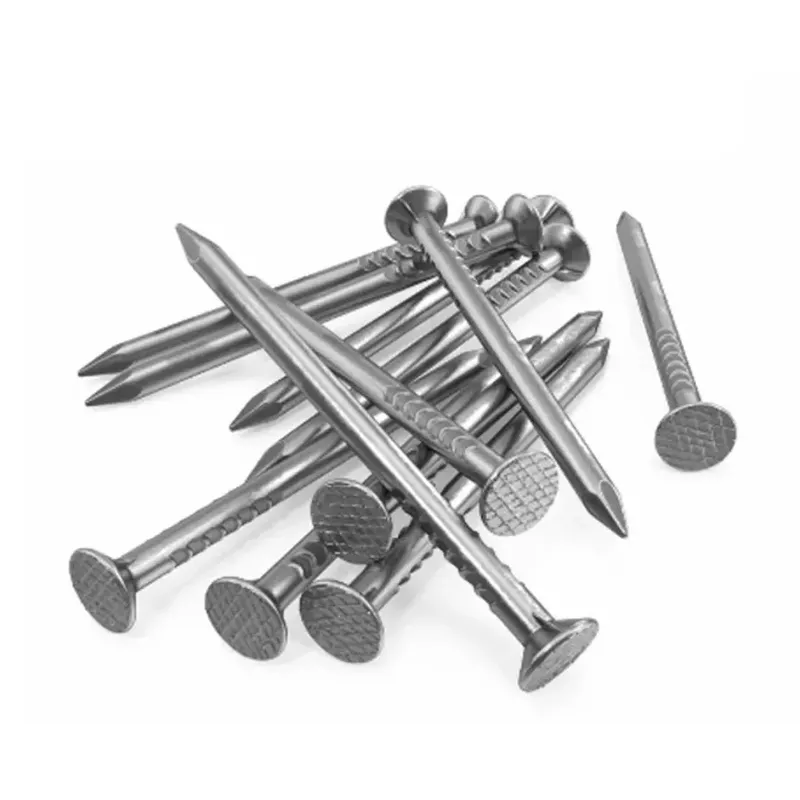
Traditional smooth-shank nails can be driven into materials rapidly, significantly reducing labor time. However, their long-term load-bearing capacity and pull-out resistance (grip strength) are inherently limited, making them prone to loosening over time. Standard screws, on the other hand, provide excellent grip and stability but often require pre-drilling or slower driving speeds, which can bottleneck a fast-paced assembly line.
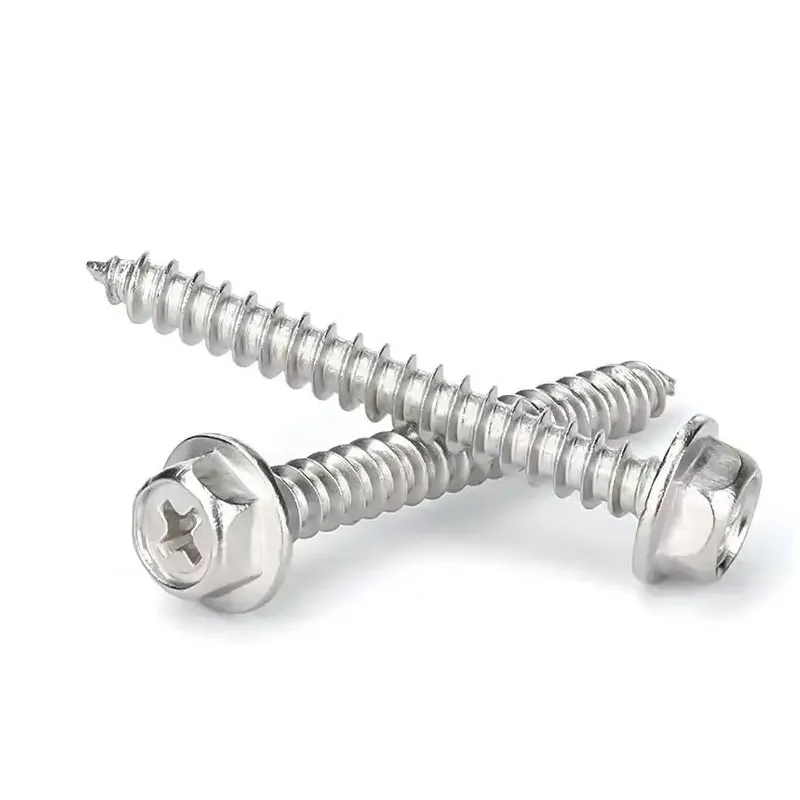
Custom nail screws bridge this exact gap. Designed with a hybrid structure, they allow for rapid insertion (often driven in like a nail) while utilizing a threaded shank to grip the surrounding material securely. For a hardware brand or construction firm, sourcing from a dedicated custom screw manufacturer means you can optimize this balance. You can specify the exact head style for your automated driving tools and the precise thread pitch required to hold your specific materials together, eliminating the compromises forced by standard fasteners.
2. How Do You Choose the Right Fastener Material for Your Environment?
Once you determine that a hybrid nail screw design is necessary, the next logical step in the sourcing process is material selection. A reliable nail screw manufacturer will tell you that a fastener is only as good as the metal it is forged from. Selecting the wrong material can lead to premature corrosion, structural shearing, or unnecessary weight.
Depending on your application, you will need to specify one of several core materials:
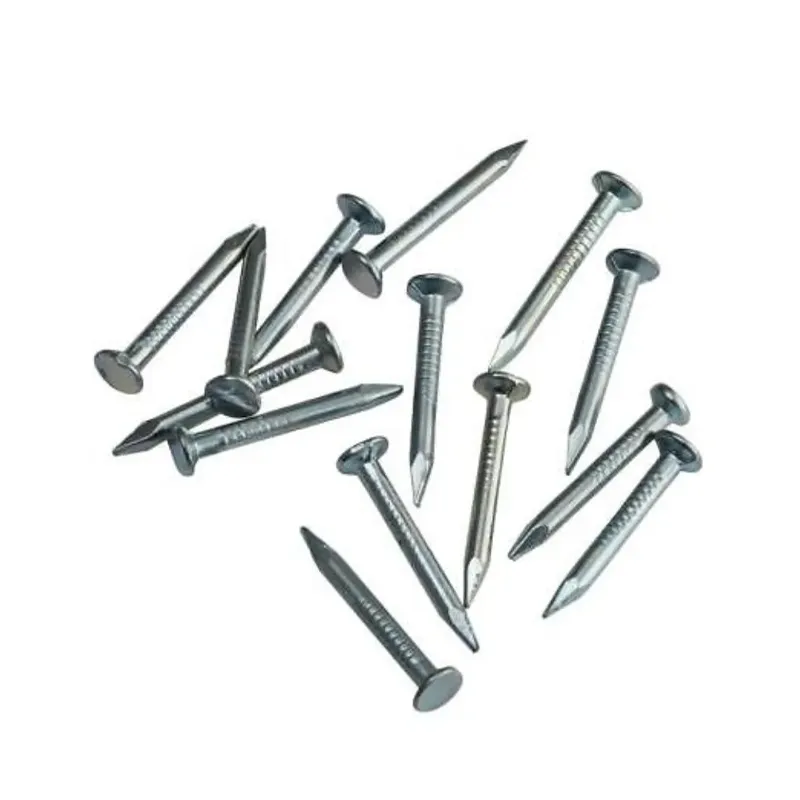
- Carbon Steel Nail Screws: This is the go-to choice for high-strength, cost-sensitive applications. Carbon steel offers excellent hardness and durability, making it ideal for indoor framing, furniture assembly, and general manufacturing. However, because it is vulnerable to rust, it almost always requires a surface treatment.
- Stainless Steel Nail Screws: For outdoor construction, marine environments, or high-humidity industrial settings, stainless steel is non-negotiable. It provides inherent resistance to rust and chemical corrosion, ensuring the fastener maintains its integrity over decades.
- Aluminum: When weight reduction is a primary design goal—such as in aerospace components, lightweight automotive assemblies, or specific consumer electronics—aluminum fasteners provide an excellent strength-to-weight ratio.
- Brass: Brass is typically selected for its aesthetic appeal in decorative furniture or architectural applications, as well as its non-sparking and electrically conductive properties.
Beyond the raw material, a competent industrial fasteners manufacturer will guide you through surface finishes. Options like Zinc Plating, Black Oxide, Nickel Plating, or Hot-Dip Galvanization add crucial layers of protection against environmental wear, extending the lifespan of your custom nail screws significantly.
3. Which Dimensional and Thread Specifications Matter Most?
With the material selected, the focus shifts to the physical geometry of the fastener. For Original Equipment Manufacturers (OEMs), standard sizes rarely fit perfectly into highly engineered, compact product designs. This is where a specialized custom fasteners supplier proves their value by offering precise dimensional adjustments.
A fully customized nail screw requires attention to several key parameters:
- Thread Size: Depending on your global market, you may require Metric sizes (typically ranging from M3 to M10) or Imperial specifications (from #4 up to 3/8”).
- Length: Custom lengths are vital for preventing fasteners from protruding through materials or failing to penetrate deeply enough. Manufacturers generally offer lengths from 10mm up to 150mm, with custom tooling available for unique requirements.
- Head Styles: The head of the nail screw dictates how it interacts with installation tools and the material surface. Options include Flat, Round, Oval, Pan, Hex, and Countersunk heads.
Table: Custom Nail Screw Specification Matrix
| Specification Category | Common Customization Range | Primary Application / Benefit |
| Material Options | Carbon Steel, Stainless Steel, Aluminum, Brass | Matches environmental demands (e.g., corrosion resistance, high tensile strength). |
| Thread Size (Metric) | M3 – M10 | Determines load capacity and compatibility with pre-tapped holes or mating parts. |
| Overall Length | 10mm – 150mm (Custom lengths available) | Ensures proper penetration depth without damaging the opposing side of the assembly. |
| Head Styles | Flat, Round, Pan, Hex, Countersunk | Aligns with the physical clearance of the product and the automated installation tooling. |
| Surface Finishes | Zinc Plated, Black Oxide, Galvanized, Nickel | Provides varying degrees of weatherproofing, chemical resistance, and aesthetic finish. |
4. What Manufacturing Capabilities Ensure Consistent Bulk Quality?
Defining your specifications is only half the battle; ensuring that your supplier can produce millions of identical pieces is the real challenge. When dealing with a bulk nail screws supplier, batch-to-batch consistency is far more critical than simply securing the lowest unit price. A single batch of out-of-tolerance screws can jam automated assembly equipment, leading to costly production downtime.
To avoid this, procurement teams must evaluate the technical capabilities of a screw manufacturing company. A top-tier factory will utilize a combination of advanced processes:
- Cold Heading: This is the standard for high-volume fastener production, creating strong, consistent heads and shanks rapidly without wasting material.
- CNC Machining: For highly specialized, low-tolerance custom fasteners, CNC equipment ensures absolute dimensional accuracy.
- Heat Treatment: This step is crucial for carbon steel nail screws, allowing the manufacturer to dial in the exact hardness and tensile strength required for your application.
- Automated Inspection: Relying solely on manual quality checks is risky for bulk orders. Leading manufacturers utilize optical sorting and automated inspection machines to verify thread pitch, length, and head diameter, ensuring defective pieces never reach your facility.
5. How Do Custom Fasteners Perform in Real-World Industrial Scenarios?
To understand the value of partnering with an experienced nail screw supplier, it helps to look at how these customized components solve actual engineering roadblocks.
Case 1: The Construction Fastening Solution
A commercial construction project required a fastening solution for large-scale drywall and wood framing. The contractors found that standard nails drove in quickly but failed building code pull-out tests over time as the wood naturally expanded and contracted. Standard screws passed the tests but slowed down the framing crews significantly.
By collaborating with a direct manufacturer, they sourced a custom nail screw. This fastener featured a robust head for heavy pneumatic driving and a uniquely pitched threaded shank that engaged the wood upon impact. The result was a fastener that retained the rapid installation speed of a nail while providing the long-term grip strength of a screw, ultimately lowering labor costs and ensuring structural stability in masonry and wood assemblies.
Case 2: The OEM Customized Assembly Project
An OEM appliance manufacturer was designing a new, highly compact unit. Because internal space was restricted, a standard screw length would interfere with the internal wiring, and a standard head style would not fit their automated robotic assembly drivers.
Working directly with a custom manufacturer, they optimized the design. They adjusted the screw length down to the exact millimeter needed, selected a low-profile pan head, and applied a specialized zinc coating to withstand the internal humidity of the appliance. This level of OEM nail screws customization reduced post-assembly rework and kept their production line running seamlessly.
6. Why Is Partnering with a Direct Manufacturer Critical for OEM Success?
The final step in the buyer’s journey is deciding who to purchase from. Many buyers fall into the trap of purchasing through middlemen or trading companies. While this might seem convenient initially, it often leads to communication delays, marked-up pricing, and a lack of engineering support when things go wrong.
Partnering directly with a source factory offers distinct advantages. A direct nail screw manufacturer provides faster engineering feedback during the prototyping phase. If you are unsure whether your project requires carbon steel or stainless steel, or which thread pitch will grip best in your specific plastic or wood material, a direct factory can provide immediate, application-based solutions. Furthermore, direct supply chains offer significantly better cost control for bulk orders and ensure that OEM/ODM cooperation is treated as a long-term partnership rather than a one-off transaction.
Facilities like RivetJL understand that industrial clients are not just buying hardware; they are investing in assembly reliability. By maintaining comprehensive in-house capabilities—from cold heading and CNC machining to heat treatment and automated sorting—they provide the end-to-end quality assurance that hardware brands, furniture manufacturers, and industrial equipment companies require.
Ready to Optimize Your Fastening Strategy?
If standard fasteners are causing bottlenecks, quality issues, or structural failures in your products, it is time to upgrade your approach. Stop compromising your designs to fit off-the-shelf hardware.
Contact our engineering team today to discuss your specific application. Whether you need high-tensile carbon steel nail screws for a construction project or highly specialized OEM fasteners for a new product line, we provide complete material selection support, custom prototyping, and reliable bulk manufacturing. Send us your technical drawings or project requirements, and let us engineer the perfect fastening solution for your business.
Frequently Asked Questions (FAQs)
1. What is the difference between a custom nail screw and a standard wood screw?
A nail screw is specifically designed with a hybrid geometry. It typically features a point and shank design that allows it to be driven into materials rapidly (often with a hammer or pneumatic tool) like a nail, while its threaded body provides the high pull-out resistance and holding power of a traditional screw.
2. Why should I choose stainless steel over carbon steel for my custom nail screws?
You should choose stainless steel if your fasteners will be exposed to outdoor elements, moisture, or corrosive chemicals. While carbon steel is generally stronger and more cost-effective, it is highly susceptible to rust unless heavily coated. Stainless steel provides long-term natural corrosion resistance.
3. What is the typical minimum order quantity (MOQ) for custom nail screws?
MOQs vary depending on the complexity of the fastener and the manufacturing process (CNC vs. Cold Heading). Because custom runs require specific tooling and machine setup, manufacturers usually require bulk orders (e.g., tens of thousands of pieces) to make the production run cost-effective for the buyer.
4. Can a manufacturer help me determine the right thread pitch for my application?
Yes. A reputable industrial fasteners manufacturer will offer engineering support. By understanding the materials you are joining (e.g., dense hardwood, thin sheet metal, or drywall), the manufacturer can recommend the optimal thread size, pitch, and length to maximize grip strength and prevent material damage.
5. How do manufacturers guarantee quality on bulk fastener orders?
High-quality factories rely on automated inspection technologies. Instead of just manual spot-checking, they use optical sorting machines that use cameras and lasers to measure the thread pitch, head diameter, and length of every single screw at high speeds, rejecting any piece that falls out of the specified tolerance.
6. Do custom screw manufacturers provide surface coating services?
Yes. Most direct manufacturers offer a wide range of in-house or closely partnered surface finishing options, including Zinc Plating, Black Oxide, Nickel Plating, and Hot-Dip Galvanization, ensuring your custom nail screws meet both aesthetic and environmental requirements.