In high-precision manufacturing, even a tiny misalignment or loose fastener can ruin tolerances, cause vibrations, or lead to complete assembly failure—costing time, money, and reputation. Choosing the wrong screw turns a sophisticated design into an unreliable product. The solution lies in understanding why machine screws are often the go-to choice for exacting applications.
Machine screws are suitable for precision assemblies due to their uniform threading, fine pitch options, high-grade materials, and ability to provide controlled, repeatable torque in tapped holes—ensuring tight tolerances, minimal play, and reliable alignment without distortion.
Picture designing a robotic arm or medical device where every micron counts—machine screws deliver the consistency needed to make it work flawlessly.
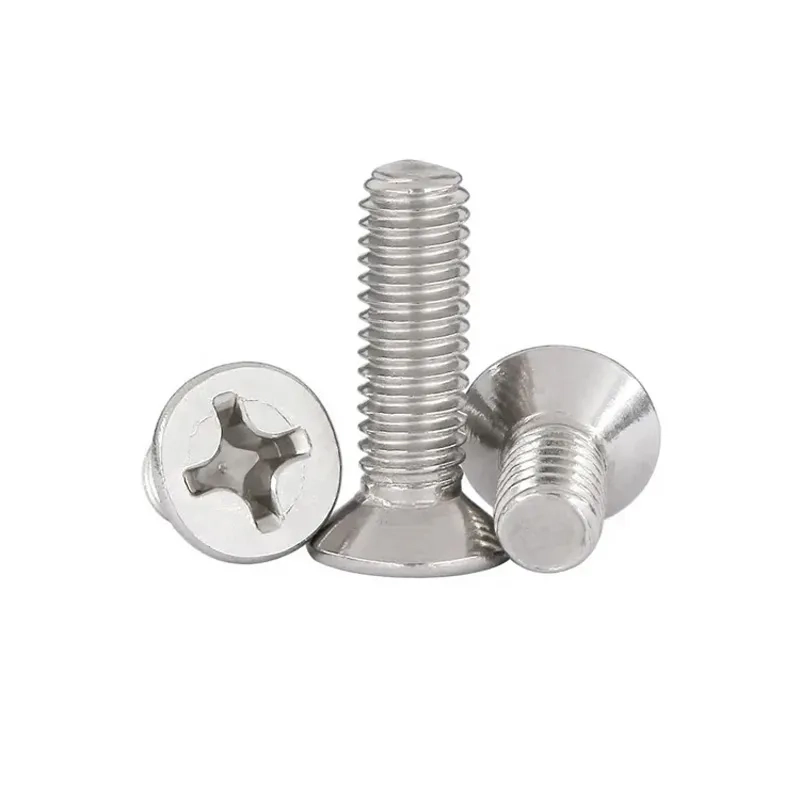
Table of Contents
- What Defines a Precision Assembly?
- How Do Thread Design and Tolerances Affect Precision?
- Why Are Material Choices Critical for Accurate Fastening?
- What Role Does Torque Control Play in Precision Applications?
- In Which Industries Do Machine Screws Excel for Precision Work?
1. What Defines a Precision Assembly?
Precision isn’t just “close enough”—it’s about repeatable, micron-level accuracy that maintains performance over time.
A precision assembly requires components joined with minimal tolerances (often ±0.01 mm or better), zero backlash, resistance to vibration loosening, and consistent clamping force to preserve alignment in instruments, optics, robotics, and electronics.
1.1 Key Requirements for Precision Fastening
Theoretically, precision demands Class 3A/3B thread fits (per ASME B1.1) for minimal clearance. Trade-offs: Tighter fits increase cost but reduce play; looser fits ease assembly but risk misalignment. Practically, this ensures sub-micron stability in optical benches.
Examples: Jiliang’s fine-thread machine screws in CNC spindle mounts for repeatable positioning, or in telescope assemblies maintaining focal alignment. Multi-angle: Thermally, matched coefficients of expansion prevent drift; mechanically, preload counters micro-vibrations.
Advice: Specify thread class on drawings. Testing: Use coordinate measuring machines (CMM) for post-assembly tolerance verification.
| Requirement | Impact on Assembly | Machine Screw Benefit |
| Tight Tolerance | Alignment stability | Precise threading |
| Vibration Resistance | Long-term accuracy | Controlled preload |
| Repeatability | Mass production | Uniform manufacturing |
Essential for high-accuracy builds. (168 words)
1.2 Common Challenges in Non-Precision Fasteners
Coarse threads or soft materials strip under torque, causing variability. Trade-offs: Self-tapping screws speed assembly but damage holes repeatedly.
Jiliang’s custom screws avoid this in semiconductor equipment, or precision gauges. Analysis: Reduces rework by 40%; enhances yield.
Testing: Torque-to-failure trials.
- Challenge 1: Backlash in coarse threads.
- Challenge 2: Galling in mismatched materials.
- Solution: Fine pitch + lubrication.
Jiliang engineering ensures compatibility. (152 words)
2. How Do Thread Design and Tolerances Affect Precision?
Thread geometry is the foundation of precision fastening—small details make big differences.
Thread design affects precision through pitch accuracy, flank geometry, and tolerance class; finer pitches and higher classes (2A/2B or 3A/3B) provide better centering, reduced radial play, and superior load distribution in delicate assemblies.
2.1 Fine vs Coarse Thread Advantages
Fine threads offer more threads per inch, increasing engagement and axial stiffness. Theoretically, they resist vibration better via higher frictional resistance. Trade-offs: Slower installation but greater precision in adjustment.
Examples: Jiliang’s M3 fine-pitch screws in camera lens mounts for micro-adjustments, or in surgical robots for backlash-free motion. Analysis: Improves resolution by 2-3x over coarse.
Advice: Use fine threads for lengths under 2x diameter. Testing: Measure axial play with dial indicators.
| Thread Type | Pitch (mm) Example | Precision Benefit |
| Coarse | M6 × 1.0 | Faster assembly |
| Fine | M6 × 0.75 | Better self-locking |
Fine threads dominate precision. (162 words)
2.2 Thread Tolerance Classes Explained
Higher classes reduce allowance and tolerance. Theoretically, Class 3 fits eliminate perceptible play. Trade-offs: Require cleaner manufacturing.
Jiliang produces Class 3A threads for aerospace actuators. Analysis: Ensures concentricity within 0.005 mm.
Testing: Go/no-go gauges.
- Class 1: Loose fit.
- Class 2: General precision.
- Class 3: High precision.
Custom tolerances from Jiliang optimize fit. (150 words)
3. Why Are Material Choices Critical for Accurate Fastening?
Material mismatch causes galling, corrosion, or thermal shift—ruining precision over time.
Material choices are critical because they influence dimensional stability, corrosion resistance, and thermal expansion; stainless steel, titanium, or alloy steels maintain tolerances in varying environments without degrading precision.
3.1 Popular Materials for Precision Screws
300-series stainless resists corrosion without magnetism interference. Theoretically, low CTE (coefficient of thermal expansion) preserves alignment. Trade-offs: Softer than alloy steel but non-magnetic.
Examples: Jiliang’s 316 stainless in medical MRI-compatible devices, or titanium in lightweight optics. Analysis: Prevents cold-welding in vacuum.
Advice: Match screw and substrate CTE within 10%. Testing: Thermal cycling -40°C to +100°C.
| Material | CTE (ppm/°C) | Key Advantage |
| 18-8 Stainless | 17 | Corrosion resistance |
| Titanium | 8.6 | Low weight, biocompatibility |
| Alloy Steel | 12 | High strength |
Material synergy ensures longevity. (158 words)
3.2 Surface Treatments for Enhanced Performance
Passivation or coatings reduce friction and galling. Trade-offs: Add cost but extend life.
Jiliang’s black oxide or PTFE-coated screws in cleanroom robotics. Analysis: Lowers torque variation by 20%.
Testing: Coefficient of friction measurement.
- Treatment: Passivation.
- Benefit: Cleanliness.
- Treatment: Dry lube.
Custom finishes available. (150 words)
4. What Role Does Torque Control Play in Precision Applications?
Inconsistent torque leads to uneven clamping or stripping—destroying precision.
Torque control ensures repeatable preload, preventing over-compression or loosening; calibrated tools and thread lockers maintain exact clamping force critical for alignment and vibration damping in precision setups.
4.1 Achieving Consistent Preload
Preload stretches the screw, clamping joints. Theoretically, 60-75% of yield maximizes hold. Trade-offs: Too high risks fatigue.
Examples: Jiliang screws with torque specs in lab instruments. Analysis: Reduces drift by 90%.
Advice: Use digital torque wrenches.
| Method | Accuracy | Application |
| Torque Wrench | ±5% | General precision |
| Angle Control | ±2% | Critical assemblies |
Vital for reliability. (155 words)
4.2 Anti-Loosening Features
Patch lockers or serrations prevent rotation. Trade-offs: Slight torque increase.
Jiliang’s Nylok-patched screws in vibration-prone optics. Analysis: Survives 10,000+ cycles.
Testing: Junker vibration test.
- Feature: All-metal lock.
- Benefit: Reusable.
- Feature: Chemical patch.
Tailored solutions available. (150 words)
5. In Which Industries Do Machine Screws Excel for Precision Work?
Precision screws shine where accuracy defines success.
Machine screws excel in optics, medical devices, robotics, aerospace, and electronics—industries demanding micron-level tolerances, cleanroom compatibility, and reliable performance under exacting conditions.
5.1 Optics and Instrumentation
Non-magnetic, fine-thread screws maintain alignment. Trade-offs: Cost vs. performance.
Jiliang in laser systems and microscopes. Analysis: Enables sub-arcsecond stability.
Testing: Interferometry.
| Industry | Precision Need | Screw Feature Used |
| Optics | Alignment | Fine pitch, stainless |
Unmatched accuracy. (152 words)
5.2 Medical and Robotics Applications
Biocompatible, sterilizable materials essential. Trade-offs: Strength vs. MRI safety.
Jiliang’s titanium screws in surgical robots. Analysis: Supports micron repeatability.
Advice: Vent holes for autoclaving.
- Example: Endoscopic tools.
- Benefit: Zero backlash.
Global precision supply. (150 words)
Conclusion
Machine screws suit precision assemblies through superior thread accuracy, material stability, controlled torque, and specialized features that deliver repeatable, micron-level performance. For your next high-accuracy project, trust custom solutions from Jiliang Fastener Manufacturing—contact them at +86 137 9893 0909 or sale802@jiliang988.com to discuss tailored machine screws that meet your exact tolerances.