Are you struggling to find reliable fasteners that combine strength and easy installation for your manufacturing needs? Achieving the perfect balance between durability and assembly efficiency can be challenging. This is where Semi-tubular rivets stand out. Unlike solid rivets that require greater force, semi-tubular rivets deliver secure fastening with less effort, helping manufacturers improve productivity while reducing labor costs. Choosing the right rivet manufacturers ensures your production process benefits from both reliability and efficiency.
A leading semi tubular rivet manufacturer specializes in producing partially hollow rivets that require significantly less force for installation compared to solid rivets. These fasteners are ideal for industries where speed and consistency are critical. Top Semi Tubular Rivets manufacturers provide a wide range of options in materials such as aluminum, steel, brass, and copper, along with multiple head styles and sizes. Whether you need standard parts or custom rivets, they deliver robust and cost-effective fastening solutions tailored to your specific requirements.
In today’s fast-paced manufacturing environment, the choice of fasteners directly impacts product quality, assembly efficiency, and overall cost. Semi-tubular rivets, with their unique design, have become a cornerstone in industries ranging from automotive and electronics to furniture and consumer goods. Trusted rivet manufacturers not only supply bulk rivets but also offer engineering support, quality certifications, and customization options. This article explores what sets a top semi tubular rivet manufacturer apart, examining their capabilities, product offerings, and the crucial role they play in modern production.
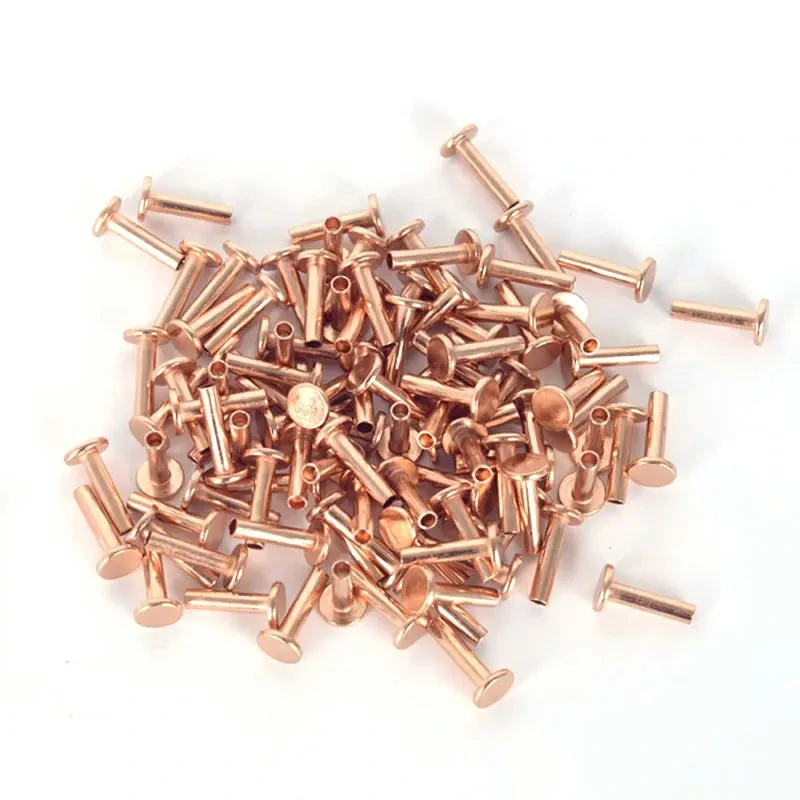
Table of Contents
- What Are Semi-Tubular Rivets?
- What Materials Do Semi-Tubular Rivet Manufacturers Use?
- What Head Styles Do Semi-Tubular Rivets Come In?
- What Industries Benefit from Semi-Tubular Rivets?
- What Customization Options Do Manufacturers Offer?
- How Do Manufacturers Ensure Quality and Performance?
1. What Are Semi-Tubular Rivets?
Are you curious about what distinguishes semi-tubular rivets from other fastening solutions? Understanding their fundamental design and operational advantages is key to appreciating their widespread use in various industries.
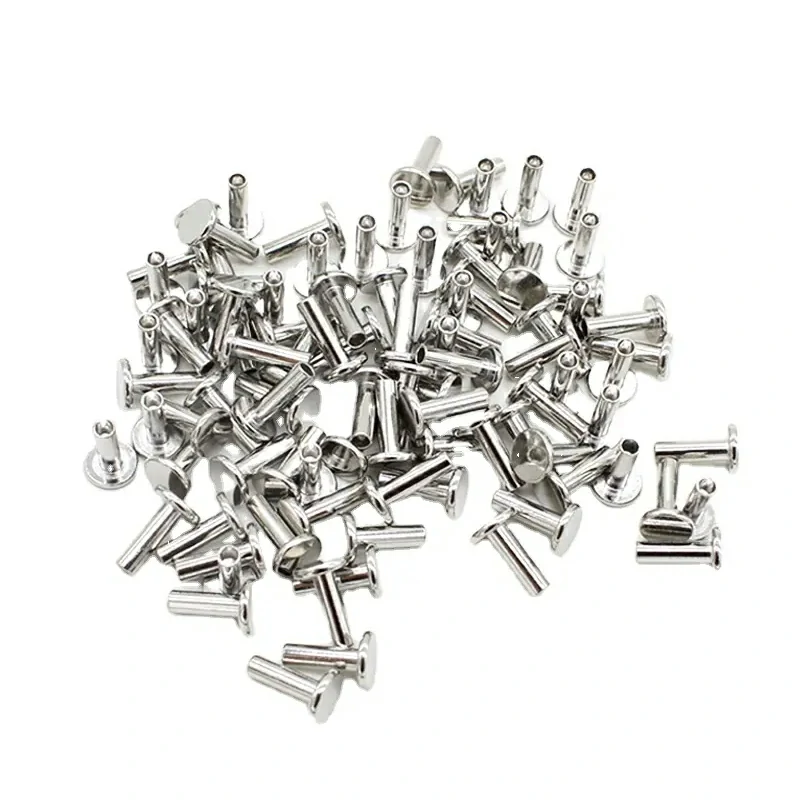
Semi-tubular rivets are mechanical fasteners characterized by a partial hole at their tail end, which reduces the force required for installation compared to solid rivets. This design allows the tubular portion to roll outward when force is applied, creating a secure and permanent joint with approximately one-quarter of the force needed for solid rivets.
These rivets are essentially a variation of solid rivets but with a strategic modification that enhances their utility. The hole depth typically ranges from 50% to 75% of the rivet’s length, with a wall thickness measuring 25% to 35% of the diameter. This hollow section facilitates controlled material flow during installation, ensuring consistent head formation and optimal material distribution. The reduced setting force makes them particularly suitable for applications involving softer materials or where delicate components are being joined, minimizing the risk of damage. They are often preferred for pivot points in joints where movement is desired, as the rivet material only swells at the tail, allowing for flexibility.
1.1 Design and Functionality
The design of a semi-tubular rivet, featuring a pre-formed head on one side and a partial hole on the opposite end, is crucial to its functionality. When installed, the hollow tail is cold-formed to create a “field head,” which securely fastens the components together. This cold-forming process requires the rivets to be made from ductile, low-strength metals to allow for extensive deformation without cracking. The partial hole guides the material flow, ensuring a consistent and strong clinch with less effort.
1.2 Advantages Over Other Rivet Types
Semi-tubular rivets offer several distinct advantages over other rivet types, particularly solid and full tubular rivets. Compared to solid rivets, they require significantly less force for installation, making the process faster and more efficient, especially in high-volume production environments. This reduced force also means less stress on the materials being joined and the installation equipment. While full tubular rivets have a hole running entirely through their body, making them suitable for very soft materials and minimal setting force, semi-tubular rivets strike a balance, offering good strength while still being easier to set than solid rivets. Their ability to form a strong, permanent joint with reduced effort makes them a versatile choice for a broad spectrum of applications, from light mechanical assemblies to electronics.
2. What Materials Do Semi-Tubular Rivet Manufacturers Use?
The performance and suitability of semi-tubular rivets for specific applications heavily depend on the materials from which they are manufactured. What are the common materials used, and why are they chosen?
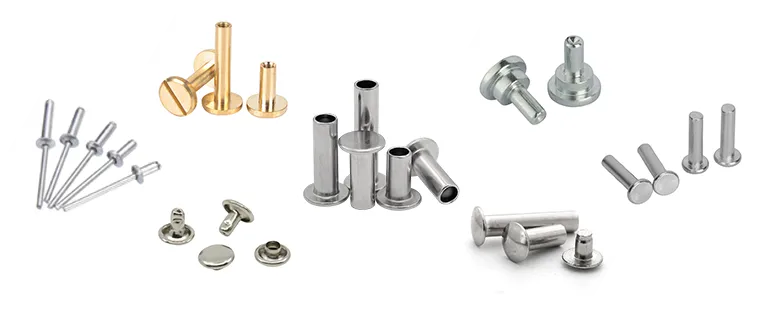
Leading semi-tubular rivet manufacturers utilize a diverse range of materials, including aluminum, steel (plain and zinc-plated), brass (plain and nickel-plated), and copper, to meet varying strength, corrosion resistance, and application-specific requirements. The selection of material is critical to ensure compatibility with the joined parts and to optimize the rivet’s performance in different environments.
Each material offers unique properties that make it ideal for certain conditions, from resisting corrosion in harsh environments to providing lightweight solutions for sensitive assemblies. Manufacturers often stock a wide inventory of these materials to cater to the broad needs of their clientele.
2.1 Aluminum Semi-Tubular Rivets
Aluminum is a popular choice for semi-tubular rivets due to its lightweight nature and excellent corrosion resistance. Its malleability allows for easy formation into complex configurations, making it versatile for various designs. Aluminum rivets are particularly suitable for applications where weight is a critical factor, such as in aircraft components, or where dissimilar metals are joined to prevent galvanic corrosion. They are also widely used in electronics and light fixtures due to their good electrical conductivity and non-magnetic properties.
2.2 Steel Semi-Tubular Rivets
Steel semi-tubular rivets, including plain finish and zinc-plated steel, offer superior strength and durability. Low carbon steels are preferred for their ability to clinch well and adapt to applications, providing flexibility compared to more rigid high carbon steel. Zinc-plated steel rivets provide enhanced corrosion resistance, making them suitable for applications exposed to moisture or other corrosive elements. These rivets are commonly found in heavy-duty applications, construction, and automotive manufacturing where high tensile and shear strength are paramount.
2.3 Brass and Copper Semi-Tubular Rivets
Brass and copper are chosen for semi-tubular rivets due to their unique properties. Brass is a flexible, low-friction, and supple material with good tarnish resistance and high strength. It does not create sparks, making brass rivets ideal for gas appliances and other applications where spark prevention is crucial. Nickel-plated brass rivets offer additional aesthetic appeal and enhanced corrosion resistance. Copper, known for its excellent thermal and electrical conductivity, is often preferred for water and electrical appliances. Both brass and copper rivets are also valued for their aesthetic qualities, making them suitable for decorative applications and historical restorations.
3. What Head Styles Do Semi-Tubular Rivets Come In?
The head style of a semi-tubular rivet is not merely an aesthetic choice; it significantly impacts the rivet’s performance, installation method, and suitability for various applications. What are the common head styles available, and how do they influence functionality?
Semi-tubular rivet manufacturers offer a variety of head styles, including flat, oval, pan, and truss heads, each designed to meet specific functional and aesthetic requirements. These head styles influence the bearing surface, protrusion, and overall appearance of the fastened joint, allowing for optimal selection based on the application’s demands.
The choice of head style is crucial for ensuring proper fit, maximizing joint strength, and achieving the desired finish in the final product.
3.1 Flat Head Semi-Tubular Rivets
Flat head semi-tubular rivets are characterized by a minimal protrusion and a large bearing surface. This design makes them ideal for applications where a low-profile finish is desired or where space is limited. They are commonly used in machine assembly, furniture manufacturing, and standard metal fabrication, providing a clean and unobtrusive appearance while ensuring a secure connection. The large bearing surface helps distribute the load evenly, reducing stress on the joined materials.
3.2 Oval Head Semi-Tubular Rivets
Oval head semi-tubular rivets feature a slightly rounded, dome-like top that offers a balance between aesthetics and functionality. This head style provides a smooth, finished look while still offering a substantial bearing surface for secure fastening. Oval heads are often chosen for applications where a decorative finish is desired, such as in leather crafting, bookbinding, and light assemblies where the rivet head remains visible. Their gentle curve also helps to prevent snagging on fabrics or other materials.
3.3 Pan Head and Truss Head Semi-Tubular Rivets
Pan head semi-tubular rivets have a noticeably low-profile dome shape, making them well-suited for thinner materials and applications requiring minimal protrusion. They are frequently used in sheet metal work, light structural assembly, and decorative applications where a subtle yet secure fastening is needed. Truss head semi-tubular rivets, on the other hand, typically feature a wider, flatter dome, providing an even larger bearing surface than pan heads. This increased surface area helps to distribute clamping force over a broader area, making them excellent for joining softer or more delicate materials where pull-through might be a concern. Both pan and truss heads offer robust fastening while maintaining a relatively low profile.
4. What Industries Benefit from Semi-Tubular Rivets?
Semi-tubular rivets are versatile fasteners, finding their place across a broad spectrum of industries due to their balance of strength, ease of installation, and cost-effectiveness. Which sectors rely heavily on these specific fasteners, and why are they preferred?
Semi-tubular rivets are widely utilized across various industries, including automotive, electronics, furniture manufacturing, and light mechanical assemblies, due to their reduced installation force, suitability for pivot points, and ability to join diverse materials effectively. Their efficiency and reliability make them a preferred choice for applications requiring secure yet adaptable fastening solutions.
Their unique design allows for efficient assembly processes, contributing to both product quality and manufacturing speed in these demanding environments.
4.1 Automotive Manufacturing
In the automotive industry, semi-tubular rivets play a crucial role in assembling various components. They are used in brake systems, interior trim, and other light mechanical assemblies where a secure yet flexible joint is required. The reduced installation force is beneficial for automated assembly lines, increasing efficiency and reducing labor costs. Furthermore, their ability to create pivot points without excessive material swelling makes them ideal for parts that require movement, such as linkages and hinges. This application extends to both traditional and new energy vehicles, where they can be found in battery pack housings and motor fixings, offering advantages like vibration resistance and reduced thermal deformation compared to welding.
4.2 Electronics and Appliances
The electronics and appliance sectors heavily rely on semi-tubular rivets for their precision and ability to join delicate components without causing damage. They are used in light fixtures, circuit board assemblies, and various household appliances. The minimal setting force and consistent head formation ensure that sensitive electronic components are not stressed during assembly. For non-magnetic materials, full tubular rivets (a close relative) are often used in electronics, highlighting the family’s suitability for this industry.
4.3 Furniture and Consumer Goods
Semi-tubular rivets are a staple in furniture manufacturing and the production of various consumer goods. Their ease of installation and ability to create strong, durable joints make them ideal for assembling wooden frames, cabinets, and other furniture pieces. In consumer goods, they are found in items like ladders, toys, and luggage, where reliable fastening is essential for product longevity and safety. The aesthetic versatility offered by different head styles also allows manufacturers to choose rivets that complement the design of their products.
5. What Customization Options Do Manufacturers Offer?
In today’s diverse manufacturing landscape, off-the-shelf solutions often fall short of specific project requirements. How do leading semi-tubular rivet manufacturers address this need for tailored fasteners?
Leading semi-tubular rivet manufacturers offer extensive customization options, including variations in material, dimensions (lengths, body diameters, head diameters), and head styles, to precisely match unique application demands. This bespoke approach ensures optimal performance, compatibility, and efficiency for specialized industrial projects.
This commitment to customization allows clients to achieve highly specific fastening solutions that integrate seamlessly with their designs and production processes.
5.1 Material and Finish Customization
Manufacturers provide a wide array of material choices for semi-tubular rivets, including various grades of aluminum, steel (plain and zinc-plated), brass (plain and nickel-plated), and copper. This allows clients to select materials based on factors such as strength requirements, corrosion resistance, weight considerations, and electrical conductivity. For instance, stainless steel options like 18-8 and 430 stainless steel are available for enhanced durability and corrosion resistance in demanding environments. Beyond the base material, manufacturers also offer different finishes and platings, such as zinc, nickel, brass, and tin, to provide additional protection against corrosion, improve aesthetics, or enhance specific functional properties like lubricity (e.g., waxing for easier assembly).
5.2 Dimensional Customization
One of the most critical aspects of customization is the ability to specify precise dimensions. Semi-tubular rivet manufacturers can produce rivets in a vast range of lengths, typically from 1/16” to 2-15/16”, and body diameters from 1/16” to 3/8”. Head diameters also vary significantly, from 5/64” to 23/32”. This level of precision ensures that the rivet perfectly fits the application’s hole size and material thickness, optimizing the clinch allowance and overall joint strength. For applications with specific or non-standard requirements, manufacturers often offer to quote special sizes or tolerances upon request, demonstrating their flexibility in meeting unique design challenges.
5.3 Head Style and Application-Specific Designs
Beyond standard head styles like flat, oval, pan, and truss, manufacturers can often accommodate requests for specialized head designs or modifications to existing ones. This might include specific countersunk angles for flush applications or unique profiles for aesthetic purposes. Furthermore, manufacturers work closely with clients to understand the specific use conditions and technical parameters, such as strength grades and surface treatments. This collaborative approach ensures that the customized semi-tubular rivets are not only dimensionally accurate but also engineered to perform optimally in their intended application, whether it’s for a pivot point requiring movement or a static, high-strength connection.
6. How Do Manufacturers Ensure Quality and Performance?
Ensuring the quality and performance of semi-tubular rivets is paramount for manufacturers, as these fasteners are critical components in countless products. What measures do leading manufacturers implement to guarantee their rivets meet the highest standards?
Leading semi-tubular rivet manufacturers employ rigorous quality control processes, including adherence to industry standards, comprehensive material testing, and precise dimensional verification, to ensure their products consistently meet high performance and reliability benchmarks. They also focus on manufacturing precision and offer technical support to optimize rivet selection and application.
This multi-faceted approach guarantees that every rivet delivered is fit for purpose, contributing to the overall integrity and longevity of the final assembly.
6.1 Adherence to Industry Standards and Certifications
Reputable semi-tubular rivet manufacturers strictly adhere to various national and international industry standards, such as ASME/ANSI, BS/BSI, SAE, JIS, DIN, and ISO. These standards dictate technical parameters like ultimate tensile strength, surface finishing, and dimensional tolerances. By complying with these specifications, manufacturers ensure that their rivets meet globally recognized benchmarks for quality and performance. Furthermore, many manufacturers obtain certifications (e.g., ISO 9001) that demonstrate their commitment to quality management systems, providing clients with assurance of consistent product quality and reliable manufacturing processes.
6.2 Material and Performance Testing
Quality assurance begins with the selection and testing of raw materials. Manufacturers conduct thorough inspections of incoming materials like aluminum, steel, brass, and copper to verify their composition and properties. For the finished rivets, performance testing is crucial. This includes destructive tests to measure shear and tensile strength, ensuring the rivets can withstand the intended loads. For instance, the Industrial Fasteners Institute (IFI) standards, such as IFI-135, are widely accepted for testing blind rivets, which also applies to the performance principles of semi-tubular rivets. Manufacturers also perform tests for other critical features like pushout force, break load, and salt spray resistance, especially for rivets destined for harsh environments. This rigorous testing regimen ensures that the rivets perform reliably under various operational conditions.
6.3 Manufacturing Precision and Technical Support
Achieving high-quality semi-tubular rivets requires precision in the manufacturing process. Leading manufacturers utilize advanced machinery, such as automated riveting machines and cold-forming equipment, to ensure consistent dimensions and material properties. They maintain tight tolerances for shank diameter, head diameter, hole diameter, and hole depth, which are critical for proper installation and optimal clinch allowance. Beyond manufacturing, top manufacturers offer extensive technical support and resources. This includes providing detailed specifications, offering industry research, and assisting clients in selecting the most suitable rivet type, material, and dimensions for their specific applications. This collaborative approach, from initial design consultation to post-installation checks, helps clients make informed decisions and ensures the successful integration and performance of the rivets in their products.
Conclusion
The role of a leading semi-tubular rivet manufacturer extends far beyond simply producing fasteners; it involves a deep understanding of material science, precision engineering, and diverse industry applications. By offering a wide array of materials, head styles, and customization options, these manufacturers provide essential solutions that balance strength, efficiency, and cost-effectiveness. Their commitment to rigorous quality control, adherence to international standards, and comprehensive technical support ensures that every semi-tubular rivet contributes to the integrity and longevity of the final product. For any industry seeking reliable, high-performance fastening solutions, partnering with a top-tier semi-tubular rivet manufacturer is a strategic decision that underpins product quality and operational success.