Are you looking for a fastening solution that offers both high strength and easy installation, without compromising on precision? Traditional solid rivets can be tough to set, and standard fasteners often lack the built-in spacing needed for complex assemblies. This is where semi-tubular shoulder rivets step in, providing an innovative and highly effective answer to these common manufacturing dilemmas. They’re designed to streamline your assembly process while ensuring the integrity and precision of your products.
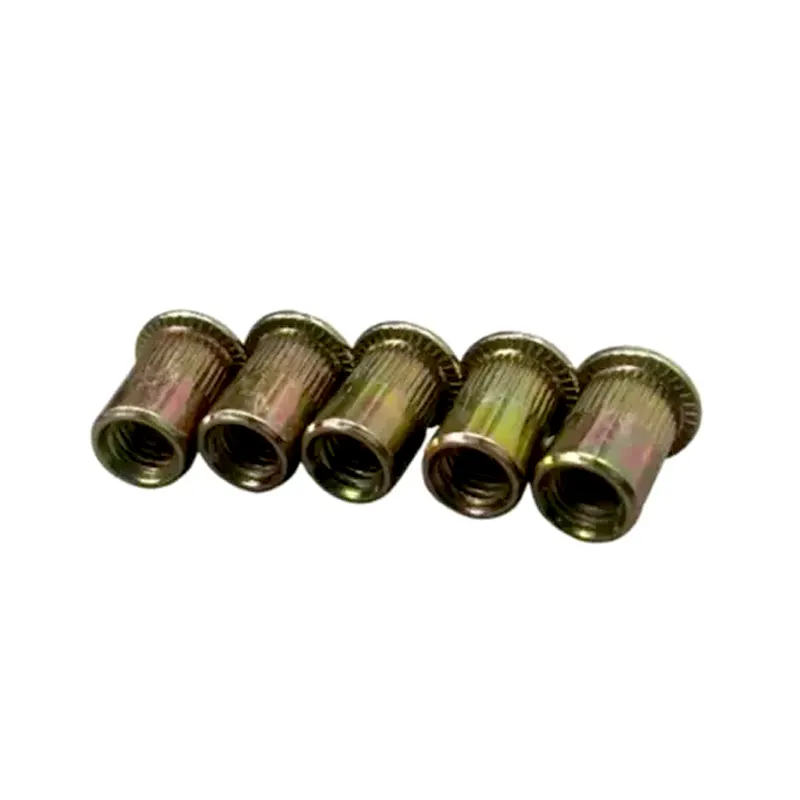
Semi-tubular shoulder rivets are specialized mechanical fasteners characterized by a partially hollow shank and a distinct, precisely defined shoulder section. This unique combination allows for easier installation compared to solid rivets, as less force is required to set them, while the shoulder provides a consistent stopping point for precise spacing and secure fit. They offer a cost-effective, durable, and versatile solution for creating strong, consistent joints across a wide range of applications, from automotive to electronics.
At Jiliang Fastener Manufacturing, we understand the critical balance between performance and efficiency. Since 2008, we’ve been at the forefront of custom fastener production, including precision-engineered semi-tubular shoulder rivets, serving global industries with solutions that meet the highest standards. Let’s explore the features, benefits, and diverse applications of these essential components.
Table of Contents
- What Defines the Design of Semi-Tubular Shoulder Rivets?
- What are the Key Benefits of Using Semi-Tubular Shoulder Rivets?
- Where are Semi-Tubular Shoulder Rivets Commonly Applied?
- How Do You Choose the Right Semi-Tubular Shoulder Rivet?
- How Does Jiliang Customize Semi-Tubular Shoulder Rivets?
1. What Defines the Design of Semi-Tubular Shoulder Rivets?
The effectiveness of semi-tubular shoulder rivets stems directly from their unique structural composition, which blends the best features of different rivet types.
The design of semi-tubular shoulder rivets is defined by a partially hollow shank, which reduces the force needed for installation, and a distinct, unthreaded shoulder section. This shoulder acts as a precise stopping point, controlling the distance between joined components and preventing over-compression, while the hollow tail is easily flared or crimped to form the second head. This combination ensures a secure, consistent fit with moderate strength, making them ideal for applications requiring both efficiency and controlled spacing.
1.1 The Anatomy of a Semi-Tubular Shoulder Rivet
A closer look at what makes them unique.
- Partially Hollow Shank: Unlike solid rivets, the shank of a semi-tubular rivet has a shallow hole or cavity at its tail end. This hollow portion is crucial because it reduces the amount of material that needs to be deformed during installation, significantly lowering the force required to set the rivet.
- Defined Shoulder Section: This is the “shoulder” aspect of the rivet. It’s a precisely machined, unthreaded cylindrical section with a larger diameter than the hollow tail. The shoulder’s length and diameter are critical as they provide a consistent stopping point, ensuring a precise and secure fit and preventing over-compression of the joined materials.
- Pre-formed Head: Similar to other rivets, it provides a bearing surface against the material and can come in various styles (e.g., flat, round, countersunk).
- Example 1: Jiliang’s Custom Semi-Tubular Shoulder Rivet for an Appliance. Imagine a custom semi-tubular shoulder rivet we manufactured for a washing machine’s internal mechanism. The shoulder precisely controls the gap between two rotating plastic components, preventing friction, while the partially hollow tail allows for rapid, automated crimping during assembly.
- Example 2: Automotive Seatbelt Assembly. In a seatbelt mechanism, a semi-tubular shoulder rivet might be used where the shoulder provides a pivot point for a moving part, and the hollow tail allows for efficient, high-volume installation, ensuring a secure yet flexible fastening solution.
- Analysis: The theoretical basis combines the principles of mechanical fastening with controlled spacing. The design trade-off involves balancing the reduced strength due to the hollow shank with the benefits of easier installation and integrated spacing. The practical impact is a fastener that offers a robust joint with added functional control, optimizing both product performance and manufacturing efficiency.
This table breaks down the anatomy of a semi-tubular shoulder rivet.
| Component | Description | Functional Purpose |
| Partially Hollow Shank | Cavity at the tail end of the rivet | Reduces installation force, allows for flaring/crimping |
| Defined Shoulder Section | Precisely machined, unthreaded cylindrical part | Provides consistent stopping point, ensures precise fit, prevents over-compression |
| Pre-formed Head | Bearing surface, various styles | Distributes load, provides aesthetic finish |
| Material | Stainless steel, aluminum, brass, etc. | Dictates strength, corrosion resistance, weight |
1.2 How it Differs from Solid and Blind Rivets
A unique position in the fastener family.
- Vs. Solid Rivets: The key difference is the partially hollow shank, which makes semi-tubular shoulder rivets much easier to install, requiring less force than solid rivets. While solid rivets offer maximum strength, semi-tubular shoulder rivets provide a balance of good strength with improved assembly efficiency.
- Vs. Blind Rivets: Blind rivets are designed for one-sided installation, where access to the back of the joint is impossible. Semi-tubular shoulder rivets typically require access to both sides (though often with a simple backing anvil), but their primary advantage lies in the integrated shoulder for spacing and pivot functions, which blind rivets do not inherently offer.
- Example: If you needed to join two metal plates and create a precise 2mm gap between them, a semi-tubular shoulder rivet could do this in one step. A solid rivet would require a separate spacer, and a blind rivet wouldn’t provide the precise spacing.
- Analysis: The practical impact is that semi-tubular shoulder rivets fill a crucial niche, offering a more efficient and functionally integrated solution for applications that demand both moderate to high strength and precise dimensional control, without the extreme force requirements of solid rivets or the specialized tooling of blind rivets.
2. What are the Key Benefits of Using Semi-Tubular Shoulder Rivets?
The unique design of semi-tubular shoulder rivets translates into several compelling advantages for manufacturers.
The key benefits of using semi-tubular shoulder rivets include significantly easier and faster installation due to their partially hollow design, leading to reduced assembly time and effort. They are also cost-effective, using less material than solid rivets without sacrificing essential strength, and ensure consistent assembly through their defined shoulder, preventing over-compression and maintaining structural integrity. Furthermore, their durability and versatility make them suitable for a wide range of lightweight and heavy-duty applications.
2.1 Enhanced Installation Efficiency and Cost-Effectiveness
Streamlining your production.
- Ease of Installation: The partially hollow design means these rivets require significantly less force to set compared to solid rivets. This reduces assembly time and effort, making them an excellent choice for high-volume production lines.
- Reduced Tool Wear: Lower installation force also translates to less wear and tear on riveting tools, extending their lifespan and reducing maintenance costs.
- Cost-Effective: By using less material than solid rivets, semi-tubular shoulder rivets are an economical choice without sacrificing necessary strength. This contributes to lower unit costs and improved overall manufacturing profitability.
- Example 1: Automated Appliance Assembly. In an appliance factory, semi-tubular shoulder rivets are installed by automated riveting machines at high speeds. Their ease of setting allows for rapid cycle times, drastically reducing labor costs and increasing throughput, making them a highly cost-effective fastening solution.
- Example 2: Furniture Manufacturing. For assembling furniture components, the ease of installation of semi-tubular shoulder rivets allows workers to quickly and efficiently join parts, reducing assembly time per unit and improving overall production efficiency.
- Analysis: The theoretical basis is material reduction and optimized deformation mechanics. The practical impact is a direct improvement in manufacturing efficiency, leading to lower production costs and faster time-to-market, without compromising on the quality of the joint.
This table summarizes the key benefits of semi-tubular shoulder rivets.
| Benefit | Description | Practical Advantage in Assembly |
| Ease of Installation | Partially hollow design, less force to set | Reduces assembly time and effort, faster production |
| Cost-Effective | Uses less material than solid rivets | Economical choice, lower unit costs |
| Consistent Assembly | Defined shoulder ensures uniform placement | Prevents over-compression, maintains structural integrity |
| Versatile Applications | Suitable for lightweight and heavy-duty uses | Adaptable to diverse industries and materials |
| Durability | Made from high-quality metals | Provides long-lasting performance |
| Precision Spacing | Integrated shoulder acts as a spacer | Eliminates separate parts, ensures accurate gaps |
| Controlled Movement | Smooth shoulder allows rotation/pivot | Ideal for hinges, linkages, moving parts |
2.2 Consistent Assembly and Durability
Reliability built-in.
- Consistent Assembly: The defined shoulder section ensures uniform placement of components, preventing over-compression and maintaining structural integrity. This is crucial for assemblies where precise spacing or controlled movement is required.
- Prevents Material Damage: By clamping against the shoulder, not directly against the joined materials, these rivets protect delicate or soft components from being crushed or deformed during installation.
- Durability: Manufactured from high-quality metals such as stainless steel, aluminum, and brass, semi-tubular shoulder rivets provide long-lasting performance and resistance to wear and tear.
- Example: In an electronic enclosure, the consistent assembly provided by the shoulder ensures that circuit boards are mounted at the correct height, preventing short circuits and allowing for proper airflow, contributing to the device’s long-term durability.
- Analysis: The practical impact is improved product quality, reduced rework, and enhanced reliability, as the rivets contribute to both the structural integrity and the functional precision of the assembly.
3. Where are Semi-Tubular Shoulder Rivets Commonly Applied?
The versatility and combined benefits of semi-tubular shoulder rivets make them a popular choice across a multitude of industries.
Semi-tubular shoulder rivets are commonly applied in industries such as automotive (brake systems, seatbelt assemblies), furniture manufacturing (hinges, reclining mechanisms), electronics (enclosures, circuit board assemblies), and appliance assembly (kitchen appliances, washers, dryers). They are also essential in the aerospace industry for lightweight components. Their ability to provide a secure, precise, and often flexible fastening solution with efficient installation makes them ideal for diverse applications ranging from lightweight to heavy-duty requirements.
3.1 Automotive and Aerospace Industries
Precision and reliability in motion.
- Automotive Industry:
- Brake Systems: Used in various components within brake systems where a secure yet flexible fastening solution is required. The shoulder can act as a pivot or spacer.
- Seatbelt Assemblies: Essential for connecting parts within seatbelt mechanisms, ensuring reliable operation and safety.
- Other Vehicle Components: Found in door hinges, interior linkages, and other areas requiring controlled movement and robust fastening.
- Example 1: Jiliang’s Custom Rivets for Automotive Linkages. We’ve supplied custom semi-tubular shoulder rivets for automotive manufacturers, used in window regulator mechanisms. The shoulder provides a smooth pivot for the linkage arms, ensuring consistent window operation, while the semi-tubular design allows for high-speed automated assembly.
- Aerospace Industry:
- Lightweight Aircraft Components: Essential for assembling lightweight aircraft components where structural integrity is critical. While solid rivets dominate primary structures, semi-tubular shoulder rivets are used in secondary structures, interior fittings, and control linkages where weight and efficient assembly are key.
- Interior Mechanisms: Used in seat mechanisms, galley equipment, and overhead bin components where controlled movement and precise spacing are needed.
- Example 2: Aircraft Cabin Seating. In aircraft cabin seating, semi-tubular shoulder rivets might be used in the recline mechanism, providing a durable pivot point that withstands frequent use while contributing to the overall lightweight design of the seat.
- Analysis: The practical impact is that these industries demand fasteners that provide a balance of strength, precision, and efficient installation, making semi-tubular shoulder rivets a crucial component for both safety-critical and functional assemblies.
This table details common applications for semi-tubular shoulder rivets.
| Industry/Application | Specific Use Cases | Primary Benefit of Semi-Tubular Shoulder Rivet Here |
| Automotive Industry | Brake systems, seatbelt assemblies, linkages | Secure yet flexible fastening, pivot points |
| Furniture Manufacturing | Hinges, reclining mechanisms, structural joints | Reliable connection, controlled movement |
| Electronics | Enclosures, circuit board assemblies | Precise fit, ease of installation, spacing |
| Aerospace Industry | Lightweight aircraft components, interior mechanisms | Structural integrity, efficient assembly |
| Appliance Assembly | Kitchen appliances, washers, dryers | Durable connections, consistent operation |
| Robotics | Articulating joints, sensor mounts | Precision pivots, controlled spacing |
| Medical Devices | Articulating instruments, diagnostic equipment | Smooth movement, accurate alignment |
3.2 Electronics, Furniture, and Appliance Assembly
Everyday reliability and precision.
- Electronics:
- Enclosures and Circuit Board Assemblies: Frequently used for their precise fit and ease of installation in electronic enclosures and for mounting circuit boards. The shoulder ensures proper standoff and prevents shorting.
- Heat Sinks: Can be used to mount heat sinks, ensuring a consistent gap for thermal paste or airflow.
- Furniture Manufacturing:
- Hinges and Reclining Mechanisms: Provides a reliable connection in hinges, reclining mechanisms, and structural joints, ensuring smooth operation and durability.
- Structural Joints: Used to join various wooden or metal components, offering a strong and lasting bond.
- Appliance Assembly:
- Kitchen Appliances, Washers, Dryers: Commonly found in various household equipment, providing durable connections for moving parts or structural elements.
- Example: A refrigerator door hinge might use a semi-tubular shoulder rivet to allow the door to swing smoothly while securely attaching the hinge components to the appliance frame, ensuring long-term reliability.
- Analysis: The practical impact is that these rivets contribute to the functionality, durability, and ease of assembly of a wide range of consumer and industrial products, making them a versatile and indispensable fastener.
4. How Do You Choose the Right Semi-Tubular Shoulder Rivet?
Selecting the optimal semi-tubular shoulder rivet is crucial for ensuring the performance and longevity of your assembly.
Choosing the right semi-tubular shoulder rivet requires careful consideration of the application’s environment to select the appropriate material (e.g., stainless steel for corrosion resistance, aluminum for lightweight strength). It’s also essential to match the rivet’s size and dimensions, including length, diameter, and shoulder size, to the intended application. Furthermore, evaluating the required load requirements for strength and durability, and considering the installation method (manual or automated), are critical steps to ensure the rivet meets all functional and structural demands.
4.1 Material and Environmental Considerations
Built to withstand the elements.
- Material Selection: The choice of material is paramount and should align with the application’s environment and performance requirements.
- Stainless Steel: Offers excellent corrosion resistance, making it ideal for outdoor, marine, or medical applications.
- Aluminum: Provides lightweight strength, commonly used in aerospace and applications where weight reduction is critical.
- Brass: Offers good electrical conductivity and aesthetic appeal, often used in decorative or electrical components.
- Steel: High strength, can be plated for corrosion resistance, widely used in general industrial applications.
- Environmental Factors: Consider temperature extremes, exposure to moisture, chemicals, or UV radiation. These factors will influence material choice and any necessary surface treatments.
- Example 1: Jiliang’s Material Expertise for Outdoor Use. A client needed semi-tubular shoulder rivets for outdoor playground equipment. We recommended 304-grade stainless steel with a specific passivation treatment to ensure maximum corrosion resistance against weather elements and long-term safety.
- Example 2: High-Temperature Industrial Oven. For components within an industrial oven, a semi-tubular shoulder rivet made from a high-temperature alloy steel would be selected to maintain strength and integrity under extreme heat.
- Analysis: The theoretical basis is material science and environmental engineering. The practical impact is ensuring the rivet’s durability and functionality throughout its service life, preventing premature failure due to environmental degradation.
This table outlines factors for choosing the right semi-tubular shoulder rivet.
| Selection Factor | Key Considerations | Impact on Rivet Choice |
| Material | Application environment, corrosion resistance, strength, weight | Stainless steel, aluminum, brass, steel |
| Size and Dimensions | Rivet length, diameter, shoulder size, grip range | Ensures proper fit, spacing, and joint integrity |
| Load Requirements | Shear, tensile, fatigue, dynamic stresses | Determines rivet diameter, material, and type |
| Installation Method | Manual vs. automated, tooling availability | Influences rivet design for efficient setting |
| Joint Function | Spacing, pivot, alignment, structural | Dictates shoulder length/diameter, head style |
| Cost & Efficiency | Unit cost, assembly time, production volume | Balances performance with manufacturing economics |
4.2 Size, Load Requirements, and Installation Method
Matching the rivet to the task.
- Size and Dimensions: It is crucial to ensure the rivet’s length, diameter, and shoulder size precisely match the intended application.
- Rivet Length: Must accommodate the total thickness of the materials being joined (the grip range) plus enough material for proper tail deformation.
- Rivet Diameter: Influences the shear strength of the joint and must fit the pre-drilled holes.
- Shoulder Size: The diameter and length of the shoulder are critical for achieving the desired spacing or pivot function.
- Load Requirements: Evaluate the strength and durability required to withstand mechanical stresses, including shear, tensile, and fatigue loads. This will influence the rivet’s material and diameter.
- Installation Method: Consider whether manual or automated installation is needed and select rivets accordingly. The partially hollow design of semi-tubular shoulder rivets makes them highly suitable for automated processes.
- Example: For a high-stress pivot point in a piece of heavy machinery, a larger diameter semi-tubular shoulder rivet made from high-strength steel would be chosen, ensuring it can withstand significant dynamic loads.
- Analysis: The practical impact is that a thorough evaluation of these factors ensures the chosen rivet will perform reliably, efficiently, and safely within the specific application, preventing costly failures and rework.
5. How Does Jiliang Customize Semi-Tubular Shoulder Rivets?
At Jiliang Fastener Manufacturing, our expertise lies in providing tailored fastening solutions, and semi-tubular shoulder rivets are a prime example of our customization capabilities.
Jiliang customizes semi-tubular shoulder rivets through a meticulous process starting with detailed requirements communication, where clients provide drawings, samples, or usage conditions. Our professional engineers then conduct a comprehensive technical feasibility analysis, discussing precise material selection, exact dimensions (including shoulder diameter, length, and tail configuration), and specific surface treatments. This bespoke engineering ensures that each semi-tubular shoulder rivet is perfectly optimized to meet the client’s unique functional demands for spacing, pivoting, and structural integrity, guaranteeing seamless integration and optimal performance in their specific application.
5.1 Precision Engineering for Unique Applications
Your design, our precision.
- Detailed Requirements Communication: We begin by thoroughly understanding your needs. Clients provide detailed drawings, new samples, or specific usage conditions, which form the foundation of our customization process.
- Technical Feasibility Analysis: Our team of professional engineers meticulously discusses every technical detail, ensuring a complete understanding of parameters such as material, dimensions, tolerances, surface treatment, and required strength grades.
- Custom Dimensions and Tolerances: We precisely engineer the shoulder diameter and length to achieve the exact standoff or pivot fit required, often to micro-tolerances for high-precision applications. We also customize the rivet’s overall length and head style.
- Example 1: Custom Rivet for a Medical Device. A client needed a miniature semi-tubular shoulder rivet for an articulating joint in a medical diagnostic tool. Jiliang engineered a custom 316L stainless steel rivet with an ultra-smooth, polished shoulder for frictionless movement and a specific head design for aesthetic integration into the device’s sterile casing.
- Example 2: High-Volume Automotive Component. For a major automotive supplier, we developed a semi-tubular shoulder rivet with a unique shoulder profile that allowed for a specific amount of controlled play in a linkage, while the hollow tail was optimized for their existing automated riveting machinery, significantly boosting their production efficiency.
- Analysis: The theoretical basis is advanced engineering design and manufacturing precision. The practical impact is a perfectly tailored fastener that not only meets but often exceeds the functional requirements of the client’s unique application, leading to superior product performance and reliability.
This table outlines Jiliang’s customization process for semi-tubular shoulder rivets.
| Customization Step | Description | Client Input/Jiliang Action |
| 1. Requirements Communication | Understanding client’s specific needs and application | Client provides drawings/samples/conditions |
| 2. Technical Analysis | Engineers discuss material, dimensions, tolerances | Jiliang ensures full understanding of parameters |
| 3. Material Selection | Choosing optimal material for strength, environment | Jiliang advises on steel, stainless, aluminum, etc. |
| 4. Dimensional Precision | Custom shoulder diameter, length, head style, tail type | Jiliang manufactures to exact, tight tolerances |
| 5. Surface Treatment | Applying coatings, finishes for specific properties | Jiliang offers plating, polishing, passivation |
| 6. Reverse Engineering (Optional) | Designing from existing samples if no drawings exist | Jiliang provides design services |
5.2 Material and Surface Treatment Optimization
Enhancing performance and durability.
- Material Optimization: We guide clients in selecting the most appropriate material, considering factors like strength, corrosion resistance, weight, and compatibility with the joined materials. This ensures the rivet performs optimally in its intended environment.
- Surface Treatments: We offer a range of surface treatments, including various platings (zinc, nickel, chrome) for enhanced corrosion resistance or aesthetics, passivation for stainless steel, and specialized coatings for reduced friction or specific electrical properties.
- Reverse Engineering: If you have an existing component but lack technical drawings, our team can reverse engineer a custom semi-tubular shoulder rivet to perfectly match your requirements.
- Example: A client in the marine industry required semi-tubular shoulder rivets that could withstand constant saltwater exposure. Jiliang provided rivets made from a specialized marine-grade stainless steel with an additional passivation treatment, ensuring maximum longevity and preventing corrosion.
- Analysis: The practical impact is a comprehensive fastening solution that not only fulfills the primary mechanical requirements but also addresses secondary factors like environmental durability, aesthetic integration, and specific functional enhancements, resulting in a truly optimized and reliable product.
Conclusion
Semi-tubular shoulder rivets stand out as a highly efficient and reliable fastening solution, perfectly balancing strength, ease of installation, and precision. Their unique design, featuring a partially hollow shank and a defined shoulder, allows them to provide consistent spacing, enable controlled movement, and ensure structural integrity across a vast array of applications.
From the demanding environments of the automotive and aerospace industries to the intricate assemblies of electronics and the robust construction of furniture and appliances, these versatile fasteners prove indispensable. At Jiliang Fastener Manufacturing, our commitment to precision engineering and comprehensive customization ensures that we can provide the ideal semi-tubular shoulder rivet tailored to your exact specifications. Partner with us to achieve unparalleled strength, efficiency, and performance in your fastening solutions.