Rivets are permanent mechanical fasteners consisting of a smooth cylindrical shaft with a head on one end, designed to join two or more materials by being inserted through pre-drilled holes and then deformed (upset) on the opposite side to create a second, “bucked” head. This deformation creates a strong, tamper-resistant, and often vibration-proof joint, making them indispensable across industries for applications requiring high structural integrity and long-term reliability where disassembly is not typically intended.
At Jiliang Fastener Manufacturing, we’ve been at the forefront of custom rivet production since 2008, serving global industries with precision-engineered solutions. Let’s delve into the fascinating world of rivets and uncover their enduring importance.
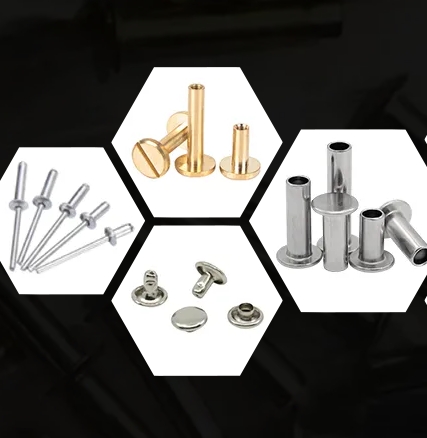
Table of Contents
- What are the Fundamental Principles of Rivet Fastening?
- What are the Main Types of Rivets and Their Characteristics?
- What are the Key Advantages of Using Rivets?
- Where are Rivets Most Commonly Applied Across Industries?
- How Do You Select the Right Rivet for Your Application?
1. What are the Fundamental Principles of Rivet Fastening?
Before diving into specific types, it’s essential to grasp the core mechanics that make rivets such effective fasteners.
The fundamental principles of rivet fastening involve creating a permanent mechanical interlock by deforming a rivet’s tail after it passes through aligned holes in the materials being joined. This deformation, or “upsetting,” forms a second head, securely clamping the materials together and filling the hole to create a robust, often vibration-resistant, and tamper-proof joint. The strength of this connection relies on the rivet material’s shear and tensile properties, as well as the integrity of the formed heads.
1.1 The Mechanics of a Permanent Joint
Simple concept, powerful results.
- Pre-drilled Holes: Riveting begins with creating aligned holes in the materials to be joined. The rivet’s shank diameter is typically slightly smaller than the hole to allow insertion.
- Insertion: The rivet, with its pre-formed head, is inserted through these holes.
- Deformation (Upsetting): The magic happens here. The tail end of the rivet is then deformed, or “upset,” using specialized tools. This deformation creates a second head (the “bucked” head) on the opposite side of the materials.
- Clamping Force: As the tail is upset, the rivet expands to fill the hole, creating a tight, interference fit. The two heads then clamp the materials together, forming a strong, permanent joint.
- Example 1: Aircraft Fuselage Assembly. When assembling an aircraft fuselage, solid rivets are inserted through pre-drilled holes in aluminum skin panels and internal frames. A rivet gun on one side and a bucking bar on the other deform the rivet’s tail, creating a permanent, high-strength joint capable of withstanding extreme aerodynamic forces and vibrations.
- Example 2: Heavy-Duty Truck Chassis. For a truck chassis, large solid rivets are used to join thick steel frame members. The upsetting process ensures a robust, vibration-resistant connection that can endure constant heavy loads and road stresses for decades.
- Analysis: The theoretical basis is the creation of a mechanical interlock and an interference fit, maximizing both shear and tensile strength. Design trade-offs involve balancing material ductility (for upsetting) with ultimate strength. The practical impact is a highly reliable, tamper-resistant joint that excels in high-vibration or critical structural applications.
This table illustrates the fundamental principles of rivet fastening.
| Principle | Description | Impact on Joint Performance |
| Hole Preparation | Pre-drilled holes in materials | Ensures proper fit, alignment, and strength |
| Rivet Insertion | Rivet placed through aligned holes | Positions rivet for deformation |
| Tail Deformation | Upsetting the rivet’s tail to form a second head | Creates permanent mechanical interlock |
| Hole Filling | Rivet expands to fill the hole | Enhances shear strength, prevents loosening |
| Clamping Force | Heads clamp materials together | Provides tensile strength, prevents separation |
| Permanent Joint | Non-removable without destruction | High reliability, tamper resistance |
1.2 Material Considerations for Rivets
The right material for the job.
- Ductility: Rivet materials must be sufficiently ductile to allow for the deformation of the tail without cracking or fracturing.
- Strength: Once installed, the rivet must provide adequate shear and tensile strength to withstand the loads of the application.
- Compatibility: The rivet material should be compatible with the materials being joined to prevent galvanic corrosion, especially in dissimilar metal assemblies.
- Common Materials:
- Aluminum: Lightweight, good corrosion resistance, common in aerospace.
- Steel (Carbon & Alloy): High strength, widely used in construction, automotive. Can be plated for corrosion resistance.
- Stainless Steel: Excellent corrosion resistance, good strength, used in marine, food processing, medical.
- Copper/Brass: Good electrical conductivity, aesthetic appeal, softer.
- Example: For joining aluminum aircraft skins, aluminum rivets (like 2117-T4 or 2017-T4) are chosen not only for their lightweight properties but also to prevent galvanic corrosion that would occur if steel rivets were used.
- Analysis: The practical impact is that careful material selection is crucial for ensuring both the successful installation and the long-term performance and integrity of the riveted joint, especially in challenging environments.
2. What are the Main Types of Rivets and Their Characteristics?
The world of rivets is incredibly diverse, with each type designed for specific applications and performance requirements.
The main types of rivets include solid rivets (maximum strength, permanent), semi-tubular rivets (moderate strength, easier installation), blind rivets (one-sided installation, versatile), and drive rivets (quick, hammer-driven). Each type is characterized by its unique design, installation method, and strength profile, making them suitable for distinct applications ranging from critical structural assemblies to decorative finishes, offering solutions for various material thicknesses and accessibility challenges.
2.1 Solid Rivets: The Unyielding Standard
The original and strongest.
- Design: A single piece of solid metal with a pre-formed head.
- Installation: Requires access to both sides. The tail is deformed (bucked) using a rivet gun and a bucking bar.
- Strength: Highest shear and tensile strength. Fills the hole completely, creating a very strong, fatigue-resistant joint.
- Applications: Primary structural components in aerospace, heavy-duty automotive chassis, bridges, and other critical load-bearing structures.
- Example 1: Jiliang’s Custom Solid Rivets for Bridge Construction. We’ve manufactured large solid rivets from high-strength steel for bridge construction projects. These rivets are hot-driven, meaning they are heated before installation, which allows for easier deformation and creates an even tighter, more robust joint as they cool and contract.
- Example 2: Vintage Aircraft Restoration. Restoring classic aircraft often involves replacing original solid rivets. The process is labor-intensive but ensures the aircraft’s structural integrity matches its original design specifications.
- Analysis: The theoretical basis is maximum material cross-section and complete hole filling for optimal stress distribution. The practical impact is unparalleled reliability in safety-critical applications, justifying the higher installation effort.
This table provides an overview of main rivet types.
| Rivet Type | Design Characteristic | Installation Method | Key Strength/Benefit |
| Solid Rivets | Single piece of solid metal | Two-sided access, bucking with rivet gun/bar | Highest strength, fatigue resistance |
| Semi-Tubular Rivets | Shallow hole at tail end | Often one-sided access (with anvil), flaring/crimping | Moderate strength, easier/faster installation |
| Blind Rivets | Mandrel pulls through hollow body | One-sided access, special rivet tool | Versatile, good for limited access |
| Drive Rivets | Pin driven into hollow body | Hammer-driven, quick installation | Fast, good for blind holes, non-critical |
| Split/Bifurcated Rivets | Forked tail, often pointed | Hammer-driven, spreads to clinch | Joins soft materials, decorative |
| Self-Piercing Rivets | Sharp point, forms own hole | Automated press, no pre-drilling | Fast, joins dissimilar materials, no pre-drilling |
2.2 Semi-Tubular Rivets: The Efficient Compromise
Strength with easier installation.
- Design: Similar to solid rivets but with a shallow hole (or cavity) at the tail end.
- Installation: Requires less force than solid rivets. The tubular end is flared or crimped, often with one-sided access (using a backing anvil).
- Strength: Good shear and tensile strength, though generally less than solid rivets.
- Applications: Automotive components, electronics, appliances, luggage, and other applications where moderate strength and efficient assembly are key.
- Example: In high-volume automotive production, semi-tubular rivets are used to attach interior trim panels. Their faster installation speed and lower force requirements make them ideal for automated assembly lines.
- Analysis: The practical impact is a balance between strength and manufacturing efficiency, making them a cost-effective solution for many industrial applications.
2.3 Blind Rivets: The One-Sided Solution
When access is limited.
- Design: Consists of a rivet body (hollow) and a central mandrel.
- Installation: Installed from one side using a special rivet tool (riveter). The tool pulls the mandrel, which expands the rivet body on the blind side, forming a head, then the mandrel snaps off.
- Strength: Varies by type (standard, structural, multi-grip), but generally lower than solid rivets.
- Applications: Construction (HVAC ducts, roofing), automotive repair, electronics, boats, and any application where access to the back side of the joint is impossible or difficult.
- Example: Attaching a license plate bracket to a car bumper where you can’t reach behind the bumper. A blind rivet provides a quick and secure fastening solution.
- Analysis: The practical impact is solving critical assembly challenges in confined spaces, enabling robust fastening where other methods are impractical.
2.4 Drive Rivets: The Hammer-Driven Fastener
Quick and simple.
- Design: A hollow body with a pre-formed head and a pin inserted into the body.
- Installation: Installed by simply hammering the pin flush with the rivet head. The pin expands the rivet body, creating a secure, permanent joint.
- Strength: Moderate, suitable for non-critical applications.
- Applications: Attaching nameplates, signs, light panels, and other applications where quick, blind fastening is needed.
- Example: Securing a metal nameplate to a piece of machinery. A few taps with a hammer, and the drive rivet is installed.
- Analysis: The practical impact is extremely fast and simple installation, making them ideal for high-volume, non-structural applications where speed is prioritized.
2.5 Specialty Rivets: Beyond the Basics
Tailored solutions for unique needs.
- Split/Bifurcated Rivets: Have a forked tail that spreads apart during installation. Ideal for joining soft materials like leather, fabric, or plastic, and often used decoratively.
- Self-Piercing Rivets (SPR): These rivets have a sharp point and pierce their own hole through the materials, eliminating the need for pre-drilling. Used extensively in automotive for joining dissimilar materials (e.g., aluminum to steel).
- Shoulder Rivets: As discussed previously, these have a distinct shoulder for precise spacing or pivot points.
- Example 1: Jiliang’s Custom Self-Piercing Rivets for EV Battery Trays. We’ve developed custom self-piercing rivets for electric vehicle battery trays, joining multiple layers of aluminum and steel without pre-drilling, which significantly speeds up production and reduces costs while maintaining structural integrity.
- Example 2: Leather Goods with Split Rivets. A custom leather wallet might use small split rivets to secure internal pockets, providing a durable and aesthetically pleasing finish.
- Analysis: The practical impact is that these specialty rivets address highly specific design and manufacturing challenges, offering innovative solutions that optimize performance, efficiency, and material compatibility.
3. What are the Key Advantages of Using Rivets?
Rivets offer a compelling set of benefits that ensure their continued relevance in modern manufacturing.
The key advantages of using rivets include creating highly robust and permanent joints with excellent vibration resistance, making them ideal for dynamic or high-stress environments. They are also cost-effective for high-volume production, provide visual inspection for quality assurance, and can join a wide range of materials, including dissimilar ones, without heat distortion. These benefits contribute to superior structural integrity, long-term reliability, and efficient assembly processes across diverse industries.
3.1 Robustness and Vibration Resistance
Built to last, built to endure.
- Permanent Joint: Once installed, a riveted joint is permanent and cannot be easily disassembled without destroying the rivet. This makes them ideal for applications where tampering is undesirable or where long-term structural integrity is paramount.
- High Shear and Tensile Strength: Especially solid rivets, provide exceptional resistance to forces acting parallel (shear) or perpendicular (tensile) to the joint.
- Vibration Resistance: Because the rivet expands to fill the hole and creates an interference fit, riveted joints are highly resistant to loosening under vibration, unlike threaded fasteners which can back out.
- Example 1: Aircraft Engines. Components within aircraft engines, subjected to extreme vibrations and thermal cycles, often rely on rivets for critical connections due to their superior vibration resistance.
- Example 2: Railway Rolling Stock. The constant vibrations and stresses experienced by train cars make rivets an ideal choice for joining structural elements, ensuring long-term safety and reliability.
- Analysis: The theoretical basis is the mechanical interlock and interference fit, which resist relative motion between joined parts. The practical impact is enhanced safety, reduced maintenance, and extended product lifespan in dynamic and high-stress environments.
This table highlights the key advantages of using rivets.
| Advantage | Description | Impact on Manufacturing/Product Performance |
| Robust & Permanent Joint | Non-removable without destruction | High structural integrity, tamper resistance |
| Excellent Vibration Resistance | Interference fit prevents loosening | Ideal for dynamic, high-stress environments |
| Cost-Effective | Low unit cost, efficient for high-volume | Reduces manufacturing costs, increases throughput |
| Visual Inspectability | Easy to verify proper installation | Simplifies quality control, enhances reliability |
| Joins Dissimilar Materials | No heat distortion, prevents galvanic corrosion | Versatile for multi-material assemblies |
| Wide Material Range | Can join metals, plastics, composites | Adaptable to diverse design needs |
3.2 Cost-Effectiveness and Inspectability
Smart choices for production and quality.
- Cost-Effective: Rivets themselves are generally inexpensive to manufacture. While installation can sometimes be labor-intensive (for solid rivets), automated riveting systems make them very cost-effective for high-volume production.
- Visual Inspectability: Unlike welds or hidden fasteners, a properly installed rivet provides a clear visual indication of its integrity (e.g., a well-formed bucked head). This simplifies quality control and inspection processes.
- Example: On an assembly line for washing machines, semi-tubular rivets are rapidly installed by automated machines, keeping unit costs low. Quality inspectors can quickly visually check each rivet for proper formation.
- Analysis: The practical impact is that rivets offer a balance of performance and economic viability, making them a preferred choice for manufacturers seeking both reliability and efficient production.
4. Where are Rivets Most Commonly Applied Across Industries?
The widespread adoption of rivets across diverse sectors underscores their versatility and reliability.
Rivets are most commonly applied across industries requiring robust, permanent fastening, including aerospace (fuselage, wing structures), automotive (chassis, body panels, interior), construction (structural steel, roofing), and electronics (enclosures, circuit board mounting). They are also prevalent in appliances, marine vessels, and general machinery, valued for their ability to join various materials, withstand vibration, and provide long-term structural integrity in demanding operational environments.
4.1 Aerospace and Automotive
The backbone of transport.
- Aerospace:
- Fuselage and Wing Structures: Solid rivets are fundamental for joining aluminum and composite panels, ensuring the structural integrity of aircraft under extreme stress and fatigue.
- Interior Components: Semi-tubular and blind rivets are used for attaching interior panels, seating, and galley equipment.
- Example 1: Jiliang’s Precision Rivets for Aircraft Interiors. We supply custom semi-tubular rivets to aerospace clients for attaching interior cabin components, balancing strength with weight reduction and efficient assembly.
- Automotive:
- Chassis and Body Panels: Solid rivets for heavy-duty chassis, self-piercing rivets for joining multi-material body panels (e.g., aluminum to steel in modern vehicles).
- Interior and Trim: Semi-tubular and blind rivets for dashboards, door panels, and trim.
- Example 2: EV Battery Pack Assembly. In electric vehicle battery packs, self-piercing rivets are crucial for joining multiple layers of aluminum and steel, creating robust, sealed enclosures without introducing heat distortion.
- Analysis: The practical impact is that rivets provide the necessary strength, fatigue resistance, and material compatibility for the demanding structural and safety requirements of these high-stakes industries.
This table details common rivet applications across industries.
| Industry/Application | Common Rivet Types Used | Specific Use Cases |
| Aerospace | Solid, Semi-Tubular, Blind | Fuselage, wings, interior panels, control surfaces |
| Automotive | Solid, Semi-Tubular, Blind, Self-Piercing | Chassis, body panels, interior trim, battery packs |
| Construction | Solid, Blind, Drive | Structural steel, roofing, HVAC ducts, cladding |
| Electronics | Semi-Tubular, Blind, Shoulder | Enclosures, circuit board mounting, heat sinks |
| Appliances | Semi-Tubular, Blind | Washing machines, refrigerators, ovens, small appliances |
| Marine | Solid (stainless), Blind (sealed) | Boat hulls, deck fittings, interior panels |
| General Machinery | Solid, Semi-Tubular, Shoulder | Gearboxes, linkages, frames, conveyor systems |
| Consumer Goods | Split, Semi-Tubular, Drive | Luggage, toys, furniture, sporting goods |
4.2 Construction and Electronics
From skyscrapers to circuit boards.
- Construction:
- Structural Steel: Historically, solid rivets were widely used in steel frame buildings and bridges. Today, high-strength bolts often replace them, but rivets are still found in older structures and some specialized applications.
- Roofing and HVAC: Blind rivets are excellent for attaching metal roofing panels, gutters, and ductwork due to one-sided access and weather resistance (when sealed).
- Electronics:
- Enclosures: Semi-tubular and blind rivets are used to assemble metal or plastic enclosures for electronic devices.
- Circuit Board Mounting: Small semi-tubular or shoulder rivets can act as standoffs for PCBs.
- Example: A large commercial building’s HVAC system uses hundreds of blind rivets to assemble duct sections, ensuring airtight and secure connections throughout the ventilation network.
- Analysis: The practical impact is that rivets provide reliable, long-lasting connections in environments ranging from harsh outdoor conditions to delicate internal electronic assemblies, demonstrating their broad adaptability.
5. How Do You Select the Right Rivet for Your Application?
Choosing the optimal rivet involves a systematic evaluation of several critical factors.
Selecting the right rivet requires careful consideration of the application’s load requirements (shear, tensile, fatigue), material compatibility (preventing galvanic corrosion), joint accessibility (one-sided vs. two-sided), and desired permanence. Additionally, factors like material thickness, environmental conditions (temperature, corrosion), and installation method (manual vs. automated) must be evaluated to ensure the chosen rivet type, material, and dimensions provide the necessary structural integrity, longevity, and manufacturing efficiency for the specific fastening challenge.
5.1 Load Requirements and Material Compatibility
Strength and synergy.
- Load Requirements:
- Shear Strength: How much force will act parallel to the joint? (e.g., for a bracket holding weight). Solid rivets excel here.
- Tensile Strength: How much force will try to pull the joint apart? (e.g., for a panel under pressure). Rivet head design and material are key.
- Fatigue Life: Will the joint experience repeated stress cycles? (e.g., in vibrating machinery). Solid rivets generally offer superior fatigue resistance.
- Material Compatibility:
- Dissimilar Metals: When joining different metals (e.g., aluminum to steel), galvanic corrosion can occur. Selecting a rivet material compatible with both, or using insulating washers, is crucial. Self-piercing rivets can be effective here.
- Material Thickness: The rivet’s grip range (the total thickness of the materials being joined) must be within the rivet’s specified range for proper installation and strength.
- Example 1: Jiliang’s Expertise in Material Matching. A client needed to join a stainless steel panel to an aluminum frame in a marine environment. We recommended a specific grade of stainless steel blind rivet with an aluminum body and a sealed head to prevent galvanic corrosion and ensure a watertight seal.
- Example 2: High-Stress Aircraft Joint. For a critical joint in an aircraft wing, engineers would calculate the maximum shear and tensile loads, then specify a solid rivet of a particular aluminum alloy and diameter to exceed those requirements with a significant safety margin.
- Analysis: The theoretical basis is material science, stress analysis, and corrosion engineering. The practical impact is ensuring the riveted joint is structurally sound, resistant to environmental degradation, and capable of performing reliably throughout its service life.
This table guides the selection of the right rivet.
| Selection Factor | Key Considerations | Impact on Rivet Choice |
| Load Requirements | Shear, tensile, fatigue, dynamic loads | Determines rivet type (solid for high), material, diameter |
| Material Compatibility | Dissimilar metals, galvanic corrosion risk | Rivet material (aluminum, stainless), coatings, SPRs |
| Joint Accessibility | One-sided vs. two-sided access | Blind rivets for one-sided, solid for two-sided |
| Desired Permanence | Permanent vs. semi-permanent | Solid, semi-tubular (permanent) vs. threaded (removable) |
| Material Thickness | Total grip range of materials | Determines rivet length and diameter |
| Environmental Conditions | Temperature, moisture, chemicals, vibration | Material (stainless, plated), sealed rivets |
| Installation Method | Manual vs. automated, tooling available | Influences rivet type (SPR for automation, solid for manual) |
| Cost & Efficiency | Unit cost, labor, production volume | Semi-tubular, blind, SPRs for high volume |
5.2 Joint Accessibility and Installation Method
Practicalities of assembly.
- Joint Accessibility:
- Two-Sided Access: If both sides of the joint are accessible, solid rivets offer the highest strength.
- One-Sided Access: If only one side is accessible, blind rivets or drive rivets are the only viable options.
- Installation Method:
- Manual vs. Automated: For low-volume or repair work, manual tools are fine. For high-volume production, automated riveting systems (often using semi-tubular or self-piercing rivets) are essential.
- Tooling Availability: Ensure you have the correct tools (rivet guns, riveters, presses) for the chosen rivet type.
- Example: A manufacturer of modular office furniture needs to assemble components where some joints are easily accessible, while others are hidden. They might use semi-tubular rivets for the accessible joints and blind rivets for the hidden ones, optimizing both strength and assembly efficiency.
- Analysis: The practical impact is that these factors directly influence the feasibility, speed, and cost of assembly, making them crucial considerations in the design and manufacturing process.
Conclusion
From the robust, time-tested strength of solid rivets to the versatile, one-sided convenience of blind rivets and the innovative efficiency of self-piercing rivets, the world of permanent fasteners is rich with solutions. Rivets remain an indispensable component in modern manufacturing, offering unparalleled reliability, vibration resistance, and structural integrity across an astonishing array of industries.
At Jiliang Fastener Manufacturing, we pride ourselves on our deep expertise in custom rivet production. Since 2008, we’ve partnered with global industries to develop and supply precision-engineered rivets tailored to the most demanding specifications. By understanding the unique characteristics and advantages of each rivet type, and carefully considering your application’s specific needs, you can confidently select the ideal fastening solution to ensure the longevity, safety, and performance of your products.