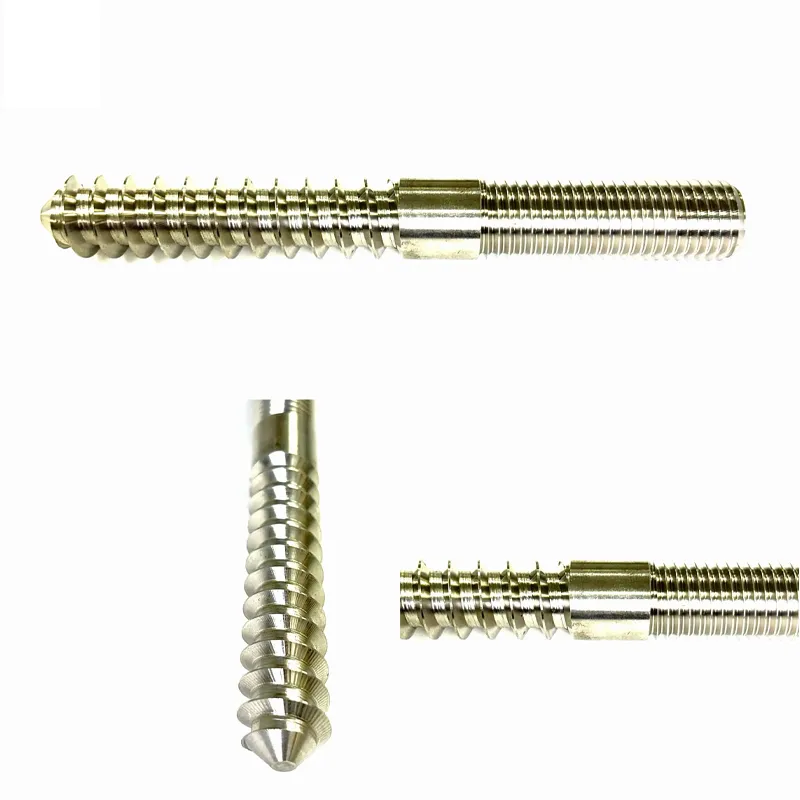
Ever wondered what holds your car together, especially in those high-stress, high-performance areas? It’s often not just a simple bolt! In the complex world of automotive manufacturing, specialized fasteners like rod studs play an unsung hero role. These aren’t your average screws; they’re engineered for precision, strength, and reliability, making them absolutely critical for everything from your engine’s power to your car’s safety.
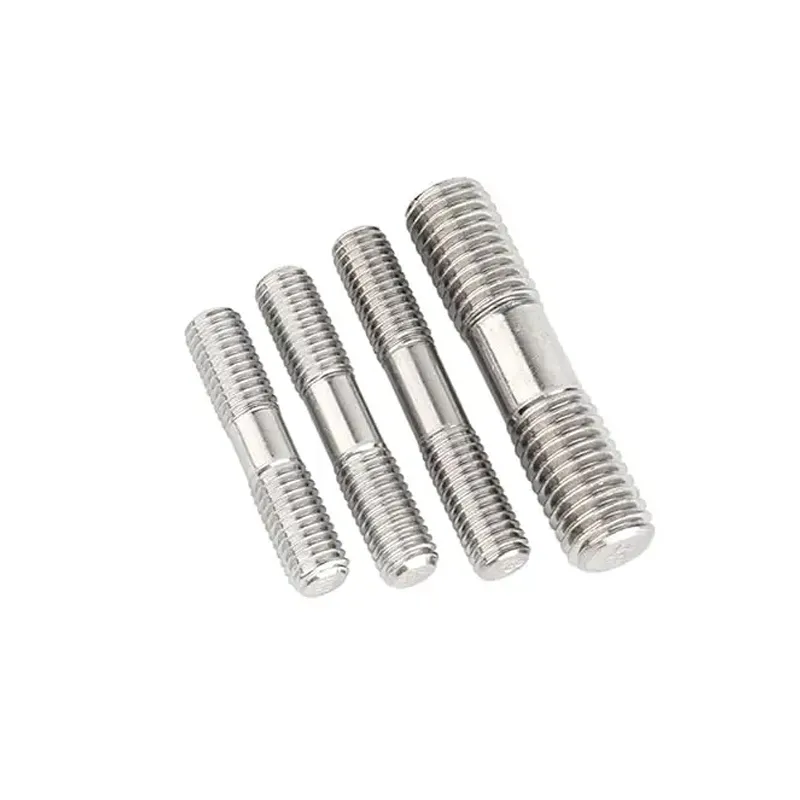
Rod studs are essential fasteners in automotive manufacturing, primarily used for critical connections requiring high clamping force, precise alignment, and resistance to vibration and thermal expansion. Their top applications include engine block assembly, cylinder head fastening, exhaust system mounting, suspension and chassis connections, and specialized interior/exterior component attachment, ensuring vehicle performance, safety, and durability.
Let’s take a deep dive into the top five ways these versatile threaded rods are used to build the cars we drive every day. We’ll look at real-world examples and understand why these specific automotive fasteners are chosen over other options, ensuring every vehicle meets the highest standards of performance and safety.
Table of Contents
- Engine Block and Crankcase Assembly
- Cylinder Head Fastening
- Exhaust System Mounting
- Suspension and Chassis Connections
- Specialized Interior and Exterior Component Attachment
1. Engine Block and Crankcase Assembly
When you think about the heart of a car, you think engine, right? And what holds that powerful heart together? Often, it’s a series of robust rod studs. The engine block and crankcase are subjected to immense forces, vibrations, and temperature changes, making the choice of fasteners incredibly critical.
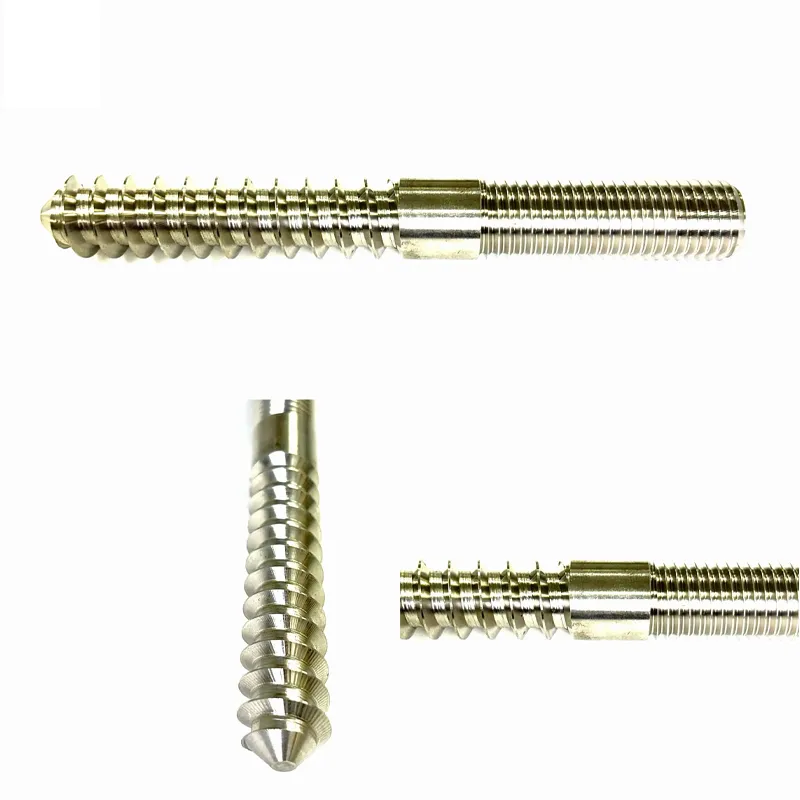
Rod studs are extensively used in engine block and crankcase assembly to secure critical components like main bearing caps and connecting rod caps. They provide superior clamping force and resistance to loosening under extreme vibration and thermal cycling, ensuring the precise alignment and structural integrity of the engine’s rotating parts for optimal performance and longevity.
1.1 Why Rod Studs are Preferred Here
It’s all about precision and strength in the engine.
- Case Study 1: Main Bearing Cap Fastening. In high-performance engines, rod studs are often used to secure the main bearing caps to the engine block. These caps hold the crankshaft in place, which is under constant rotational stress. Using engine studs here allows for more accurate torque application and less distortion of the block threads compared to bolts, leading to a more stable and durable crankshaft assembly.
- Case Study 2: Connecting Rod Cap Fastening. Similarly, rod studs (often called connecting rod bolts or studs) are vital for attaching the connecting rod caps. These fasteners experience incredible tensile and shear forces with every piston stroke. Their design ensures consistent clamping load, which is crucial for preventing bearing failure and maintaining engine efficiency.
- Analysis: The theoretical basis for using rod studs in these applications is their ability to provide a more consistent and higher preload. Unlike bolts, which are torqued into the block threads, studs are installed once and then nuts are torqued onto them. This reduces thread wear in the block and allows for more precise tensioning, which is critical for components under high dynamic loads. The design trade-off is slightly higher assembly time versus significantly improved reliability and reduced risk of engine failure.
This table highlights the benefits of rod studs in engine assembly.
| Application Area | Key Benefit of Rod Studs | Impact on Engine Performance |
| Main Bearing Caps | Consistent clamping force, reduced block thread wear | Ensures crankshaft stability, prevents bearing failure |
| Connecting Rod Caps | High tensile strength, resistance to fatigue | Maintains precise rod geometry, prevents catastrophic failure |
| Crankcase Assembly | Superior preload, better vibration resistance | Enhances overall engine durability and power delivery |
| Oil Pan Attachment | Even sealing pressure, prevents leaks | Maintains oil integrity, prevents engine damage |
1.2 Impact on Engine Performance and Durability
The right fasteners make a huge difference.
- Example 1: Preventing Engine Knock. By maintaining precise clearances and preventing component movement, rod studs contribute directly to the smooth operation of the engine. Loose or improperly torqued fasteners can lead to excessive play, causing engine knock or even catastrophic failure.
- Example 2: Extended Engine Life. The reduced stress on the engine block threads and the consistent clamping force provided by engine studs mean less wear and tear over time. This translates to a longer lifespan for the engine, reducing maintenance costs and improving vehicle reliability.
- Analysis: The practical impact is that high-quality automotive studs are an investment in the engine’s long-term health. They allow engineers to push the boundaries of engine design, achieving higher power outputs and better fuel efficiency, knowing that the critical connections will hold up.
2. Cylinder Head Fastening
The cylinder head is where the magic of combustion happens. It seals the combustion chamber, houses the valves, and connects to the intake and exhaust manifolds. The forces exerted during combustion are immense, trying to lift the cylinder head off the engine block. This is where cylinder head studs come into play, providing an unyielding grip.
Rod studs are critically used for fastening cylinder heads to the engine block, providing a superior and more consistent clamping force than traditional bolts. This ensures a perfect seal for the combustion chambers, prevents head gasket leaks, and maintains the structural integrity of the engine under extreme combustion pressures and thermal cycling, which is vital for engine performance and longevity.
2.1 Why Studs are Superior for Cylinder Heads
It’s all about maintaining that perfect seal.
- Case Study 1: High-Performance Engines. In turbocharged or supercharged engines, combustion pressures are significantly higher. High-strength cylinder head studs are essential here. They allow for higher torque values and more even clamping pressure across the head gasket, preventing “head lift” and ensuring a reliable seal, even under extreme boost.
- Case Study 2: Diesel Engines. Diesel engines operate at much higher compression ratios and combustion pressures than gasoline engines. Heavy-duty cylinder head studs are standard in diesel automotive manufacturing to withstand these forces, preventing gasket failure and ensuring the engine’s robust performance and durability over hundreds of thousands of miles.
- Analysis: The theoretical basis is that cylinder head studs minimize thread galling in the engine block (which is often aluminum), allowing for repeated assembly and disassembly without damaging the block. They also stretch more uniformly than bolts, providing a more consistent and resilient clamping force that can better accommodate thermal expansion and contraction cycles. The design trade-off is the slightly higher cost and complexity of using studs versus the significant performance and reliability gains, especially in demanding applications.
This table illustrates the advantages of cylinder head studs.
| Feature of Rod Studs | Benefit for Cylinder Head Fastening | Consequence of Using Bolts Instead (Potential Issues) |
| Reduced Block Thread Wear | Allows for multiple rebuilds without damage | Damaged block threads, costly repairs |
| Consistent Clamping Force | Even pressure on head gasket, better seal | Uneven pressure, head gasket leaks, engine overheating |
| Superior Strength | Withstands high combustion pressures and thermal cycles | Head lift, gasket failure, reduced engine power |
| Easier Alignment | Guides cylinder head onto block during assembly | Misalignment, potential gasket damage |
2.2 Preventing Head Gasket Failure
A good seal is everything for an engine.
- Example 1: Preventing Coolant Leaks. A properly secured cylinder head with robust studs ensures the head gasket maintains its seal, preventing coolant from mixing with oil or leaking externally. This is crucial for engine cooling and lubrication.
- Example 2: Maintaining Compression. The primary function of the cylinder head is to seal the combustion chamber. Cylinder head studs ensure this seal is maintained, preventing loss of compression, which would directly lead to reduced engine power and efficiency.
- Analysis: The practical impact is that cylinder head studs are a key component in preventing one of the most common and costly engine failures: a blown head gasket. Their use ensures the engine can operate at its designed performance levels for its entire lifespan, a critical factor in automotive manufacturing quality.
3. Exhaust System Mounting
Your car’s exhaust system is more than just a pipe; it’s a complex network that manages hot, corrosive gases and experiences significant vibration. Attaching the various components – manifolds, catalytic converters, mufflers – requires fasteners that can withstand extreme temperatures, thermal cycling, and constant movement. This is where specialized exhaust studs shine.
Rod studs are vital for mounting exhaust system components, particularly exhaust manifolds to the engine block, due to their ability to withstand extreme temperatures, significant thermal expansion and contraction, and constant vibration. They provide a robust, leak-proof connection that resists loosening and corrosion, ensuring efficient exhaust gas flow and preventing dangerous leaks.
3.1 The Heat and Vibration Challenge
Exhaust systems are a tough environment for any fastener.
- Case Study 1: Exhaust Manifold Attachment. The exhaust manifold is directly bolted to the engine, experiencing temperatures that can reach hundreds of degrees Celsius. Exhaust manifold studs are typically made from high-temperature resistant alloys (like specific stainless steels or even Inconel in some performance applications) to prevent them from stretching, seizing, or breaking due to heat and thermal shock.
- Case Study 2: Catalytic Converter and Muffler Connections. Further down the exhaust line, rod studs are used to connect sections of the exhaust system, often with gaskets. These connections must be flexible enough to absorb vibration but strong enough to prevent leaks. The studs ensure a consistent clamping force, even as the system heats up and cools down.
- Analysis: The theoretical basis is that exhaust studs are designed to handle differential thermal expansion between the cast iron/steel manifold and the aluminum/steel engine block. Their material properties (e.g., high creep resistance) prevent them from deforming permanently under sustained heat and load. The design trade-off is using specialized, often more expensive, materials for studs to ensure a long-lasting, leak-free exhaust system, which is crucial for emissions control and vehicle safety.
This table outlines the requirements for exhaust studs.
| Challenge for Exhaust Studs | Material/Design Solution (Rod Studs) | Benefit for Exhaust System Performance |
| High Temperatures | High-temperature stainless steel, Inconel alloys | Prevents stud stretching, seizing, or breaking |
| Thermal Cycling | Materials with good fatigue resistance | Maintains clamping force through heat/cool cycles |
| Vibration | High-strength, properly torqued studs | Prevents loosening, reduces noise and rattles |
| Corrosion | Stainless steel, specialized coatings | Resists rust from exhaust gases and road salt |
3.2 Ensuring Emissions Compliance and Safety
A leaky exhaust is bad news.
- Example 1: Preventing Exhaust Leaks. A secure exhaust system, thanks to reliable exhaust studs, prevents harmful exhaust gases (like carbon monoxide) from entering the passenger cabin. This is a critical safety feature in automotive manufacturing.
- Example 2: Maintaining Emissions Control. Leaks in the exhaust system, especially before the catalytic converter, can compromise the effectiveness of emissions control devices. Robust exhaust studs ensure a tight seal, allowing the catalytic converter to function optimally and meet environmental regulations.
- Analysis: The practical impact is that exhaust studs are not just about holding parts together; they are integral to vehicle safety and environmental compliance. Their careful selection and proper installation are non-negotiable in modern vehicle assembly.
4. Suspension and Chassis Connections
The chassis is the backbone of your car, and the suspension system is what connects it to the wheels, absorbing bumps and ensuring a smooth, controlled ride. These components are under constant stress from road impacts, cornering forces, and braking. Rod studs are often employed in these critical areas to provide robust, long-lasting connections that can withstand dynamic loads.
Rod studs are crucial in suspension and chassis connections within automotive manufacturing, used for securing components like control arms, shock absorbers, and subframes. They provide high-strength, fatigue-resistant joints that maintain precise alignment and withstand constant vibration, impact, and varying loads, ensuring vehicle stability, handling, and passenger safety.
4.1 High-Stress, High-Impact Applications
These parts take a beating, so their fasteners must too.
- Case Study 1: Control Arm Mounts. Control arms are fundamental to a vehicle’s suspension, connecting the wheel hub to the chassis. High-strength rod studs are often used to mount these arms, providing a secure, non-slip connection that can handle the constant up-and-down motion and lateral forces during cornering. This ensures precise wheel alignment and predictable handling.
- Case Study 2: Subframe Attachment. The subframe is a structural component that supports the engine, transmission, and suspension. It’s bolted to the main chassis using heavy-duty stud bolts. These fasteners must be incredibly strong and resistant to fatigue to maintain the structural integrity of the vehicle and absorb crash energy effectively.
- Analysis: The theoretical basis for using rod studs here is their superior fatigue resistance and ability to maintain preload under dynamic loads. Unlike bolts, which can experience bending stresses at the head-to-shank transition, studs distribute stress more evenly. The design trade-off is ensuring the material chosen for these chassis studs has both high tensile strength and good ductility to resist sudden impacts without brittle fracture.
This table summarizes the role of rod studs in chassis and suspension.
| Component Area | Key Role of Rod Studs | Impact on Vehicle Dynamics and Safety |
| Control Arm Mounts | Secure, non-slip connection, precise alignment | Ensures stable handling, prevents premature tire wear |
| Subframe Attachment | High-strength structural connection, crash energy absorption | Maintains vehicle integrity, enhances crash safety |
| Shock Absorber Mounts | Robust fastening, withstands repetitive impacts | Supports suspension function, improves ride comfort |
| Wheel Hub Assembly | Secures hub to steering knuckle (in some designs) | Critical for wheel retention and braking performance |
4.2 Ensuring Vehicle Stability and Safety
These connections are vital for how your car drives and protects you.
- Example 1: Maintaining Wheel Alignment. Properly secured suspension components, thanks to reliable studs, ensure that wheel alignment remains consistent. This is crucial for safe handling, even tire wear, and fuel efficiency.
- Example 2: Crashworthiness. In the event of a collision, the integrity of chassis and suspension connections is paramount. Robust stud bolts ensure that structural components remain attached, helping to absorb impact energy and protect occupants.
- Analysis: The practical impact is that suspension studs and chassis studs are fundamental to a vehicle’s dynamic performance and passive safety. Their design and material selection are subject to rigorous testing in automotive manufacturing to meet stringent safety standards.
5. Specialized Interior and Exterior Component Attachment
While engine and chassis applications are often the first things that come to mind, rod studs also play a crucial role in securing various specialized interior and exterior components in automotive manufacturing. These applications might not involve the same extreme forces, but they demand precision, aesthetics, and long-term reliability.
Rod studs are utilized in specialized interior and exterior automotive applications for securely attaching components like seat belt anchors, dashboard assemblies, and body panels. They provide strong, precise, and often tamper-resistant connections, ensuring safety, fit-and-finish, and durability for parts that might require specific alignment or resistance to vibration and environmental factors.
5.1 Precision and Security in Less Obvious Places
Not all rod studs are hidden deep within the engine.
- Case Study 1: Seat Belt Anchor Points. This is a critical safety application. High-strength rod studs are often welded or permanently affixed to the vehicle’s frame or chassis to serve as anchor points for seat belts. These safety studs must withstand immense forces during a collision, ensuring occupant restraint. Their design often prevents removal without specialized tools, enhancing safety.
- Case Study 2: Dashboard and Console Mounting. Modern dashboards are complex assemblies of electronics, airbags, and trim. Precision rod studs are used to mount the main dashboard structure to the vehicle’s body, ensuring proper alignment and preventing rattles or movement over time. This contributes to the vehicle’s perceived quality and safety.
- Analysis: The theoretical basis here is often a combination of high tensile strength for safety-critical items and precise dimensional control for aesthetic and functional components. The design trade-off involves balancing strength, ease of assembly, and sometimes tamper-resistance, especially for safety features.
This table shows diverse applications of rod studs in automotive components.
| Component Area | Key Role of Rod Studs | Benefit for Vehicle Quality and Safety |
| Seat Belt Anchors | High-strength, permanent attachment for safety | Ensures occupant restraint during collisions |
| Dashboard/Console Mounts | Precise alignment, vibration resistance | Prevents rattles, enhances interior fit-and-finish |
| Body Panel Attachment | Secure, often hidden fastening for exterior panels | Maintains aesthetic lines, reduces panel gaps |
| Battery Tray Securing | Robust hold for heavy battery, especially in EVs | Prevents battery movement, enhances electrical safety |
5.2 Contributing to Overall Vehicle Quality
Even small fasteners make a big difference in the user experience.
- Example 1: Eliminating Rattles. By providing a secure and precise connection, rod studs help eliminate unwanted noises and vibrations from interior components, contributing to a quieter and more premium driving experience.
- Example 2: Enhanced Safety Features. Beyond seat belts, specialized studs can be used to mount airbag modules or other safety sensors, ensuring they are correctly positioned and securely attached to function as intended during an emergency.
- Analysis: The practical impact is that even in less obvious applications, automotive rod studs are crucial for both the tangible (safety) and intangible (quality, comfort) aspects of a vehicle. Their careful selection and integration are a testament to the meticulous engineering involved in vehicle assembly.
Conclusion
From the roaring heart of the engine to the intricate details of the interior, rod studs are indispensable fasteners in automotive manufacturing. We’ve explored their critical roles in engine block assembly, cylinder head fastening, exhaust system mounting, suspension and chassis connections, and specialized interior/exterior component attachment. Each application highlights how these specialized threaded rods provide the strength, precision, and reliability necessary to withstand extreme conditions, ensure safety, and contribute to the overall performance and durability of modern vehicles.
The next time you’re in a car, remember the unsung heroes – the automotive studs – working tirelessly beneath the surface, holding everything together and making your ride safe, smooth, and powerful. Their meticulous design and application are a testament to the engineering excellence that drives the automotive industry forward.