Are you struggling with standard fasteners that compromise your product’s performance or slow down your assembly line? Many manufacturers face challenges such as insufficient joint strength, corrosion in harsh environments, or inefficiencies caused by ill-fitting components. Imagine every connection being perfectly secure, tailored for its specific application, and contributing to a smoother, more reliable manufacturing process.
Custom Solid Rivets provide engineered solutions to these complex fastening problems, offering superior strength, precision, and durability when off-the-shelf rivets fall short. By addressing specific material, dimensional, and environmental requirements, these high-performance fasteners enhance product reliability, streamline assembly processes, and reduce long-term costs for industries demanding consistent quality.
The limitations of generic rivets become evident when standard fasteners cannot endure extreme conditions, fit unique designs, or maintain the required longevity. Partnering with an experienced rivet manufacturer like Jiliang ensures access to custom solid rivets, bulk rivets, and high-strength, corrosion-resistant rivets tailored to your exact specifications. This article explores common fastener challenges and demonstrates how specialized riveting solutions provide precise, effective, and long-lasting results.
Table of Contents
- Are Your Fasteners Failing Under Stress?
- Is Corrosion Compromising Your Product’s Lifespan?
- Are Assembly Inefficiencies Slowing Your Production?
- Do You Need Fasteners for Unique or Complex Designs?
- How Can Jiliang Solve Your Fastener Challenges?
1. Are Your Fasteners Failing Under Stress?
Do your current fasteners struggle to maintain joint integrity under heavy loads, constant vibration, or extreme operational conditions? Fastener failure can lead to costly product recalls, safety hazards, and damage to your brand reputation.
Fasteners often fail under stress due to inadequate material strength, improper design for specific load demands, or insufficient resistance to fatigue and vibration. Custom solid rivets address these issues by allowing for precise material selection and design optimization, ensuring the fastener can withstand the exact mechanical stresses of its application, thereby enhancing reliability and safety.
The ability of a fastener to withstand the forces exerted upon it is paramount, especially in critical applications. Standard rivets, while robust for many uses, may not possess the specific tensile or shear strength required for environments where components are subjected to continuous dynamic loads or extreme static forces. This is where the engineering of custom solid rivets becomes essential, as their properties can be tailored to meet precise performance benchmarks.
1.1. Problem: Insufficient Joint Strength
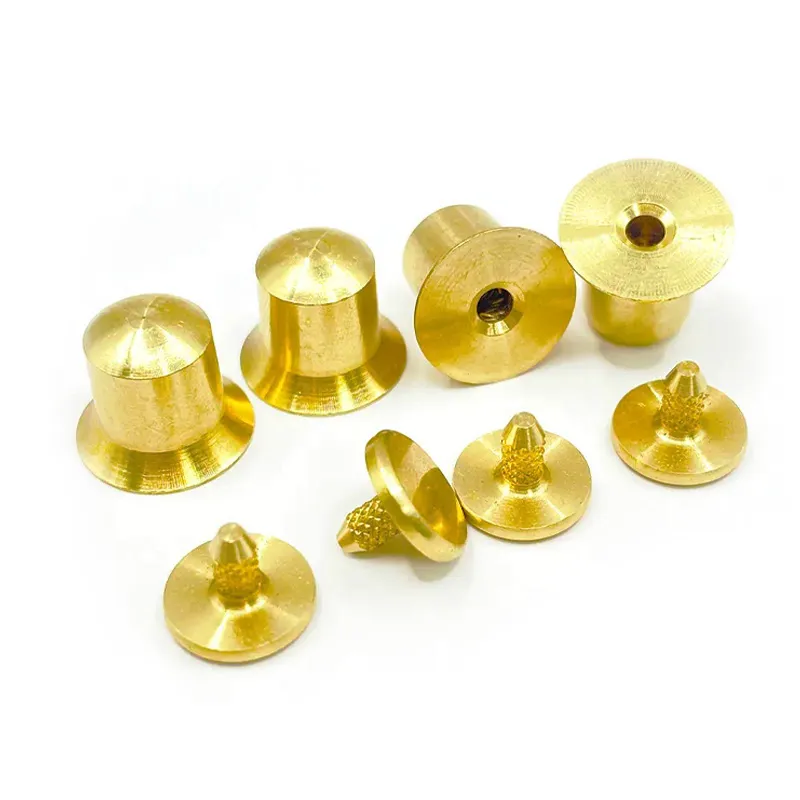
Standard rivets may not provide the necessary load-bearing capacity for heavy-duty applications, leading to premature failure.
- Impact: Weak joints can result in structural collapse, equipment malfunction, and significant safety risks, particularly in industries like construction or heavy machinery.
- Solution with Custom Rivets: Custom solid rivets can be manufactured from high-strength materials like specialized steel or titanium alloys, and their dimensions (diameter, length) can be precisely engineered to maximize shear and tensile strength for specific load demands. The cold-heading manufacturing process, which Jiliang utilizes, further enhances the material’s work hardening, increasing the rivet’s inherent strength and durability.
- Example: In bridge construction, where structures must withstand immense static and dynamic loads, custom high-strength stainless steel rivets are used to ensure long-term structural integrity and seismic resistance. Similarly, for heavy machinery assembly, Jiliang’s custom fasteners are designed to maintain firmness even under high-strength vibration, preventing loosening and ensuring reliability.
1.2. Problem: Poor Vibration and Fatigue Resistance
Components subjected to constant vibration or cyclical loading can cause standard fasteners to loosen or fail over time.
- Impact: This can lead to reduced product lifespan, increased maintenance costs, and potential operational failures, especially in transportation or industrial equipment.
- Solution with Custom Rivets: Custom solid rivets can be designed with specific head styles and shank features that improve their grip and resistance to vibrational loosening. The work-hardened nature of cold-headed rivets also provides superior fatigue resistance compared to other fastening methods.
- Example: In the automotive industry, particularly for new energy vehicles, custom rivets are engineered for battery pack enclosures and motor fixings to resist vibration and ensure long-term stability. For high-speed rail, specialized rivets with high fatigue strength are crucial for vehicle body assembly and bogie components, reducing maintenance frequency.
1.3. Problem: Inability to Withstand Extreme Temperatures
High or low temperatures can degrade fastener materials, leading to embrittlement, softening, or loss of clamping force.
- Impact: This can result in joint failure in environments like aerospace engines, industrial furnaces, or cryogenic systems.
- Solution with Custom Rivets: Custom rivets can be made from specialized alloys (e.g., nickel-based alloys like Monel, or specific stainless steels) that maintain their mechanical properties across a wide range of temperatures.
- Example: In aerospace applications, custom rivets made from titanium alloys or specialized stainless steel are required for aircraft fuselages and engine components due to their resistance to extreme temperatures. For petrochemical applications, custom rivets made from Hastelloy composite materials are used in chemical reaction tanks to maintain strength under high temperature and pressure.
To illustrate the diverse material capabilities for high-stress and high-temperature applications, consider the following:
Table 1: Material Selection for High-Stress & High-Temperature Custom Rivets
| Material Type | Key Properties | Typical Applications | Benefits for Custom Rivets |
| Stainless Steel | High strength, corrosion resistance, good ductility | Construction, automotive, general industrial | Versatile, cost-effective for many demanding environments. |
| Titanium Alloys | Excellent strength-to-weight ratio, high temp. resistance, corrosion resistance | Aerospace, medical implants, high-performance automotive | Ideal for lightweight, high-stress, and extreme temperature needs. |
| Nickel-Based Alloys (e.g., Monel, Hastelloy) | Exceptional corrosion resistance (acids, alkalis), high temp. strength | Chemical processing, oil & gas, marine, aerospace engines | Unmatched durability in highly corrosive and extreme thermal conditions. |
| High-Strength Steel Alloys | Superior tensile and shear strength, fatigue resistance | Heavy machinery, bridges, structural applications | Maximizes load-bearing capacity and fatigue life. |
2. Is Corrosion Compromising Your Product’s Lifespan?
Are your products failing prematurely due to rust, chemical degradation, or environmental exposure? Corrosion is a silent killer of fasteners, leading to structural weakening, unsightly damage, and costly replacements.
Corrosion compromises product lifespan when fasteners are exposed to moisture, chemicals, or harsh environments without adequate protection. Custom solid rivets solve this by allowing for the selection of highly corrosion-resistant materials and specialized surface treatments, ensuring the fastener maintains its integrity and performance even in aggressive conditions.
The environment in which a product operates dictates the necessary corrosion resistance of its components. Standard fasteners often come with general coatings that may not suffice for highly corrosive settings, such as marine, chemical processing, or outdoor applications. Custom solid rivets offer the flexibility to choose materials and finishes specifically designed to combat these challenges, ensuring longevity and reliability.
2.1. Problem: Rust and Oxidation in Humid or Outdoor Environments
Standard steel rivets can quickly rust when exposed to moisture, leading to joint weakening and aesthetic issues.
- Impact: This is particularly problematic for outdoor structures, marine vessels, and consumer goods exposed to the elements, leading to reduced lifespan and increased maintenance.
- Solution with Custom Rivets: Custom rivets can be manufactured from inherently corrosion-resistant materials like stainless steel (e.g., 304, 316L) or aluminum alloys. Additionally, specialized surface treatments such as zinc plating, nickel plating, or passivation can be applied to enhance resistance.
- Example: For marine and offshore engineering, Jiliang provides custom rivets made from 316L ultra-low carbon stainless steel, specifically chosen to resist salt spray corrosion and prevent rust-induced structural failure in ship hulls and offshore platforms. Aluminum rivets are also ideal for outdoor applications as they do not rust.
2.2. Problem: Chemical Degradation in Industrial Settings
Exposure to acids, alkalis, or other aggressive chemicals can rapidly degrade fastener materials not designed for such environments.
- Impact: This can cause catastrophic failures in chemical processing equipment, pipelines, and industrial machinery, posing significant safety and environmental risks.
- Solution with Custom Rivets: Custom rivets can be made from highly specialized alloys, such as Hastelloy or specific grades of stainless steel, known for their exceptional resistance to various chemical agents.
- Example: In the petrochemical industry, custom rivets are used for refinery pipeline flange connections and chemical reaction tanks, where they must resist corrosive elements like hydrogen sulfide and acidic media.
2.3. Problem: Galvanic Corrosion Between Dissimilar Metals
When two different metals are in contact in the presence of an electrolyte (like moisture), one can corrode preferentially.
- Impact: This can lead to unexpected and rapid degradation of one of the joined materials or the fastener itself, compromising the joint’s integrity.
- Solution with Custom Rivets: Custom rivets can be designed using materials that are galvanically compatible with the joined components, or with insulating coatings to prevent direct metal-to-metal contact.
- Example: While not explicitly detailed for galvanic corrosion, Jiliang’s ability to customize materials like stainless steel, copper, and aluminum allows for careful selection to minimize galvanic reactions when joining dissimilar metals. Expert guidance on optimal fastener choices considers environmental conditions and corrosion resistance.
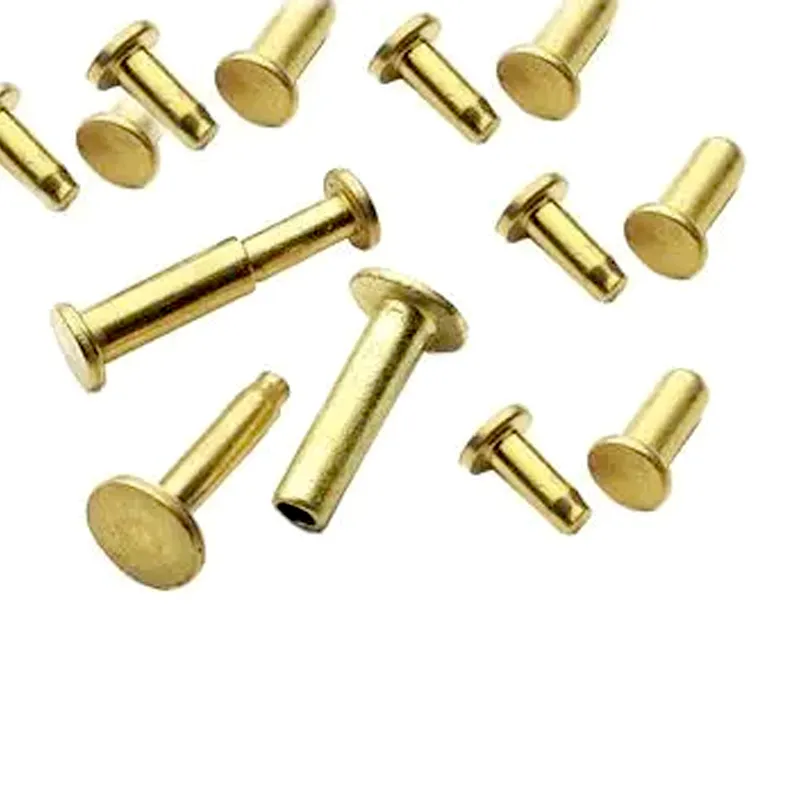
To better understand the corrosion resistance of various materials commonly used in custom rivets, refer to the table below:
Table 2: Corrosion Resistance of Common Rivet Materials
| Material Type | General Corrosion Resistance | Specific Environmental Resistance | Typical Applications (Corrosive) |
| Aluminum Alloys | Good (forms passive oxide layer) | Atmospheric, freshwater | Outdoor structures, automotive (non-marine) |
| Stainless Steel 304 | Very Good | Mild acids, alkalis, general outdoor | Food processing, architectural, general industrial |
| Stainless Steel 316L | Excellent | Saltwater, chlorides, stronger acids | Marine, chemical processing, medical |
| Copper Alloys | Good | Atmospheric, some mild chemicals | Electrical, plumbing, decorative |
| Nickel-Based Alloys | Outstanding | Highly aggressive acids, alkalis, high-temp. corrosive gases | Petrochemical, aerospace, extreme industrial |
3. Are Assembly Inefficiencies Slowing Your Production?
Is your manufacturing process hampered by fasteners that are difficult to install, require excessive labor, or lead to frequent rework? Inefficient assembly can inflate production costs and delay market entry.
Assembly inefficiencies often arise from fasteners that require complex installation tools, extensive labor, or are not optimized for automated processes. Custom solid rivets can significantly improve efficiency by being designed for specific installation methods, reducing the need for specialized skills, and minimizing material preparation, thereby streamlining production and lowering labor costs.
Optimizing the assembly line is crucial for maintaining competitive production costs and meeting tight deadlines. Standard fasteners, while widely available, may not integrate seamlessly into modern, high-speed manufacturing environments. Custom solid rivets, however, can be engineered to complement specific assembly techniques, from automated systems to simplified manual installations, directly addressing common bottlenecks.
3.1. Problem: High Labor Costs and Complex Installation
Many fasteners require skilled labor and specific tools, increasing installation time and overall costs.
- Impact: This can be a significant burden for high-volume production lines or projects with limited access to specialized workers.
- Solution with Custom Rivets: While solid rivets traditionally require access to both sides and specific tools like rivet guns or hammers, custom designs can be optimized for more efficient installation methods. For instance, the use of a rivet compression or crimping tool can simplify installation for rivets close to the edge of the material, often requiring only one person.
- Example: Jiliang’s expertise in fastener engineering includes optimizing manufacturability through print and DFM reviews, which proactively identify potential issues and minimize costly modifications during production. Their introduction of Taiwanese automated nailing machines also improves the nailing process, enhancing efficiency for various product specifications.
3.2. Problem: Material Damage During Installation
Improperly designed fasteners or installation methods can lead to material splitting, bulging, or surface imperfections.
- Impact: This results in wasted materials, rework, and compromised product aesthetics, particularly with sensitive or thin materials.
- Solution with Custom Rivets: Custom rivets can be designed with specific head and shank geometries, and their material properties can be tailored to prevent damage to the joined materials during the setting process. For example, certain head types like bugle heads or undercut heads are designed to sit flush or countersink easily without splitting the material.
- Example: Jiliang’s customers praise their custom rivets for “excellent riveting effect,” noting that the surface is flat and smooth, not affecting the product’s aesthetic appeal. This indicates a focus on designs that minimize material distortion.
3.3. Problem: Lack of Standardization and Part Consolidation
Using a wide variety of standard fasteners can complicate inventory management, procurement, and design processes.
- Impact: This leads to increased administrative overhead, higher inventory costs, and potential delays due to part unavailability.
- Solution with Custom Rivets: A custom fastener manufacturer can work with clients to standardize part designs and consolidate multiple functions into fewer, custom-designed components. This strategic approach simplifies product complexity and reduces variation.
- Example: Jiliang offers services like Bill of Materials (BOM) optimization, identifying opportunities for part standardization and consolidation to streamline processes and reduce costs. This unlocks significant value by simplifying design and reducing manufacturing complexity.
The table below highlights how custom solid rivets contribute to improved assembly efficiency compared to standard, off-the-shelf options:
Table 3: Custom vs. Standard Rivets for Assembly Efficiency
| Feature / Aspect | Standard Rivets | Custom Solid Rivets | Impact on Assembly Efficiency |
| Fit & Tolerance | Fixed sizes, often requiring shims or rework. | Precision-engineered for exact fit, minimal gaps. | Reduces rework, faster assembly, higher quality. |
| Installation Method | Limited to common tools, may not suit automation. | Designed for specific tools (e.g., automated feeders), optimized for process. | Enables automation, reduces manual labor, faster cycle times. |
| Material Compatibility | General purpose, potential for damage to soft materials. | Tailored material properties and head designs to prevent material damage. | Less material waste, improved product aesthetics. |
| Part Consolidation | Requires multiple fastener types for complex assemblies. | Can combine functions, reducing part count. | Simplifies BOM, reduces inventory, streamlines procurement. |
| Rework Rate | Higher due to fit issues or material stress. | Lower due to precise design and material matching. | Significant cost savings, improved throughput. |
4. Do You Need Fasteners for Unique or Complex Designs?
Are your innovative product designs constrained by the limitations of standard fasteners? When off-the-shelf options don’t fit, compromise performance, or hinder aesthetic goals, custom solutions become essential.
Fasteners for unique or complex designs are needed when standard dimensions, head styles, or material properties cannot accommodate the specific geometry, functional requirements, or aesthetic demands of a product. Custom solid rivets provide the flexibility to precisely match these unique specifications, ensuring optimal fit, performance, and visual integration.
Modern product development often pushes the boundaries of conventional design, requiring components that are equally innovative. Whether it’s a miniaturized electronic device, a streamlined aerospace component, or a decorative architectural element, the fastener must integrate seamlessly without compromising the overall design vision. Custom solid rivets offer the ultimate flexibility in this regard, allowing for tailored solutions that are impossible with mass-produced alternatives.
4.1. Problem: Non-Standard Dimensions or Shapes
Standard rivets come in predefined sizes and shapes, which may not fit unique component geometries or tight spaces.
- Impact: This can lead to design compromises, the need for costly modifications to existing parts, or inefficient use of space within an assembly.
- Solution with Custom Rivets: Custom solid rivets can be manufactured to precise, non-standard dimensions (e.g., specific diameters, lengths, or shank features) and unique head styles to perfectly integrate with complex designs. Jiliang offers 2D and 3D modeling services to create precise technical drawings and digital representations, facilitating accurate communication and design optimization.
- Example: For precision electronics, custom rivets with specific diameters and lengths are crucial for compact designs and electromagnetic shielding. In medical devices, rivets often require precise dimensions and smooth finishes for biological compatibility and ease of sterilization.
4.2. Problem: Specific Aesthetic Requirements
Some applications demand fasteners that are not only functional but also blend seamlessly with the product’s appearance or serve a decorative purpose.
- Impact: Standard rivets with protruding heads or visible finishes can detract from the product’s aesthetic appeal, especially in consumer goods or architectural applications.
- Solution with Custom Rivets: Custom rivets can be designed with flush heads (countersunk), specific finishes (e.g., polished, colored, or plated), or unique head shapes that complement the product’s design.
- Example: Flush rivets are widely used in the aerospace industry on external aircraft surfaces to reduce aerodynamic drag and ensure a smooth finish. Similarly, in architectural applications like glass curtain walls, custom rivets with specific head styles are chosen for both structural integrity and visual aesthetics. Jiliang offers various surface treatments for screws, including silver, gold, chromium, and nickel, which can also be applied to rivets for aesthetic purposes.
4.3. Problem: Integration with Advanced Manufacturing Processes
Modern manufacturing often involves automation and specialized assembly techniques that require fasteners designed for precise feeding and placement.
- Impact: Standard fasteners may not be compatible with automated systems, leading to manual intervention, slower production rates, or increased errors.
- Solution with Custom Rivets: Custom rivets can be engineered with features that optimize them for automated feeding systems, robotic assembly, or specific riveting machines. This includes precise tolerances and consistent quality.
- Example: Jiliang’s use of Taiwanese automated nailing machines improves the nailing process and allows for the production of various specifications with high precision, indicating their capability to support advanced manufacturing processes. Self-piercing rivets, which do not require pre-drilled holes, are also suitable for high-speed automated manufacturing processes in industries like automotive.
The flexibility of custom rivet design is a key advantage for unique applications. The following table outlines some common customization options:
Table 4: Customization Options for Solid Rivet Design
| Customization Aspect | Description | Benefits for Unique Designs |
| Material | Selection from a wide range (steel, aluminum, copper, titanium, nickel alloys). | Optimized for specific strength, weight, corrosion, or temperature needs. |
| Dimensions | Precise control over diameter, length, and shank features. | Perfect fit for non-standard holes, thin materials, or tight spaces. |
| Head Style | Flat, round, countersunk, universal, truss, or custom shapes. | Achieves desired aesthetic, flush finish, or specific load distribution. |
| Shank Features | Grooves, knurling, special points, or tapered sections. | Enhances grip, prevents rotation, facilitates installation, or improves material flow. |
| Surface Finish/Coating | Plating (zinc, nickel, chrome), passivation, anodizing, painting. | Improves corrosion resistance, alters appearance, provides electrical conductivity/insulation. |
| Tolerance | Tighter manufacturing tolerances than standard parts. | Ensures precise fit for critical assemblies and automated processes. |
5. How Can Jiliang Solve Your Fastener Challenges?
Are you looking for a reliable partner who can not only supply fasteners but also provide expert solutions to your most pressing engineering and production challenges? Choosing the right manufacturer is crucial for long-term success.
Jiliang Fastener Manufacturing, established in 2008, is a comprehensive and innovative enterprise specializing in the customization, development, design, production, and sales of high-quality industrial components. They solve customer problems through a client-centric approach that includes expert technical support, application problem-solving, custom fastener manufacturing, and a commitment to quality and efficiency.
Jiliang understands that a fastener is more than just a component; it’s a critical element that impacts product performance, manufacturing efficiency, and overall cost. Their expertise goes beyond simple production, offering a partnership that addresses the root causes of fastener-related issues and provides tailored solutions.
5.1. Expert Technical Support and Problem Solving
Jiliang’s engineering team provides comprehensive assistance to navigate complex fastener challenges.
- Service Offerings:
- Technical Inquiries & Troubleshooting: Skilled engineers and technical experts offer guidance for specific challenges regarding fasteners and their applications.
- Application Problem Solving: Systematic analysis of real-world challenges related to fasteners and bolt joints to identify effective, tailored solutions.
- Print & DFM Review: Proactively identifies potential issues in product designs to optimize manufacturability, minimizing production challenges and costly modifications.
- Assembly Line Walks & Teardowns: Hands-on examination of production processes to identify bottlenecks and inefficiencies, providing actionable insights for continuous improvement and deeper product understanding.
- Benefit to Customer: This proactive and analytical approach ensures that customers receive not just a product, but a solution that is thoroughly vetted and optimized for their specific operational environment, preventing costly errors and enhancing efficiency.
5.2. Custom Design and Manufacturing Capabilities
Jiliang excels in creating fasteners that precisely match unique requirements, going beyond standard offerings.
- Capabilities:
- 2D & 3D Modeling: Creation of precise technical drawings and digital representations for accurate communication and design optimization.
- Customization & Special Orders: Modification of existing fasteners or creation of entirely new custom designs to ensure optimal performance and functionality for specific applications.
- Wide Material Selection: Offers premium-grade stainless steel, copper, aluminum, iron, and titanium, ensuring durability, corrosion resistance, and versatility.
- Advanced Manufacturing: Utilizes Taiwanese automated nailing machines to produce various specifications with high precision.
- Benefit to Customer: This ensures that even the most complex or niche design requirements can be met, providing fasteners that perfectly integrate with the product, enhance performance, and maintain aesthetic integrity.
5.3. Product Optimization and Value Engineering
Jiliang helps customers maximize value and efficiency through strategic cost management and component optimization.
- Service Offerings:
- Optimal Fastener Choices: Expert guidance on selecting ideal fasteners based on load demands, environmental conditions, and corrosion resistance.
- VA/VE Services: Maximizing value by systematically identifying and eliminating unnecessary expenses while maintaining or boosting functionality and quality.
- Bill of Materials (BOM) Optimization: Identifying opportunities for part standardization, consolidation, and streamlining processes to reduce costs and unlock significant value.
- Benefit to Customer: This focus on value engineering translates into tangible cost savings, enhanced efficiency, and improved product quality, helping customers achieve a competitive edge in their markets.
5.4. Testing and Quality Assurance
Jiliang ensures the highest standards of quality and reliability for all its products.
- Processes: Comprehensive testing and quality assurance, including Production Part Approval Process (PPAP) and First Article Inspection (FAI).
- Customer Feedback: Customers consistently praise Jiliang’s products for “excellent riveting effect,” “outstanding rivet strength,” and “good rivet toughness,” highlighting surface quality, firmness under vibration, and durability.
- Benefit to Customer: This rigorous commitment to quality ensures that every fastener meets necessary specifications and regulations, providing peace of mind and contributing to the overall reliability and safety of the customer’s end product.
Conclusion
The challenges posed by inadequate fasteners can significantly impact product performance, manufacturing efficiency, and overall business success. From failing under stress and succumbing to corrosion to hindering assembly lines and limiting design innovation, standard fasteners often present more problems than solutions in demanding applications.
Custom solid rivets offer a powerful alternative, providing tailored solutions that address these specific pain points. By precisely matching material properties, dimensions, and design features to your unique requirements, these specialized fasteners ensure superior strength, enhanced durability, improved assembly efficiency, and seamless integration into complex designs.
Jiliang Fastener Manufacturing stands as a dedicated partner in overcoming these challenges. With over a decade of expertise in custom fastener development, design, production, and sales, Jiliang offers comprehensive solutions that extend beyond mere manufacturing. Their commitment to expert technical support, value engineering, and rigorous quality assurance ensures that your fastening needs are met with precision, reliability, and cost-effectiveness.
Don’t let fastener limitations hold back your innovation or compromise your product’s integrity. Partner with Jiliang to unlock the full potential of custom solid rivets for your most critical applications. Visit our website at https://rivetjl.com/solid-rivet/ or contact Jiliang Fastener Manufacturing today to discuss your specific requirements and discover how their tailored solutions can transform your product’s performance and streamline your production processes.