Solid rivets are a time-tested fastening solution renowned for their exceptional strength and reliability, especially in high-stress applications like bridges and heavy construction. Their unique installation process, which involves heating the rivet and forming a second head in place, creates a powerful clamping force and a completely filled hole, resulting in a joint with superior shear strength and unparalleled resistance to vibrational fatigue. This makes solid rivets the gold standard for ensuring long-term structural integrity in critical infrastructure projects.
Table of Contents
- What Exactly Are Solid Rivets and Why Are They a Gold Standard?
- The Hot Riveting Process: How is Unmatched Strength Forged?
- How Do Solid Rivets Compare to High-Strength Bolts?
- What are the Core Advantages of Solid Rivets in Structural Applications?
- Why Do Historic Structures Rely on Solid Rivets?
- Where Are Solid Rivets Used in Modern Heavy Construction?
- Why Partner with RivetJL for Your Structural Fastening Needs?
What Exactly Are Solid Rivets and Why Are They a Gold Standard?
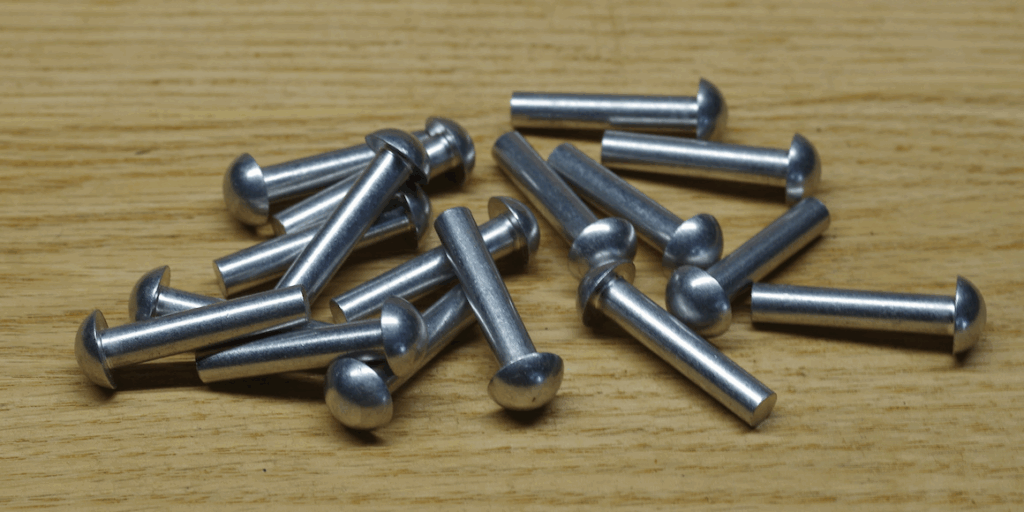
At its core, a solid rivet is a simple yet incredibly robust mechanical fastener consisting of a smooth, cylindrical shaft with a pre-formed head on one end. Unlike screws or bolts that rely on threads, a rivet secures components by being passed through aligned holes and having its tail (the end opposite the head) deformed, creating a second head known as the “shop head” or “buck-tail.” This process permanently clamps the structural members together. Their status as the “gold standard” isn’t just about tradition; it’s rooted in the fundamental physics of how they create a joint. The hot installation process ensures the rivet completely fills the hole, eliminating any play or slippage. As it cools, the rivet contracts, pulling the steel plates together with immense force. This combination of a fully filled hole and powerful clamping action is what gives riveted joints their legendary durability and strength.
The enduring legacy of solid rivets is visible in some of the world’s most iconic structures, from the Eiffel Tower to the Golden Gate Bridge. These monuments stand as testaments to the long-term reliability of riveted connections. The principle is simple: create a joint that behaves as a single, monolithic piece of material. When subjected to shear forces (forces that try to slide the plates past one another), the rivet bears the load across its entire cross-section. When subjected to tension and vibration, the incredible clamping force prevents movement, significantly reducing material fatigue over decades of service. This inherent integrity is why engineers continue to specify solid steel rivets for new construction and critical repair work on historic infrastructure, ensuring safety and longevity for generations.
The Hot Riveting Process: How is Unmatched Strength Forged?
The exceptional performance of a solid rivet is inextricably linked to its installation method, known as hot riveting. This is not merely a process of fastening; it’s a carefully orchestrated thermal and mechanical procedure that forges a joint of unparalleled strength. Understanding this process reveals why rivets outperform many modern alternatives in high-stress environments.
Heating the Rivet to Perfection
The process begins by heating the rivet in a specialized forge until it reaches a specific temperature, typically between 1000°C and 1100°C (1800°F to 2000°F). This state, known as a “light cherry red” to “yellow” heat, makes the steel malleable and easy to form. The temperature is critical; if it’s too cool, the rivet will be too difficult to drive and won’t properly form the shop head. If it’s too hot, the steel can be damaged or “burnt,” compromising its metallurgical structure and strength. A skilled riveting team knows how to manage the forge to ensure each rivet is at the optimal temperature for installation, guaranteeing its ductility for the forming process.
Insertion and Bucking: The Art of Forming the Joint
Once heated, the rivet is quickly passed to the riveting team and inserted into the pre-drilled and aligned holes of the structural steel plates. The “riveter” uses a pneumatic hammer or riveting gun to drive the rivet, while the “bucker” on the opposite side uses a heavy dolly or “bucking bar” to support the manufactured head. The pneumatic hammer’s repeated, powerful blows shape the malleable tail of the rivet into the shop head. This action, known as upsetting or bucking, is a craft that requires precision and coordination. The goal is to form a perfectly shaped shop head that is free of cracks and completely fills the countersunk hole, ensuring direct and uniform contact with the steel plate.
Cooling and Clamping: The Science Behind the Strength
This is where the true magic of hot riveting happens. After the shop head is formed, the rivet begins to cool. As it cools, it contracts along its length. Because the two heads are firmly locked against the outer surfaces of the steel plates, this contraction is constrained. The result is an enormous residual tensile force within the rivet, which in turn creates a powerful clamping force on the joint. This force can be as high as 70% of the rivet’s tensile strength, pressing the steel plates together so tightly that the friction between them becomes a primary mechanism for resisting shear loads. This pre-loaded condition is what gives a riveted joint its incredible stiffness and resistance to slipping, making it vastly superior in fatigue-prone applications.
How Do Solid Rivets Compare to High-Strength Bolts?
In modern construction, high-strength bolts are often seen as the main alternative to solid rivets. While bolts offer advantages in installation speed and do not require a heated forge, a side-by-side comparison reveals the unique structural benefits that keep rivets relevant, especially in specific applications. The primary difference lies in how the fastener fills the hole and applies its clamping force.
| Feature | Solid Rivets (Hot-Driven) | High-Strength Bolts (e.g., A325, A490) |
|---|---|---|
| Hole Filling | The rivet expands during driving to completely fill the hole. This prevents any initial slippage and provides a direct bearing surface. | Bolts have a clearance between the shank and the hole. The joint may slip until the bolt shank bears against the hole surface. |
| Clamping Force | Generated by the thermal contraction of the rivet as it cools. This force is immense, consistent, and permanent. | Generated by torquing the nut to a specified tension. Relies on proper calibration of torque wrenches and lubrication. |
| Fatigue Resistance | Extremely high. The massive clamping force prevents micro-movements between plates, which is the primary cause of fatigue failure. | Good, but the potential for joint slip makes it more susceptible to fatigue under cyclical loading compared to a properly installed rivet. |
| Shear Strength | Excellent. The load is resisted by both the friction from the clamping force and the rivet itself in pure shear. | Excellent. In friction-type connections, load is resisted by friction. In bearing-type, it is resisted by the bolt shank in shear. |
| Inspection | Simple visual inspection. A properly formed head and a tight fit (verified with a tap test) confirm a good joint. | Requires calibrated torque wrenches, turn-of-nut methods, or direct tension indicators. More complex to verify proper installation. |
| Installation | Requires a skilled, multi-person crew, a forge, and pneumatic tools. Slower and more labor-intensive. | Faster installation with fewer crew members. Does not require heat or specialized forges. |
The takeaway is clear: while high-strength bolts are an efficient and reliable solution for many static structures, solid rivets offer superior performance in environments with dynamic, cyclical loads and high vibration. The complete hole-fill and thermal clamping force provide a level of structural damping and fatigue resistance that is difficult to replicate with a threaded fastener. This is why rivets remain the fastener of choice for bridge repair, railway infrastructure, and heavy-duty industrial machinery that experiences constant stress reversals.
What are the Core Advantages of Solid Rivets in Structural Applications?
The decision to use solid rivets in demanding construction projects is based on a clear set of engineering advantages that directly contribute to the safety, longevity, and integrity of a structure. These benefits are not theoretical; they have been proven over more than a century of real-world application.
Unmatched Shear Strength and Load Distribution
When a hot-driven rivet is installed, it swells to fill every irregularity of the hole. This creates a “body-bound” fit, meaning there is zero clearance. When a shear load is applied, the force is immediately transferred to the rivet’s full cross-section without any initial slippage. Furthermore, the immense clamping force creates significant friction between the joined plates. In many designs, this friction alone is sufficient to handle the service loads, with the rivet acting as a fail-safe. This dual mechanism—friction resistance and direct shear bearing—provides a level of redundancy and strength that is a hallmark of robust engineering.
Superior Fatigue and Vibration Resistance
Fatigue is the silent killer of structural components. It occurs when materials are subjected to repeated cycles of loading and unloading, such as a bridge experiencing daily traffic or a crane lifting and lowering loads. These cycles can cause microscopic cracks to form and propagate, eventually leading to failure. A hot-riveted joint is inherently resistant to fatigue. The powerful clamping force prevents the micro-movements between the joined plates that initiate fatigue cracking. The joint acts as a single, damped unit, effectively absorbing and dissipating vibrational energy rather than concentrating stress at the fastener.
A Permanent, Tamper-Proof Fastening Solution
Once a solid rivet is installed, it is permanent. It cannot be undone without physically drilling it out or cutting it off. This provides a significant security advantage, making riveted joints tamper-proof. There are no nuts that can loosen over time due to vibration, a common concern with bolted connections that often require periodic re-torquing or the use of locking mechanisms. The permanence of a rivet ensures that the joint’s integrity, as established on the day of installation, remains constant for the life of the structure without the need for ongoing maintenance of the fastener itself.
Reliability Through Simple Visual Inspection
One of the most underappreciated advantages of solid rivets is the simplicity of inspection. A properly installed rivet can be verified visually. Inspectors look for a well-formed shop head, ensuring it is concentric with the shank and fully seated against the plate. An audible “ring” when the rivet is tapped with a small hammer indicates that it is tight in the hole. Conversely, a dull thud can signal a loose rivet that needs replacement. This straightforward, reliable inspection method does not require complex equipment and can be performed quickly, making it easy to assess the health of an entire structure and ensure its continued safety.
Why Do Historic Structures Rely on Solid Rivets?
When we look at the great engineering marvels of the late 19th and early 20th centuries, a common thread binds them together: millions of solid steel rivets. Structures like the Sydney Harbour Bridge, the RMS Titanic, and countless railway trestles and industrial buildings were built using this technology. The reason is that during the dawn of the steel age, hot riveting was the most reliable and understood method for creating strong, permanent joints in large-scale steel construction. It was a technology that was proven, scalable, and could be implemented by skilled labor crews on-site.
These historic structures serve as living laboratories, demonstrating the incredible durability of riveted connections. Many of these bridges and buildings have withstood over a century of environmental exposure, increased load demands, and seismic events, far exceeding their original design lives. The preservation and repair of these structures often involve replacing old, corroded rivets with new ones, a process that honors the original design intent. By using the same hot-riveting techniques, engineers can ensure that repairs integrate seamlessly with the existing structure, maintaining its historical character and, more importantly, its proven structural behavior. The longevity of these icons is the ultimate testament to why structural integrity and solid rivets are synonymous.
Where Are Solid Rivets Used in Modern Heavy Construction?
While high-strength bolting has become more common, solid rivets continue to hold a critical place in modern heavy construction and industry. Their use is targeted toward applications where their unique properties of high fatigue resistance, permanent clamping, and complete hole-filling are not just advantageous, but essential for safety and long-term performance.
Bridge Construction and Repair
For the repair and rehabilitation of historic steel bridges, solid rivets are often the only acceptable fastener. Using rivets maintains the structure’s original design aesthetic and, more critically, its intended structural dynamics. Introducing bolts can alter how loads are transferred, potentially over-stressing other original components. Furthermore, in new bridge construction, particularly for elements subjected to extreme vibration and load reversals like railway bridges, engineers may still specify rivets for key connections to maximize fatigue life.
Heavy Machinery and Industrial Equipment
The frames of heavy-duty equipment such as mining trucks, industrial cranes, and rock crushers are subjected to immense and constant vibration and shock loads. In these applications, the risk of a bolted joint loosening over time is a significant safety and operational concern. Solid rivets provide a permanent, “fit-and-forget” solution. Their ability to create a rigid, unified joint ensures that the equipment’s frame maintains its structural integrity despite the brutal operating conditions, reducing maintenance downtime and increasing operational safety.
Railway and Aerospace Applications
The railway industry has long relied on rivets for everything from building railcars to assembling the steelwork for switches and crossings (frogs). The constant click-clack of a train over tracks generates high-frequency vibrations that can easily loosen threaded fasteners. Rivets provide the necessary permanence and vibration resistance. Similarly, while the aerospace industry often uses specialized “blind” rivets, solid rivets are still used in critical structural areas of airframes where two-sided access is possible, prized for their strength-to-weight ratio and reliability.
Why Partner with RivetJL for Your Structural Fastening Needs?
In a field where precision and reliability are non-negotiable, the quality of your fasteners is paramount. At RivetJL, we understand the critical role that solid rivets play in ensuring the structural integrity of your most important projects. Our commitment extends beyond simply manufacturing a product; we provide a foundation of trust built on decades of expertise, stringent quality control, and an unwavering dedication to engineering excellence.
When you choose RivetJL, you are partnering with a specialist. We manufacture solid rivets to the highest industry standards, including ASTM A502 for structural steel rivets, ensuring that every piece meets the precise material composition, dimensional tolerances, and mechanical properties required for critical applications. Our process is transparent, and our products are fully traceable, giving you the confidence that you are building with fasteners of proven quality. Whether your project involves the faithful restoration of a historic bridge or the construction of new, heavy-duty industrial equipment, our team is ready to provide the technical support and high-quality rivets you need to build with strength, safety, and permanence. Trust RivetJL to be the backbone of your next structure.