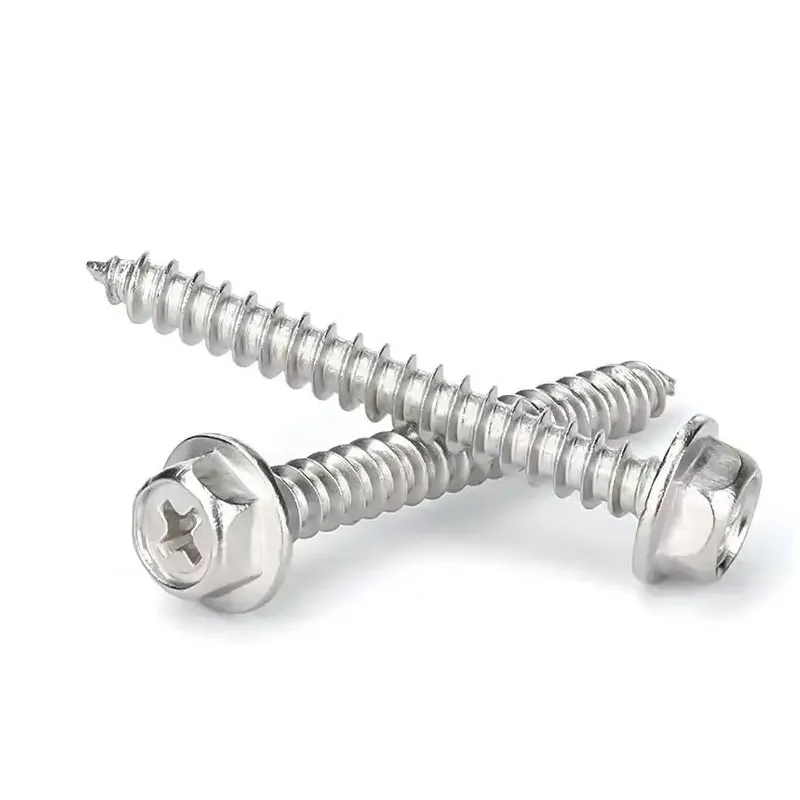
For rail-transportation applications, the choice between fasteners is not merely a matter of cost but of paramount safety and long-term operational reliability. High-strength screws are essential for the railway industry due to their superior tensile strength, enhanced fatigue resistance, and ability to maintain a high clamping force under constant vibration and extreme dynamic loads. In contrast, standard commercial screws, while suitable for static or low-stress applications, are fundamentally ill-equipped for the demanding railway environment and are prone to premature failure, which can lead to catastrophic consequences. Understanding this critical distinction is the first step in ensuring the integrity and safety of rail infrastructure and rolling stock.
Table of Contents
- What Fundamentally Separates Standard Screws from High-Strength Screws?
- Why Do Standard Commercial Screws Fall Short in the Railway Environment?
- High-Strength Screws: The Non-Negotiable Choice for Rail Safety and Reliability
- Key Applications of High-Strength Screws in Rail Transportation
- How to Select the Correct High-Strength Fastener for Your Rail Application
- Beyond the Screw: The Total Cost of Ownership in Railway Fastening
- Partnering with an Expert Manufacturer for Your Rail Fastening Needs
What Fundamentally Separates Standard Screws from High-Strength Screws?
At a glance, a standard screw and a high-strength screw may look identical, but their performance capabilities are worlds apart. This difference is not superficial; it is engineered into the very core of the fastener through carefully controlled material science and manufacturing processes. Understanding these foundational distinctions is key to appreciating why only high-strength variants are acceptable for safety-critical applications like rail transportation.
Material Composition and Grade: The Core of Strength
The journey to superior performance begins with the raw material. Standard commercial screws are typically manufactured from low-carbon steel, which is cost-effective and easy to form but offers limited strength. They often fall into lower property classes, such as ISO Class 4.6 or 5.8. In contrast, high-strength screws are forged from medium-carbon alloy steels, such as chromium, molybdenum, or nickel alloys. These alloying elements significantly enhance the material’s hardness, toughness, and resistance to environmental factors. This difference is codified in their grading, with high-strength screws designated as ISO Class 8.8, 10.9, or 12.9, or under ASTM standards like A325 and A490, each indicating a progressively higher level of tensile and yield strength.
The Role of Heat Treatment in Achieving Superior Mechanical Properties
The most significant differentiator between the two fastener types is the process of heat treatment. Standard screws typically undergo minimal to no heat treatment after forming. High-strength screws, however, are subjected to a precise “quenching and tempering” process. First, they are heated to a critical temperature to alter their crystalline structure (austenitizing), then rapidly cooled or “quenched” in oil or water to lock in a hard, brittle martensitic structure. This is followed by “tempering,” where the screw is reheated to a lower temperature to reduce brittleness and impart the desired balance of hardness, ductility, and toughness. This controlled thermal process is what transforms a standard piece of alloy steel into a component capable of withstanding immense forces.
Manufacturing Processes: From Standard Forming to Precision Engineering
While both types of screws may be cold-headed, the manufacturing controls for high-strength fasteners are far more stringent. A critical step for high-strength screws is thread rolling after heat treatment. Rolling the threads, rather than cutting them, induces compressive residual stresses at the thread root—the area most vulnerable to fatigue cracks. This process significantly improves fatigue life, a crucial attribute for components exposed to the cyclical loading found in rail applications. Furthermore, quality control for high-strength fasteners involves rigorous testing, including magnetic particle inspection for surface defects and tensile testing to verify mechanical properties, ensuring every screw meets its specified grade.
Why Do Standard Commercial Screws Fall Short in the Railway Environment?
The railway environment is one of the most mechanically hostile settings for any component. The combination of heavy loads, high speeds, and constant movement creates a symphony of forces that will quickly expose the weaknesses of an inadequate fastener. Using standard commercial screws in such an environment is not a cost-saving measure; it is an invitation for failure.
The Unrelenting Challenge of Vibration and Dynamic Loads
Every passing train subjects the track, bogies, and car bodies to intense, high-frequency vibrations and severe shock loads. This constant shaking causes micro-movements within a bolted joint. For a standard screw with lower tensile strength, it is impossible to achieve and maintain the high preload (clamping force) necessary to resist this movement. As the screw stretches and relaxes under these dynamic loads, the preload rapidly decays, leading to joint loosening. A loose joint is an ineffective joint, allowing components to shift, which accelerates wear and can ultimately lead to component separation.
Susceptibility to Fatigue Failure and Stress Corrosion Cracking
Fatigue is the primary failure mode for fasteners in dynamic applications. It occurs when a material breaks down after being subjected to repeated cycles of loading and unloading, even at stress levels well below its ultimate tensile strength. Standard screws, lacking the specialized material composition and thread-rolling processes of their high-strength counterparts, have a much lower fatigue life. They are highly susceptible to crack initiation at stress concentration points like thread roots. Furthermore, exposure to moisture and de-icing chemicals in the rail environment can lead to stress corrosion cracking (SCC), where the combination of tensile stress and a corrosive environment causes brittle failure in a standard, less-resilient material.
Inadequate Clamping Force and Joint Integrity
The primary function of a screw in a structural joint is to act as a powerful spring, clamping components together with a specific preload. This clamping force creates friction between the joint surfaces, which is what actually resists shear loads and prevents slipping. Standard screws cannot be tightened to the high torque values required to generate sufficient preload without yielding (permanently stretching) or fracturing. Their inability to provide and maintain a high clamping force means the joint relies on the screw’s much weaker shear strength, leading to premature failure and a complete loss of structural integrity.
High-Strength Screws: The Non-Negotiable Choice for Rail Safety and Reliability
Where standard screws fail, high-strength screws excel. They are not simply “stronger”; they are engineered with a specific suite of properties designed to counteract the exact failure modes prevalent in the rail industry. Their use is a fundamental requirement for building safe, durable, and reliable rail systems.
Superior Tensile and Yield Strength: Resisting Extreme Forces
The defining characteristic of a high-strength screw is its immense tensile and yield strength. Yield strength is the point at which the screw begins to deform permanently, while tensile strength is its ultimate breaking point. A high yield strength allows the screw to be tightened to a very high torque, generating a massive clamping force that locks the joint together. This high preload ensures the joint remains rigid and slip-resistant, even when subjected to the powerful braking, acceleration, and cornering forces experienced by rolling stock.
Enhanced Fatigue Resistance for Long-Term Performance
Engineered specifically for cyclical loading, high-strength screws boast a significantly longer fatigue life. The combination of superior alloy materials, precision heat treatment, and rolled threads creates a fastener that is highly resistant to crack initiation and propagation. This resilience ensures that the screws can endure millions of stress cycles over their service life without failing, providing predictable performance and reducing the need for frequent inspections and replacements. This long-term durability is essential for components that are difficult to access and critical for operational safety.
Ensuring High Preload and Secure Clamped Joints
The ability to achieve and maintain a high preload is arguably the most important function of a high-strength screw in a rail application. When a joint is correctly clamped with high-strength fasteners, the external dynamic loads are absorbed by a reduction in the compressive stress on the joint components, rather than being applied as additional tensile stress on the screw itself. This dramatically reduces the stress fluctuations experienced by the screw, which is the key to preventing fatigue failure and self-loosening. A properly preloaded joint is a stable, reliable, and vibration-proof connection.
table {
width: 100%;
border-collapse: collapse;
margin: 20px 0;
}
th, td {
border: 1px solid #dddddd;
text-align: left;
padding: 8px;
}
th {
background-color: #f2f2f2;
}
| Feature | Standard Commercial Screws (e.g., Class 4.6) | High-Strength Screws (e.g., Class 10.9) |
|---|---|---|
| Material | Low-carbon steel | Medium-carbon alloy steel (e.g., Cr-Mo) |
| Heat Treatment | None or minimal | Quenched and Tempered |
| Tensile Strength | Low (approx. 400 MPa) | Very High (approx. 1040 MPa) |
| Vibration Resistance | Poor; prone to loosening | Excellent; maintains high preload |
| Fatigue Life | Low; fails under cyclical loads | High; designed for dynamic environments |
| Typical Rail Application | Not recommended for structural or critical use. Maybe in non-load-bearing interior fittings. | Track joints, bogie frames, braking systems, couplers, engine mounts. |
Key Applications of High-Strength Screws in Rail Transportation
High-strength fasteners are ubiquitous in the rail industry, forming the invisible backbone of the entire system. Their application spans from the foundational track infrastructure to the most complex components of modern locomotives and passenger cars.
Track and Infrastructure: Securing the Foundation
The integrity of the railway track itself depends on high-strength fastening. This includes track bolts (fish bolts) used to join sections of rail at insulated joints, which must withstand immense thermal expansion/contraction forces and the constant pounding of train wheels. High-strength screw spikes and other fastening systems are used to secure rails to ties (sleepers), preventing gauge spreading and rail rollover. In switches and crossings (turnouts), a complex assembly of specialized high-strength bolts ensures precise and reliable operation.
Rolling Stock Assembly: From Bogies to Car Bodies
The bogie (or truck) of a rail car is a primary safety-critical assembly, and it is held together almost entirely by high-strength bolts. These fasteners secure the axle boxes, suspension components, brake calipers, and the frame itself. The connection between the car body and the bogie (the center pivot) also relies on high-strength fasteners to transmit all acceleration, braking, and cornering forces. Within the car body, structural frame elements and couplers are all assembled with high-strength screws to ensure the vehicle can withstand operational stresses and maintain its integrity in the event of a collision.
Critical Systems: Braking, Coupling, and Power Transmission
Beyond the main structure, high-strength screws are essential for attaching critical operating systems. In braking systems, they mount calipers and secure brake disc assemblies, where failure is not an option. In automatic coupling systems, they must withstand massive tensile and compressive shock loads during train marshalling. On locomotives, high-strength fasteners are used to mount the engine and transmission to the chassis, absorbing torque and vibration to ensure reliable power delivery.
How to Select the Correct High-Strength Fastener for Your Rail Application
Choosing the right high-strength screw is a complex engineering decision that goes beyond simply picking the highest grade. It requires a thorough analysis of the application, an understanding of relevant standards, and a commitment to proper installation procedures.
Understanding Load Requirements and Joint Design
The first step is a detailed analysis of the forces the joint will experience. Engineers must calculate the static and dynamic loads, including tension, shear, and any prying forces. The joint design itself is critical—factors like the number of bolts, their spacing, and the stiffness of the clamped materials all influence the selection. The goal is to choose a screw grade and diameter that can achieve a target preload sufficient to overcome all expected external loads without being stressed beyond its elastic limit.
Navigating Railway Standards and Certifications (AREMA, EN, UIC)
The rail industry is heavily regulated, and fasteners are no exception. Different regions and rail networks adhere to specific standards, such as those from the American Railway Engineering and Maintenance-of-Way Association (AREMA) in North America, European Norms (EN), or the International Union of Railways (UIC). These standards dictate the required mechanical properties, dimensions, coatings, and testing protocols for fasteners used in specific applications. Compliance is not optional; it is a requirement for ensuring interoperability, safety, and regulatory approval.
The Critical Importance of Proper Installation and Torque Control
A high-strength screw is only as effective as its installation. The relationship between applied torque and resulting preload is the key to a successful bolted joint. Using calibrated torque wrenches or more advanced methods like turn-of-nut or direct tension indicators is crucial. Under-tightening results in insufficient clamping force, leading to loosening and fatigue. Over-tightening can cause the screw to yield and fail during installation or in service. Proper training for installation personnel and adherence to specified tightening procedures are just as critical as selecting the correct fastener.
Beyond the Screw: The Total Cost of Ownership in Railway Fastening
While a standard commercial screw has a lower initial purchase price, this is a dangerously misleading metric in the context of rail applications. The true cost must be evaluated through the lens of Total Cost of Ownership (TCO). A high-strength screw, despite its higher upfront cost, provides a significantly lower TCO due to its reliability and longevity. The cost of a single fastener failure can include extensive downtime for repairs, collateral damage to expensive equipment, and, most critically, the immense potential cost associated with accidents and injuries. Investing in certified, high-quality, high-strength fasteners is an investment in risk mitigation, operational efficiency, and public safety.
Partnering with an Expert Manufacturer for Your Rail Fastening Needs
The performance of a critical high-strength screw is a direct result of the manufacturer’s expertise and quality control. For applications where there is no margin for error, it is essential to partner with a manufacturer who understands the unique demands of the rail industry. At rivetjl, we bring a legacy of precision engineering and manufacturing excellence to every component we produce. While our core is in mold making, our expertise in materials science, precision machining, and rigorous quality assurance extends to the creation of custom, high-integrity components for critical industries. We understand that safety and reliability are engineered, not accidental.
Whether you require custom-forged fastening solutions or other precision-engineered components for your rail transportation projects, our team has the technical knowledge and manufacturing capability to meet the most stringent standards. Contact us today to discuss how our commitment to quality can enhance the safety and performance of your application.