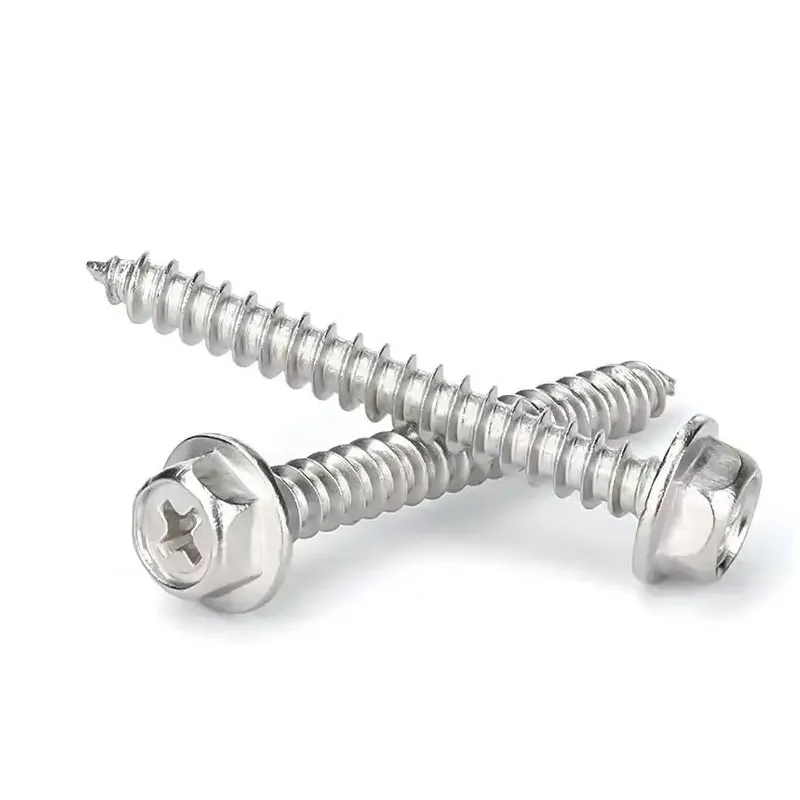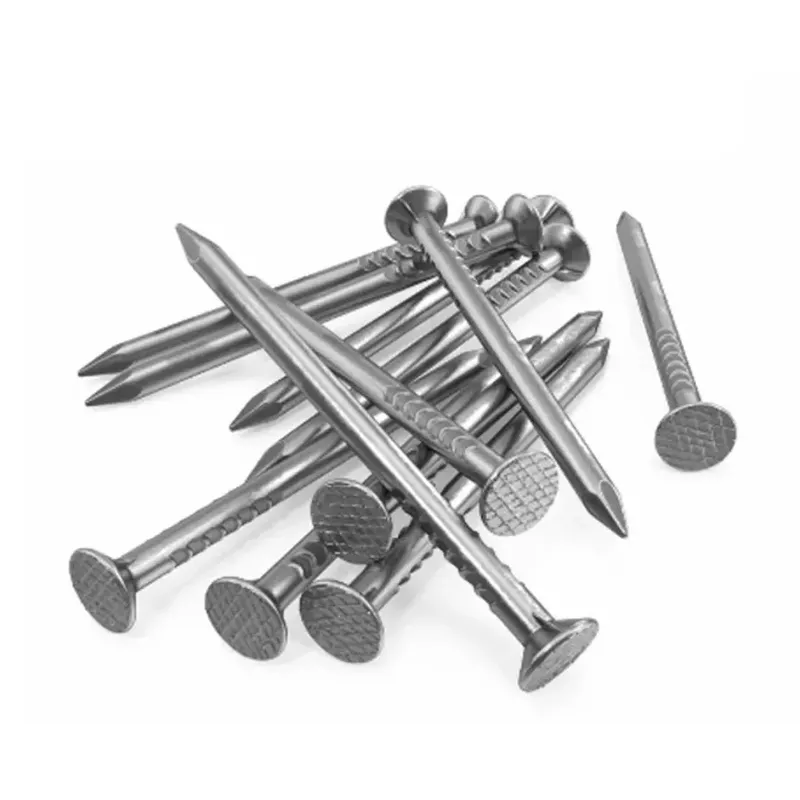
Ever wondered why some fastened joints hold strong for decades, while others fail prematurely? It often comes down to the unsung heroes of assembly: rivets. Specifically, for semi-tubular rivets, their performance isn’t just about being “a rivet.” It’s a precise science where two key factors—material selection and head style—play a monumental role. These choices dictate everything from how much stress a joint can handle to how long it will last in harsh environments, and even how it looks!
Material selection and head style critically impact semi-tubular rivet performance by determining the rivet’s ultimate tensile strength, shear resistance, corrosion durability, and aesthetic integration. The chosen material (e.g., steel, aluminum, brass) dictates the rivet’s mechanical properties and environmental resilience, while the head style (e.g., universal, flat, countersunk) influences load distribution, flushness, and the integrity of the clinched joint, collectively optimizing the fastener for specific application requirements.
This article will dive deep into how these two crucial design elements influence the strength, durability, and overall effectiveness of semi-tubular rivets, helping you make informed decisions for your next fastening challenge.
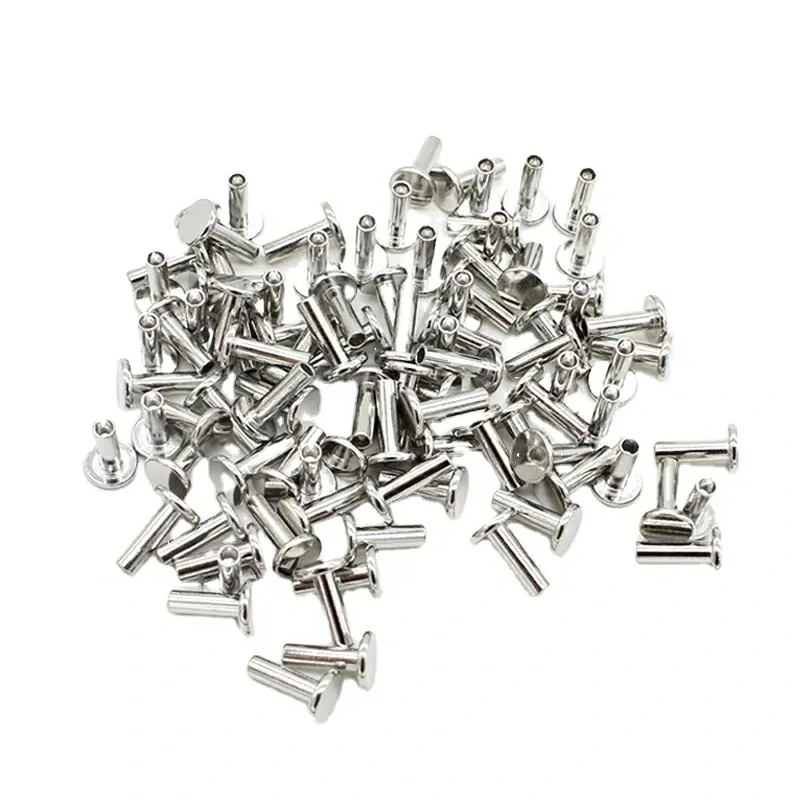
Table of Contents
- The Role of Material Selection in Rivet Performance
- Understanding Different Rivet Head Styles and Their Impact
- Optimizing Rivet Performance for Specific Applications
- Testing and Validation: Ensuring Rivet Reliability
- Common Pitfalls and Best Practices in Rivet Selection
1. The Role of Material Selection in Rivet Performance
The material from which a semi-tubular rivet is made is arguably the most critical factor determining its mechanical properties and suitability for a given application. It dictates strength, ductility, corrosion resistance, and even cost.
Material selection profoundly impacts semi-tubular rivet performance by defining its mechanical strength (tensile, shear), ductility (ability to form a strong clinch), and resistance to environmental factors like corrosion or temperature extremes. For instance, steel offers high strength, aluminum provides lightweight corrosion resistance, and brass delivers good electrical conductivity and aesthetic appeal, making the choice fundamental to the rivet’s functional integrity and longevity in its intended application.
1.1 Strength and Ductility: The Core Mechanics
A rivet needs to be strong enough to hold, and ductile enough to form.
- Example 1: High-Strength Steel Rivets. In structural applications like automotive chassis components or heavy machinery, semi-tubular rivets made from carbon steel or alloy steel are essential. Their high tensile and shear strength ensures the joint can withstand significant loads and vibrations without failing. However, they must also possess sufficient ductility to form a proper clinch without cracking during installation.
- Example 2: Aluminum Rivets for Lightweight Assemblies. For aerospace components or consumer electronics where weight is a critical factor, aluminum semi-tubular rivets are preferred. While not as strong as steel, their excellent strength-to-weight ratio and good ductility allow for a secure, lightweight joint. They also offer inherent corrosion resistance.
- Analysis: The theoretical basis lies in material science, specifically the yield strength, ultimate tensile strength, and elongation properties of the chosen metal. A rivet must have a high enough yield strength to bear the load and sufficient ductility (measured by elongation) to deform and form a strong clinch without fracturing. Design trade-offs involve balancing the required strength with the need for formability and cost.
This table compares common rivet materials and their performance characteristics.
| Rivet Material | Key Performance Characteristics | Typical Applications | Considerations |
| Carbon Steel | High strength, good ductility, cost-effective | General assembly, automotive, appliances | Susceptible to corrosion (requires plating) |
| Stainless Steel | Excellent corrosion resistance, good strength | Marine, food processing, medical, outdoor | Higher cost, can be harder to form |
| Aluminum | Lightweight, good corrosion resistance, ductile | Aerospace, electronics, lightweight structures | Lower strength than steel, can be softer |
| Brass/Copper | Good electrical conductivity, aesthetic, ductile | Electrical components, decorative, non-sparking | Lower strength, higher cost, can tarnish |
| Nickel Silver | Good strength, corrosion resistance, aesthetic | Jewelry, optical, decorative | Higher cost, specific aesthetic niche |
1.2 Environmental Resistance and Compatibility
Beyond strength, how will it fare against the elements?
- Example 1: Stainless Steel for Marine Environments. In boat construction or outdoor marine equipment, semi-tubular rivets made from 316-grade stainless steel are crucial. Their superior resistance to saltwater corrosion prevents rust and maintains joint integrity, which would otherwise be compromised by standard steel rivets.
- Example 2: Brass Rivets for Electrical Conductivity. For electrical contacts or components requiring good conductivity, brass or copper semi-tubular rivets are ideal. They offer low electrical resistance and good corrosion resistance in many environments, ensuring reliable electrical connections.
- Analysis: The practical impact is that material selection must consider the operating environment. A rivet’s material must resist chemical attack, temperature extremes, and galvanic corrosion (when dissimilar metals are in contact), ensuring long-term performance and preventing premature failure.
2. Understanding Different Rivet Head Styles and Their Impact
The head style of a semi-tubular rivet is not just an aesthetic choice; it significantly influences load distribution, flushness, and the overall integrity and appearance of the fastened joint.
Rivet head style critically impacts semi-tubular rivet performance by dictating load distribution, flushness, and aesthetic integration. A universal head offers broad load-bearing, a flat head provides a low profile, and a countersunk head achieves a completely flush surface, essential for smooth finishes. Each style influences the joint’s strength, resistance to pull-through, and suitability for specific material thicknesses and application requirements, directly affecting both functionality and appearance.
2.1 Load Distribution and Joint Strength
How the head distributes force is key.
- Example 1: Universal Head for General Purpose. The universal head semi-tubular rivet (also known as round or button head) is the most common. Its generous, rounded profile provides a large bearing surface, distributing the load over a wider area of the material. This makes it excellent for general-purpose applications where maximum pull-through resistance is desired, such as in luggage or automotive interiors.
- Example 2: Flat Head for Low Profile. For applications requiring a low-profile finish but not necessarily a completely flush surface, the flat head semi-tubular rivet is used. Its wider, flatter top surface still offers good load distribution, but its reduced height is beneficial where clearance is an issue, such as in thin sheet metal assemblies or certain electronic enclosures.
- Analysis: The theoretical basis is stress distribution. A larger bearing surface (like a universal head) reduces localized stress on the fastened material, improving pull-through resistance. Design trade-offs involve balancing load-bearing capacity with aesthetic requirements and clearance constraints.
This table details common rivet head styles and their impact.
| Rivet Head Style | Key Characteristics | Impact on Performance | Typical Applications |
| Universal (Round/Button) | Rounded, large bearing surface | Excellent pull-through resistance, good load distribution | General assembly, automotive, luggage, appliances |
| Flat | Flat top, wider diameter | Low profile, good load distribution, less snagging | Thin sheet metal, electronics, where clearance is key |
| Countersunk (Flush) | Conical underside, sits flush with surface | Completely flush finish, no protrusion, aesthetic | Aircraft skins, smooth surfaces, high-speed applications |
| Truss (Large Diameter) | Very wide, low-profile dome | Maximum pull-through resistance, decorative | Soft materials (leather, plastic), decorative |
| Oval | Slightly rounded, decorative, low profile | Aesthetic appeal, moderate load distribution | Decorative items, leather goods |
2.2 Flushness and Aesthetics
Sometimes, a smooth surface is paramount.
- Example 1: Countersunk Head for Aircraft Skins. In aerospace applications, semi-tubular rivets with a countersunk head are critical. The conical underside allows the rivet head to sit completely flush with the surface of the aircraft skin, minimizing aerodynamic drag and creating a smooth, aesthetically pleasing finish. This requires the material to be countersunk prior to riveting.
- Example 2: Truss Head for Soft Materials. When fastening soft materials like leather or plastic, a truss head semi-tubular rivet is often chosen. Its extra-wide, low-profile dome provides maximum bearing surface, preventing the rivet from pulling through or damaging the soft material, while also offering a decorative touch.
- Analysis: The practical impact is that head style directly influences the functional and aesthetic integration of the rivet into the final product. A flush finish is crucial for aerodynamics, safety (no snagging), and visual appeal, while a wide head is essential for securing soft or brittle materials.
3. Optimizing Rivet Performance for Specific Applications
The true art of using semi-tubular rivets lies in the intelligent combination of material and head style to meet the unique demands of each application.
Optimizing semi-tubular rivet performance for specific applications involves a strategic combination of material selection and head style to meet precise strength, durability, and aesthetic requirements. For high-stress environments, strong materials like steel with universal heads are chosen. For lightweight, flush finishes, aluminum with countersunk heads is preferred. This tailored approach ensures the rivet functions optimally, extending product life and enhancing reliability across diverse industries.
3.1 Matching Rivet to Application Demands
No one-size-fits-all solution.
- Example 1: Automotive Interior Panels. For fastening interior trim panels in a car, aluminum semi-tubular rivets with a flat head might be chosen. Aluminum offers lightweight properties and good corrosion resistance, while the flat head provides a low profile that doesn’t interfere with other components or passenger comfort. The material’s ductility ensures a clean clinch on plastic or composite panels.
- Example 2: Heavy-Duty Industrial Equipment. In a vibrating industrial conveyor belt system, carbon steel semi-tubular rivets with a universal head would be specified. The high strength of steel resists shear forces and fatigue, while the large bearing surface of the universal head provides maximum pull-through resistance, ensuring the belt remains securely joined despite constant motion and stress.
- Analysis: The theoretical basis is engineering design principles, where component selection is driven by functional requirements (load, environment, lifespan) and constraints (cost, weight, aesthetics). The practical impact is that a carefully chosen combination of material and head style directly contributes to the reliability, safety, and longevity of the final product.
This table provides examples of optimized rivet selection.
| Application Scenario | Recommended Material | Recommended Head Style | Rationale |
| Aircraft Fuselage | Aluminum | Countersunk | Lightweight, flush finish for aerodynamics |
| Marine Equipment | 316 Stainless Steel | Universal | Corrosion resistance to saltwater, strong joint |
| Leather Goods/Belts | Brass/Copper | Truss/Oval | Aesthetic appeal, prevents pull-through on soft material |
| Electronic Enclosures | Aluminum/Steel | Flat | Low profile for clearance, good conductivity (Al) |
| Heavy Machinery (Structural) | Carbon Steel | Universal | High strength for heavy loads, robust joint |
| Medical Devices | 316 Stainless Steel | Flat/Countersunk | Biocompatibility, corrosion resistance, smooth finish |
3.2 Considerations for Automated Assembly
Efficiency and consistency are key.
- Example 1: High-Volume Appliance Manufacturing. In an automated assembly line for washing machines, carbon steel semi-tubular rivets with a universal head are often used. Their robust nature and standard geometry are well-suited for automated feeding and riveting machines, ensuring consistent, high-speed assembly without jams or misfires.
- Example 2: Precision Electronics Assembly. For small, intricate electronic components, aluminum semi-tubular rivets with a flat head might be chosen. Their lighter weight and precise dimensions are easier for robotic arms to handle, and the flat head ensures a clean, non-obtrusive finish within compact designs.
- Analysis: The practical impact is that material and head style choices can significantly influence manufacturing efficiency and cost. Selecting rivets compatible with automated processes reduces labor, increases throughput, and ensures consistent quality in high-volume production.
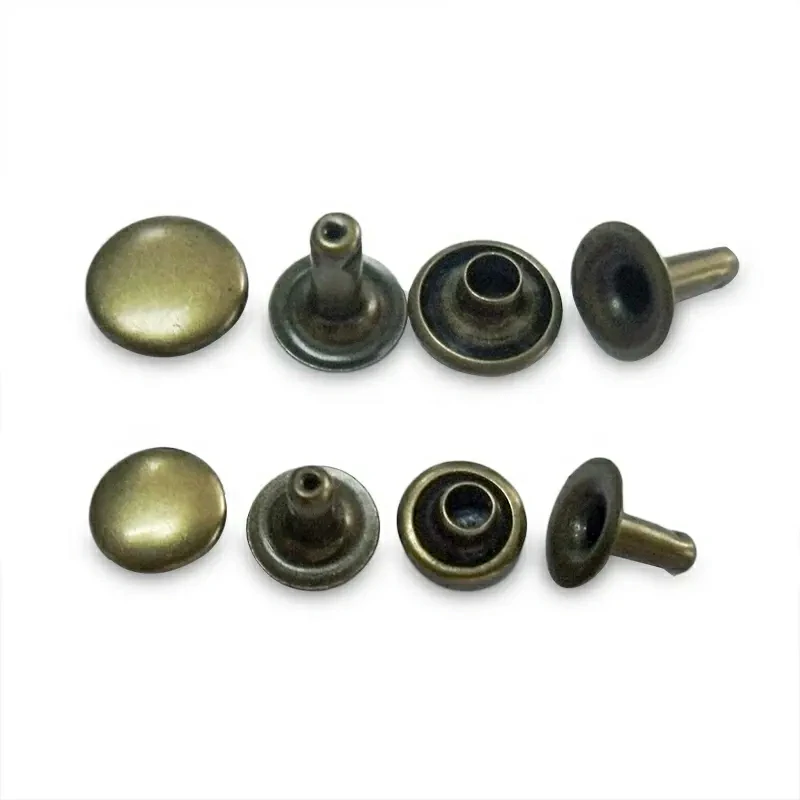
Preventing Tooling Wear and Clinch Cracking in High-Volume Riveting
For manufacturing engineers operating orbital or radial riveting machines, specifying a semi-tubular rivet goes far beyond matching a head style. Inconsistent metallurgical hardness or flawed shank geometry directly impacts both the integrity of the clinched joint and the lifespan of your assembly tooling. At Jiliang Hardware (RivetJL), we control the microscopic variables that eliminate the three most common production failures:
- Eliminating Clinch Cracking & Splitting: If the tubular section of the rivet lacks proper ductility or undergoes improper annealing, the metal will split or fracture when the riveting die forms the roll clinch. RivetJL enforces precise heat treatment and spheroidizing annealing on all steel and brass batches, ensuring a smooth, uniform 360-degree flare without structural splitting.
- Minimizing Riveting Die & Punch Wear: Inconsistent material hardness across a single bulk batch forces riveting machines to exert uneven pressure, leading to premature cracking of your precision rolling dies. We maintain strict control over raw material grain structures to deliver uniform hardness, maximizing your tooling setup’s service life.
- Concentricity Control for High-Speed Feeders: In automated bowl feeders and pneumatic tracks, any eccentricity between the rivet head and the hollow shank causes alignment failure at the rivet jaws. Our multi-station cold-heading equipment holds concentricity to strict tolerances, eliminating robotic line jams.
4. Testing and Validation: Ensuring Rivet Reliability
Even with the most informed material and head style choices, rigorous testing and validation are indispensable to confirm that semi-tubular rivets perform as expected in real-world conditions.
Ensuring semi-tubular rivet reliability requires rigorous testing and validation, including destructive tests like shear and tensile strength, and non-destructive methods for visual and dimensional inspection. These processes confirm that the chosen material and head style meet specified performance criteria, withstand expected loads, and maintain joint integrity over time. Validation is crucial for preventing failures, ensuring product safety, and complying with industry standards before mass production.
4.1 Destructive Testing Methods
Pushing rivets to their breaking point.
- Example 1: Shear Strength Test. To validate semi-tubular rivets used in a critical load-bearing joint (e.g., a bicycle frame), a shear strength test is performed. The riveted joint is subjected to increasing shear force until the rivets fail. This test confirms that the chosen material (e.g., high-strength aluminum) and head style (e.g., universal) provide the required resistance to shearing, ensuring the frame’s structural integrity.
- Example 2: Tensile (Pull-Out) Strength Test. For rivets securing a panel that might experience pull-out forces (e.g., an access panel on machinery), a tensile strength test is conducted. The test measures the force required to pull the rivet head through the material or to break the rivet shank. This validates the combination of material and head style (e.g., a wide truss head on a softer material) for pull-through resistance.
- Analysis: The theoretical basis is mechanical engineering principles, where material properties and joint geometry determine failure modes. Design trade-offs involve balancing the cost of testing with the critical need for safety and reliability, especially in high-consequence applications.
This table outlines key testing methods for semi-tubular rivets.
| Testing Method | Purpose | What it Validates |
| Shear Strength Test | Measures resistance to forces parallel to joint | Rivet material strength, joint integrity |
| Tensile (Pull-Out) Test | Measures resistance to forces perpendicular to joint | Rivet head style, material ductility, pull-through resistance |
| Fatigue Test | Evaluates performance under cyclic loading | Rivet and joint lifespan under dynamic stress |
| Corrosion Resistance Test | Assesses material/coating durability in harsh environments | Material selection, plating/coating effectiveness |
| Dimensional Inspection | Checks head diameter, shank length, hole size | Manufacturing precision, fit with components |
| Visual Inspection | Checks for cracks, burrs, proper clinch formation | Installation quality, aesthetic consistency |
4.2 Non-Destructive and Environmental Testing
Checking without breaking, and simulating real-world conditions.
- Example 1: Visual and Dimensional Inspection. Before and after riveting, semi-tubular rivets undergo visual and dimensional inspection. This ensures the head is properly formed, there are no cracks, and the clinch is secure and consistent. For instance, in a medical device, a precise head diameter and a smooth finish are critical for hygiene and patient safety.
- Example 2: Salt Spray Test. For semi-tubular rivets used in outdoor signage, a salt spray test simulates corrosive coastal environments. This test validates the effectiveness of the chosen material (e.g., stainless steel) or coating (e.g., galvanized steel) in resisting rust and maintaining structural integrity over time.
- Analysis: The practical impact is that a comprehensive testing regimen provides confidence in the rivet’s performance, reduces the risk of field failures, and ensures compliance with industry standards and safety regulations.
5. Common Pitfalls and Best Practices in Rivet Selection
Even experienced engineers can make mistakes. Understanding common pitfalls and adhering to best practices can significantly improve the success rate of semi-tubular rivet applications.
Common pitfalls in semi-tubular rivet selection include misjudging material strength, overlooking environmental factors, and choosing an inappropriate head style, leading to premature joint failure or aesthetic issues. Best practices involve a thorough analysis of application requirements, precise material and head style matching, rigorous testing, and close collaboration with experienced rivet manufacturers. Adhering to these ensures optimal performance, durability, and cost-effectiveness for any fastening solution.
5.1 Avoiding Common Mistakes
Learn from others’ errors.
- Pitfall 1: Underestimating Environmental Factors. Using standard carbon steel semi-tubular rivets in an outdoor, humid environment without proper plating.
- Consequence: Rapid corrosion, weakening of the joint, and unsightly rust stains on the surrounding material.
- Best Practice: Always consider the operating environment (moisture, chemicals, temperature) and select materials (e.g., stainless steel) or coatings (e.g., galvanization, specialized platings) that offer adequate resistance.
- Pitfall 2: Mismatching Rivet Material to Parent Material. Riveting aluminum sheets with copper semi-tubular rivets without an insulating barrier.
- Consequence: Galvanic corrosion, where the more active aluminum corrodes rapidly due to contact with the less active copper in the presence of an electrolyte (moisture).
- Best Practice: Use rivets made from the same or a compatible material as the parent components, or employ insulating washers/sleeves to prevent galvanic corrosion when dissimilar metals are necessary.
- Analysis: The theoretical basis is electrochemistry and material compatibility. The practical impact of these pitfalls is premature joint failure, increased maintenance costs, and potential safety hazards.
This table summarizes common pitfalls and best practices.
| Pitfall | Consequence | Best Practice |
| Underestimating Environment | Rapid corrosion, joint failure | Analyze operating environment, select resistant materials/coatings |
| Mismatching Materials (Galvanic) | Accelerated corrosion of one component | Use compatible materials or insulating barriers |
| Incorrect Head Style | Poor load distribution, pull-through, snagging | Match head style to load, material, and aesthetic needs |
| Ignoring Material Thickness | Weak clinch, crushing material, improper fit | Select correct shank length for total grip |
| Overlooking Installation Method | Damaged rivets, weak joints | Consider automated vs. manual, tooling compatibility |
| Skipping Testing/Validation | Unforeseen failures, safety risks | Conduct shear, tensile, fatigue, and environmental tests |
5.2 Partnering with Experts
Leverage specialized knowledge.
- Example 1: Complex Assemblies. For a new product involving complex material combinations and dynamic loads, collaborating with a specialized semi-tubular rivet manufacturer can be invaluable. Their engineers can recommend optimal material alloys, custom head designs, and even suggest appropriate riveting tools and processes.
- Example 2: Cost Optimization. An expert manufacturer can help identify cost-effective alternatives (e.g., a specific plating instead of a more expensive base material) that still meet performance requirements, optimizing the overall bill of materials without compromising quality.
- Analysis: The practical impact is that leveraging the expertise of a dedicated rivet manufacturer ensures that all aspects of material selection, head style, and installation are optimized, leading to a more reliable, efficient, and cost-effective fastening solution.
Conclusion
The humble semi-tubular rivet is a powerhouse of engineering, its performance intricately tied to two fundamental choices: material selection and head style. From the robust strength of steel with a universal head for heavy machinery to the lightweight, flush finish of aluminum with a countersunk head for aerospace, every decision profoundly impacts the joint’s integrity, durability, and aesthetic appeal.
By understanding the unique properties of different materials and the functional implications of various head styles, engineers and manufacturers can move beyond generic fastening solutions. A meticulous approach, coupled with rigorous testing and collaboration with expert manufacturers, ensures that each semi-tubular rivet performs optimally, guaranteeing the longevity, safety, and reliability of your products in any application.