Table of Contents
- Understanding the Fundamentals: What Are Curtain Wall Fixings?
- Head-to-Head Comparison: Rivets vs. Anchor Bolts
- Installation Speed and Efficiency: A Clear Winner?
- Reliability and Load-Bearing Capacity: The Core of Structural Integrity
- Cost Analysis: Initial Investment vs. Long-Term Value
- Versatility and Application Scenarios: Where Does Each Excel?
- Aesthetics and Visual Impact: The Hidden Factor
- Inspection and Maintenance Requirements
- Quick Comparison Table: Rivets vs. Anchor Bolts
- Critical Decision Factors: How to Choose the Right Fastener for Your Project
- The rivetjl Perspective: Why Precision in Fastening Matters
- Conclusion: A Verdict on Speed vs. Reliability
- Frequently Asked Questions (FAQ)
Understanding the Fundamentals: What Are Curtain Wall Fixings?
A curtain wall is a non-structural outer covering of a building, designed to keep the weather out and the occupants in. While it doesn’t carry any structural load from the building, it must support its own weight and withstand environmental forces like wind and seismic activity. The fasteners used to achieve this—the curtain wall fixings—are therefore critical components. The two most common categories of fasteners discussed are rivets and anchor bolts, each serving distinct purposes based on their mechanical properties.

The Role of Rivets in Facade Systems
A rivet is a mechanical fastener consisting of a smooth cylindrical shaft with a head on one end. During installation, the tail end is formed into a second head, called the “shop head” or “buck-tail,” clamping the materials together. In modern curtain wall construction, blind rivets are most common. These can be installed from one side of the workpiece, making them ideal for attaching cladding panels (like aluminum composite panels) to the mullions and transoms of the curtain wall grid. Their primary function is to resist shear forces—forces that try to slide the panels past each other. They are valued for their installation speed and simplicity.
The Function of Anchor Bolts in Structural Support
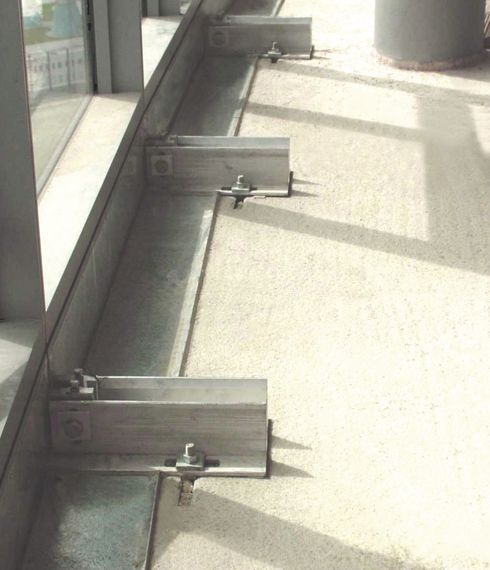
Anchor bolts are heavy-duty fasteners designed to connect structural elements to concrete. In the context of curtain walls, their primary and non-negotiable role is to secure the brackets that hold the entire curtain wall system to the building’s primary structure (the concrete slabs, columns, or steel beams). Unlike rivets, anchor bolts are engineered to handle significant tensile loads (pull-out forces) and shear loads. They work through various mechanisms, such as mechanical expansion (wedge anchors), undercutting, or chemical adhesion (epoxy anchors), to create an incredibly strong and permanent connection with the base material.
Head-to-Head Comparison: Rivets vs. Anchor Bolts
To determine which fastener is superior, we must analyze them across several key performance indicators relevant to construction projects. The question isn’t just about speed or reliability in a vacuum, but how these factors interact with cost, application, and long-term performance.
Installation Speed and Efficiency: A Clear Winner?
When it comes to pure installation speed, rivets are the undisputed winner. A trained installer with a pneumatic or electric rivet gun can set dozens of blind rivets in minutes. The process is simple: drill a hole, insert the rivet, and activate the tool. This high-speed installation is a major advantage in assembling the vast number of panels on a large building facade, directly translating to reduced labor costs and shorter project timelines.
Anchor bolt installation is a more deliberate and time-consuming process. It requires drilling a precise hole into concrete or steel, thoroughly cleaning the hole of dust and debris (especially critical for chemical anchors), inserting the bolt, and then torquing it to a specific value. Each step requires care and precision, making the process inherently slower than setting a rivet. Therefore, for tasks where speed is the dominant factor, such as panel attachment, rivets excel.
Reliability and Load-Bearing Capacity: The Core of Structural Integrity
This is where anchor bolts demonstrate their essential role. For reliability in a structural context, anchor bolts are vastly superior. They are specifically engineered and tested to handle substantial loads. A properly installed wedge anchor or chemical anchor can withstand thousands of pounds of pull-out and shear force, ensuring the entire curtain wall system remains safely attached to the building, even under extreme wind pressure or seismic events. Their reliability is quantifiable through detailed engineering data and pull-out tests performed on-site.
Rivets, while reliable for their intended purpose, have a much lower load-bearing capacity, particularly in tension. They are primarily designed for shear loads in thin materials. Using a rivet for a primary structural connection to a concrete slab would be a catastrophic failure of engineering. Their reliability is limited to securing lightweight panels to the supporting frame, where the loads are distributed over many points and are primarily in shear.
Cost Analysis: Initial Investment vs. Long-Term Value
On a per-unit basis, rivets are generally cheaper than anchor bolts. The tooling for rivets is also relatively inexpensive. When you factor in the significantly faster installation time and lower labor costs, the overall cost of using rivets for panel attachment is very low.
Anchor bolts have a higher per-unit cost, and the associated tools (rotary hammers, torque wrenches, epoxy dispensers) are more expensive. The slower installation process also adds to the labor cost. However, this cost is not a choice but a necessity. The long-term value of using robust anchor bolts for structural connections is immeasurable, as it ensures the safety, durability, and code compliance of the entire building envelope. Skimping on primary structural anchors is not a viable cost-saving measure.
Versatility and Application Scenarios: Where Does Each Excel?
The versatility of each fastener lies within its designated domain.
- Rivets Excel In: High-volume, non-structural or semi-structural connections. They are perfect for attaching metal panels to metal framing, joining thin sheets of material, and applications where access is limited to one side. Their use is ubiquitous in the assembly of the “infill” components of a curtain wall.
- Anchor Bolts Excel In: Heavy-duty, structural connections to a solid base material. Their primary application is securing the curtain wall brackets to the building’s concrete or steel skeleton. They are also used for attaching any significant structural elements like sunshades or maintenance davits to the building through the curtain wall system.
Aesthetics and Visual Impact: The Hidden Factor
Both fasteners can offer a clean finish. Rivet heads are typically low-profile and can be painted or color-matched to the facade panels, making them visually unobtrusive. This is crucial for maintaining the sleek, monolithic appearance desired in modern architecture.
Anchor bolts are typically hidden from view. They are located behind the cladding, inside the mullion system at the bracket connection point. Therefore, their aesthetic impact on the finished building is virtually zero. The primary aesthetic concern is ensuring the brackets they secure are properly concealed by the facade system.
Inspection and Maintenance Requirements
Anchor bolt connections, being critical to safety, often require formal inspection. This can involve visual checks and torque testing to ensure they are installed to the manufacturer’s specifications. Once properly installed, they are generally maintenance-free for the life of the building.
Riveted connections are typically inspected visually for proper installation (e.g., ensuring the mandrel has broken off correctly and the head is properly formed). While individual rivet failures are rare, they can occur due to vibration or thermal cycling. However, because they are used in high-redundancy systems (many rivets holding a single panel), the failure of one is not typically catastrophic. Maintenance is generally not performed unless a panel becomes loose.
Quick Comparison Table: Rivets vs. Anchor Bolts
| Feature | Rivets | Anchor Bolts |
|---|---|---|
| Primary Application | Panel-to-frame attachment (secondary) | Frame-to-building structure (primary) |
| Installation Speed | Very Fast | Slow / Moderate |
| Reliability (Load Capacity) | Low (Excellent in Shear for its size) | Very High (Excellent in Tension & Shear) |
| Cost per Unit | Low | High |
| Labor Skill Required | Low | Moderate to High (Requires Precision) |
| Base Material | Thin metals (Aluminum, Steel) | Concrete, Masonry, Structural Steel |
| Inspection | Visual | Visual, Torque Testing, Pull-out Tests |
Critical Decision Factors: How to Choose the Right Fastener for Your Project
Choosing between rivets and anchor bolts is not a matter of preference but of engineering necessity. The decision is dictated by the specific connection you are making. Here are the key questions to ask:
Substrate Material: Concrete, Steel, or Something Else?
What are you fastening into? This is the first and most important question. If you are connecting to the building’s primary concrete slab or steel I-beam, you must use an anchor bolt. The type of anchor bolt (e.g., wedge, sleeve, chemical) will then be determined by the specifics of the substrate and the load requirements. If you are fastening a thin aluminum panel to an extruded aluminum mullion, a rivet is the appropriate, efficient choice.
Environmental Loads: Wind, Seismic, and Thermal Stress
What forces will this connection need to resist? The connections securing the curtain wall frame to the building will bear the full brunt of wind suction and pressure, as well as seismic forces. These forces create high-tension and shear loads, which only anchor bolts can safely handle. Rivets holding panels experience smaller, distributed loads and must accommodate thermal expansion and contraction between the panel and the frame, which their slight flexibility allows.
Project Timeline and Labor Skills
What are the project’s constraints? While timeline and labor costs are important, they should only influence the choice between *types* of appropriate fasteners, not the fundamental choice between a structural and non-structural fastener. For example, you might choose one type of blind rivet over another for faster cycle times in panel assembly. Similarly, you might select a specific type of anchor bolt that offers quicker installation or curing times to meet a tight schedule, but you would never substitute it with a rivet.
The rivetjl Perspective: Why Precision in Fastening Matters
At rivetjl, our expertise is rooted in precision manufacturing and material science. We understand that the performance of a final product—whether it’s a molded component or an entire building facade—is only as strong as its weakest link. This principle applies directly to fasteners.
The choice and correct installation of a fastener is a matter of precision engineering. An anchor bolt’s performance relies on exact hole diameter, perfect cleanliness, and calibrated torque. A rivet’s strength depends on the correct grip range and proper tool usage. This parallels our work in mold making, where tolerances measured in microns determine the quality and success of the final part. We advocate for a systems-based approach where every component, especially critical connectors like fasteners, is chosen based on rigorous engineering analysis, not just convenience or upfront cost.
Conclusion: A Verdict on Speed vs. Reliability
In the debate of Rivets vs. Anchor Bolts for curtain wall fixing, there is a clear and separate verdict for each. They are not competing solutions but complementary tools for different jobs.
- For Speed in non-structural or semi-structural assembly, such as attaching facade panels to the sub-frame, rivets are the superior choice. Their rapid, low-skill installation process significantly reduces labor costs and accelerates project completion.
- For Reliability in all primary structural connections, where the entire curtain wall system is anchored to the building, anchor bolts are the only safe and acceptable option. Their high tensile and shear strength provide the non-negotiable security and durability required to withstand significant environmental loads and ensure public safety.
Ultimately, a successful and safe curtain wall installation relies on using both fasteners correctly in their designated roles. The speed of rivets allows for efficient assembly of the facade, while the unwavering reliability of anchor bolts ensures it remains securely in place for decades.
Frequently Asked Questions (FAQ)
1. Can rivets ever be used for primary structural connections in curtain walls?
No. Standard blind or solid rivets do not have the tensile (pull-out) strength or the engineering verification required to safely anchor a curtain wall system to a building structure. This is exclusively the job of engineered anchor bolts.
2. What are the most common failure modes for anchor bolts in curtain walls?
The most common failures are not of the bolt itself but of the installation. These include improper hole cleaning (leading to reduced capacity for chemical anchors), incorrect torque (either under-tightening or over-tightening mechanical anchors), and incorrect embedment depth. Choosing the wrong anchor for the substrate (e.g., using a wedge anchor in low-strength masonry) can also lead to failure.
3. How does thermal expansion affect fastener choice?
Thermal expansion and contraction of large facade panels must be accommodated. Riveted connections, especially in slightly oversized holes, can allow for the minute movements required. The primary anchor bolt connections at the brackets are also designed with slip joints or slotted holes to allow the entire curtain wall grid to expand and contract without imposing stress on the anchors themselves.
4. Are there hybrid solutions that use both rivets and bolts?
Yes, every modern curtain wall is a hybrid system. It’s the standard method of construction. Anchor bolts are used for the structural frame-to-building connection, and rivets (or sometimes screws) are used for the panel-to-frame connection. They work in tandem, each performing the task for which it is best suited.