In the complex landscape of B2B industrial procurement, finding the right supplier for fasteners is often treated as a secondary priority. Many purchasing teams default to working with general hardware traders for convenience, assuming that a screw is simply a commodity. However, when your assembly line relies on specialized components like nail screws, this “commodity mindset” quickly becomes a costly liability.
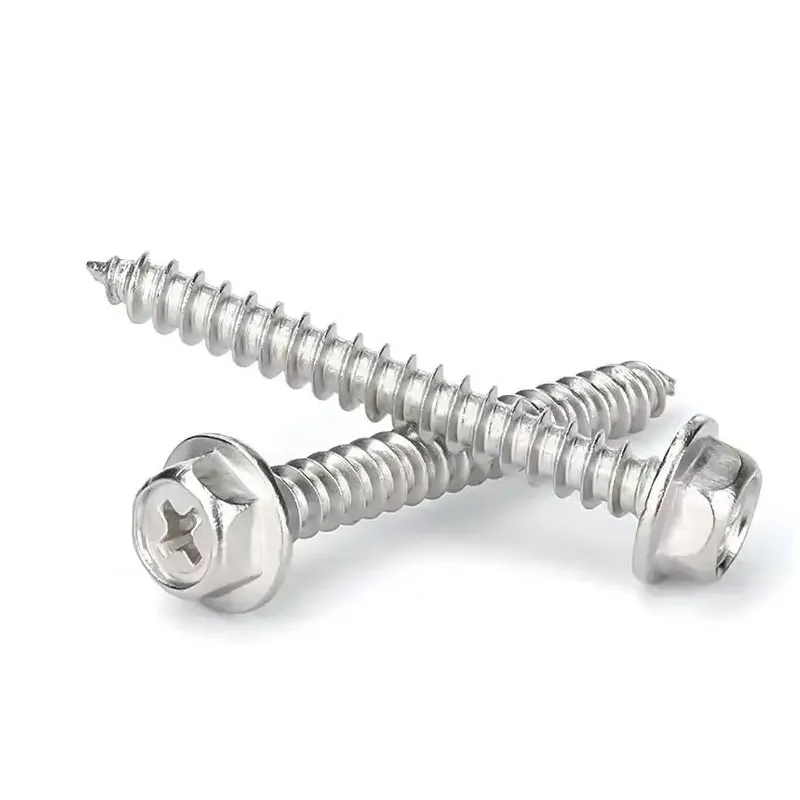
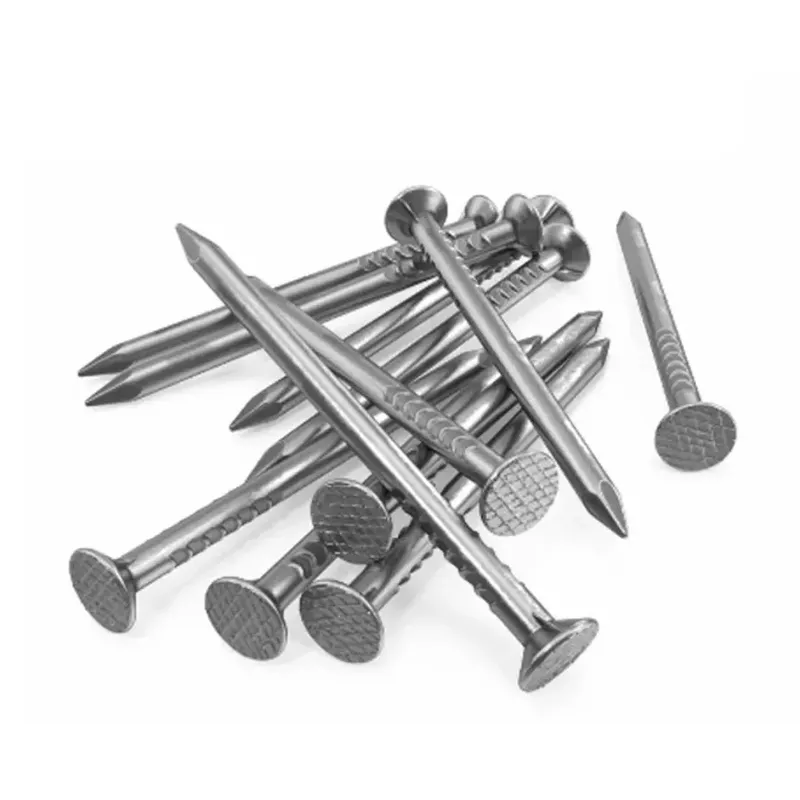
A nail screw is not a standard fastener; it is a highly engineered hybrid component designed to deliver the rapid installation speed of a nail alongside the superior pull-out resistance of a threaded screw. This unique dual-functionality demands strict control over material hardness, thread precision, and batch consistency. When structural integrity and production efficiency are on the line, the gap between a middleman’s off-the-shelf inventory and a true factory’s engineering capability becomes glaringly obvious. This guide explores the critical operational and financial reasons why sourcing directly from a custom nail screw manufacturer is the most reliable strategy for your supply chain.
Table of Contents
- Why Do Standard Fasteners Fail in Specialized Applications?
- What Is the Real Difference Between a Manufacturer and a Trader?
- How Does Direct Sourcing Solve Hidden Supply Chain Costs?
- Can a Factory Direct Model Improve Your Assembly Line Efficiency?
- Why Is Engineering Support Critical for Long-Term OEM Success?
- How to Choose the Right Industrial Fastener Partner?
1. Why Do Standard Fasteners Fail in Specialized Applications?
To understand why direct sourcing is superior, we must first look at why standard inventory fails. In environments like construction fastening, woodworking, or metal structure assembly, the requirements for a fastener are rarely one-size-fits-all.
A nail screw must endure high-impact forces when driven into a substrate, yet its threads must remain perfectly intact to grip the material and prevent loosening over time. If you purchase from a trader, you are restricted to their existing catalog of standard SKUs. These standard components might have the wrong thread pitch for your specific wood density, or a head style that doesn’t quite fit your automated assembly drivers.
When a standard component fails—whether through stripping, snapping, or rusting—a trader can only offer to replace it with another standard component. They lack the ability to alter the physical geometry of the product. This lack of adaptability is the root cause of countless assembly line bottlenecks, leading professional procurement teams to seek out a dedicated custom screws factory that can engineer a solution to fit the application, rather than forcing the application to fit the screw.
2. What Is the Real Difference Between a Manufacturer and a Trader?
The distinction between a trading company and a direct manufacturer goes far beyond where the product is stored. The core difference lies in the “design-to-production” capability versus the “order-to-stock” limitation.
A custom nail screws supplier that operates its own factory has absolute control over the production variables. If your application requires a specific adjustment, a manufacturer can directly modify the thread design, alter the head style, switch the raw material, and specify a different surface treatment. They possess the closed-loop engineering support required to translate a mechanical problem into a manufactured solution.
Conversely, a trader relies on a fragmented network of third-party factories. Because they do not own the production lines, their ability to guarantee batch consistency or implement custom quality assurance (QA) protocols is severely limited.
Table: Capability Comparison – Manufacturer vs. Trader
| Supply Chain Metric | Custom Nail Screw Manufacturer | Sourcing Trader / Middleman | Impact on Procurement |
| Customization Depth | Full OEM/ODM support (M3–M10, 10-150mm lengths) | Limited to standard, existing inventory SKUs | Factories solve specific engineering problems; traders only fill standard orders. |
| Production Control | Controlled production lines & automated optical inspection | Multi-supplier sourcing with varying quality standards | Direct manufacturing ensures batch-to-batch consistency and lower defect rates. |
| Engineering Feedback | Direct communication with production engineers | Middleman communication delays and misinterpretations | Factories adapt designs rapidly during prototyping and production. |
| Material Options | Carbon steel, stainless steel, aluminum, brass | Limited to whatever the third-party factory produced | Manufacturers align the material with the specific environmental requirements. |
Understanding these fundamental operational differences naturally leads to the next major concern for procurement teams: how does this control impact the bottom line?
3. How Does Direct Sourcing Solve Hidden Supply Chain Costs?
The most immediate financial benefit of direct screw manufacturer sourcing is the elimination of the middleman markup. Industry data consistently shows that the trader model adds a 10% to 30% premium to the baseline production cost. However, this visible markup is only a fraction of the total cost picture.
The true financial drain in B2B procurement comes from hidden costs: assembly line downtime, high tool wear rates, and post-sale warranty claims due to structural failure. When a trader provides a batch of nail screws with inconsistent thread tolerances, those screws can jam automated driving equipment. Every minute the assembly line is halted, the company loses money. Furthermore, if the surface coating is applied unevenly by a trader’s low-cost sub-supplier, the screws will corrode prematurely in the field, leading to expensive rework.
By working with a wholesale nail screws factory, buyers gain complete cost transparency. You are paying for the raw material, the machining time, and the quality control process—not an arbitrary sourcing fee. The factory’s automated inspection systems ensure that every fastener meets the specified tolerance, drastically lowering the hidden lifecycle costs associated with assembly failure and rework.
4. Can a Factory Direct Model Improve Your Assembly Line Efficiency?
The transition from a trader to a manufacturer frequently acts as a catalyst for major production improvements. When engineers collaborate directly with the factory floor, the results are measurable. Let’s examine two real-world scenarios where this shift resolved critical operational pain points.
Case 1: Resolving Construction Fastening Inconsistencies
A large construction firm initially sourced their nail screws through a regional trading company. Soon, their field workers reported severe issues: dimensional deviations between batches caused the screws to jam in the nail guns, the thread engagement was inconsistent in the wood framing, and outdoor installations began showing signs of rust within months.
The firm transitioned their supply chain to an OEM nail screw manufacturer. The factory engineered a unified solution using carbon steel for high shear strength, paired with a specialized heavy zinc-plated surface treatment to combat outdoor corrosion. The factory also optimized the thread geometry to match the density of the framing lumber and implemented strict batch tolerance controls. As a result, the firm’s installation efficiency soared, rework rates plummeted, and the lifespan of the fastened structures was significantly extended.
Case 2: Optimizing OEM Furniture Production
A high-volume furniture manufacturer struggled with the standard inventory screws provided by a trader. The generic screw heads did not mate perfectly with their robotic assembly equipment, leading to a high tool wear rate, stripped screw heads, and unacceptable production delays.
By partnering directly with a custom manufacturer, they redesigned the fastener from the ground up. The factory customized the head and shank structure to precisely match the automated drivers and applied an anti-friction coating. This direct engineering intervention increased the assembly line throughput, minimized tool replacement costs, and virtually eliminated assembly failures.
5. Why Is Engineering Support Critical for Long-Term OEM Success?
As demonstrated in the cases above, the most valuable asset a factory provides is not just metal hardware, but application engineering. When evaluating a bulk nail screws supplier in China or elsewhere, the decision boundary often comes down to their ability to participate in your design process.
High-value buyers understand that long-term success requires a strategic supply chain partner. If your project faces an unexpected challenge—such as a change in the mating material or a new environmental requirement—a trader will struggle to adapt. An industrial fastener manufacturer, however, offers a closed-loop feedback system. They can quickly produce custom prototypes, recommend material shifts (e.g., from carbon steel to stainless steel for better corrosion resistance), and scale production safely once the new design is validated.
This level of risk control is invaluable. Stable production lines, predictable quality assurance protocols, and the capacity for long-term OEM supply agreements ensure that the fasteners you order in five years will perform exactly like the prototypes you approved today.
6. How to Choose the Right Industrial Fastener Partner?
Ultimately, transitioning away from trading companies requires identifying a factory that truly understands your industrial application. The highest conversion trigger for B2B buyers is finding a partner who says, “We understand how this screw functions in your specific assembly,” rather than simply, “We can match this target price.”
A capable custom fasteners OEM supplier must possess a comprehensive suite of manufacturing technologies, including advanced cold heading, precision CNC machining, controlled heat treatment, and automated optical sorting. They must be able to support a wide range of specifications, from tiny M3 fasteners for electronics to heavy-duty 150mm components for construction.
When you choose to source factory direct nail screws, you are not just buying a box of parts; you are integrating a team of manufacturing experts into your own production workflow. This alignment guarantees that your fastening solutions will enhance your product’s performance, streamline your assembly line, and protect your brand’s reputation for quality.
Ready to Optimize Your Supply Chain?
If inconsistent fasteners, supply chain delays, or lack of engineering support are creating bottlenecks in your production, it is time to work directly with the source. At RivetJL, we specialize in engineering and manufacturing high-precision custom nail screws tailored to your exact application.
Stop compromising your designs with standard, off-the-shelf inventory from middlemen. Contact our engineering team today with your blueprints, technical requirements, or assembly challenges, and let us build a reliable, cost-effective fastening solution that scales with your business.
Frequently Asked Questions (FAQ)
1. What is the primary advantage of a custom nail screw manufacturer vs trader?
The main advantage is direct control over the engineering and manufacturing process. A manufacturer can customize dimensions, materials, and coatings to solve specific assembly problems, whereas a trader is generally limited to selling existing, pre-manufactured standard inventory.
2. Can a direct manufacturer accommodate small batch prototyping?
Yes, reputable custom manufacturers understand the product development cycle. While bulk production uses cold heading for efficiency, factories often utilize CNC machining to produce small prototype batches, allowing you to test the fastener design before committing to high-volume tooling.
3. Why do nail screws require tighter manufacturing tolerances than standard nails?
Nail screws rely on a hybrid action: they are driven in forcefully but must hold via threads. If the thread tolerance is too loose, the grip strength fails. If the core hardness is inconsistent, the fastener will snap upon impact. Tight factory tolerances ensure this dual-action performs reliably.
4. Will buying factory direct nail screws increase my lead times?
Initially, engineering a custom fastener and creating the tooling may take a few weeks. However, once the production line is established, a direct manufacturer offers much more stable and predictable lead times than a trader, who is at the mercy of multiple third-party factory schedules.
5. How do I know if my application requires a custom nail screw?
If you are experiencing high rates of stripped heads during automated assembly, if the fasteners are loosening under vibration, or if standard screws are slowing down your installation process, your application would highly benefit from a custom-engineered geometry and material upgrade.
6. Do manufacturers offer different surface treatments for outdoor applications?
Absolutely. A direct factory can provide specific surface treatments based on your environmental needs, ranging from standard zinc plating for indoor use to heavy galvanization, black oxide, or specialized polymer coatings for harsh outdoor and marine environments.