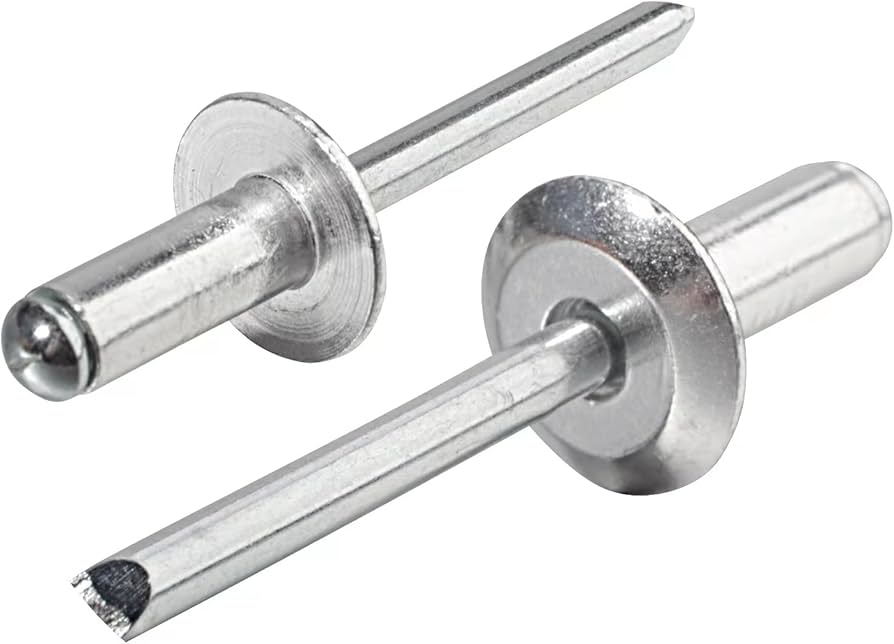
The performance of a shoulder rivet is directly dictated by the precision of its manufacturing, with tight tolerances achieved through CNC machining being crucial for ensuring proper function, reliability, and longevity in critical applications. Unlike standard fasteners, a shoulder rivet acts as a precise pivot point, axle, or guide, meaning even minuscule deviations in its dimensions can lead to assembly failure, premature wear, or a complete breakdown of the mechanism it supports. Precision CNC machining provides the necessary dimensional accuracy in the shoulder diameter, underhead length, and concentricity, which are essential for smooth rotation, consistent spacing, and optimal load distribution in everything from aerospace assemblies to medical devices.
Table of Contents
- The Anatomy of a Shoulder Rivet: A Precision Component
- Why Do Tolerances on Shoulder Rivets Matter? The Core of Performance
- CNC Machining vs. Cold Heading: A Tale of Two Processes
- The Tangible Benefits of CNC-Machined Precision for Your Application
- Choosing the Right Materials and Finishes for Optimal Performance
- Partner with RivetJL for Your Precision Shoulder Rivet Needs
The Anatomy of a Shoulder Rivet: A Precision Component
Before delving into the intricacies of tolerance, it’s essential to understand what makes a shoulder rivet unique. It isn’t merely a tool for clamping two materials together; it is a multi-functional component engineered for motion. A shoulder rivet consists of three primary sections, each with a distinct purpose: the head, the shoulder, and the shank (or tenon). The head provides a stopping surface and bears the axial load. The shank is the portion that is deformed (upset or peened) during installation to secure the rivet in place. The shoulder, however, is the star of the show.
The unthreaded, precision-ground shoulder is what sets this fastener apart. It is designed to act as a load-bearing pivot point, a shaft for a rotating part, a spacer, or a guide for sliding components. This functional requirement means the relationship between the shoulder’s diameter and length is paramount. For example, in a pivoting lever assembly, the inner race of a bearing or the bore of the lever will ride directly on this shoulder. Any imperfection, deviation in diameter, or lack of concentricity with the head and shank can introduce friction, binding, or unwanted “slop,” compromising the entire assembly’s function.
Why Do Tolerances on Shoulder Rivets Matter? The Core of Performance
In mechanical engineering, tolerance refers to the permissible limit of variation in a physical dimension. For standard bolts or screws, tolerances might be relatively generous. For a shoulder rivet functioning as a high-performance axle, tolerance is everything. The tight control over every dimension, made possible by precision CNC machining, is what separates a reliable component from a point of failure. Let’s explore how tolerances on each key feature impact performance.
The Critical Role of Shoulder Diameter Tolerance
The shoulder’s diameter is arguably the most critical dimension. It dictates the fit between the rivet and the component it supports. An oversized shoulder will prevent assembly or cause the rotating part to seize, while an undersized shoulder will result in excessive play or vibration. This leads to accelerated wear, loss of precision in the mechanism’s movement, and potential fatigue failure.
Precision CNC turning allows for shoulder diameters to be held to tolerances as tight as ±0.0005 inches (or even tighter for specialized applications). This level of accuracy ensures a perfect clearance fit, allowing a component like a gear or linkage to rotate smoothly and consistently with minimal radial movement. This is non-negotiable in applications like robotics, automotive transmissions, and aerospace control systems, where predictable, repeatable motion is fundamental to safety and functionality.
Underhead Length (Shoulder Length) Accuracy: The Key to Proper Spacing
The length of the shoulder determines the precise spacing between the panel it’s installed in and the head of the rivet. This dimension must be controlled tightly to allow the moving component enough axial freedom to rotate without being clamped down or having too much room to “walk” along the shaft. If the shoulder is too long, the component will be loose, leading to misalignment and operational noise. If it’s too short, the component will be pinched between the head and the substrate after the shank is set, preventing movement entirely.
CNC machining ensures this length is consistently accurate from one rivet to the next, which is vital for both manual and automated assembly lines. This consistency prevents tolerance stack-up—a scenario where small, acceptable variations in multiple components accumulate to create a large-scale assembly problem. With precisely machined shoulder rivets, engineers can design with confidence, knowing the intended spacing will be achieved every time.
Shank Diameter and Length: Ensuring a Secure and Lasting Fit
While the shoulder handles the functional load, the shank provides the clamping force that holds the entire assembly together. The shank’s diameter must be precisely matched to the hole it will be installed in to ensure a secure interference fit before setting. Its length is equally important; it must be long enough to form a strong, properly shaped secondary head (the “buck-tail”) when upset, but not so long that it requires excessive force or results in a malformed clinch. CNC machining provides the control needed to produce shanks with ideal dimensions for consistent and reliable installation, whether using an orbital riveter, a press, or a simple hammer.
Head Dimensions and Concentricity: The Foundation of Strength
The head’s diameter and height determine its ability to distribute bearing stress and resist pull-through forces. Equally important is concentricity—the shared centerline between the head, shoulder, and shank. Poor concentricity, often a byproduct of less precise manufacturing methods, can cause uneven load distribution. This creates stress risers and eccentric loading on the shoulder, leading to wobbling of the rotating part and premature fatigue failure of the rivet head or the surrounding material. Precision CNC turning manufactures the entire rivet from a single piece of stock in one setup, ensuring all features are perfectly concentric and aligned, thereby maximizing the component’s strength and operational lifespan.
CNC Machining vs. Cold Heading: A Tale of Two Processes
Shoulder rivets can be produced through several methods, but the two most common are cold heading (or cold forming) and CNC machining. While cold heading is excellent for producing large volumes of standard fasteners at a low cost, it cannot match the precision of CNC machining, especially for complex or custom shoulder rivets.
Cold heading involves forming the rivet from a wire blank through a series of dies at room temperature. This process is fast and creates strong parts due to work-hardening, but it struggles with achieving the tight tolerances required for high-performance shoulder applications. Sharp corners, complex geometries, and exceptionally tight control over multiple dimensions are challenging. In contrast, CNC machining is a subtractive process where a computer-controlled cutting tool removes material from a solid bar of stock. This method offers unparalleled control over every feature of the rivet.
| Feature | Precision CNC Machining | Cold Heading |
|---|---|---|
| Dimensional Tolerance | Extremely tight (often < ±0.001″). Ideal for precision pivot points. | Looser tolerances. Suitable for general fastening, not precision motion. |
| Material Options | Vast range, including stainless steel, titanium, brass, and exotic alloys. | Limited to malleable materials that can be formed without fracturing. |
| Geometric Complexity | Can produce complex designs, multi-step shoulders, and custom head shapes. | Generally limited to simpler, symmetrical shapes due to die limitations. |
| Surface Finish | Excellent, smooth finish (low Ra) directly from the machine, reducing friction. | Good, but may require secondary grinding or polishing for bearing surfaces. |
| Ideal Volume | Low-to-high volume, perfect for prototypes and custom production runs. | High volume only due to expensive tooling and setup costs. |
The Tangible Benefits of CNC-Machined Precision for Your Application
Choosing a CNC-machined shoulder rivet is an investment in the performance and reliability of your final product. The benefits extend far beyond just the part itself, impacting everything from assembly efficiency to long-term durability.
Unmatched Reliability and Consistency
When every shoulder rivet in a batch is dimensionally identical, assembly processes become smoother and more predictable. For automated assembly systems, this consistency is critical. It eliminates the risk of a slightly out-of-spec part jamming the machinery, causing costly downtime. This part-to-part consistency ensures that every unit coming off your production line performs exactly as designed, enhancing your product’s reputation for quality and reliability.
Enhanced Durability and Longevity
A precisely machined shoulder provides a superior bearing surface. The smooth finish reduces friction, and the exact fit minimizes vibration and shock loading—two of the primary culprits behind mechanical wear. By eliminating the microscopic “slop” that allows for impact and abrasion, a tight-tolerance shoulder rivet significantly extends the service life of both itself and the components interacting with it. This translates to a more robust product that requires less maintenance and is less likely to fail in the field.
Design Freedom for Complex and Custom Applications
Perhaps one of the greatest advantages of CNC machining is the ability to create custom shoulder rivets tailored to a specific, unique application. Engineers are no longer constrained by off-the-shelf fastener sizes. CNC machining can produce rivets with multiple shoulder steps of varying diameters, unique head configurations to fit into tight spaces, or specific groove features for retaining clips. This manufacturing flexibility empowers innovation, allowing designers to solve complex mechanical challenges without compromising on performance or function.
Choosing the Right Materials and Finishes for Optimal Performance
The performance of a shoulder rivet is also heavily influenced by material selection, another area where CNC machining excels. The process is compatible with a wide array of materials, allowing you to match the rivet’s properties to the application’s demands. Common materials include:
- Stainless Steel (303, 304, 316): Offers excellent corrosion resistance, ideal for medical, marine, and food-grade applications.
- Alloy Steel (e.g., 4140): Can be heat-treated for superior strength and hardness in high-load scenarios.
- Brass and Bronze: Provide good lubricity and corrosion resistance, often used in electrical or marine applications.
- Aluminum: A lightweight option for aerospace and other weight-sensitive designs.
- Titanium: Delivers an exceptional strength-to-weight ratio and corrosion resistance for high-performance aerospace and medical implants.
Furthermore, CNC-machined rivets can undergo various secondary finishing processes, such as passivation to enhance corrosion resistance, zinc or nickel plating for wear resistance, or anodizing for aluminum parts. This ability to combine a precise geometry with the ideal material and finish ensures the shoulder rivet will perform flawlessly in its intended environment.
Partner with RivetJL for Your Precision Shoulder Rivet Needs
Understanding the critical impact of tolerance on shoulder rivet performance is the first step. The next is partnering with a manufacturer who can deliver that precision consistently. At RivetJL, we specialize in the manufacturing of high-quality, tight-tolerance shoulder rivets using state-of-the-art CNC machining technology. Our expertise is not just in making parts; it’s in understanding the mechanical function they serve.
Whether you need a standard-size shoulder rivet with superior precision or a fully custom-designed component for a groundbreaking new product, our team of experts is ready to assist. We work with you from design to production to ensure your components meet the exact specifications required for optimal performance, reliability, and longevity. Don’t let fastener tolerance be an afterthought—make it the foundation of your design’s success.
Contact RivetJL today to discuss your project and discover how our precision CNC machining capabilities can elevate your product’s performance.