For Original Equipment Manufacturers (OEMs), the choice between standard and precision custom screws is a critical decision impacting product performance, assembly efficiency, and long-term cost. Standard screws, or off-the-shelf fasteners, offer immediate availability and low per-unit cost for general applications. In contrast, precision custom screws are specifically engineered solutions designed to meet unique functional requirements, providing a perfect fit, superior reliability, and a lower total cost of ownership in demanding or specialized applications. Understanding when to transition from a standard component to a tailored solution is key to gaining a competitive advantage.

Table of Contents
- What Are Standard (Off-the-Shelf) Screws?
- What Are Precision Custom Screws?
- The Core Dilemma: A Head-to-Head Comparison
- Why Should OEMs Prioritize Precision Custom Screws?
- When is a Standard Screw the Right Choice?
- The Tipping Point: Key Indicators You Need a Custom Screw Solution
- The Custom Screw Design & Manufacturing Process with rivetjl
- Conclusion: Investing in Precision for a Competitive Edge
- Frequently Asked Questions (FAQ)
What Are Standard (Off-the-Shelf) Screws?
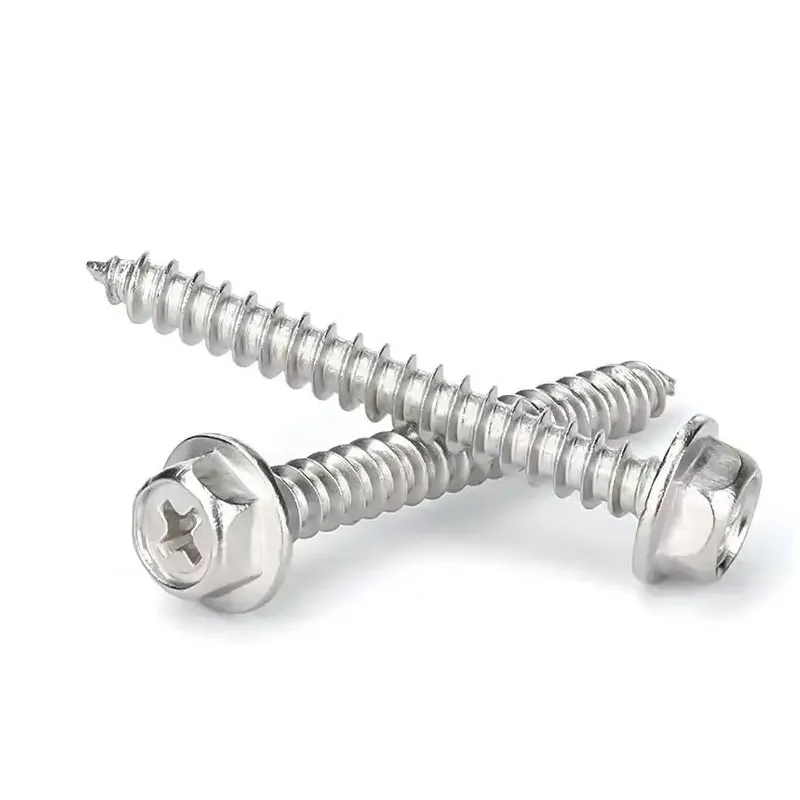
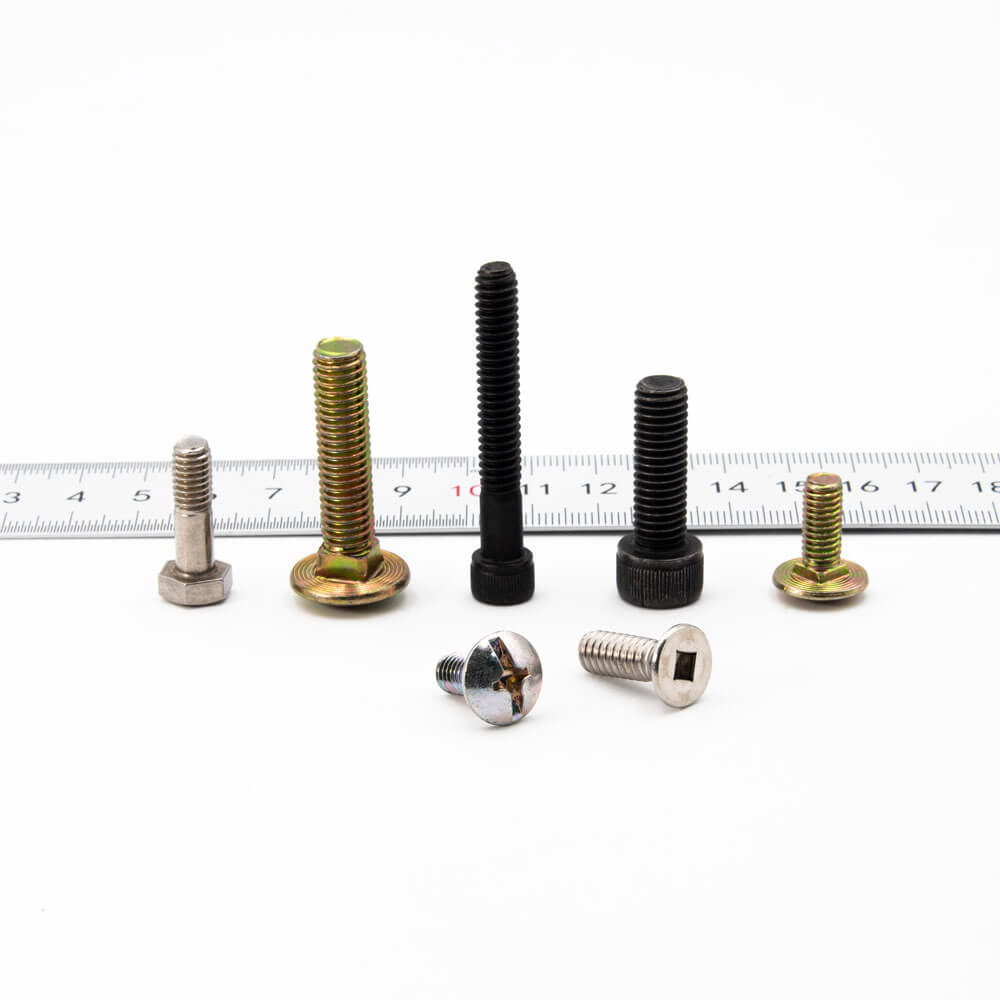
Standard screws are mass-produced fasteners that conform to widely accepted dimensional standards, such as those set by the International Organization for Standardization (ISO) or the American National Standards Institute (ANSI). Their primary advantages are availability and cost-effectiveness. Because they are manufactured in massive volumes, they can be sourced quickly from numerous distributors at a very low per-unit price. They are available in common materials like steel, stainless steel, and brass, and feature standard head styles (e.g., pan, flat, hex) and drive types (e.g., Phillips, slotted, Torx).
These off-the-shelf components are ideal for prototyping, non-critical joints, and applications where the design constraints are flexible enough to accommodate standard sizes. However, their one-size-fits-all nature is also their main limitation. OEMs may be forced to design their product *around* the fastener, potentially compromising on optimal dimensions, weight, or material properties, which can lead to over-engineering or, worse, premature failure in specialized applications.
What Are Precision Custom Screws?
Precision custom screws, also known as bespoke or engineered fasteners, are designed and manufactured to solve a specific problem for a unique application. Unlike standard screws, every aspect of a custom screw can be tailored: the head style, drive type, thread length and pitch, material composition, heat treatment, and surface finish. This level of customization ensures the fastener integrates perfectly into the final product, performing its function without compromise.
These tailored solutions are essential in industries where performance, reliability, and precision are non-negotiable, such as aerospace, medical devices, automotive, and high-end electronics. For example, a custom screw might be designed with a unique, low-profile head to fit a compact electronic device, made from a specific titanium alloy to withstand corrosive environments in a marine application, or feature a combination drive for both automated and manual assembly. They represent a strategic investment in the product’s overall quality and functionality.
The Core Dilemma: A Head-to-Head Comparison
Choosing between a standard part and a custom-engineered solution requires a clear understanding of the trade-offs. While initial cost is often a primary driver, OEMs must consider the total cost of ownership, which includes assembly time, product performance, and potential warranty claims. The table below breaks down the key differences.
| Feature | Standard Screws | Precision Custom Screws |
|---|---|---|
| Design & Specifications | Limited to established industry standards (ISO, ANSI, DIN). | Fully customizable; designed to exact application requirements. |
| Material Selection | Common materials like low-carbon steel, stainless steel, brass. | Vast range, including high-strength alloys, titanium, polymers, and exotic metals. |
| Performance & Fit | General purpose; may be a “good enough” fit, risking over or under-engineering. | Optimized for specific torque, tensile strength, shear, and environmental loads. |
| Availability & Lead Time | Immediately available from stock. | Requires design, tooling, and manufacturing lead time. |
| Initial Cost | Very low per-unit cost. | Higher per-unit cost, often with initial tooling investment. |
| Total Cost of Ownership | Can be higher due to potential assembly issues, failures, or compromised product life. | Often lower due to improved assembly efficiency, reliability, and product performance. |
| Ideal Use Case | Prototyping, low-stress applications, general construction, cost-sensitive projects. | High-performance products, unique design constraints, harsh environments, automated assembly. |
Why Should OEMs Prioritize Precision Custom Screws?
For forward-thinking OEMs, moving beyond standard components is not just about finding a better fastener; it’s about building a better product. The benefits of a custom-designed screw extend far beyond the component itself, influencing everything from the production line to the end-user experience.
Unmatched Performance and Perfect Fit
The most significant advantage of a custom screw is its ability to meet precise performance criteria. Standard fasteners are designed for average loads, but what if your application involves high vibration, extreme temperatures, or specific clamping force requirements? A custom screw is engineered with these factors in mind. By controlling the material, thread profile, and head-to-shank ratio, we can design a fastener that provides the exact tensile and shear strength needed, eliminating the risk of failure associated with an ill-suited standard part.
Enhanced Product Reliability and Longevity
A single screw failure can lead to catastrophic product failure, costly recalls, and irreparable brand damage. Precision custom fasteners are a form of insurance against this risk. By designing a screw that perfectly matches the application’s demands—including material compatibility to prevent galvanic corrosion and proper heat treatment for hardness and ductility—you significantly increase the product’s mean time between failures (MTBF). This enhanced reliability is a powerful selling point and a cornerstone of customer trust.
Streamlined Assembly and Reduced Labor Costs
On a high-volume assembly line, every second counts. Custom fasteners can be designed to optimize the manufacturing process. For example, a custom screw could feature a specialized head that is easier for robotic arms to grip, a self-aligning point to reduce cross-threading, or a pre-applied thread-locking patch to eliminate a manual application step. These small design enhancements can lead to substantial reductions in assembly time, fewer errors, and lower overall labor costs, directly impacting the bottom line.
Material Specialization for Extreme Environments
Standard screws offer a limited palette of materials. If your product operates in a corrosive marine environment, a sterile medical setting, or a high-temperature automotive engine bay, a standard stainless or carbon steel screw may not suffice. Custom manufacturing opens the door to a world of advanced materials, from lightweight and high-strength titanium alloys to corrosion-resistant superalloys like Inconel or chemical-resistant polymers like PEEK. Choosing the right material ensures the fastener—and your product—survives and thrives in its intended environment.
Design Freedom and Part Consolidation
Instead of designing your product around existing hardware, custom screws allow you to design the ideal fastener for your product. This freedom can lead to more compact, lightweight, and innovative designs. Furthermore, a single custom fastener can often be designed to perform the function of multiple components. For instance, a screw with a built-in washer (a SEMS screw) or a specific shoulder that also acts as a pivot point can reduce the total bill of materials (BOM), simplify assembly, and lower inventory management costs.
Brand Protection with Proprietary and Tamper-Proof Designs
In a competitive market, protecting your intellectual property is paramount. Custom screws can be designed with proprietary, tamper-proof drive systems that require a special tool for removal. This serves as a powerful deterrent against unauthorized servicing, reverse engineering, and counterfeiting. It ensures that only certified technicians can access the internal components of your product, safeguarding its integrity and your revenue streams.
When is a Standard Screw the Right Choice?
Despite the compelling advantages of custom solutions, standard screws still hold a crucial place in manufacturing. It is important to recognize the scenarios where their use is not only acceptable but optimal. For early-stage prototyping, when designs are fluid and speed is more critical than perfection, off-the-shelf fasteners are an invaluable resource. They allow engineers to quickly assemble and test concepts without waiting for custom production. Similarly, for non-critical applications such as securing internal brackets, cover plates, or components in low-stress environments, a standard screw often provides more than adequate performance at the lowest possible cost.
The Tipping Point: Key Indicators You Need a Custom Screw Solution
How do you know when you’ve crossed the line from a standard application to one that demands a custom solution? Here are several key indicators that should prompt an evaluation:
- Recurring Failures: Are you experiencing fastener loosening, shearing, or corrosion with standard parts?
- Specific Performance Gaps: Does your application require a specific clamping load, vibration resistance, or electrical conductivity that standard screws can’t guarantee?
- Harsh Operating Environments: Will the product be exposed to extreme temperatures, chemicals, moisture, or pressure?
- Assembly Line Inefficiencies: Are workers or automated systems struggling with fastener alignment, cross-threading, or torque consistency?
- Design Compromises: Did you have to change your product’s design (e.g., increase wall thickness) to accommodate a standard fastener?
- Weight or Space Constraints: Is minimizing weight and size a critical design driver, such as in aerospace or portable electronics?
- Security and Tampering Concerns: Do you need to prevent end-user access to the product’s interior?
If you answer “yes” to one or more of these questions, it is highly probable that the long-term value of a precision custom screw will far outweigh its initial investment.
The Custom Screw Design & Manufacturing Process with rivetjl
Partnering with an experienced manufacturer like rivetjl transforms the challenge of sourcing a custom fastener into a strategic collaboration. Our process is designed to be thorough and efficient, ensuring the final product perfectly aligns with your needs. It begins with an in-depth Consultation and Discovery phase, where our engineers work with your team to understand the application’s functional requirements, environmental stresses, and assembly processes. We then move to Design and Engineering, using CAD software to model the fastener and perform Finite Element Analysis (FEA) to simulate its performance under load. Once a design is finalized, Material Selection is critical, and we guide you to the optimal alloy or polymer for performance and cost. Prototyping and rigorous testing validate the design before we move to full-scale Precision Manufacturing and Quality Assurance, using advanced CNC machining or cold-forming processes to produce your custom screws to exacting tolerances.
Conclusion: Investing in Precision for a Competitive Edge
The decision between standard and custom screws is more than a simple procurement choice; it’s a reflection of an OEM’s commitment to quality, reliability, and innovation. While standard screws are the workhorses for countless general applications, they are by nature a compromise. For OEMs aiming to lead their market, a compromise is often not good enough. Precision custom screws offer a pathway to superior product performance, enhanced durability, and a more efficient manufacturing process. By investing in a fastener that is purpose-built for your application, you are ultimately investing in your product’s success and your brand’s reputation. Don’t let a generic component be the weakest link in your innovative design.
Frequently Asked Questions (FAQ)
1. Isn’t the cost of custom screws prohibitively expensive for most projects?
While the initial per-unit cost and tooling for custom screws can be higher, it’s essential to evaluate the Total Cost of Ownership (TCO). Custom screws can reduce assembly time, eliminate the need for other components (like washers or adhesives), and prevent costly product failures and warranty claims, often making them more economical in the long run for high-volume or critical applications.
2. What is the typical lead time for manufacturing custom screws?
Lead times vary depending on the complexity of the design, material availability, and production volume. The process typically includes design (1-2 weeks), tooling (2-4 weeks), and production. At rivetjl, we work closely with clients to establish realistic timelines and can often expedite processes for urgent needs.
3. What information do I need to provide to start the custom screw design process?
To start, you should provide the application details, required dimensions (or a drawing of the mating parts), performance requirements (e.g., torque, tensile strength), environmental conditions (temperature, chemical exposure), assembly method, and estimated annual volume. The more information you can provide, the faster our engineers can develop an optimal solution.