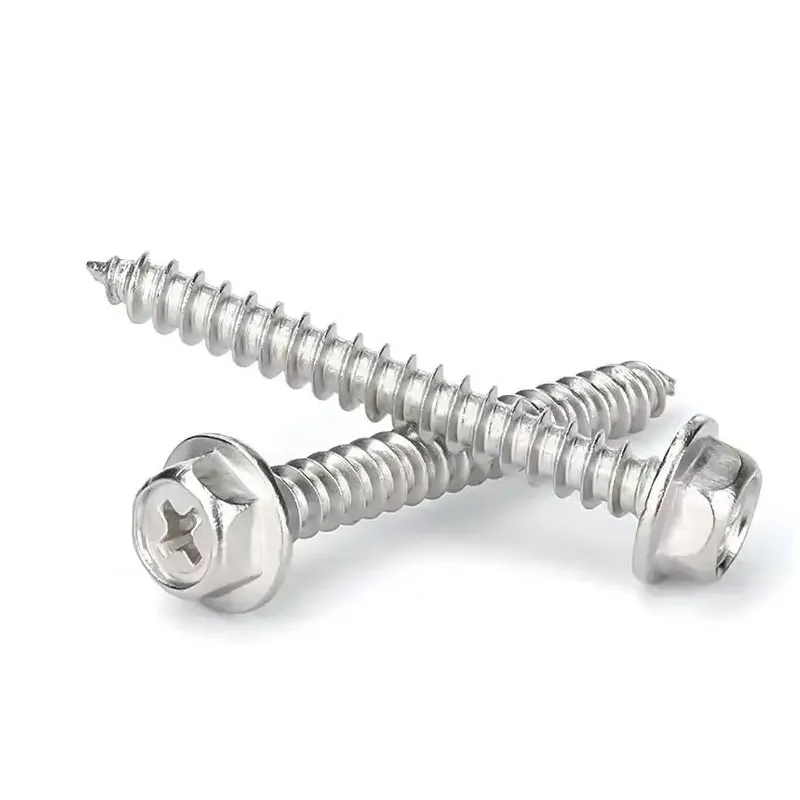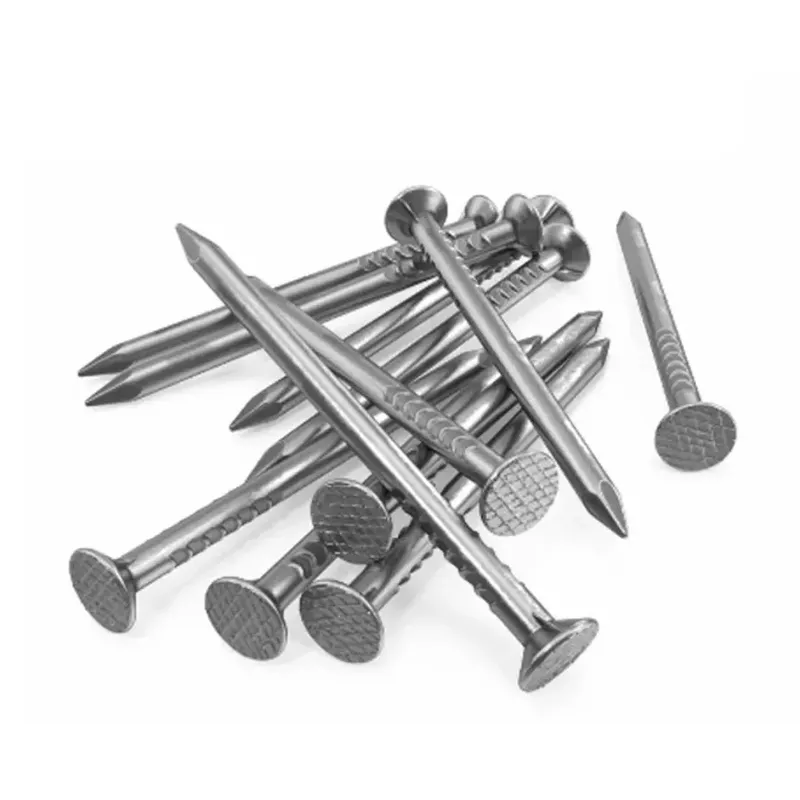
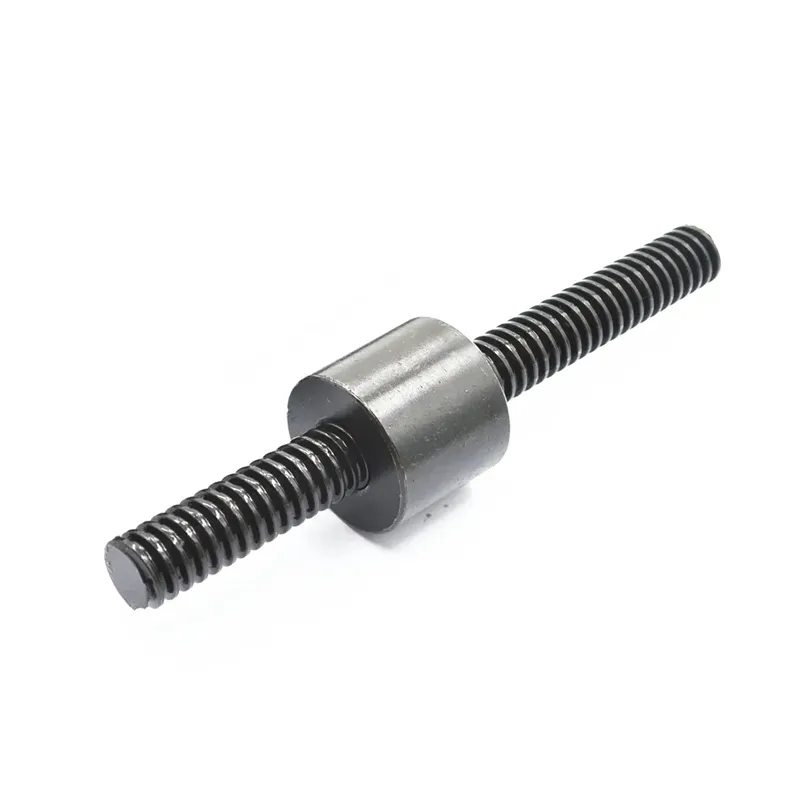
When comparing automatic nailing machine-mounted rivets to manual installation, automated systems deliver vastly superior productivity, consistency, and long-term cost-effectiveness for medium to high-volume manufacturing. While manual riveting offers lower upfront costs and flexibility for custom work, automatic nailing machines provide unparalleled speed, precision, and quality control, leading to stronger, more reliable joints, reduced labor expenses, and a significant return on investment. This makes automation the strategic choice for businesses aiming to scale production and enhance product quality.
Table of Contents
- Understanding the Core Difference: What Sets Automated and Manual Riveting Apart?
- The Productivity Showdown: Why Automation Wins the Race for High-Volume Manufacturing
- A Deep Dive into Quality and Consistency: How Machines Eliminate Human Error
- Manual vs. Automatic Riveting: A Head-to-Head Comparison
- The Financial Equation: Analyzing the True Cost of Rivet Installation
- When is Manual Riveting Still the Right Choice?
- Making the Right Decision for Your Business: Key Factors to Consider
- Conclusion: Embracing Automation for a Competitive Edge in Manufacturing
- Partner with rivetjl for Your Automation Needs
Understanding the Core Difference: What Sets Automated and Manual Riveting Apart?
At its core, the choice between manual and automated riveting comes down to the application of force, precision, and repetition. Both methods aim to join materials by inserting and deforming a rivet, but how they achieve this goal is fundamentally different. Understanding these process distinctions is the first step in identifying the optimal solution for your specific manufacturing needs, as each method carries its own set of capabilities and limitations.
The Manual Riveting Process: A Hands-On Approach
Manual riveting relies entirely on a human operator’s skill, strength, and attention to detail. Using tools ranging from simple handheld rivet guns (for blind rivets) to pneumatic hammers and bucking bars (for solid rivets), the operator is responsible for every step of the process. This includes positioning the workpiece, inserting the rivet, applying the tool, and judging the completion of the set. While this method provides a high degree of flexibility for accessing tight spaces or handling complex, one-off assemblies, it is inherently variable. The quality of the final joint is directly tied to the operator’s experience, focus, and physical stamina, which can fluctuate throughout a shift.
The Automatic Nailing Machine Process: Precision and Speed Unleashed
An automatic nailing machine, also known as an automated riveting system, transforms the fastening process into a highly controlled, repeatable, and efficient operation. These systems integrate multiple functions, such as rivet feeding, component clamping, part positioning, and the riveting cycle itself, into a single, automated workflow. Using technologies like orbital, radial, or press riveting, the machine applies a precisely calibrated amount of force and displacement for a predetermined duration. This removes operator variability from the equation entirely, ensuring that every single rivet is set according to exact engineering specifications, cycle after cycle, without fatigue or error.
The Productivity Showdown: Why Automation Wins the Race for High-Volume Manufacturing
In any manufacturing environment where throughput and efficiency are key performance indicators, the productivity gap between manual and automated riveting is not just a gap—it’s a chasm. While a skilled operator can perform admirably, they simply cannot match the relentless speed and efficiency of a purpose-built machine. Adopting an automatic nailing machine is a strategic move to unlock new levels of output and streamline the entire assembly process.
Cycle Time and Throughput: A Quantitative Leap
The most dramatic advantage of automation is the drastic reduction in cycle time. A manual riveting operation might take several seconds to a minute per rivet, depending on complexity and operator skill. An automatic nailing machine can often complete a cycle in a fraction of that time, sometimes setting a rivet in less than a second. When multiplied across thousands or millions of units, this difference is staggering. This allows a manufacturer to dramatically increase their production capacity without a proportional increase in floor space or labor, directly boosting revenue potential and market responsiveness.
Reducing Labor Costs and Reallocating Human Capital
Manual riveting is a labor-intensive process that often requires dedicated, skilled operators. Automation allows a single technician to oversee the operation of one or even multiple machines, freeing up valuable human resources. This doesn’t necessarily mean eliminating jobs; instead, it allows for the reallocation of skilled workers to more complex, value-added tasks such as quality assurance, machine maintenance, or complex assembly steps that genuinely require human ingenuity. Over time, the savings in direct labor costs alone often provide a compelling justification for the initial investment in an automated system.
Eliminating Bottlenecks in the Assembly Line
In a complex assembly line, the slowest process dictates the pace of the entire operation. Manual riveting frequently becomes this bottleneck, holding back the potential output of upstream and downstream processes. By implementing an automatic nailing machine, manufacturers can break this constraint. The consistent, predictable, and rapid output of an automated system creates a smoother, more balanced production flow, reducing work-in-progress (WIP) inventory and improving the overall efficiency of the entire manufacturing ecosystem.
A Deep Dive into Quality and Consistency: How Machines Eliminate Human Error
While productivity gains are often the most visible benefit of automation, the improvements in quality and consistency are arguably more critical for long-term success. Product failures, recalls, and warranty claims stemming from faulty joints can be financially devastating and severely damage a brand’s reputation. Automated riveting systems act as a powerful form of quality assurance, building consistency directly into the manufacturing process itself.
Unwavering Consistency in Every Fastening
Human operators, no matter how skilled, are subject to fatigue, distraction, and minute variations in technique. This can lead to inconsistently set rivets—some too tight (over-driven), others too loose (under-driven). An automatic nailing machine operates with unwavering precision. It applies the exact same pressure, for the exact same duration, to the exact same position, for every single rivet. This level of repeatability is impossible to achieve manually and results in a uniformly high-quality product, ensuring that the last unit of the day is identical to the first.
Enhanced Joint Strength and Structural Integrity
The final strength and reliability of a riveted joint are directly dependent on the proper formation of the rivet’s set head. Automated systems, especially advanced orbital or radial forming machines, shape the metal in a controlled, flowing manner that minimizes material stress and optimizes grain structure. This results in a stronger, more durable joint that is less prone to fatigue or failure under load. Many automated systems also incorporate process monitoring, using sensors to verify that each rivet has been set within specified force and distance parameters, providing 100% real-time quality control.
Reducing Scrap Rates and Rework Costs
Incorrectly set rivets often lead to scrapped parts or costly, time-consuming rework. A single misplaced or poorly formed rivet can render an entire high-value assembly useless. By virtually eliminating the human error responsible for these defects, automatic nailing machines dramatically reduce scrap rates. The precision of the machine ensures the job is done right the first time, every time. This not only saves money on wasted materials and labor but also contributes to a more sustainable and efficient manufacturing operation.
Manual vs. Automatic Riveting: A Head-to-Head Comparison
To make an informed decision, it’s helpful to see the two methods compared directly across key operational and business metrics. The following table provides a clear, at-a-glance summary of the primary differences.
| Metric | Manual Rivet Installation | Automatic Nailing Machine |
|---|---|---|
| Speed & Throughput | Low to moderate; operator-dependent. | Very High; consistent and rapid cycles. |
| Consistency & Quality | Variable; depends on operator skill and fatigue. | Extremely High; every rivet is set to precise specifications. |
| Initial Investment Cost | Low; handheld tools are inexpensive. | High; requires significant capital expenditure. |
| Operating Cost (Labor) | High; requires one operator per tool. | Low; one operator can oversee multiple machines. |
| Scrap & Rework Rate | Higher due to human error. | Minimal; near-zero defects due to process control. |
| Flexibility | High; easily adaptable to new tasks and locations. | Lower; dedicated tooling may be required for different parts. |
| Operator Safety & Ergonomics | Risk of repetitive strain injury (RSI), noise exposure. | Greatly Improved; operator is removed from forceful, repetitive tasks. |
The Financial Equation: Analyzing the True Cost of Rivet Installation
The decision to invest in an automatic nailing machine is primarily a financial one. While the sticker price of an automated system can seem daunting, a thorough analysis often reveals a compelling business case built on long-term value and a strong return on investment.
Initial Investment: The Upfront Cost Hurdle
There is no denying that the initial capital outlay for an automatic nailing machine is significantly higher than for a set of manual tools. This cost includes not only the machine itself but also potentially custom tooling, integration into the existing production line, and training for personnel. This upfront cost is the primary reason why smaller shops or companies with very low production volumes may stick with manual methods. However, for established manufacturers, this should be viewed not as a simple expense but as a strategic investment in future productivity and quality.
Calculating the Long-Term Return on Investment (ROI)
The true financial picture emerges when calculating the ROI. This calculation must factor in several key areas of savings and increased revenue. Key inputs include:
- Labor Savings: Calculate the cost of operators per year that can be reassigned or saved.
- Increased Throughput: Quantify the value of additional units that can be produced and sold.
- Reduced Scrap/Rework: Tally the annual cost of materials and labor lost to quality defects with the manual process.
- Improved Quality: While harder to quantify, factor in the reduced cost of warranty claims and the enhanced brand value.
When these factors are considered, the payback period for an automatic nailing machine is often surprisingly short, typically ranging from 12 to 36 months.
The Hidden Costs of Manual Installation: Safety and Ergonomics
A complete cost analysis must also account for the hidden costs associated with manual riveting. Repetitive motions, high vibrations, and forceful exertions common in manual riveting can lead to musculoskeletal disorders like Carpal Tunnel Syndrome. These result in increased workers’ compensation claims, higher insurance premiums, and lost productivity due to employee absence. An automatic nailing machine mitigates these risks by isolating the operator from the forceful and repetitive aspects of the task, creating a safer and more sustainable work environment.
When is Manual Riveting Still the Right Choice?
Despite the overwhelming advantages of automation for mass production, manual riveting still holds a valuable place in certain manufacturing scenarios. Acknowledging these specific use cases is key to developing a well-rounded and appropriate fastening strategy for your entire operation.
Prototyping and Low-Volume Production
When developing new products, producing initial prototypes, or fulfilling very small batch orders, the high initial cost and setup time for an automated system are simply not justifiable. Manual riveting provides the speed and flexibility needed to quickly assemble one-off units or small runs without the need for custom tooling. It allows engineers and designers to test concepts and make modifications on the fly, a crucial part of the research and development process.
Custom or Hard-to-Reach Applications
Some assemblies have complex geometries or rivet locations that are difficult or impossible for a fixed automated system to access. In these niche situations, the dexterity of a human operator with a handheld tool is indispensable. This is common in aerospace repair, custom fabrication, and restoration work, where each task is unique and requires a level of adaptability that is currently beyond the scope of practical automation.
Making the Right Decision for Your Business: Key Factors to Consider
Choosing between manual and automated riveting is a strategic decision that depends entirely on your unique operational context. By carefully evaluating a few key factors, you can determine which path will deliver the best results for your company’s goals.
Evaluating Your Production Volume and Mix
This is the most critical factor. Ask yourself: How many units do we produce annually, and how many rivets are in each unit? If you are dealing with high volumes of a relatively stable product design, the case for automation is very strong. If your business model is based on low-volume, high-mix custom work, a manual or semi-automated approach might be more appropriate.
Assessing Your Quality and Tolerance Requirements
What are the consequences of a failed joint in your product? For safety-critical applications in industries like automotive, medical, or aerospace, the absolute consistency and process monitoring offered by an automatic nailing machine are non-negotiable. If your product has less stringent quality requirements and some variability is acceptable, manual methods may suffice.
Planning for Future Growth and Scalability
Don’t just plan for your current needs; consider your company’s future. Do you anticipate an increase in demand? Are you planning to bid on larger contracts? Investing in an automated system can be a foundational step that enables future growth. A manual process that works for 10,000 units a year will become a major liability when you need to produce 100,000. An automatic nailing machine provides the scalability to meet future demand without a corresponding explosion in labor costs.
Conclusion: Embracing Automation for a Competitive Edge in Manufacturing
The comparison between automatic nailing machines and manual installation reveals a clear conclusion for modern manufacturing: for any application beyond prototyping or very low-volume custom work, automation is the superior path to enhanced productivity, impeccable quality, and long-term profitability. While the initial investment is significant, the returns—realized through increased throughput, drastically reduced labor costs, near-perfect consistency, and a safer workplace—are undeniable. In a competitive global market, embracing automation is no longer a luxury; it is a strategic imperative for any company looking to scale its operations, improve its products, and secure a dominant market position.
Partner with rivetjl for Your Automation Needs
Making the leap to automation can feel complex, but you don’t have to do it alone. At rivetjl, we specialize in providing cutting-edge mold and machine solutions tailored to the specific needs of your production environment. Our team of experts can help you analyze your current processes, calculate your potential ROI, and design an automatic nailing machine system that integrates seamlessly into your workflow. Contact us today to learn how we can help you unlock the full potential of automated riveting.