While modern construction overwhelmingly favors welding, riveting can outperform welding in specific structural steel applications, particularly those demanding exceptional fatigue resistance, predictable ductility, and straightforward inspection. The primary advantage of a hot-driven rivet lies in its unique installation process, which creates a massive clamping force on the steel members. This inherent tension generates friction between the plates, effectively resisting shear forces and dampening vibrations long before the rivet itself experiences significant stress, a characteristic that makes it superior for structures under cyclical loads like bridges and cranes. Furthermore, unlike welding, riveting is a mechanical process that does not alter the molecular structure of the base metal, completely avoiding the creation of a potentially brittle Heat-Affected Zone (HAZ).

Table of Contents
- What is the Fundamental Difference Between Riveting and Welding?
- Key Scenarios Where Riveting Holds a Distinct Advantage
- A Comparative Analysis: Riveting vs. Welding Head-to-Head
- Why Did Welding Become the Industry Standard If Riveting Has These Benefits?
- Modern Applications and Niche Roles for Riveting
- How Does the Riveting Process Itself Contribute to Its Strengths?
- Conclusion: Making the Right Connection Choice for Your Project
- Frequently Asked Questions (FAQ)
What is the Fundamental Difference Between Riveting and Welding?
To understand why one method might be chosen over the other, it’s essential to grasp how fundamentally different they are. They are not simply interchangeable ways to join steel; they work on entirely different mechanical and metallurgical principles. A riveted joint is a mechanical assembly, whereas a welded joint is a metallurgical fusion. This core distinction is the source of their respective strengths and weaknesses.
The Mechanics of a Riveted Joint: A Clamping Force Fastener
A structural rivet is not merely a pin that prevents steel plates from sliding apart. The magic of a hot-driven rivet happens during cooling. The rivet is heated to a bright cherry-red (around 1000-1100°C or 1800-2000°F), inserted into aligned holes, and a second head is immediately formed using a pneumatic hammer. As this red-hot rivet cools, it contracts along its length. This contraction exerts an enormous clamping force on the steel members it connects, pressing them together with incredible pressure. This *pre-tension* means that the primary force resisting shear is the static friction between the plates, not the shear strength of the rivet itself. The joint only relies on the rivet’s shear strength after the applied load is great enough to overcome this friction, providing a robust and resilient connection.
The Mechanics of a Welded Joint: A Fused, Monolithic Connection
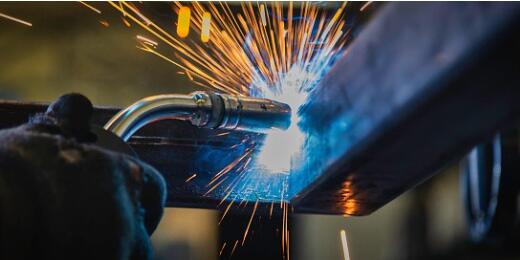
Welding, in contrast, creates a continuous, monolithic structure. By melting the base metal of the two pieces along with a filler material, welding fuses them into a single, homogenous piece of steel upon cooling. The resulting joint is incredibly strong and rigid, transferring load directly through the fused material. This method eliminates the need for gusset plates and overlapping sections required for riveting, often resulting in a lighter and aesthetically cleaner structure. However, the intense, localized heat required for welding creates a Heat-Affected Zone (HAZ) in the parent metal adjacent to the weld, which can alter its crystalline structure and mechanical properties, sometimes leading to reduced ductility or increased brittleness if not properly controlled.
Key Scenarios Where Riveting Holds a Distinct Advantage
While welding is the default for most modern steel construction due to its efficiency and strength, specific engineering challenges reveal the unique and sometimes superior performance of riveting. These advantages are not theoretical; they are the reason iconic structures like the Eiffel Tower and the Sydney Harbour Bridge have endured for generations.
Superior Fatigue Resistance and Vibration Damping
This is arguably riveting’s most significant advantage. Structures like railway bridges, gantry cranes, and heavy industrial machine frames are subjected to thousands or millions of load cycles. In a welded joint, these cyclical stresses can concentrate at microscopic imperfections, leading to the initiation and propagation of fatigue cracks. A riveted joint behaves differently. The immense clamping force and the friction it creates absorb and dampen vibrational energy. Furthermore, the rivet completely fills the hole, preventing the micro-movements that can lead to fretting fatigue. Even if a crack were to form, it would typically stop at the edge of the hole, preventing catastrophic failure across the entire structure.
Enhanced Ductility and Accommodation of Movement
A riveted structure possesses a degree of inherent flexibility that a rigid, welded frame lacks. While seemingly a disadvantage, this ductility is crucial for structures that experience thermal expansion and contraction or minor seismic shifts. The slight, controlled slip that can occur in a riveted joint (after overcoming the initial friction) allows the structure to “breathe” and redistribute stress, preventing the buildup of localized high-stress points that could cause failure in a completely rigid welded connection. This makes riveting an excellent choice for long-span bridges and buildings in climates with extreme temperature variations.
Preservation of Base Metal Properties: The “No HAZ” Argument
The high temperatures of welding fundamentally change the steel around the weld. This Heat-Affected Zone (HAZ) can have different properties—often harder but more brittle—than the original parent metal. This metallurgical change introduces a variable that must be carefully managed through pre-heating, post-heating, and precise procedural control. Riveting, being a mechanical fastening process, induces no such metallurgical transformation. The steel members remain in their original, fabricated state, ensuring their properties are consistent and predictable throughout. This is particularly important when working with specialized or older steels whose response to welding heat may be unknown or detrimental.
Simplified and Reliable Quality Control and Inspection
Inspecting a riveted joint is a remarkably simple and reliable process. A properly driven rivet will have well-formed heads and will be tight in its hole. Inspectors can check for tightness by striking the rivet head with a hammer; a tight rivet emits a clear ring, while a loose one produces a dull thud. This simple, tactile test requires minimal equipment and can be performed quickly and effectively. Conversely, inspecting a structural weld for hidden defects like lack of fusion, porosity, or internal cracking requires complex and expensive non-destructive testing (NDT) methods like ultrasonic or radiographic inspection, which demand highly trained technicians and careful interpretation.
A Comparative Analysis: Riveting vs. Welding Head-to-Head
Choosing between riveting and welding requires a clear understanding of their trade-offs. The optimal choice is always dependent on the specific application’s demands, including load type, environmental conditions, and project economics. The table below provides a direct comparison of key attributes.
| Attribute | Riveting | Welding |
|---|---|---|
| Primary Load Resistance | Clamping force (friction) and shear strength of the rivet. | Fusion and metallurgical bond of the joint material. |
| Fatigue Life | Excellent. High clamping force and hole-filling nature resist cyclical loads well. | Good to fair. Vulnerable to stress concentrations and crack propagation. |
| Joint Flexibility/Ductility | High. Allows for minor slips to relieve stress from thermal/seismic loads. | Low. Creates a rigid, monolithic joint. |
| Material Integrity (HAZ) | Unaffected. No metallurgical change to the base metal. | Creates a Heat-Affected Zone (HAZ) that alters base metal properties. |
| Inspection Process | Simple. Visual and auditory (tap testing). | Complex. Often requires NDT (ultrasonic, X-ray) for internal defects. |
| Labor Skill & Environment | Requires a coordinated team (heater, catcher, bucker, driver) but is less sensitive to environmental conditions. | Requires a highly skilled, certified welder. Sensitive to wind, moisture, and contamination. |
| Weight & Efficiency | Heavier. Requires overlapping plates and gussets. | Lighter. Allows for more direct butt joints and streamlined designs. |
Why Did Welding Become the Industry Standard If Riveting Has These Benefits?
Given the impressive advantages of riveting in certain contexts, it’s logical to ask why it’s now a niche practice. The shift towards welding and high-strength bolting was driven by a powerful combination of technological advancement, economic pressure, and a change in design philosophy.
The Rise of High-Strength Bolting and Modern Welding Techniques
The development of high-strength bolts in the mid-20th century provided a compelling alternative. A high-strength tension control (TC) bolt could be installed by a single worker with a torque wrench, replicating the clamping force of a rivet with far less labor and no need for a hot forge on site. Concurrently, welding technology advanced rapidly. The introduction of methods like Shielded Metal Arc Welding (SMAW) and later, Flux-Cored Arc Welding (FCAW), made it possible to create strong, reliable welds faster and more consistently, even in field conditions. These technologies offered a level of automation and speed that a four-person riveting gang could not match.
Economic and Efficiency Factors in Modern Construction
Ultimately, economics sealed the deal. Riveting is a labor-intensive process requiring a skilled, four-person crew for each rivet. Welding and bolting require fewer workers and are significantly faster, directly translating to lower labor costs and shorter project timelines. The material efficiency of welding—eliminating the need for large gusset plates and overlapping members—also reduced the total tonnage of steel required for a project, further cutting costs. In the fast-paced world of modern construction, these efficiencies made welding and bolting the overwhelmingly logical choice for most applications.
Modern Applications and Niche Roles for Riveting
Despite being largely supplanted, riveting is far from obsolete. It continues to be the superior and sometimes only choice for a specialized set of applications where its unique properties are indispensable.
Historical Restoration and Replication Projects
When restoring historic steel structures, maintaining authenticity is paramount. Replacing failed rivets with bolts or welds would not only be aesthetically jarring but could also alter the way the structure handles stress, potentially compromising its integrity. Therefore, projects on iconic bridges, buildings, and steam locomotives often require skilled artisans to replicate the original hot-riveting process, preserving both the look and the engineered behavior of the original design.
Specialized Industrial Equipment
In certain industrial applications, such as the construction of traditional boilers and pressure vessels, riveting is still used. The ductility and predictable failure mode of riveted seams can be a safety advantage over welded seams, which might fail more catastrophically. Additionally, in equipment that is difficult to inspect or subject to severe vibration, the reliability of a riveted joint remains highly valued.
Aesthetic Choices in Architectural Design
The distinct, powerful look of a riveted connection has a strong industrial appeal. Architects and designers often specify rivets or rivet-style bolts as a design element to evoke a vintage, industrial, or steampunk aesthetic in buildings, furniture, and fixtures. In these cases, the choice is driven by visual impact rather than purely structural demands.
How Does the Riveting Process Itself Contribute to Its Strengths?
The strength of a riveted joint is a direct result of its meticulous, multi-step installation. The process begins with heating the solid steel rivet in a forge to approximately 1050°C, a bright “cherry-red” color. This makes it malleable. A “heater” passes the hot rivet to a “catcher,” who inserts it into the pre-drilled, aligned holes in the steel plates. On one side, a “bucker” uses a heavy dolly to hold the manufactured head of the rivet firmly in place. On the other side, a “driver” uses a pneumatic riveting hammer to rapidly form the other head (the “shop head” or “field head”). This entire process must be completed in seconds before the rivet cools. As the rivet cools and shrinks, it contracts with immense force, pulling the steel plates into tight compression and completely filling the hole, which is the source of its excellent fatigue resistance and clamping power.
Conclusion: Making the Right Connection Choice for Your Project
In the debate of riveting versus welding, there is no single “better” method—only the *right method for the application*. Welding offers unparalleled strength, rigidity, and economic efficiency, making it the dominant choice for the vast majority of modern steel structures. However, riveting retains a vital and superior role in niche applications where performance under dynamic, cyclical loads is the primary concern. Its ability to dampen vibration, resist fatigue, and accommodate minor movements without compromising the base metal’s integrity is a testament to its enduring engineering brilliance. Just as selecting the right steel and manufacturing process is critical in precision mold making, choosing the optimal connection method is paramount in structural engineering. Understanding the distinct advantages of riveting ensures that this classic technique remains a valuable tool for engineers facing the unique challenges of vibration, thermal cycling, and historical preservation.
Frequently Asked Questions (FAQ)
Are rivets stronger than welds?
It depends on the type of strength. A welded joint is typically stronger in terms of ultimate tensile and shear strength, creating a single, monolithic piece. However, a riveted joint is often “stronger” in terms of fatigue life and its ability to withstand cyclical loads and vibrations over long periods.
Is riveting more expensive than welding?
Yes, almost always. Hot riveting is a highly labor-intensive process requiring a skilled, multi-person crew and specialized equipment (a forge). Welding is significantly faster and requires fewer personnel, making it much more cost-effective for new construction.
Can you replace rivets with bolts?
Yes, and this is a common practice in repair and retrofitting. High-strength bolts, when properly tensioned, can replicate the clamping force of a rivet. However, it’s crucial to use bolts of the correct size and grade and follow a specific installation procedure to ensure the joint behaves as intended.
Why don’t we build skyscrapers with rivets anymore?
Modern skyscrapers rely on rigid frame designs to resist wind and seismic loads. The immense rigidity of welded connections is better suited for this purpose. Furthermore, the speed and cost-efficiency of welding and high-strength bolting are essential for the scale and timeline of such massive projects.