In food-processing equipment, the choice between CIP-compatible rivets and regular screws is a critical engineering decision that directly impacts food safety, operational efficiency, and regulatory compliance. The primary difference lies in their design for cleanability: CIP-compatible rivets provide a smooth, permanent, and crevice-free surface that minimizes areas for bacterial harborage, while regular screws, with exposed threads and complex head geometries, create microscopic pockets where contaminants can thrive, posing a significant risk in sanitary environments. This distinction is fundamental to preventing biofilm formation and ensuring the integrity of Clean-in-Place (CIP) systems.

Table of Contents
- What is Clean-in-Place (CIP) and Why Do Fasteners Matter?
- The Hidden Dangers: How Fasteners Become Contamination Hotspots
- The Case for Traditional Rivets in Sanitary Applications
- The Pitfalls of Using Regular Screws in Food Processing
- A Head-to-Head Comparison: CIP-Compatible Rivets vs. Regular Screws
- The Modern Solution: The Rise of Hygienically Designed Screws
- Making the Right Choice: Key Factors for Your Application
- Conclusion: Fastening Your Commitment to Food Safety
What is Clean-in-Place (CIP) and Why Do Fasteners Matter?
Clean-in-Place (CIP) is an automated method of cleaning the interior surfaces of pipes, vessels, processing equipment, and associated fittings without major disassembly. The process involves circulating cleaning solutions, rinses, and sanitizing agents through the equipment at specific temperatures and flow rates. The entire philosophy of CIP is built on the principle of achieving verifiable, repeatable cleaning results to ensure a sanitary processing environment. In this system, every single component, no matter how small, must be designed to facilitate this process. Fasteners—the rivets, screws, and bolts holding the machinery together—are not exempt; in fact, they are one of the most critical and often overlooked elements.
The Hidden Dangers: How Fasteners Become Contamination Hotspots
Improperly selected fasteners can completely undermine a state-of-the-art CIP system. They can become epicenters for bacterial harborage and biofilm formation. A biofilm is a complex community of microorganisms that attaches to a surface and is encased in a protective slimy layer. Once formed, biofilms are notoriously difficult to remove with standard cleaning procedures and can continuously shed bacteria into the product stream, leading to spoilage, reduced shelf life, and potentially severe foodborne illnesses. The microscopic gaps, threads, and sharp corners of a standard screw provide the perfect textured surface for initial bacterial attachment and subsequent biofilm growth, turning a simple component into a major liability.
The Case for Traditional Rivets in Sanitary Applications
For decades, rivets have been a preferred choice for permanent assemblies in food-grade equipment. When properly installed, a solid rivet creates a permanent, non-porous joint that is inherently more hygienic than a typical threaded fastener. Their design is simple, robust, and addresses the primary concern of eliminating crevices.
Advantages: A Seamless, Crevice-Free Solution
The primary advantage of a rivet is its final form. During installation, the rivet tail is upset (formed) to create a second head, clamping the joined materials tightly. This process fills the hole completely, leaving a smooth, domed head on both sides. This seamless surface is ideal for CIP systems because it lacks the sharp angles, recesses, and exposed threads found on screws. Cleaning solutions can flow over the surface unimpeded, effectively removing product residue and sterilizing the area. This significantly reduces the risk of bacterial harborage, making rivets an excellent choice for static, non-moving parts within the food-contact zone.
Disadvantages: The Challenge of Permanence and Inspection
The strength of the rivet—its permanence—is also its main drawback. Riveted assemblies cannot be disassembled for routine inspection, maintenance, or repair without destroying the fastener. To access internal components, the rivet must be drilled out and replaced, a labor-intensive and costly process. This lack of access makes it impossible to visually inspect the mating surfaces between the joined parts for signs of crevice corrosion or hidden contamination. For equipment that requires periodic teardowns for seal replacement or part servicing, rivets are simply not a practical option.
The Pitfalls of Using Regular Screws in Food Processing
While screws offer unmatched convenience for assembly and maintenance, standard, off-the-shelf hardware is profoundly unsuitable for sanitary applications. The very features that make a screw functional in an industrial setting become critical failure points in a food-processing environment.
Why Standard Screws Fail the Hygiene Test
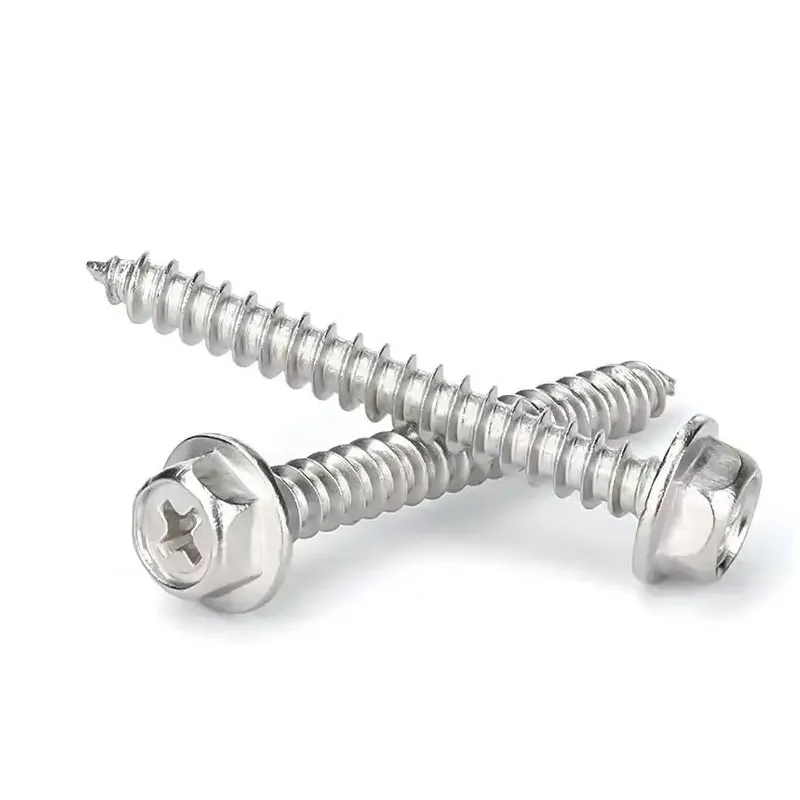
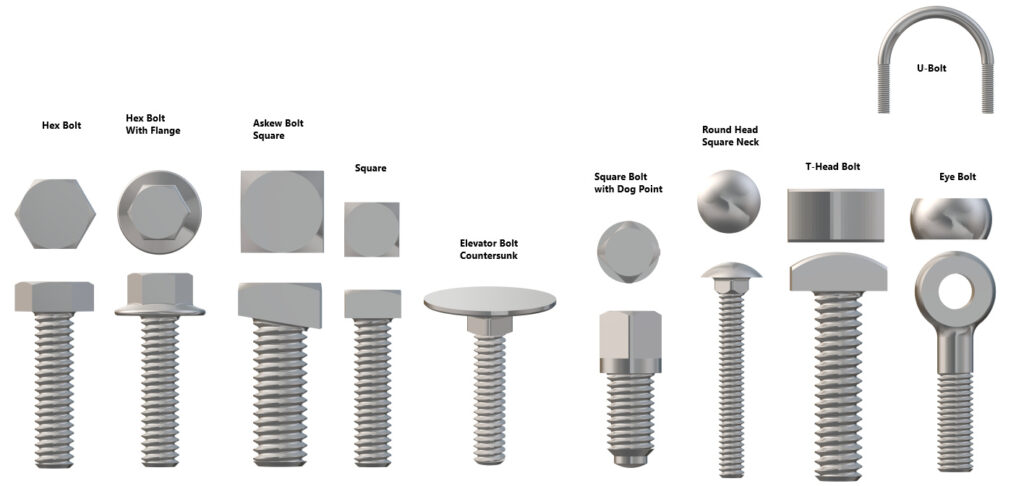
A standard screw, such as a socket head cap screw or a hex bolt, is a collection of hygienic hazards. The recess in the head (e.g., the hexagonal socket) is a perfect trap for food particles and moisture, creating an ideal breeding ground for bacteria. The sharp corners under the head and the exposed threads provide countless microscopic ledges for microorganisms to attach and colonize. These areas are shielded from the flow and chemical action of CIP fluids, making effective cleaning virtually impossible. Furthermore, the small gap between the screw shank and the clearance hole it passes through can also trap debris and harbor pathogens.
The Unseen Risk: Crevice Corrosion in Threads and Heads
Beyond microbial contamination, regular screws introduce the risk of crevice corrosion. This is a localized form of corrosion that occurs in confined spaces where access to oxygen is restricted. The tight spaces within screw threads and under the fastener head are prime locations for this to occur. Trapped moisture and cleaning chemicals can become stagnant and aggressive, leading to pitting and degradation of the stainless steel. This not only weakens the fastener’s structural integrity but also creates an even more textured and difficult-to-clean surface, exacerbating the problem of bacterial harborage.
A Head-to-Head Comparison: CIP-Compatible Rivets vs. Regular Screws
To clarify the decision-making process, this table provides a direct comparison of key attributes for each fastener type, including the modern alternative of hygienic screws.
| Feature | CIP-Compatible Rivets | Regular Screws | Hygienic Screws |
|---|---|---|---|
| Cleanability | Excellent; smooth, non-porous surface. | Poor; threads and head recesses trap contaminants. | Very Good to Excellent; polished, crevice-free design. |
| Contamination Risk | Very Low. | Very High. | Low to Very Low. |
| Maintenance & Inspection | Difficult; requires destructive removal. | Excellent; easily removable for access. | Excellent; designed for easy removal and cleaning. |
| Assembly Type | Permanent. | Removable. | Removable. |
| Initial Cost | Moderate. | Low. | High. |
| Regulatory Compliance | Generally compliant for permanent joints. | Non-compliant for food-contact zones. | Designed to meet 3-A, EHEDG standards. |
The Modern Solution: The Rise of Hygienically Designed Screws
Recognizing the limitations of both rivets and standard screws, the industry has developed a third option: hygienically designed threaded fasteners. These components blend the serviceability of a screw with the cleanability principles of a rivet, offering a superior solution for many applications.
What Makes a Screw “CIP-Compatible”?
A CIP-compatible or hygienic screw is engineered from the ground up to eliminate contamination points. Key features include:
- Smooth, Domed Heads: Heads are often rounded, polished, and free of recesses (like hex sockets) to prevent pooling and promote drainage. Drive types are external (e.g., polished hex head) or specially designed cleanable internal drives.
- Polished Surfaces: Surfaces are polished to a low Ra (Roughness average) value, typically below 0.8 µm, making it difficult for bacteria to adhere.
- Radiused Transitions: All transitions, such as where the head meets the shank, are smoothly radiused to eliminate sharp internal corners where microbes can hide.
- Specialized Sealing: They are often used with special washers or O-rings made from FDA-compliant materials to seal the gap between the fastener head and the equipment surface, preventing ingress.
Innovations in Thread and Head Design
Modern innovations go even further. Some hygienic bolts feature reduced shank diameters and special captive sealing washers that create a metal-to-metal seal while also protecting the mounting hole. Thread designs may be modified for easier cleaning, and materials are carefully selected for corrosion resistance and durability. Achieving these precise geometries and flawless surface finishes requires advanced manufacturing processes and stringent quality control, representing a significant step up from standard hardware production.
Making the Right Choice: Key Factors for Your Application
Which fastener is right for your equipment? The decision depends on a careful analysis of the specific application, weighing factors of maintenance, material compatibility, and regulatory requirements.
Permanent vs. Removable Assemblies
This is the first and most critical question. Is the joint intended to be permanent for the life of the equipment, such as a structural frame or a permanently affixed nameplate? If so, a CIP-compatible rivet is an excellent, cost-effective, and highly sanitary choice. If the assembly requires *any* future access for maintenance, cleaning validation, or parts replacement—such as securing a pump housing, an access panel, or a bearing mount—then a hygienic screw is the only appropriate choice. Regular screws should never be used in a food-contact or product-splash zone.
Material Selection: Beyond Basic Stainless Steel
The material is just as important as the design. While 304 stainless steel is common, the aggressive cleaning agents and sanitizers used in CIP systems often demand a higher grade. 316 or 316L stainless steel offers superior resistance to chlorides and other corrosive chemicals, preventing pitting and crevice corrosion. For extremely harsh environments, specialty alloys may be required. Ensuring the material is certified and traceable is a key part of quality assurance and regulatory compliance.
Compliance and Certification (FDA, 3-A, EHEDG)
In the food and beverage industry, compliance is non-negotiable. Equipment and its components must adhere to strict standards set by bodies like the FDA (Food and Drug Administration), 3-A Sanitary Standards, and EHEDG (European Hygienic Engineering & Design Group). These organizations provide specific guidelines on the design of sanitary equipment, including the use of fasteners. Choosing certified hygienic fasteners ensures that your equipment will meet these rigorous requirements, simplifying validation and demonstrating a commitment to the highest levels of food safety.
Conclusion: Fastening Your Commitment to Food Safety
The choice between CIP-compatible rivets, regular screws, and hygienic screws is far more than a simple hardware selection; it is a fundamental decision that underpins the safety and integrity of food-processing operations. While rivets offer a robust solution for permanent, crevice-free joints, their lack of serviceability limits their use. Regular screws, despite their convenience, present an unacceptable risk of contamination in sanitary zones. The clear winner for modern, serviceable equipment design is the hygienically designed screw, which successfully merges maintainability with the stringent cleaning requirements of CIP systems. By prioritizing sanitary design principles in every component, down to the last fastener, manufacturers can build equipment that is not only efficient and reliable but also a fortress against contamination. For expert guidance on designing and manufacturing custom components that meet the highest sanitary standards, contact the precision engineering team at rivetjl.