Ever been in that frustrating spot where the perfect fastener just doesn’t exist? You’ve got a brilliant, unique project – maybe a bespoke leather bag, a custom furniture piece, or a specialized electronic enclosure – and standard rivets are either too long, too short, or just plain wrong. That’s where custom male-female rivets come into play. They’re not just fasteners; they’re tailored solutions designed to fit your exact vision. But how do you go about ordering something that isn’t sitting on a shelf?
Ordering non-standard custom male-female rivets involves providing precise specifications for dimensions (head diameter, post length, barrel diameter), material, finish, and quantity to a specialized manufacturer. This process typically requires detailed drawings or samples, clear communication of application needs, and often includes prototyping to ensure the bespoke fasteners perfectly match the unique requirements of your project, guaranteeing optimal fit, function, and aesthetic integration.
This guide will walk you through the entire process, making it easy to get those perfectly sized, unique male-female rivets for your one-of-a-kind creation. Let’s get started!
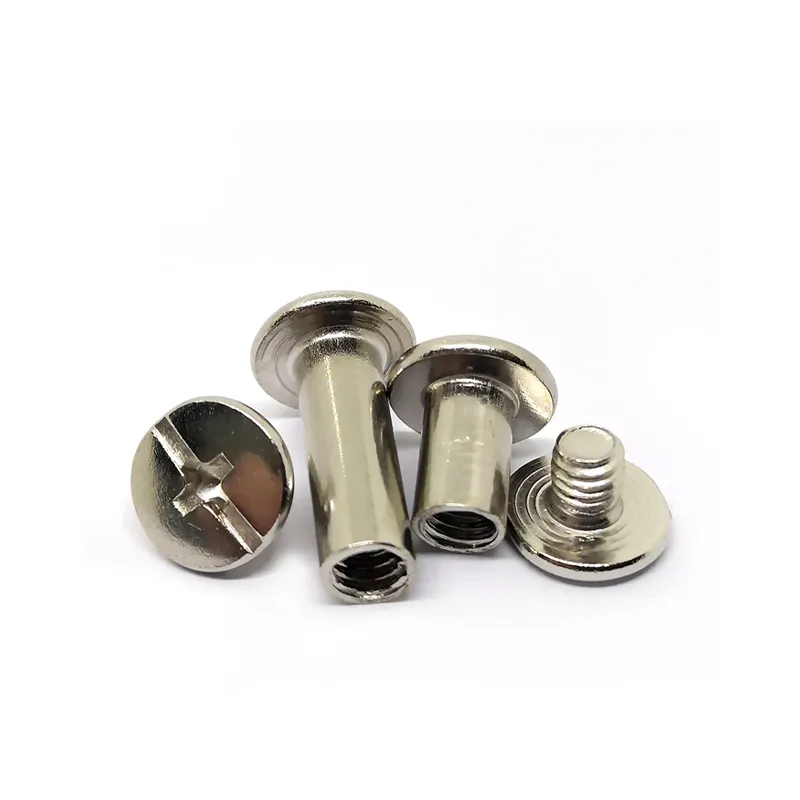
Table of Contents
- Why Go Custom for Male-Female Rivets?
- Defining Your Specifications: What Information Do Manufacturers Need?
- The Custom Ordering Process: Step-by-Step
- Material and Finish Options for Custom Rivets
- Tips for a Successful Custom Rivet Order
1. Why Go Custom for Male-Female Rivets?
Standard fasteners are great for standard jobs. But when your project is anything but standard, trying to force a generic rivet can lead to compromises in aesthetics, functionality, and even durability.
Going custom for male-female rivets is essential when standard sizes fail to provide the precise fit, desired aesthetic, or required strength for a unique project. Customization allows for exact matching of dimensions, materials, and finishes to specific application needs, preventing issues like improper grip, unsightly protrusion, or insufficient load-bearing capacity, thereby ensuring optimal performance, enhanced aesthetics, and superior product quality that off-the-shelf options cannot achieve.
1.1 Perfect Fit and Functionality
No more “almost” fitting.
- Example 1: Bespoke Leather Goods. Imagine a luxury leather handbag where the standard male-female rivets are either too long (leaving an unsightly gap or wobbly joint) or too short (failing to secure all layers of leather). Custom male-female rivets can be manufactured with the exact post length to perfectly grip the specific thickness of the leather, ensuring a tight, secure, and professional-looking closure that enhances the bag’s overall quality and feel.
- Example 2: Specialized Electronic Enclosures. For a compact electronic device, every millimeter counts. A standard rivet might protrude too much, interfere with internal components, or not sit flush. Custom rivets can be designed with precise head diameters and barrel lengths to fit perfectly within tight tolerances, ensuring components are securely fastened without obstruction or aesthetic compromise.
- Analysis: The theoretical basis is precision engineering and design for assembly. An “off-the-shelf” rivet is designed for a range of applications, leading to compromises. A custom rivet, however, is optimized for a single, specific application, maximizing fit, load distribution, and joint integrity. The practical impact is a superior product that functions flawlessly and looks professionally finished.
This table highlights the benefits of custom male-female rivets.
| Benefit of Custom Rivets | How it Solves Standard Rivet Problems | Impact on Your Project |
| Exact Dimensional Fit | No gaps, no crushing, perfect grip for material thickness | Superior joint strength, professional finish |
| Tailored Aesthetics | Matches brand identity, specific design vision | Enhanced visual appeal, stronger brand recognition |
| Optimized Material/Finish | Meets specific strength, corrosion, or conductivity needs | Increased durability, extended product lifespan |
| Unique Design Features | Custom logos, special head shapes | Exclusivity, anti-counterfeiting, unique selling point |
| Problem-Solving | Addresses unique assembly challenges | Prevents costly reworks, ensures project success |
1.2 Enhanced Aesthetics and Brand Identity
Your fasteners can be part of your brand story.
- Example 1: Custom Furniture Design. A high-end furniture piece might feature exposed fasteners as a design element. Standard, shiny brass rivets might clash with a rustic, matte black aesthetic. Custom male-female rivets can be ordered with a specific antique bronze finish and a unique, slightly domed head style, perfectly complementing the furniture’s design and reinforcing the brand’s unique aesthetic.
- Example 2: Luxury Packaging. For premium product packaging, every detail matters. Custom rivets with a brand logo engraved on the head, or a specific color-matched coating, can elevate the unboxing experience, making the packaging feel more exclusive and reinforcing brand identity.
- Analysis: The practical impact is that custom fasteners transform a functional component into a design feature, contributing significantly to the perceived value and brand image of the product. This attention to detail is a hallmark of luxury and quality.
2. Defining Your Specifications: What Information Do Manufacturers Need?
When you’re ordering non-standard rivet sizes, clarity is king. The more precise information you provide, the faster and more accurately your custom rivets can be manufactured.
To order non-standard custom male-female rivets, manufacturers require precise specifications including: male and female head diameters, male post length (under head), female barrel length (under head), male and female barrel diameters, material type (e.g., brass, steel), desired finish (e.g., antique brass, nickel plating), and estimated quantity. Providing detailed technical drawings or physical samples is highly recommended to ensure accurate production and avoid misinterpretations.
2.1 Critical Dimensions: Measure Twice, Order Once
Precision is paramount.
- Male Rivet Dimensions:
- Head Diameter: The width of the male rivet’s head.
- Post Length (Under Head): The length of the male post from the underside of the head to its tip. This is crucial for gripping your material thickness.
- Barrel Diameter: The diameter of the male post that inserts into the female part.
- Female Rivet Dimensions:
- Head Diameter: The width of the female rivet’s head.
- Barrel Length (Under Head): The length of the female barrel from the underside of its head to its opening. This needs to accommodate the male post and your material.
- Barrel Diameter (Inner/Outer): The inner diameter must fit the male post, and the outer diameter affects the overall look and strength.
- Example 1: Measuring for a Leather Wallet. You’re joining three layers of leather, totaling 4.5mm thick. You’d specify a male post length of, say, 5.0mm (allowing for a slight protrusion for secure fastening) and a female barrel length of 4.5mm. The head diameters would be chosen for aesthetic balance.
- Example 2: Custom Book Binding. For a thick book cover, you might need a male post length of 10mm and a female barrel length of 9.5mm, with larger head diameters to provide a robust, decorative finish.
- Analysis: The theoretical basis is dimensional tolerance and fit. Each dimension plays a critical role in the rivet’s ability to secure the material without being too loose (leading to wobble) or too tight (crushing the material). The practical impact of precise measurements is a strong, aesthetically pleasing, and durable joint.
This table lists the essential specifications for custom male-female rivets.
| Specification Category | Specific Details Required | Why it’s Important |
| Male Rivet | Head Diameter, Post Length (Under Head), Barrel Diameter | Determines grip, strength, and visual presence |
| Female Rivet | Head Diameter, Barrel Length (Under Head), Inner/Outer Barrel Diameter | Ensures male fit, grip, and overall joint integrity |
| Material | Type (Brass, Steel, Stainless, Aluminum), Grade (e.g., 304 SS) | Dictates strength, corrosion, weight, and cost |
| Finish | Plating (Nickel, Gold), Coating (PVD, E-coat), Antique Effect | Aesthetic appeal, corrosion resistance, durability |
| Head Style | Domed, Flat, Countersunk, Custom Logo/Texture | Visual impact, flushness, branding |
| Quantity | Estimated number of rivets needed | Affects pricing, production lead time |
| Application Details | Material thickness, environment, load requirements | Helps manufacturer advise on optimal choices |
| Drawings/Samples | Technical drawings (CAD), physical samples | Ensures accurate interpretation of requirements |
2.2 Material, Finish, and Head Style Details
Beyond size, it’s about look and feel.
- Material: Do you need brass for a classic look, stainless steel for corrosion resistance, or aluminum for lightweight? Specify the exact alloy if known (e.g., 304 stainless steel).
- Finish: Do you want a shiny nickel plate, an antique brass look, a durable PVD coating in matte black, or a specific color e-coat? Provide samples or pantone codes if color matching is critical.
- Head Style: Is it a standard domed head, a flat head, or something unique like an engraved logo or a specific texture?
- Example 1: Custom Jewelry Clasps. For a unique jewelry piece, you might specify custom male-female rivets in sterling silver with a polished finish and a tiny, engraved brand initial on the head. This level of detail elevates the piece significantly.
- Example 2: Outdoor Signage. For a durable outdoor sign, you’d specify stainless steel male-female rivets with a PVD black finish to resist weathering and provide a sleek, modern look.
- Analysis: The practical impact is that these details transform a functional fastener into an integral part of your product’s design and brand identity, contributing to its perceived quality and market appeal.
3. Material and Finish Options for Custom Rivets
Just like the dimensions, the material and finish of your custom male-female rivets are crucial for both performance and aesthetics. These choices define how your rivets will look, feel, and hold up over time.
Material and finish options for custom male-female rivets are critical for performance and aesthetics. Common materials include brass for classic appeal and good conductivity, steel for high strength (often plated for corrosion), stainless steel for superior corrosion resistance, and aluminum for lightweight applications. Finishes range from various platings (e.g., nickel, gold, antique brass) for aesthetic and protective purposes, to durable coatings like PVD or e-coating for enhanced wear resistance and specific colors, ensuring the rivet meets both functional and visual demands.
3.1 Choosing the Right Base Material
Strength, weight, and environment.
- Brass: A classic choice, offering a warm, golden aesthetic, good corrosion resistance (especially when plated), and excellent electrical conductivity. Ideal for decorative items, leather goods, and electrical components.
- Example: For a vintage-style leather briefcase, custom male-female rivets in solid brass with an antique finish would be perfect, developing a beautiful patina over time.
- Steel (Carbon Steel): Offers high strength and is very cost-effective. However, it’s prone to rust, so it almost always requires a protective plating (e.g., zinc, nickel, black oxide).
- Example: For a heavy-duty tool belt, custom male-female rivets in plated carbon steel would provide the necessary strength and durability.
- Stainless Steel (304, 316): Excellent corrosion resistance, good strength, and a modern, clean look. 316 grade offers superior resistance to saltwater and harsh chemicals.
- Example: For marine-grade equipment or medical devices, custom male-female rivets in 316 stainless steel ensure longevity and hygiene.
- Aluminum: Lightweight, good corrosion resistance, and easily anodized for color. Lower strength than steel but ideal where weight is a concern.
- Example: For aerospace components or lightweight consumer electronics, custom male-female rivets in aluminum would be chosen.
- Analysis: The theoretical basis is material science, where each metal has distinct mechanical, chemical, and aesthetic properties. Design trade-offs involve balancing required strength, weight, corrosion resistance, and cost.
This table summarizes common materials and finishes for custom male-female rivets.
| Material Type | Key Characteristics | Common Finishes | Typical Applications |
| Brass | Classic look, good conductivity, corrosion resistant | Polished, Antique Brass, Lacquered | Leather goods, decorative, electrical |
| Carbon Steel | High strength, cost-effective, rusts without plating | Zinc Plated, Nickel Plated, Black Oxide, Chrome | General assembly, automotive, heavy-duty |
| Stainless Steel | Excellent corrosion, good strength, modern look | Polished, Brushed, Black Oxide, PVD | Marine, medical, outdoor, food processing |
| Aluminum | Lightweight, good corrosion, ductile | Anodized (various colors), Polished, Clear Coat | Aerospace, electronics, lightweight structures |
| Copper | Excellent conductivity, unique color, soft | Polished, Antique Copper, Lacquered | Electrical, decorative, artisan crafts |
3.2 Aesthetic and Protective Finishes
The final touch.
- Plating: A thin layer of another metal applied for aesthetics or corrosion protection. Common options include nickel (bright silver), brass plating (golden), chrome (mirror-like), and various antique finishes (e.g., antique brass, antique copper).
- Example: A custom male-female rivet for a luxury watch strap might be nickel-plated brass for a sleek, durable silver finish.
- Coatings (PVD, E-coating):
- PVD (Physical Vapor Deposition): A highly durable, thin film coating that offers excellent scratch and wear resistance, and a wide range of colors (e.g., matte black, rose gold, gunmetal).
- Example: For high-wear items like backpack straps, custom male-female rivets with a PVD black finish would maintain their appearance longer.
- E-coating (Electrophoretic Coating): A uniform, thin organic coating that can provide specific colors and good corrosion resistance.
- Example: If you need custom male-female rivets in a very specific brand color, e-coating can achieve that with good durability.
- PVD (Physical Vapor Deposition): A highly durable, thin film coating that offers excellent scratch and wear resistance, and a wide range of colors (e.g., matte black, rose gold, gunmetal).
- Analysis: The practical impact is that the finish not only enhances the visual appeal of the rivet but also significantly contributes to its longevity and performance in specific environments, preventing tarnish, rust, or wear.
4. The Custom Ordering Process: Step-by-Step
Ordering non-standard custom male-female rivets is a collaborative effort. Knowing the steps helps ensure a smooth and successful outcome.
The custom ordering process for non-standard male-female rivets typically involves: 1. Initial Inquiry with detailed specifications (dimensions, material, finish, quantity). 2. Technical Review and Quotation from the manufacturer. 3. Prototype Approval to validate fit and aesthetics. 4. Production and Quality Control. 5. Delivery. Clear communication and providing comprehensive details at each stage are crucial for a successful bespoke fastener order.
4.1 Initial Inquiry and Technical Review
Getting the conversation started.
- Step 1: Contact the Manufacturer. Reach out to a specialized custom rivet manufacturer (like Jiliang Fastener Manufacturing!). Provide your initial requirements and project overview.
- Step 2: Submit Detailed Specifications. This is where your precise measurements, material choices, finish preferences, and estimated quantities come in.
- What to provide:
- Technical Drawings: CAD files (DXF, DWG, STEP) are ideal.
- Hand Sketches: If no CAD, clear, dimensioned hand sketches can work.
- Physical Samples: If you have an existing rivet you want to modify, send it!
- Application Details: Explain what the rivet is for, what materials it’s joining, and the environment it will be in.
- What to provide:
- Step 3: Technical Review and Quotation. The manufacturer’s engineers will review your specifications, confirm feasibility, and provide a detailed quotation including unit cost, tooling costs (if any), and lead times. They might also suggest alternative materials or finishes for better performance or cost-efficiency.
- Example: You send a CAD drawing for a custom male-female rivet with a specific post length for a 7mm thick material, specifying 304 stainless steel with a brushed finish, and a quantity of 5,000 pieces. The manufacturer reviews it, confirms they can produce it, and sends back a quote.
- Analysis: The theoretical basis is clear communication and engineering feasibility. The practical impact is that a thorough initial review prevents costly errors down the line and ensures the manufacturer fully understands your needs.
This table outlines the custom ordering process.
| Step Number | Process Stage | Key Actions | Expected Outcome |
| 1 | Initial Inquiry | Contact manufacturer, provide project overview | Establish communication, receive initial guidance |
| 2 | Specification Submission | Provide detailed drawings, dimensions, material, finish, quantity, application details | Manufacturer understands requirements, prepares for review |
| 3 | Technical Review & Quotation | Manufacturer reviews specs, confirms feasibility, provides pricing & lead times | Agreement on design, cost, and timeline |
| 4 | Prototyping (Optional but Recommended) | Manufacturer produces samples for client approval | Validation of fit, function, and aesthetics |
| 5 | Production & Quality Control | Mass production begins, rigorous QC checks | High-quality custom rivets manufactured |
| 6 | Delivery | Rivets shipped to client | Project receives its bespoke fasteners |
4.2 Prototyping and Production
Seeing your custom rivet come to life.
- Step 1: Prototyping (Highly Recommended). For non-standard rivet sizes or complex designs, the manufacturer will produce a small batch of prototypes. This allows you to physically test the fit, function, and aesthetic of the custom male-female rivets on your actual project.
- Why it’s crucial: You can verify the post length, head diameter, and finish are exactly what you envisioned before committing to a large production run.
- Step 2: Prototype Approval. Once you’re satisfied with the prototypes, you give the go-ahead for mass production.
- Step 3: Production and Quality Control. The manufacturer then proceeds with full production, implementing strict quality control measures throughout the process to ensure every rivet meets your exact specifications and quality standards.
- Example: You receive prototypes of your custom male-female rivets. You test them on your leather product and realize the post length needs to be 0.5mm shorter for a tighter fit. You communicate this, the manufacturer adjusts, and new prototypes (or direct production) begin.
- Analysis: The practical impact of prototyping is risk mitigation. It catches potential issues early, saving significant time and cost compared to discovering problems after a full production run.
5. Tip3s for a Successful Custom Rivet Order
Ordering custom male-female rivets can be straightforward if you follow a few key guidelines.
For a successful custom male-female rivet order, always provide detailed, unambiguous specifications, including precise dimensions and material/finish requirements. Collaborate closely with your chosen manufacturer, utilize their expertise, and strongly consider prototyping for non-standard sizes. Plan ahead for lead times, and don’t hesitate to ask questions, ensuring clear communication and a perfect final product for your unique project.
5.1 Be Detailed and Proactive
Your clarity is their blueprint.
- Tip 1: Provide Comprehensive Drawings. Even if it’s a simple rivet, a clear, dimensioned drawing (or CAD file) leaves no room for ambiguity. Include all critical dimensions for both male and female parts.
- Tip 2: Specify Application Details. Explain how the rivet will be used. “Joining 3mm thick aluminum sheets in a high-vibration environment” is far more helpful than “a rivet for metal.” This helps the manufacturer recommend the best material and design.
- Tip 3: Ask Questions. Don’t assume anything. If you’re unsure about a material, a finish, or a tolerance, ask your manufacturer. They are the experts!
- Example: Instead of just saying “brass rivets,” specify “C260 brass, polished finish, for use in a dry, indoor environment, joining 2.5mm thick wood and 1mm thick leather.” This level of detail ensures the manufacturer can provide the exact custom male-female rivets you need.
- Analysis: The theoretical basis is effective communication and information transfer. The practical impact is that proactive and detailed communication minimizes errors, speeds up the process, and ensures you get exactly what you ordered.
This table offers essential tips for ordering custom male-female rivets.
| Tip Category | Specific Advice | Why it’s Important |
| Specification Clarity | Provide detailed drawings (CAD preferred), all dimensions, material, finish, quantity. | Prevents misinterpretation, ensures accurate production |
| Application Context | Explain how the rivet will be used, materials joined, environment, load. | Helps manufacturer recommend optimal solutions |
| Prototyping | Always request prototypes for non-standard or critical designs. | Validates fit/function/aesthetics before mass production |
| Manufacturer Collaboration | Choose a specialized manufacturer, leverage their expertise, maintain open communication. | Access to knowledge, problem-solving, quality assurance |
| Lead Times | Plan custom orders well in advance, understand production schedules. | Avoid project delays, manage expectations |
| Quality Control | Discuss QC processes, ask for certifications/reports. | Ensures consistent quality and reliability |
| Cost Considerations | Understand tooling costs, minimum order quantities (MOQs). | Manages budget, avoids surprises |
5.2 Plan Ahead and Collaborate
Time and teamwork are your allies.
- Tip 1: Account for Lead Times. Custom male-female rivets, especially non-standard sizes, take longer to produce than off-the-shelf items. Factor in design, prototyping, tooling, and production time into your project schedule.
- Tip 2: Choose the Right Partner. Select a manufacturer with a proven track record in custom fasteners, strong engineering capabilities, and excellent customer service. Look for certifications (e.g., ISO 9001) that indicate a commitment to quality.
- Example: You’re launching a new product in six months. You start the custom male-female rivet design process four months out, allowing two weeks for design review, two weeks for prototyping, and three months for production and shipping. This proactive planning prevents last-minute rushes.
- Analysis: The practical impact is that strategic planning and a strong manufacturing partnership are crucial for the timely and successful delivery of high-quality custom male-female rivets, ultimately contributing to the overall success of your unique project.
Conclusion
For projects that demand precision, aesthetic harmony, and uncompromising quality, custom male-female rivets in non-standard sizes are the definitive solution. Moving beyond generic fasteners allows you to tailor every aspect—from the exact dimensions and material to the perfect finish and head style—to your unique vision.
By providing detailed specifications, collaborating closely with a specialized manufacturer, and embracing the prototyping process, you can transform a simple fastening requirement into a bespoke design element. Embrace the power of customization to ensure your unique project not only holds together flawlessly but also stands out with unparalleled craftsmanship and attention to detail.