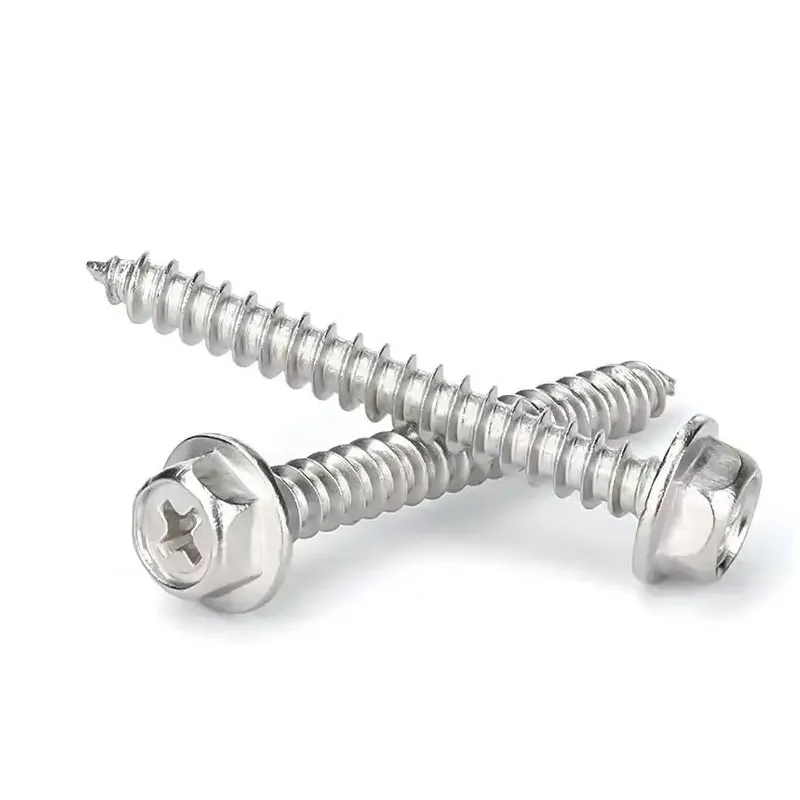
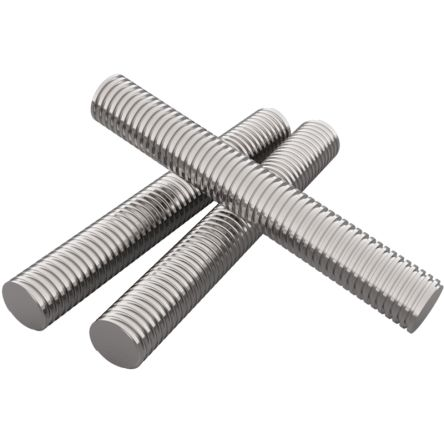
Ever had a project where a standard, off-the-shelf fastener just wouldn’t quite fit? Maybe the material wasn’t strong enough, the length was slightly off, or it needed to withstand extreme heat that no catalog item could handle. That’s where the magic of rod stud customization comes in! In the world of specialized industrial applications, “one size fits all” rarely works.
Rod stud customization involves precisely tailoring a stud’s material, dimensions, thread specifications, and surface treatments to meet the unique performance, environmental, and assembly requirements of a specific project. This bespoke approach ensures optimal strength, corrosion resistance, fit, and functionality, addressing complex engineering challenges that standard fasteners cannot effectively solve.
Think of it as getting a custom-tailored suit for your machinery – perfectly fitted, incredibly functional, and designed for peak performance. This article will dive deep into why custom rod studs are often the best solution, what aspects can be customized, and how this tailored approach can elevate your projects from good to exceptional.
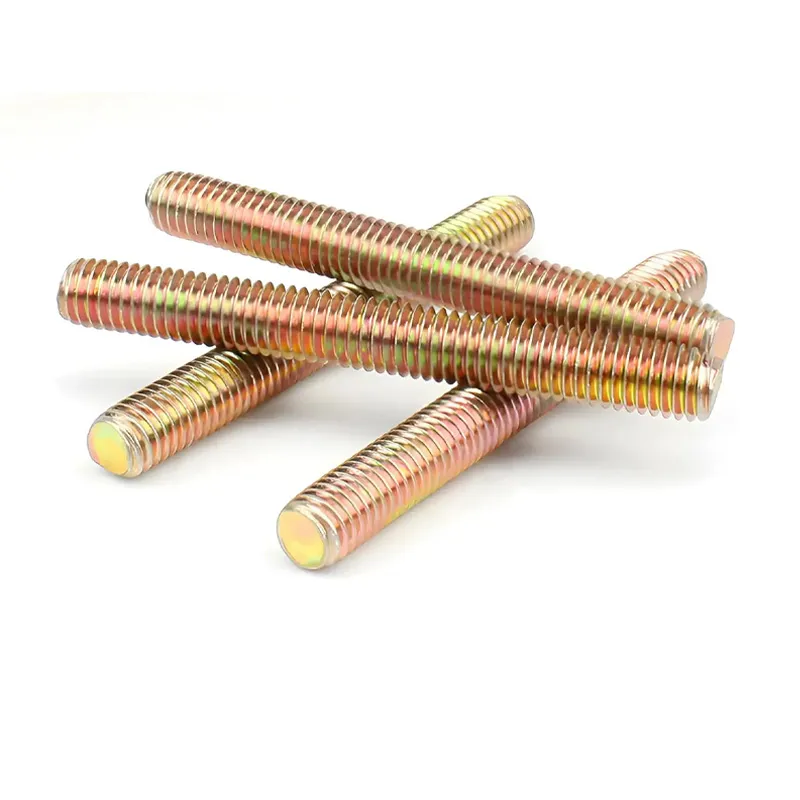
Table of Contents
- Why Standard Rod Studs Aren’t Always Enough
- Customizing Material for Specific Performance
- Tailoring Dimensions and Thread Specifications
- Applying Specialized Coatings and Surface Treatments
- The Customization Process and Supplier Collaboration
1. Why Standard Rod Studs Aren’t Always Enough
While standard rod studs are great for general applications, many industrial projects face unique challenges that demand more. Trying to force a standard solution into a specialized problem often leads to compromises in performance, reliability, or even safety.
Standard rod studs often fall short in specialized industrial applications due to limitations in material properties, precise dimensional requirements, environmental resistance, or unique assembly constraints. These limitations can lead to inadequate strength, premature corrosion, improper fit, or compromised performance, necessitating rod stud customization to achieve optimal functionality and safety for the specific project.
1.1 Unique Environmental Challenges
From deep-sea to outer space, environments vary wildly.
- Case Study 1: Subsea Oil & Gas Equipment. Imagine rod studs used on equipment operating thousands of feet underwater. Standard steel would quickly corrode. Here, custom rod studs made from Duplex or Super Duplex Stainless Steel or even Nickel-Copper alloys (e.g., Monel) are essential. These materials offer extreme resistance to saltwater corrosion, high pressure, and hydrogen embrittlement, ensuring the integrity of critical subsea infrastructure.
- Case Study 2: High-Temperature Aerospace Engines. In jet engines, rod studs must withstand temperatures exceeding 600°C (1112°F) while maintaining strength. Standard high-strength steels would creep or lose strength. Custom engineered studs from Inconel 718 or Waspaloy (superalloys) are designed to retain their mechanical properties at these extreme temperatures, crucial for engine safety and performance.
- Analysis: The theoretical basis is that material properties (strength, corrosion resistance, creep resistance) are highly dependent on environmental factors. Standard materials are optimized for general conditions. Custom fasteners allow for the selection of exotic alloys or specific heat treatments that precisely match the demands of extreme environments, preventing premature failure and ensuring long-term reliability.
This table highlights common limitations of standard rod studs.
| Limitation of Standard Studs | Consequence for Specialized Projects | Why Customization is Needed |
| Limited Material Options | Inadequate strength, corrosion, or temperature resistance | Allows selection of exotic alloys, specific heat treatments |
| Fixed Dimensions | Improper fit, insufficient thread engagement, interference | Precise length, diameter, and shoulder adjustments |
| Generic Coatings | Insufficient protection against specific chemicals/wear | Application-specific coatings (e.g., PTFE, Zinc-Nickel) |
| Standard Thread Forms | Poor vibration resistance, galling, or specific torque needs | Fine threads, left-hand threads, custom pitches |
| Lack of Certification | Fails to meet industry-specific quality/traceability | Full material traceability, specific testing, certifications |
1.2 Specific Performance Requirements
Sometimes, “strong enough” isn’t strong enough.
- Example 1: High-Pressure Vessel Closures. For reactors or pressure vessels in chemical plants, rod studs must provide an absolutely leak-proof seal under immense internal pressure. Custom studs might feature specific thread forms for higher clamping loads, specialized coatings to prevent galling during high-torque assembly, and be made from materials with very low creep rates to maintain preload over time.
- Example 2: Vibration-Critical Machinery. In heavy industrial machinery with constant, high-frequency vibration, standard studs might loosen. Custom engineered studs could incorporate specific thread-locking features (e.g., deformed threads), be made from materials with superior fatigue resistance, or be designed for use with specialized locking nuts, ensuring the joint remains secure.
- Analysis: The practical impact is that custom fasteners enable engineers to push the boundaries of design, achieving higher performance, greater safety margins, and longer service life for critical equipment. This often translates to reduced downtime, lower maintenance costs, and improved operational efficiency.
2. Customizing Material for Specific Performance
The material is the heart of your custom rod stud. It’s where you define its fundamental properties – how strong it is, how it reacts to heat, and what it can resist.
Customizing rod stud material involves selecting specific alloys and heat treatments to precisely match the required mechanical properties (tensile strength, yield strength, hardness, fatigue resistance) and environmental resistance (corrosion, temperature, chemical exposure). This tailored approach ensures the stud performs optimally under the exact stresses and conditions of the industrial application, preventing premature failure and maximizing longevity.
2.1 Beyond Standard Steels
When standard carbon or stainless steels won’t cut it.
- Case Study 1: Medical Implants/Equipment. For surgical tools or MRI machine components, custom rod studs require exceptional biocompatibility and non-magnetic properties. Titanium alloys (e.g., Ti-6Al-4V) or specific non-magnetic stainless steels (e.g., 316LVM) are chosen. These materials are precisely machined and often electropolished to meet stringent medical-grade requirements, ensuring patient safety and equipment functionality.
- Case Study 2: Semiconductor Manufacturing. In cleanroom environments, rod studs must not shed particles or outgas contaminants. Custom studs might be made from ultra-high purity stainless steel or PEEK (a high-performance polymer), and then specially cleaned and packaged. This prevents contamination of sensitive processes, which is critical for product yield and quality.
- Analysis: The theoretical basis is that every alloy has a unique combination of physical and chemical properties. Custom fastener manufacturers have access to a vast array of materials and can advise on the best choice for specific needs, including exotic alloys, superalloys, and even specialized plastics. Design trade-offs involve balancing material cost, machinability, and the exact performance requirements.
This table showcases specialized materials for custom rod studs.
| Material Type | Key Customization Benefits | Typical Custom Applications |
| Duplex/Super Duplex SS | Extreme corrosion resistance (chlorides), high strength | Subsea, chemical processing, marine |
| Inconel/Hastelloy | High-temp strength, chemical resistance, creep resistance | Aerospace, petrochemical, high-temp furnaces |
| Titanium Alloys | High strength-to-weight, biocompatibility, corrosion | Aerospace, medical, motorsports, lightweight structures |
| Monel/K-Monel | Saltwater corrosion, high strength, non-magnetic | Marine, oil & gas, electrical (non-magnetic) |
| A286 Stainless Steel | High-temp strength (up to 650°C), good corrosion | Jet engines, turbochargers, high-temp fasteners |
| PEEK/Ultem (Polymers) | Lightweight, electrical insulation, chemical resistance | Electronics, medical, lightweight non-metallic assemblies |
2.2 Specific Heat Treatments
Heat treatment can transform a material’s properties.
- Example 1: Enhanced Hardness and Wear Resistance. For custom rod studs used in applications with abrasive environments or requiring high surface hardness (e.g., for wear plates), specific heat treatments like nitriding or carburizing can be applied. This hardens the surface while maintaining a tough core, extending the stud’s life.
- Example 2: Improved Fatigue Life. In components subjected to millions of stress cycles, custom studs might undergo shot peening or specific quenching and tempering processes. These treatments introduce compressive residual stresses or optimize microstructure, significantly improving the stud’s fatigue resistance and preventing crack initiation.
- Analysis: The practical impact is that heat treatments allow engineers to fine-tune the mechanical properties of a chosen material, optimizing it for specific stress profiles or environmental interactions. This level of control is a hallmark of engineered studs and crucial for demanding applications.
3. Tailoring Dimensions and Thread Specifications
Even a millimeter can make a difference. Custom rod studs offer unparalleled precision in physical dimensions and thread design, ensuring a perfect fit and optimal load distribution.
Tailoring rod stud dimensions involves precise adjustments to length, diameter, and unthreaded sections (shoulders) to ensure perfect fit, proper component spacing, and optimal load transfer. Custom thread specifications include non-standard pitches, left-hand threads, or specialized forms (e.g., Acme, Buttress) to meet unique assembly, locking, or power transmission requirements, preventing interference and maximizing joint integrity.
3.1 Precise Lengths, Diameters, and Shoulders
Every dimension matters.
- Case Study 1: Multi-Component Stacks. In complex machinery where multiple plates or components are stacked and secured by a single rod stud, standard lengths often don’t provide the ideal thread engagement or shoulder length. Custom studs can be manufactured to the exact length required, with specific unthreaded shoulder sections to perfectly space components and ensure even clamping force without crushing sensitive parts.
- Case Study 2: Restricted Access Areas. In compact designs or areas with limited access, a standard hex nut might be too large. Custom rod studs can be designed with a specific drive feature (e.g., internal hex, Torx) on one end, allowing them to be installed and then secured with a smaller, custom-designed nut or cap, optimizing space and assembly.
- Analysis: The theoretical basis is that precise dimensions prevent interference, ensure proper preload, and optimize stress distribution. Shoulders can act as spacers or provide a bearing surface. Design trade-offs involve balancing manufacturing complexity with the exact fit and functional requirements.
This table illustrates common dimensional and thread customizations.
| Customization Area | Specific Examples | Benefit for Project |
| Length | Exact length for specific stack-up, no excess | Perfect fit, avoids interference, optimized thread engagement |
| Diameter | Non-standard sizes, stepped diameters | Matches existing holes, specific load distribution |
| Shoulder/Unthreaded Section | Specific lengths for spacing, bearing surfaces | Component alignment, prevents crushing, precise preload |
| Thread Pitch | Finer/coarser than standard, specific for locking | Enhanced vibration resistance, faster assembly, higher load |
| Left-Hand Threads | Prevents loosening in specific rotational applications | Safety in rotating machinery, anti-tamper |
| Special Thread Forms | Acme, Buttress, custom profiles | Power transmission, high load, specific locking |
3.2 Non-Standard Thread Forms
Threads aren’t just for tightening.
- Example 1: Power Transmission. For applications requiring linear motion or power transmission (e.g., lead screws in a machine tool), custom rod studs might feature Acme threads or Buttress threads. These thread forms are designed for high load-bearing capacity and efficient power transfer, unlike standard V-threads used for fastening.
- Example 2: Anti-Loosening in Rotation. In machinery with components that rotate in a specific direction, custom rod studs with left-hand threads can be used. This design ensures that the rotational forces actually tighten the nut, rather than loosening it, providing an inherent safety mechanism.
- Analysis: The practical impact is that custom threaded studs can solve complex mechanical problems that standard fasteners simply cannot. They allow for specialized functions beyond simple fastening, integrating the stud more deeply into the machine’s operation.
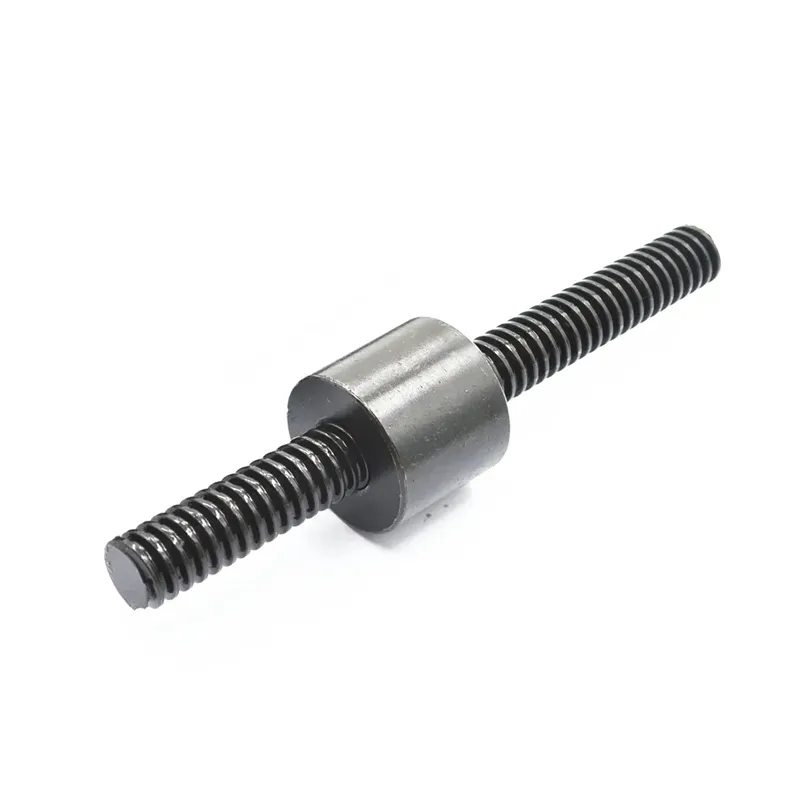
Overcoming Engineering Risks in Custom Rod Stud Procurement
In high-pressure petrochemical piping, subsea manifolds, or heavy turbomachinery, a single defect in a customized threaded rod can trigger catastrophic structural failure. Beyond selecting exotic alloys, global procurement departments must address specific metallurgical and geometric vulnerabilities during custom manufacturing. At RivetJL, we systematically mitigate these heavy-industry risks:
- Eliminating Hydrogen Embrittlement in High-Tensile Studs: High-strength rod studs (such as ASTM A193 B7 or Class 10.9 equivalents) are highly susceptible to hydrogen embrittlement following acid pickling or electroplating. RivetJL enforces rigorous post-plating baking cycles within strict time windows to guarantee internal crystal lattice integrity.
- Thread Pitch Consistency Across Extended Lengths: For long custom threaded rods, maintaining a uniform thread pitch is notoriously difficult, often resulting in cumulative tolerance errors that cause nut binding during field installation. We utilize specialized long-bed thread rolling machinery to secure perfect Class 2A/3A or 6g/4g6g thread fits along the entire shaft.
- Strict Adherence to ASTM and ASME Specifications: Customization does not mean improvising. Whether your project requires ASTM A193, A320 (low-temperature service), or specialized ASME B18.31.2 standards, our production routines strictly follow international heavy-industry codes, backed by mill test certificates.
4. Applying Specialized Coatings and Surface Treatments
A custom coating can be the final touch that makes a rod stud perfectly suited for its environment, offering enhanced protection or specific functional properties.
Applying specialized coatings and surface treatments to rod studs provides tailored protection against corrosion, wear, and galling, while also controlling friction and offering electrical insulation or conductivity. Options range from advanced fluoropolymer coatings for chemical resistance and reduced torque, to ceramic coatings for extreme heat, or specialized platings for specific environmental or functional requirements, optimizing stud performance and longevity.
4.1 Enhanced Corrosion and Wear Resistance
Beyond basic zinc plating.
- Case Study 1: Highly Corrosive Chemical Environments. For rod studs in chemical reactors or pipelines handling aggressive acids, even stainless steel might not be enough. Custom studs can be coated with PTFE (Teflon) or Xylan (fluoropolymers). These coatings provide an inert barrier, excellent chemical resistance, and reduce friction, allowing for easier assembly and disassembly in corrosive conditions.
- Case Study 2: Abrasive Environments. In mining equipment or material handling systems, rod studs can be exposed to abrasive dust and grit. Custom studs might receive a ceramic coating or hard chrome plating to significantly increase their surface hardness and wear resistance, extending their service life in harsh conditions.
- Analysis: The theoretical basis is that coatings provide a sacrificial layer, a barrier, or alter surface properties. Custom fastener manufacturers can apply a wide range of advanced coatings that are not typically available on standard fasteners, precisely matching the stud’s surface to the environmental challenges. Design trade-offs include coating cost, thickness (which affects thread fit), and durability.
This table lists advanced coatings for custom rod studs.
| Coating/Treatment Type | Key Customization Benefits | Typical Custom Applications |
| Fluoropolymer (PTFE/Xylan) | Extreme chemical resistance, low friction, non-stick | Chemical processing, high-temp, food grade, reduced torque |
| Ceramic Coatings | High hardness, wear resistance, high-temp insulation | Abrasive environments, high-temp components |
| Hard Chrome Plating | High hardness, wear resistance, low friction | Wear surfaces, precision machinery |
| Zinc-Nickel Plating | Superior corrosion resistance (salt spray), thin | Automotive, marine, harsh outdoor |
| Dry Film Lubricants | Anti-galling, reduced friction, high-temp | High-temp, stainless steel fasteners, vacuum |
| Electroless Nickel | Uniform thickness, corrosion resistance, hardness | Precision parts, complex shapes, chemical exposure |
4.2 Functional Coatings
Coatings can do more than just protect.
- Example 1: Electrical Insulation. In certain electronic assemblies or power distribution systems, custom rod studs might need to provide electrical insulation. A polymer coating (e.g., nylon, epoxy) can be applied to the stud, preventing electrical conductivity while still providing mechanical fastening.
- Example 2: Controlled Friction. For applications requiring very precise torque control or where galling is a major concern (e.g., stainless steel in high-temperature environments), custom studs can be treated with dry film lubricants or specific phosphate coatings. These treatments provide a consistent coefficient of friction, allowing for more accurate torque application and preventing seizing.
- Analysis: The practical impact is that custom coatings allow the rod stud to perform multiple functions simultaneously – fastening, protecting, insulating, or lubricating – thereby simplifying assembly and improving overall system performance.
5. The Customization Process and Supplier Collaboration
Getting a custom rod stud isn’t just about placing an order; it’s a collaborative process that ensures the final product perfectly meets your needs. Choosing the right supplier is key.
The rod stud customization process involves close collaboration with a specialized manufacturer, starting with detailed requirement communication, followed by design and engineering, material selection, prototyping, and rigorous testing. A reliable supplier offers technical expertise, adheres to strict quality control, provides material traceability, and ensures efficient production and delivery, guaranteeing the custom fasteners meet exact project specifications and performance standards.
5.1 The Customization Journey
From concept to completion.
- Step 1: Detailed Requirements Communication. This is the most crucial step. You provide your custom fastener manufacturer with detailed drawings, specifications, environmental conditions, load requirements, and any specific industry standards (e.g., ASTM, ISO, API). The more information, the better.
- Step 2: Design and Engineering. The manufacturer’s engineers will review your requirements, suggest optimal materials, dimensions, and coatings, and create detailed CAD drawings for your approval. They might also perform FEA (Finite Element Analysis) to simulate performance.
- Step 3: Prototyping and Testing. For critical applications, a prototype run of custom rod studs might be produced for you to test in your actual application. This allows for validation of design and performance before full-scale production.
- Step 4: Production and Quality Control. Once approved, the engineered studs are manufactured using specialized machinery and processes. Throughout production, rigorous quality control checks (dimensional inspection, material testing, non-destructive testing) ensure every stud meets specifications.
- Analysis: The theoretical basis is a structured engineering design process. The design trade-off is the initial investment in time and potentially cost for customization versus the long-term benefits of a perfectly optimized and reliable fastener.
This table outlines key aspects of supplier collaboration for custom fasteners.
| Aspect of Collaboration | Importance | What to Expect from a Good Supplier |
| Technical Expertise | Guidance on material, design, and manufacturing | Experienced engineers, material scientists |
| Communication | Clear, timely updates and feedback | Dedicated project manager, responsive team |
| Quality Assurance | Guarantees product meets specifications | ISO certification, material certs, testing reports |
| Manufacturing Capabilities | Ability to produce complex designs and materials | Advanced machinery, specialized processes |
| Lead Times & Delivery | Impacts project timelines | Realistic lead times, on-time delivery record |
| Cost Transparency | Clear breakdown of costs, no hidden fees | Detailed quotes, explanation of cost drivers |
5.2 Choosing the Right Custom Fastener Manufacturer
Your partner in precision.
- Example 1: Experience and Expertise. Look for a custom fastener manufacturer with a proven track record in your specific industry (e.g., aerospace, oil & gas, medical). Their experience with similar challenges will be invaluable.
- Example 2: Quality Certifications and Traceability. Ensure the supplier holds relevant industry certifications (e.g., ISO 9001, AS9100) and can provide full material traceability for every custom rod stud. This is critical for quality assurance and regulatory compliance.
- Analysis: The practical impact of choosing the right supplier is immense. A good partner will not only produce the engineered studs to your specifications but also act as a technical resource, helping you optimize your design and avoid potential pitfalls, ultimately saving you time and money.
Conclusion
In the complex and demanding world of industrial applications, rod stud customization is not just an option – it’s often a necessity. By precisely tailoring the material, dimensions, thread specifications, and surface treatments of your rod studs, you can create engineered studs that perfectly meet the unique challenges of your project. This bespoke approach ensures optimal performance, enhances safety, and extends the lifespan of your equipment, solving problems that standard fasteners simply cannot address.
Embrace the power of custom fasteners and collaborate closely with a specialized manufacturer. This strategic partnership will unlock new possibilities for your designs, delivering superior reliability and efficiency, and ultimately, elevating your projects to new heights of success.