Ever found yourself staring at a catalog full of rod studs, wondering which one is actually the right fit for your project? It’s not just about grabbing the first one that looks strong enough! In the demanding world of industrial applications, choosing the correct rod stud is absolutely critical. Get it wrong, and you could face anything from minor inefficiencies to catastrophic equipment failure.
Selecting the right rod stud for industrial applications involves a systematic evaluation of several key factors: the required material strength and corrosion resistance, precise size and thread specifications, appropriate coating for environmental protection, and the specific operational conditions like temperature, vibration, and chemical exposure. A thorough assessment ensures optimal performance, safety, and longevity of the fastened components.
Don’t worry, it’s not as complicated as it sounds! This guide will break down the essential considerations, helping you navigate the selection process with confidence. We’ll cover everything from the basic material choices to the nitty-gritty details of coatings and environmental factors, ensuring your industrial connections are robust and reliable.
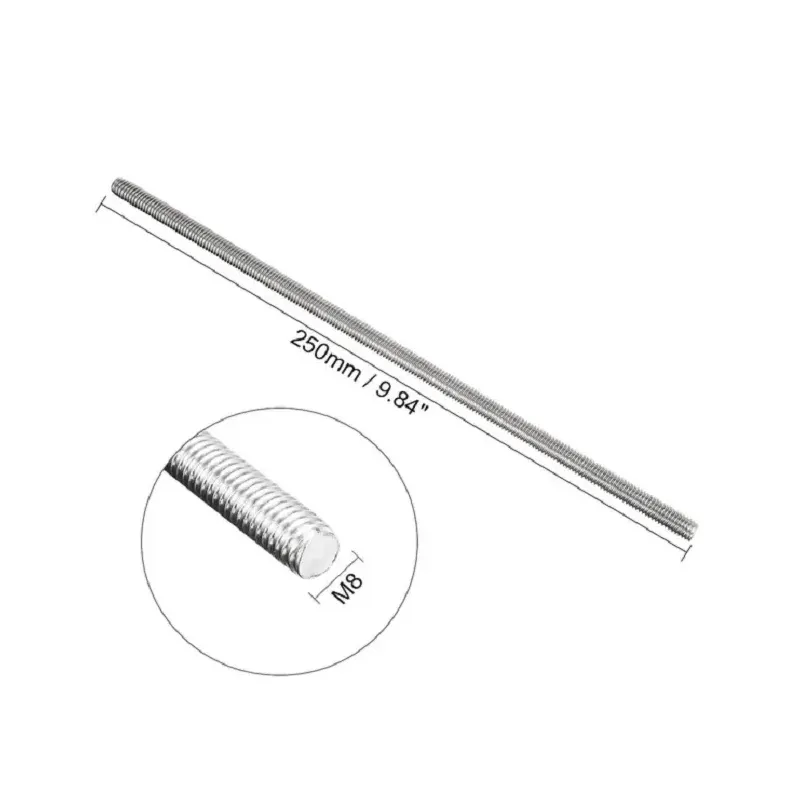
Table of Contents
- Understanding Material Properties and Strength Requirements
- Determining Size, Length, and Thread Specifications
- Considering Coatings and Surface Treatments
- Assessing Environmental and Operational Conditions
- Evaluating Cost-Effectiveness and Supplier Reliability
1. Understanding Material Properties and Strength Requirements
The material of your rod stud is arguably the most critical factor. It dictates the stud’s strength, its resistance to various forms of degradation, and ultimately, its suitability for your specific industrial application. Don’t just pick “steel” – there’s a whole world of alloys out there!
Selecting the correct rod stud material is paramount, as it directly determines the fastener’s tensile strength, yield strength, hardness, and resistance to corrosion and fatigue. Key considerations include the required load-bearing capacity, operating temperature range, and the presence of corrosive agents, ensuring the material can withstand the specific mechanical and chemical stresses of the industrial environment.
1.1 Tensile Strength and Yield Strength
These are your primary indicators of a stud’s mechanical performance.
- Tensile Strength Example: Imagine a heavy-duty press machine. The rod studs holding its main frame together need to withstand immense pulling forces without breaking. A high-tensile steel stud (e.g., Grade 8 or 10.9 metric) would be chosen here, as its high tensile strength ensures it won’t fracture under the maximum expected load.
- Yield Strength Example: In a precision assembly line, rod studs might be used to maintain a specific clamping force on a component. Here, the yield strength is crucial. You want the stud to stretch slightly when torqued (to create preload) but not deform permanently. A medium-carbon alloy steel stud (e.g., Grade 5 or 8.8 metric) offers a good balance of strength and ductility, ensuring the stud returns to its original shape after load removal, maintaining the clamping force.
- Analysis: The theoretical basis is that tensile strength is the maximum stress a material can withstand before breaking, while yield strength is the stress at which it begins to deform permanently. For most industrial applications, you want the stud to operate well below its yield strength to ensure elastic deformation and maintain preload. Design trade-offs involve balancing strength with ductility; very high-strength materials can sometimes be more brittle.
This table provides a quick reference for common rod stud materials.
| Material Type | Key Characteristics | Typical Industrial Applications |
| Low Carbon Steel | Moderate strength, good ductility, low cost | General purpose, non-critical assemblies |
| Medium Carbon Alloy Steel | High strength, good toughness, heat treatable | Machinery, automotive, structural (e.g., Grade 8.8, 10.9) |
| Stainless Steel (304/316) | Excellent corrosion resistance, good strength | Food processing, marine, chemical, outdoor |
| High-Nickel Alloys (Inconel) | Extreme temperature resistance, high strength, corrosion | Aerospace, petrochemical, high-temp furnaces |
| Titanium | High strength-to-weight ratio, excellent corrosion | Aerospace, medical, lightweight critical applications |
1.2 Corrosion Resistance
Rust and chemical attack can quickly compromise even the strongest stud.
- Example 1: Marine Environment. For offshore oil rigs or shipbuilding, rod studs are constantly exposed to saltwater and humidity. 316 Stainless Steel studs or even Duplex Stainless Steel studs would be chosen due to their superior resistance to chloride corrosion, preventing premature failure and ensuring structural integrity.
- Example 2: Chemical Processing Plant. In areas exposed to acids or strong alkalis, standard steel studs would quickly degrade. Here, rod studs made from Hastelloy or Inconel (high-nickel alloys) are essential, as they offer exceptional resistance to a wide range of aggressive chemicals, maintaining the safety and reliability of the plant.
- Analysis: The practical impact of choosing the right corrosion-resistant material is directly linked to the lifespan and safety of the equipment. A stud that corrodes prematurely can lead to loosening, leaks, or structural collapse. It’s often a balance between initial cost and long-term maintenance and replacement expenses.
2. Determining Size, Length, and Thread Specifications
Once you know the material, the physical dimensions and thread type are the next critical steps. These factors ensure the rod stud fits correctly, provides adequate engagement, and can achieve the necessary clamping force.
Accurate determination of rod stud size, length, and thread specifications is crucial for proper fit, sufficient thread engagement, and achieving the required clamping load. This involves matching the stud’s diameter and pitch to the mating components, ensuring adequate length for full engagement and nut installation, and selecting the correct thread form (e.g., UNC, UNF, Metric) to prevent cross-threading and ensure secure assembly.
2.1 Diameter and Length
These are the most straightforward measurements, but mistakes can be costly.
- Diameter Example: If you’re replacing a rod stud in an existing assembly, simply measure the diameter of the old stud or the hole it goes into. For new designs, the diameter is determined by the required load-bearing capacity and the available space. A larger diameter generally means greater strength. For instance, a M16 rod stud will handle significantly more load than an M8 rod stud.
- Length Example: The length of the rod stud must be sufficient to pass through all components being joined, allow for full thread engagement with the nut, and ideally, have a few threads protruding past the nut for maximum security. If a stud is too short, it won’t fully engage the nut, leading to stripping. If it’s too long, it can interfere with other components or look unsightly.
- Analysis: The theoretical basis for diameter selection is directly related to the stress area of the stud, which dictates its ultimate strength. Length is critical for ensuring proper thread engagement, which is typically 1 to 1.5 times the nominal diameter for steel fasteners. Design trade-offs involve optimizing length for assembly ease and avoiding interference, while ensuring sufficient strength.
This list highlights common thread types for rod studs.
- UNC (Unified National Coarse): Standard for general-purpose applications, good for quick assembly, less prone to cross-threading.
- UNF (Unified National Fine): Offers greater strength in tension, finer adjustments, and better resistance to loosening from vibration.
- Metric Coarse: Standard metric thread, similar to UNC in application.
- Metric Fine: Offers higher strength and better vibration resistance than metric coarse, similar to UNF.
- Special Threads: Left-hand threads, Acme threads, or other custom profiles for specific machinery or safety requirements.
2.2 Thread Type and Pitch
The thread profile is vital for compatibility and performance.
- Example 1: High-Vibration Machinery. For equipment like industrial vibrators or heavy-duty mixers, rod studs with UNF (Unified National Fine) or Metric Fine threads are often preferred. Their finer pitch provides more thread engagement per unit of length, making them more resistant to loosening under vibration compared to coarse threads.
- Example 2: General Construction. In less critical, general construction applications where speed of assembly is important and vibration is minimal, UNC (Unified National Coarse) or Metric Coarse threads are commonly used. They are less prone to cross-threading and easier to start.
- Analysis: The practical impact of thread selection is directly related to the ease of assembly, the security of the joint, and its resistance to loosening. Using the wrong thread type can lead to cross-threading, stripped threads, or premature loosening, all of which can cause significant operational issues. Always ensure the stud’s thread matches the mating nut and tapped hole.
3. Considering Coatings and Surface Treatments
Beyond the base material, a coating or surface treatment can significantly enhance a rod stud’s performance, particularly in terms of corrosion resistance, friction control, and aesthetics. This is an often-overlooked but crucial aspect of fastener selection.
Coatings and surface treatments for rod studs are essential for enhancing corrosion resistance, controlling friction during assembly, and improving durability in specific industrial environments. Common options include zinc plating for basic corrosion protection, hot-dip galvanizing for harsh outdoor conditions, specialized fluoropolymer coatings for chemical resistance and reduced friction, and black oxide for aesthetic and mild protection.
3.1 Enhancing Corrosion Resistance
Coatings add an extra layer of protection.
- Example 1: Outdoor Structural Steel. For rod studs used in outdoor structural steel applications (e.g., bridge components, large industrial frameworks), hot-dip galvanizing is a common choice. This process applies a thick layer of zinc, providing excellent sacrificial corrosion protection against rain, humidity, and atmospheric pollutants, significantly extending the stud’s lifespan.
- Example 2: Automotive Underbody. In automotive manufacturing, rod studs used in the underbody are exposed to road salt, water, and grime. Zinc-nickel plating or Geomet coatings are often specified. These advanced coatings offer superior corrosion resistance compared to standard zinc plating, crucial for vehicle longevity and safety.
- Analysis: The theoretical basis is that coatings act as a barrier or provide sacrificial protection (as with zinc). The choice depends on the severity of the corrosive environment and the desired lifespan. Design trade-offs include the cost of the coating, its thickness (which can affect thread fit), and its durability against abrasion.
This table compares common rod stud coatings.
| Coating Type | Key Benefits | Typical Applications | Limitations |
| Zinc Plating | Basic corrosion resistance, low cost | Indoor, mild outdoor, general purpose | Limited protection in harsh environments |
| Hot-Dip Galvanizing | Excellent corrosion resistance, sacrificial protection | Outdoor, structural, marine (non-critical) | Thick coating, can affect thread fit, not for high-precision |
| Black Oxide | Aesthetic, mild corrosion resistance, anti-galling | Interior, machinery components, visual appeal | Very limited corrosion protection on its own |
| Fluoropolymer (PTFE/Xylan) | Excellent chemical resistance, low friction, non-stick | Chemical processing, high-temp, food grade, reduced torque | Higher cost, can be scratched, limited wear resistance |
| Zinc-Nickel | Superior corrosion resistance, thin, consistent | Automotive, harsh outdoor, high-performance | Higher cost than standard zinc |
3.2 Friction Control and Anti-Galling
Coatings can also make assembly easier and prevent damage.
- Example 1: High-Temperature Assemblies. In exhaust systems or furnace applications, rod studs can seize or gall (cold weld) to nuts due to high temperatures and friction. Fluoropolymer coatings (like PTFE or Xylan) are often applied. These coatings reduce friction, prevent galling, and allow for easier assembly and disassembly, even after prolonged exposure to heat.
- Example 2: Stainless Steel Fasteners. Stainless steel is prone to galling, especially when tightening nuts onto studs. A dry film lubricant or a fluoropolymer coating on stainless steel studs can significantly reduce the coefficient of friction, preventing galling and ensuring a smooth, consistent torque application.
- Analysis: The practical impact is that proper coatings can prevent costly assembly issues, reduce rework, and ensure the integrity of the joint by allowing accurate torque application. They are particularly important for materials prone to galling or in environments where consistent friction is critical.
4. Assessing Environmental and Operational Conditions
The environment in which your rod stud will operate is just as important as the forces it will endure. Temperature, chemical exposure, and vibration all play a significant role in determining the right fastener.
Thoroughly assessing environmental and operational conditions is critical for rod stud selection, encompassing factors like extreme temperatures, chemical exposure, humidity, and vibration. These conditions dictate the required material properties (e.g., high-temperature alloys, chemical-resistant coatings), thread locking mechanisms, and overall design to prevent premature failure, maintain joint integrity, and ensure long-term reliability in industrial settings.
4.1 Temperature Extremes
Heat and cold can drastically affect a stud’s performance.
- Example 1: High-Temperature Furnaces. For internal components of industrial furnaces or boilers, rod studs must withstand temperatures exceeding 500°C (932°F). High-nickel alloys like Inconel 625 or A286 stainless steel are specifically designed for these conditions, maintaining their strength and creep resistance at elevated temperatures where standard steels would fail.
- Example 2: Cryogenic Applications. In liquid natural gas (LNG) processing or other cryogenic environments, rod studs are exposed to extremely low temperatures. Materials like 304L or 316L Stainless Steel are preferred because they retain their ductility and strength at sub-zero temperatures, unlike some carbon steels which can become brittle.
- Analysis: The theoretical basis is that material properties (tensile strength, yield strength, ductility) change significantly with temperature. High temperatures can lead to creep (permanent deformation under sustained load) and reduced strength, while low temperatures can cause embrittlement. Design trade-offs involve selecting materials with stable properties across the entire operating temperature range, often at a higher cost.
This list details critical environmental factors for rod stud selection.
- Temperature Range: Max/min operating temperatures, thermal cycling frequency.
- Chemical Exposure: Presence of acids, alkalis, solvents, salts, gases.
- Humidity/Moisture: Constant exposure to water, high humidity, condensation.
- Vibration/Dynamic Loads: Frequency and amplitude of vibration, shock loads.
- UV Radiation: For outdoor applications, especially with plastic components or coatings.
- Abrasion/Wear: Presence of abrasive particles, potential for mechanical wear.
4.2 Chemical Exposure and Vibration
These factors demand specific solutions.
- Example 1: Acidic Washdown Areas. In food processing or pharmaceutical plants, equipment is often subjected to harsh chemical washdowns. Rod studs made from 316 Stainless Steel or coated with fluoropolymers are essential to resist corrosion from cleaning agents, ensuring hygiene and equipment longevity.
- Example 2: Heavy Machinery with Constant Vibration. For applications like large industrial pumps, compressors, or mining equipment, constant vibration is a major concern. Here, rod studs might be paired with locking nuts (e.g., nylon insert lock nuts, all-metal prevailing torque nuts) or thread-locking compounds to prevent loosening. The stud itself should also be of a material with good fatigue resistance.
- Analysis: The practical impact is that ignoring these conditions can lead to rapid fastener degradation, joint failure, and potential safety hazards. Proper selection involves not just the stud material but also considering supplementary locking mechanisms or protective coatings to ensure long-term reliability in challenging environments.
5. Evaluating Cost-Effectiveness and Supplier Reliability
While technical specifications are paramount, the practical realities of budget and supply chain also play a significant role in rod stud selection. It’s about finding the best solution that is also economically viable and reliably available.
Evaluating cost-effectiveness and supplier reliability is the final crucial step in rod stud selection, balancing technical requirements with budget constraints and supply chain stability. This involves comparing the total lifecycle cost (including installation, maintenance, and replacement) against initial purchase price, and choosing suppliers known for consistent quality, adherence to standards, and dependable delivery to avoid project delays and ensure long-term performance.
5.1 Balancing Performance and Budget
The cheapest option isn’t always the most cost-effective in the long run.
- Example 1: Non-Critical General Purpose. For a non-critical assembly in a dry, indoor environment, using a low-carbon steel rod stud with basic zinc plating might be the most cost-effective solution. Over-specifying a high-alloy stud would be an unnecessary expense.
- Example 2: Critical High-Performance. In contrast, for a critical component in a nuclear power plant, the initial cost of high-nickel alloy rod studs is secondary to their absolute reliability and safety. The potential cost of failure far outweighs the material cost.
- Analysis: The theoretical basis is a total cost of ownership (TCO) model. This considers not just the purchase price but also installation costs, maintenance, potential downtime due to failure, and replacement costs over the product’s lifespan. Design trade-offs involve making informed decisions where a slightly higher initial investment in a better stud can lead to significant savings down the line.
This table helps in evaluating suppliers for industrial fasteners.
| Supplier Evaluation Criteria | Importance | What to Look For |
| Quality Certifications | Ensures consistent product quality and standards | ISO 9001, AS9100, specific material certifications |
| Technical Support | Assistance with selection, design, and issues | Experienced engineers, responsive customer service |
| Lead Times & Delivery | Impacts project schedules and inventory | Reliable delivery history, clear lead time communication |
| Customization Capabilities | For unique or specialized application needs | Ability to produce custom sizes, materials, coatings |
| Pricing & Payment Terms | Affects budget and cash flow | Competitive pricing, flexible payment options |
| Reputation & References | Indicates past performance and customer satisfaction | Industry reputation, customer testimonials, case studies |
5.2 Supplier Reliability and Quality Assurance
A great stud is useless if you can’t get it, or if it’s not up to spec.
- Example 1: Just-in-Time Manufacturing. In industries relying on just-in-time inventory, a supplier’s ability to consistently deliver rod studs on schedule is paramount. Delays can halt production, leading to massive losses. Choosing a supplier with a proven track record and robust logistics is essential.
- Example 2: Regulated Industries. For medical devices or aerospace, rod studs must meet extremely strict quality standards and traceability requirements. Selecting a supplier with relevant certifications (e.g., AS9100 for aerospace) and comprehensive quality control processes is non-negotiable.
- Analysis: The practical impact is that a reliable supply chain and guaranteed quality are as important as the stud’s technical specifications. A cheap stud from an unreliable supplier can quickly become the most expensive component if it causes production delays or product failures. Always ask for material certifications and quality documentation.
Conclusion
Choosing the right rod stud for your industrial application is a multi-faceted decision that goes far beyond simply matching a thread. It requires a deep understanding of material properties, precise dimensional requirements, the protective benefits of coatings, and the harsh realities of the operating environment. By systematically evaluating these factors – from tensile strength and corrosion resistance to temperature tolerance and vibration control – you can ensure your fasteners perform optimally.
Remember to also consider the practical aspects of cost-effectiveness and, crucially, the reliability of your supplier. A well-chosen industrial rod stud is an investment in the safety, efficiency, and longevity of your equipment and structures, preventing costly failures and ensuring smooth operations for years to come.