In standardized manufacturing, off-the-shelf fasteners are the backbone of basic assembly. However, as mechanical designs become more compact and operating environments grow more severe, forcing a standard screw into a complex joint often creates an engineering bottleneck.
When your assembly line is slowed down by the need for extra washers, or your equipment suffers from chronic vibration loosening, the fastener is no longer just a component—it is a liability. By engineering custom machine screws for industrial applications, manufacturers can eliminate these design compromises, streamline assembly lines, and drastically improve structural stability. Here is how transitioning from standard to custom fasteners directly solves your most stubborn manufacturing pain points.
1. Recognizing the Limits of Standard Fasteners
The primary pain point in advanced manufacturing occurs when engineers are forced to design their product around the limitations of available fasteners, rather than having a fastener designed for the product.
In precision equipment or high-stress automation lines, standard machine screws frequently fall short. If the available lengths do not exactly match your blind-hole depth, or if the standard head geometry does not fit within a tight recess, assembly workers are forced to improvise. This often means adding shims, utilizing oversized washers, or modifying the mating parts. These workarounds create uneven load distribution, increase the risk of self-loosening under vibration, and turn a simple joint into a structural weak point.
2. How Custom Geometries Streamline Assembly
Every additional washer or spacer required to make a standard screw fit is an extra step on your assembly line. Customization eliminates this waste.
By engineering a machine screw with a non-standard length, a specialized under-head radius, or an integrated flange, you physically consolidate multiple components into one. Industry data shows that in complex assembly scenarios, utilizing custom fasteners reduces the total number of components by 10% to 20%. By removing the need for workers to fumble with extra washers or adjust misaligned threads, overall assembly efficiency increases by 20% to 35%.
Table 1: Standard vs. Custom Fastener Performance Matrix
| Engineering Dimension | Standard Off-the-Shelf Screws | Custom Engineered Machine Screws |
| Assembly Efficiency | Baseline (often requires extra steps/washers) | 20% – 35% Faster (Drop-in fit) |
| Part Count | High (Screws + Washers + Shims + Nuts) | 10% – 20% Reduction (Consolidated design) |
| Connection Stability | Moderate (Prone to uneven load distribution) | 25%+ Improvement (Optimized thread & tolerance) |
| Dimensional Fit | “Close enough” | Exact millimeter lengths and specialized head geometries |
| Cost Structure | Low unit cost, high hidden assembly/rework cost | Higher unit cost, vastly lower Total Cost of Ownership |
3. Engineering Precision: Tolerances and Thread Optimization
In high-precision equipment, a “standard” thread fit is often too loose, allowing for micro-vibrations that eventually destroy the joint.
Custom machine screws allow engineers to dictate exact thread pitch, engagement length, and machining tolerances. By optimizing the thread engagement to precisely match the shear strength of your specific substrate (whether it is an aerospace composite or a cast aluminum engine block), the load is distributed evenly across the joint. Engineering field tests demonstrate that matching custom thread profiles and tightening tolerances can increase connection stability by more than 25%, virtually eliminating the risk of stripped threads and transverse slippage.
4. Material and Coating Selection for Extreme Environments
A fastener is only as good as the alloy it is cut from. Standard carbon steels and basic zinc plating will rapidly fail in high-temperature, highly corrosive, or heavy chemical environments.
Customization unlocks the ability to specify the exact metallurgy required for your environment. Whether you need the high-tensile fatigue resistance of a proprietary alloy steel for a vibrating motor mount, or the extreme chemical immunity of titanium for a fluid processing valve, custom screws prevent environmental failure. When combined with specialized surface treatments (like PTFE coatings or heavy-duty Dacromet), custom materials significantly extend the lifespan of the equipment and drastically reduce the frequency of field maintenance.
5. Case Study: Unlocking Efficiency in Packaging Automation
The transition from standard to custom fasteners yields immediate, measurable results on the production floor.
The Bottleneck: A manufacturer of automated packaging equipment designed a highly compact internal chassis. Initially, they sourced standard machine screws for structural assembly. Because the standard screws were slightly too long and the heads were too narrow for the oversized clearance holes, assembly workers had to manually install two washers on every screw. This tedious process destroyed assembly efficiency and introduced a high risk of vibration loosening during operation.
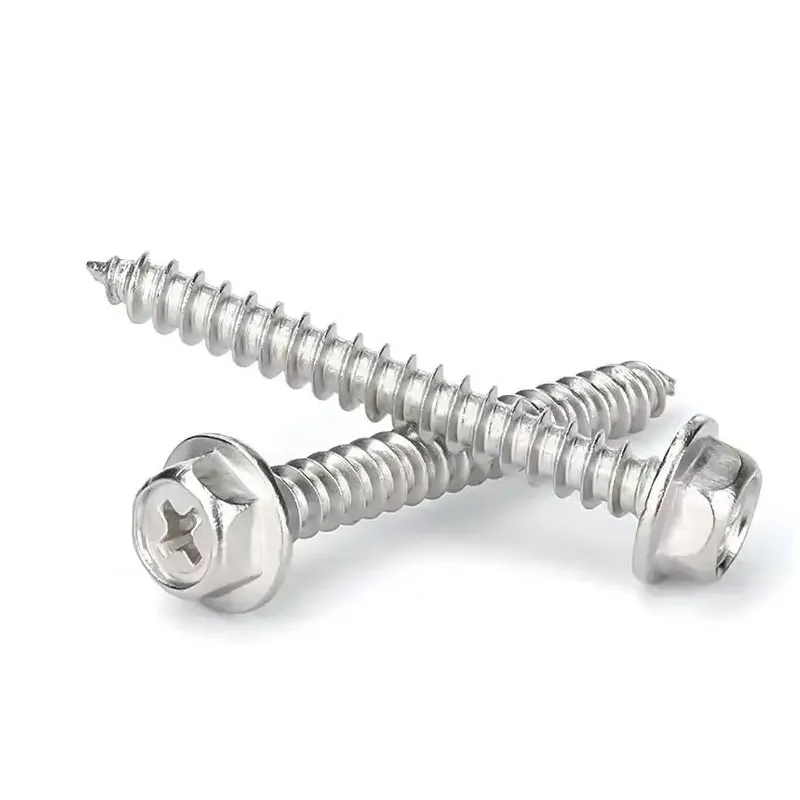
The Custom Solution: The engineering team pivoted to a custom machine screw. The new fastener featured a custom, non-standard length that bottomed out perfectly without striking the internal mechanics, an integrated wide-flange head (eliminating the washers), and a high-strength alloy material treated to resist high-frequency vibration.
The Result: * Assembly time dropped by 30%.
- The bill of materials (BOM) shrank due to the elimination of washers.
- The overall running stability of the packaging machine improved, leading to a direct reduction in warranty claims and post-sale maintenance costs.
6. The ROI of Customization: Lowering Total Cost of Ownership
Procurement teams often resist custom fasteners due to the higher initial unit cost. However, this is a flawed financial calculation.
The Total Cost of Ownership (TCO) of a joint includes the assembly labor, the inventory management of multiple SKUs (washers, locknuts, screws), and the devastating cost of machine downtime when a standard joint fails. By simplifying the design, accelerating the assembly line, and extending the maintenance intervals, custom machine screws pay for themselves exponentially over the product’s lifecycle.
7. Partner with a Fastener Engineering Expert
When standard hardware forces you to compromise your design, it is time to upgrade. Do not let a generic machine screw become the bottleneck of your next flagship product.
At Dongguan Jiliang Machinery Hardware, we specialize in transforming fastening bottlenecks into competitive advantages. Whether you need an integrated flange, a non-standard thread pitch, or an extreme-environment alloy, our engineering team will design and manufacture the exact solution you need.
Ready to streamline your assembly and eliminate joint failure? Send us your CAD drawings or explain your current assembly bottleneck, and our engineers will help you design a custom machine screw that perfectly matches your industrial application.
[Contact Our Custom Engineering Team Today]
Frequently Asked Questions (FAQ)
1. What is the typical minimum order quantity (MOQ) for custom machine screws?
MOQs depend entirely on the manufacturing process required (e.g., cold heading vs. CNC machining). While CNC machining can accommodate small prototype runs (hundreds of pieces), high-volume cold-heading usually requires MOQs in the tens of thousands to be economically viable.
2. How long does it take to develop and produce a custom fastener?
For a completely new design requiring custom molds or tooling, prototype production typically takes 2 to 4 weeks. Once the prototype is approved, mass production usually requires an additional 3 to 5 weeks, depending on material availability and secondary plating processes.
3. Can I customize the head style of a machine screw?
Yes. You can customize the drive type (e.g., Torx, Hex, tamper-proof security drives) to match your assembly line tooling, as well as the head geometry (e.g., ultra-low profile, integrated wide flanges, or specific countersink angles) to fit your exact spatial constraints.
4. Are custom threads more expensive to produce?
If the thread pitch requires a custom-ground rolling die, there is an initial tooling cost. However, once the die is created, the per-unit cost of rolling a custom thread is very similar to rolling a standard thread at high volumes.
5. Can custom machine screws help with vibration resistance?
Absolutely. We can engineer custom screws with integrated locking features, such as pre-applied nylon patches (Nylok), specialized under-head serrations, or optimized fine thread pitches that inherently resist transverse vibration much better than standard coarse threads.