You’re working on a project, maybe a custom leather piece, a binder, or even some light machinery, and you’ve chosen male-female rivets for their clean look and strong hold. But then a thought pops into your head: “What if I need to take this apart later? Are male-female rivets reusable?” It’s a great question, and the answer isn’t as straightforward as you might think. While some types are designed for multiple uses, others are more of a one-and-done deal. Understanding their longevity and reusability factors is key to smart design and maintenance.
Male-female rivets can be reusable, but their longevity and ability to withstand multiple cycles of removal and reinstallation depend critically on their specific design, material, and the care taken during handling. Screw-type male-female rivets are generally designed for reusability, relying on threads that can wear over time, while press-fit or crimped versions are typically permanent. Factors like thread quality, material hardness, and the presence of thread-locking compounds significantly impact how many times a male-female rivet can be effectively reused before its structural integrity or holding power is compromised.
Let’s dive into the specifics and uncover what truly determines if your male-female rivets will go the distance.
Table of Contents
- Understanding Male-Female Rivet Designs and Reusability
- Factors Affecting Male-Female Rivet Longevity and Reusability
- Best Practices for Reusing Male-Female Rivets
- When Not to Reuse: Signs of Wear and Compromise
- Alternative Fasteners for Frequent Disassembly
1. Understanding Male-Female Rivet Designs and Reusability
The design of a male-female rivet is the primary indicator of its reusability. Not all are created equal.
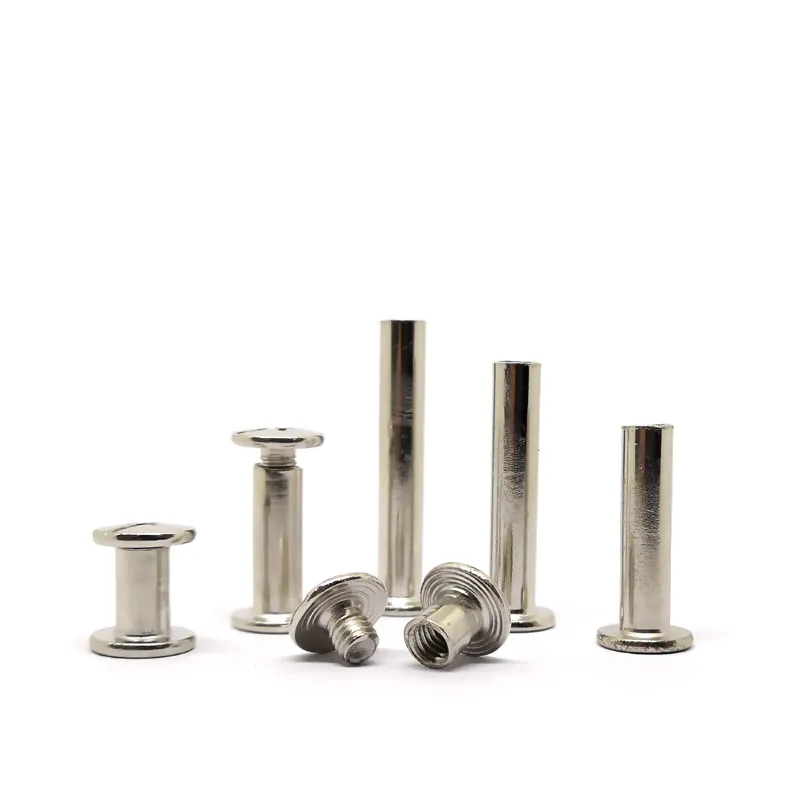
Male-female rivets’ reusability is fundamentally determined by their design: screw-type versions, featuring threaded male posts and female barrels, are explicitly engineered for repeated assembly and disassembly, making them reusable. Conversely, press-fit or crimped male-female rivets create a permanent, non-reusable mechanical interlock upon installation, as their deformation prevents clean removal without damage, thus requiring replacement if the joint needs to be opened.
1.1 Screw-Type Male-Female Rivets: Designed for Disassembly
The champions of reusability.
- Design: These are the most common type when reusability is desired. They consist of a male post with external threads and a female barrel with internal threads. They are joined by screwing the male part into the female part.
- Reusability: Yes, these are generally reusable. Their threaded design allows for easy unscrewing and re-tightening.
- Longevity Factor: The longevity of their reusability depends heavily on the quality of the threads, the material, and how often they are reused.
- Example 1: Custom Leather Goods. A high-quality leather bag or belt might use screw-type male-female rivets to attach buckles or straps. These can be unscrewed to replace a strap or make adjustments, then re-tightened, maintaining their hold for many years if not over-tightened or stripped.
- Example 2: Binder Posts. Many office binders use male-female rivets (often called binding posts) to hold pages. These are specifically designed to be unscrewed to add or remove pages, demonstrating clear reusability.
- Analysis: The theoretical basis is the integrity of the threaded connection. The practical impact is that these rivets offer flexibility for maintenance and modification, making them ideal for products requiring periodic adjustments.
This table details different male-female rivet designs and their reusability.
| Rivet Design Type | Reusability Status | Primary Fastening Mechanism | Typical Applications |
| Screw-Type | Generally Reusable | Threaded mechanical interlock | Leather goods, binders, architectural panels |
| Press-Fit/Snap-Together | Limited/Not Reusable | Friction fit, plastic deformation | Light electronics, plastic assemblies |
| Crimped/Deformed | Not Reusable (permanent once set) | Permanent material deformation/interlock | Permanent assemblies, security fasteners |
1.2 Press-Fit or Crimped Male-Female Rivets: One-Time Use
The permanent solutions.
- Design: These types are designed for a permanent or semi-permanent connection.
- Press-Fit: The male and female parts are designed to snap or press together, often with a friction fit or small barbs that engage.
- Crimped/Deformed: The male post might be inserted into a hollow female barrel, and then the end of the male post is crimped, flared, or peened over to create a permanent mechanical lock.
- Reusability: Generally not reusable. Attempting to remove them usually damages the rivet or the material, requiring replacement.
- Longevity Factor: Their longevity refers to the lifespan of the initial connection, as they are not meant for repeated cycles.
- Example 1: Light Electronic Enclosures. Some plastic electronic enclosures might use small press-fit male-female rivets to hold circuit boards or covers. Once pressed together, they are difficult to remove without breaking the plastic components of the rivet.
- Example 2: Security Fasteners. In some applications where tampering needs to be prevented, a male-female rivet might be designed to be crimped or peened after assembly, making it a permanent, non-reusable fastener.
- Analysis: The theoretical basis is permanent material deformation or a non-releasable friction fit. The practical impact is a secure, tamper-resistant, but non-reusable joint, suitable for assemblies not intended for frequent disassembly.
2. Factors Affecting Male-Female Rivet Longevity and Reusability
Even for reusable types, several factors dictate how many times they can be effectively reused.
The longevity and reusability of male-female rivets are significantly affected by material quality (e.g., brass vs. steel), thread integrity (prone to wear or stripping), installation torque (over-tightening causes damage), and environmental exposure (corrosion reduces lifespan). Repeated disassembly and reassembly cycles inherently degrade the threads and material, making careful handling and appropriate material selection crucial for maximizing their effective lifespan before structural integrity is compromised.
2.1 Material Quality and Thread Integrity
The backbone of durability.
- Material Quality:
- Impact: Rivets made from softer metals (e.g., brass, aluminum) are more prone to thread wear, stripping, or deformation during repeated use compared to harder metals (e.g., steel, stainless steel).
- Longevity: High-quality, harder materials will naturally extend the longevity and reusability.
- Example: A brass screw-type male-female rivet used in a frequently opened portfolio will show thread wear much faster than a stainless steel one in a similar application.
- Thread Integrity:
- Impact: The precision and depth of the threads on both the male and female parts are crucial. Poorly formed or shallow threads are easily stripped.
- Longevity: Well-machined, robust threads are essential for repeated engagement and disengagement.
- Example: A cheaply manufactured male-female rivet with shallow threads might strip on its second or third use, rendering it non-reusable, whereas a precision-machined one could last dozens of cycles.
- Analysis: The theoretical basis is material hardness, fatigue, and thread mechanics. The practical impact is that investing in higher-quality rivets made from appropriate materials directly translates to better reusability and extended longevity.
This table outlines factors affecting male-female rivet longevity.
| Factor | Impact on Reusability & Longevity | Best Practice for Extension |
| Material Quality | Softer metals wear faster, harder metals last longer | Choose steel/stainless steel for frequent reuse |
| Thread Integrity | Poor threads strip easily, good threads endure | Use high-quality, precision-machined rivets |
| Installation Torque | Over-tightening strips threads, under-tightening loosens | Use recommended torque, avoid excessive force |
| Number of Cycles | Each cycle causes wear, reducing lifespan | Minimize unnecessary disassembly |
| Environmental Exposure | Corrosion, chemicals degrade material, threads | Select corrosion-resistant materials, protective coatings |
| Presence of Threadlocker | Can make removal difficult, potentially damaging threads | Use sparingly, or choose removable types if reusability is key |
2.2 Installation and Removal Practices
How you handle them matters.
- Over-tightening:
- Impact: Applying excessive torque during installation can strip the threads of either the male or female part, or deform the rivet, making it impossible to reuse.
- Longevity: Significantly reduces longevity to potentially a single use.
- Example: Using a power drill on a high-torque setting to install a small male-female rivet in leather can easily strip the threads, ruining it.
- Improper Removal:
- Impact: Using the wrong tool or technique to remove a screw-type rivet (e.g., pliers instead of a screwdriver) can damage the head, making future reinstallation difficult or impossible.
- Longevity: Can prematurely end the rivet’s reusable life.
- Example: Trying to pry open a crimped male-female rivet will deform it and the material, making it non-reusable.
- Analysis: The practical impact is that proper technique and appropriate tools are crucial for preserving the integrity of reusable male-female rivets and extending their longevity.
3. Best Practices for Reusing Male-Female Rivets
To get the most life out of your reusable male-female rivets, follow these guidelines.
For optimal longevity and reusability of male-female rivets, always use the correct tools (e.g., appropriately sized screwdrivers) to prevent head or thread damage during installation and removal. Avoid over-tightening to preserve thread integrity, and regularly inspect rivets for wear, corrosion, or deformation. Storing removed rivets properly and cleaning threads before reinstallation further extends their effective lifespan, ensuring reliable performance across multiple uses.
3.1 Use the Right Tools and Technique
Gentle hands, precise tools.
- Correct Screwdriver/Tool: Always use a screwdriver that perfectly fits the head of the male post (e.g., flathead, Phillips, hex). Using an ill-fitting tool can strip the head, making future removal impossible.
- Appropriate Torque: Tighten screw-type male-female rivets until snug, but avoid excessive force. Hand-tightening is often sufficient for many applications. If a torque specification is provided, adhere to it.
- Clean Threads: Before reinstallation, inspect the threads on both parts. If there’s any debris or old thread-locking compound, clean it gently with a brush or appropriate solvent.
- Example: When disassembling a custom leather holster, carefully use a perfectly sized flathead screwdriver to unscrew each male-female rivet, ensuring no damage to the slots, which allows for easy reassembly later.
- Analysis: The practical impact is that meticulous handling and proper tooling directly contribute to preserving the physical integrity of the rivet, maximizing its reusable longevity.
This table provides best practices for reusing male-female rivets.
| Best Practice | Why it’s Important | Impact on Reusability & Longevity |
| Use Correct Tools | Prevents head stripping, thread damage | Preserves rivet integrity for multiple uses |
| Avoid Over-tightening | Prevents thread stripping, material deformation | Maintains thread strength, extends lifespan |
| Inspect Before Reuse | Identifies wear, damage, or corrosion | Prevents reinstallation of compromised fasteners |
| Clean Threads | Ensures smooth engagement, prevents binding | Reduces wear, maintains secure connection |
| Store Properly | Prevents damage, corrosion, loss of parts | Keeps rivets in good condition for future use |
| Lubricate (if applicable) | Reduces friction, prevents galling (for metal-on-metal) | Extends thread life, eases installation/removal |
3.2 Inspection and Storage
A little care goes a long way.
- Inspect for Wear: Before reusing, carefully inspect both the male and female parts for any signs of thread wear, deformation, corrosion, or cracks. If any significant damage is present, it’s best to replace the rivet.
- Proper Storage: If you remove male-female rivets for later reuse, store them together (male and female parts) in a clean, dry container to prevent loss, damage, or corrosion.
- Example: After removing male-female rivets from a prototype, you visually check each one for stripped threads or bent posts. The good ones are then placed in a small, labeled bag for future projects.
- Analysis: The practical impact is that proactive inspection and careful storage prevent the reintroduction of compromised fasteners, ensuring that only reliable components are used, thus maintaining structural integrity.
4. When Not to Reuse: Signs of Wear and Compromise
Knowing when to say goodbye to a rivet is just as important as knowing how to reuse it.
Do not reuse male-female rivets if they exhibit clear signs of wear or compromise, such as stripped or cross-threaded threads, visible deformation (bent posts, flattened heads), significant corrosion, or cracks in the material. Reusing a damaged rivet severely compromises joint integrity, risking premature failure, loosening, and potential safety hazards. When in doubt, always replace a questionable rivet to ensure the longevity and reliability of the assembly.
4.1 Visual Cues of Damage
What to look for.
- Stripped or Cross-Threaded Threads: If the threads on either the male or female part look flattened, chewed up, or don’t engage smoothly, the rivet is compromised.
- Deformation: Any visible bending of the male post, flattening of the head, or distortion of the female barrel indicates that the rivet has been overstressed or improperly handled.
- Corrosion: Significant rust or other forms of corrosion can weaken the rivet material and degrade thread integrity.
- Cracks: Hairline cracks, especially near the head or where the male post meets the head, are a clear sign of fatigue or overstress.
- Example: You try to unscrew a male-female rivet, and the screwdriver slips repeatedly, or the threads feel gritty and don’t turn smoothly. Upon inspection, you see the threads are visibly flattened. This rivet should be discarded.
- Analysis: The practical impact is that recognizing these signs of damage prevents the reinstallation of a weakened fastener, which could lead to joint failure and potential safety issues.
This table lists signs that a male-female rivet should not be reused.
| Sign of Compromise | Why it’s a Problem | Risk of Reuse |
| Stripped/Cross-Threaded Threads | Cannot achieve proper torque or secure engagement | Joint will be loose, prone to failure |
| Visible Deformation | Indicates material stress, weakened structure | Reduced strength, potential for breakage |
| Significant Corrosion | Weakens material, degrades threads | Premature failure, reduced holding power |
| Hairline Cracks | Sign of fatigue or material failure | Catastrophic failure under load |
| Head Damage (e.g., stripped drive) | Prevents proper tightening/loosening | Cannot achieve secure connection, difficult maintenance |
| Galling | Material transfer between threads, seizing | Permanent seizing, cannot be removed/reinstalled |
4.2 The Risk of Reusing Compromised Rivets
It’s not worth it.
- Compromised Joint Integrity: A damaged rivet will not provide the intended clamping force or shear strength, leading to a weak joint that is prone to loosening or failure.
- Safety Hazard: In structural or load-bearing applications, a failed rivet can lead to equipment malfunction, product damage, or even injury.
- False Economy: Attempting to save a few cents by reusing a questionable rivet can lead to much higher costs down the line due to repairs, replacements, or liability.
- Example: Reusing a male-female rivet with stripped threads in a child’s toy could lead to a component detaching, posing a choking hazard.
- Analysis: The practical impact is that the potential risks associated with reusing a compromised rivet far outweigh any perceived benefits, making replacement the only responsible course of action.
5. Alternative Fasteners for Frequent Disassembly
If frequent disassembly is a core design requirement, other fasteners might be a better fit.
For applications requiring very frequent disassembly and reassembly, alternative fasteners like captive screws, quick-release pins, or specialized quarter-turn fasteners often offer superior longevity and ease of use compared to even reusable male-female rivets. These alternatives are specifically engineered for high cycle counts, minimizing wear and ensuring consistent performance, making them ideal for access panels, modular components, or equipment requiring regular maintenance without compromising structural integrity or assembly speed.
5.1 Captive Screws and Quick-Release Pins
Engineered for repeated access.
- Captive Screws: These screws remain attached to one panel even when unscrewed, preventing loss and simplifying assembly/disassembly. They are designed for many cycles.
- Longevity: Excellent, as they are engineered for repeated use.
- Example: Access panels on electronic equipment often use captive screws, allowing technicians to quickly open and close the enclosure for maintenance without losing fasteners.
- Quick-Release Pins: These fasteners (e.g., ball-lock pins, detent pins) allow for extremely fast, tool-free connection and disconnection.
- Longevity: Very high cycle life, designed for frequent engagement.
- Example: Modular stage components or temporary fixtures often use quick-release pins for rapid setup and breakdown.
- Analysis: The practical impact is that these alternatives offer superior longevity and convenience for applications demanding very frequent disassembly, reducing the risk of fastener wear and improving operational efficiency.
This table lists alternative fasteners for frequent disassembly.
| Alternative Fastener | Primary Benefit for Reusability | Typical Applications |
| Captive Screws | Prevents loss, designed for high cycle counts | Access panels, electronic enclosures |
| Quick-Release Pins | Tool-free, extremely fast connection/disconnection | Modular components, temporary fixtures |
| Quarter-Turn Fasteners | Fast, secure locking with minimal turns | Access panels, covers, quick-release components |
| Thumb Screws/Knobs | Tool-free manual tightening/loosening | Adjustable fixtures, consumer products |
| Cam Locks | Strong, secure, quick-release mechanism | Furniture, cabinetry, display cases |
5.2 Quarter-Turn Fasteners and Thumb Screws
Speed and convenience.
- Quarter-Turn Fasteners: These fasteners lock and unlock with just a quarter turn, providing quick access and secure closure.
- Longevity: Designed for many cycles, offering excellent longevity.
- Example: Equipment covers or fairings that need to be removed frequently for inspection or service often use quarter-turn fasteners.
- Thumb Screws/Knobs: These are screws with an enlarged, knurled head that can be tightened and loosened by hand, without tools.
- Longevity: Good, depending on material and frequency of use.
- Example: Adjustable laboratory equipment or camera mounts might use thumb screws for quick, tool-free adjustments.
- Analysis: The practical impact is that these fasteners prioritize ease and speed of disassembly, making them ideal for user-facing products or components requiring regular, tool-free access, further extending the longevity of the overall assembly by minimizing wear on the fastening mechanism.
Conclusion
So, are male-female rivets reusable? The answer is a nuanced “it depends.” While screw-type male-female rivets are indeed designed for reusability and can offer excellent longevity with proper care, press-fit or crimped versions are generally permanent.
To maximize the reusable life of your male-female rivets, always use the correct tools, avoid over-tightening, and diligently inspect them for any signs of wear or damage before reinstallation. When a rivet shows compromise, replacing it is always the safest and most cost-effective choice in the long run. For applications demanding very frequent disassembly, however, exploring alternative fasteners specifically designed for high cycle counts might offer even greater convenience and extended durability.