Walk onto any high-volume manufacturing floor, and you will likely witness a familiar bottleneck: an assembly line worker meticulously stacking a tiny screw, a spacer, two washers, and a nut, trying to align them perfectly before applying torque. In mechanical engineering, creating a joint that allows two parts to rotate smoothly without binding or wobbling is a perpetual challenge.
For decades, engineers have debated the optimal pivot fastening solution. Should you rely on the modular flexibility of a spacer and screw assembly, or should you transition to the integrated precision of a shoulder rivet?
The core difference between these two mechanical assembly methods is not merely about how they connect materials; it is about how they define structural behavior—specifically spacing, motion, and stability. In modern design, the prevailing engineering consensus is clear: if the assembly requires consistent motion and spacing, structural integration is vastly more reliable than component stacking. This guide delves into the mechanical comparison, efficiency metrics, and real-world application data to help you determine the superior assembly method for your next project.
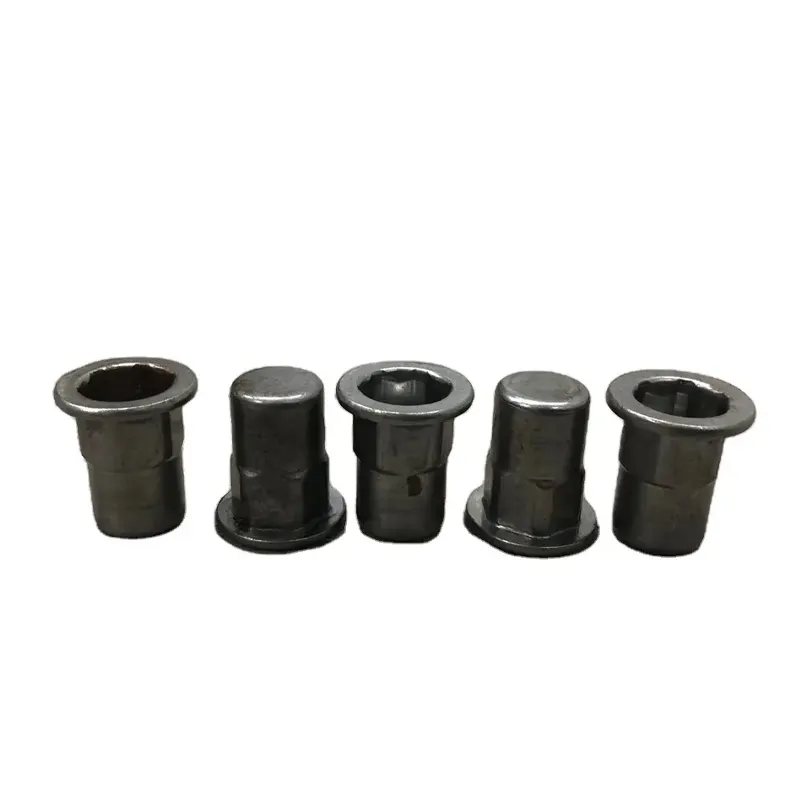
Table of Contents
- What Is the Fundamental Design Logic Behind Each Method?
- How Do These Fasteners Impact Assembly Efficiency and Part Count?
- Which Assembly Method Offers Better Precision and Consistency?
- How Does Fastener Choice Affect Pivot Motion Performance?
- What Are the Real-World Applications for Each Fastening Structure?
- When Is the Spacer and Screw Method Actually Superior?
- How Can Structural Optimization Lower Your Total BOM Cost?
1. What Is the Fundamental Design Logic Behind Each Method?
To make an informed decision between a shoulder rivet vs screw, engineers must first analyze the mechanical logic driving each design.
The Spacer + Screw Logic (Component Stacking)
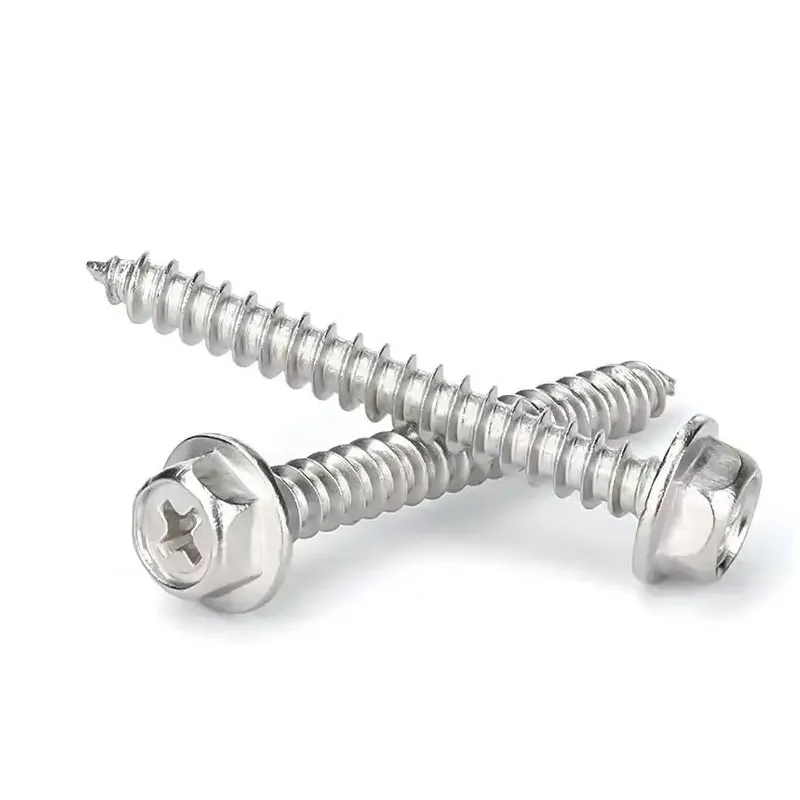
The traditional screw approach builds a pivot joint through modular combination. The machine screw provides the clamping force (fastening), a separate hollow cylinder (spacer or bushing) acts as the physical standoff to prevent the plates from crushing together, and washers are often added to distribute the load or reduce friction.
- The Advantage: It is highly modular. You can easily swap a spacer for a slightly longer one during prototyping, and the entire joint is completely removable.
- The Limitation: The joint’s stability relies entirely on the quality of the assembly process. The friction, the gap, and the alignment are at the mercy of installation torque and the interaction of multiple separate pieces.
The Shoulder Rivet Logic (Structural Integration)
A precision spacing fastener like a shoulder rivet fundamentally changes the equation by integrating three distinct functions—fastening, spacing, and rotational support—into a single, CNC-machined component.
- The Advantage: The structural gap is permanently defined by the solid, unyielding shoulder. Once the tail is swaged into the base plate, the pivot axis is locked. It physically prevents the operator from over-tightening the joint.
- The Limitation: It is a permanent assembly. If the joint needs to be disassembled for routine maintenance, a rivet must be drilled out and replaced.
2. How Do These Fasteners Impact Assembly Efficiency and Part Count?
When evaluating a mechanical assembly methods comparison, the engineering department and the procurement team often have different priorities. The engineering team wants structural stability, while procurement wants a simplified Bill of Materials (BOM) and lower assembly costs. The shoulder rivet satisfies both.
A standard dynamic joint built with a screw usually requires at least three to four components: the screw, the spacer, a washer, and a locking nut or tapped hole. Every additional component is a separate SKU that must be sourced, tracked, stored, and manually handled on the production line.
By switching to an integrated shoulder rivet, manufacturers routinely reduce the parts in an assembly by 30% to 60%. This massive part consolidation has a direct, cascading effect on the assembly line. Because workers no longer have to fumble with aligning tiny spacers or calibrating torque wrenches to ensure they don’t crush the joint, assembly time is consistently lowered by 20% to 40%. The rivet is inserted, a pneumatic tool swages the tail in a fraction of a second, and the joint is permanently set.
3. Which Assembly Method Offers Better Precision and Consistency?
The silent killer of any precision mechanism is tolerance stack-up error. In a stacked assembly, every individual component has its own manufacturing tolerance.
If you use a screw, a spacer, and two washers, you are combining four separate dimensional tolerances. Even if each part is machined accurately, the cumulative error can result in a joint that is either too tight (causing binding) or too loose (causing wobble). Furthermore, the actual clearance of a screw-based pivot joint is heavily influenced by the fastening force. If an automated driver applies 5% more torque to one screw, that specific joint may compress the washers slightly more, changing the friction profile completely.
A shoulder rivet eliminates this variable. The spacing is strictly defined by the physical length of the machined shoulder. Because it is a single component, there is no stack-up error. Industry data demonstrates that transitioning from a stacked screw assembly to a precision shoulder rivet reduces clearance fluctuation (gap variation) by 20% to 50%. Whether it is the first unit off the assembly line or the ten-thousandth, the gap remains exactly the same.
4. How Does Fastener Choice Affect Pivot Motion Performance?
For engineers designing hinges, linkages, and levers, the quality of the rotational feel is paramount.
In a spacer vs shoulder rivet comparison regarding motion performance, the rivet holds a distinct advantage due to the continuity of its bearing surface. A screw and spacer combination often suffers from microscopic misalignment. The screw threads may rub against the inside of the spacer, or the spacer may shift slightly off-center under load. This creates uneven friction, leading to a “jerky” rotational feel or localized accelerated wear.
A mechanical shoulder rivet acts as a perfectly rigid, fixed pivot axis. The shoulder is polished and continuous, providing a superior bearing surface for the rotating plate. Because the shoulder absorbs the entire axial clamping force during installation, the rotating arm is never compressed. This isolation ensures uniform friction throughout the entire range of motion, improving friction stability by over 30% and virtually eliminating the risk of binding or stiction.
Table 1: Shoulder Rivet vs. Spacer & Screw Performance Comparison
| Engineering Metric | Spacer + Screw Assembly | Precision Shoulder Rivet | Impact on Production & Design |
| Component Count | 3 to 4 parts (Screw, spacer, washer, nut) | 1 Integrated Part | Reduces BOM complexity by 30%–60%. |
| Assembly Speed | Slower (Requires alignment and torque control) | Fast (Single-step swaging) | Lowers assembly time by 20%–40%. |
| Tolerance Stack-Up | High (Cumulative error from multiple parts) | Low (Single machined tolerance) | Reduces gap fluctuation by 20%–50%. |
| Pivot Friction Stability | Inconsistent (Vulnerable to torque variations) | Highly Consistent | Boosts friction stability by >30%. |
| Vibration Resistance | Moderate (Screws can back out over time) | Excellent (Permanent mechanical lock) | Eliminates self-loosening failures. |
| Disassembly | Fully reversible | Permanent | Rivets cannot be easily dismantled for maintenance. |
5. What Are the Real-World Applications for Each Fastening Structure?
Theoretical data is best understood through application-based case studies. Let’s look at how these fasteners perform in distinct industrial scenarios.
Case 1: Consumer Electronics Hinge Structures
- The Demand: Laptops, folding tablets, and camera brackets require small-form-factor hinges that deliver a highly consistent, premium tactile feel.
- The Screw Failure: When engineers attempt to use a micro-screw and spacer, the assembly errors cause inconsistent hand-feel. Some hinges are stiff; others are floppy. Over time, the rotational motion backs the screw out, causing the device to feel cheap and loose.
- The Rivet Solution: Integrating a shoulder rivet defines a permanent, built-in spacing structure. The tactile resistance becomes perfectly uniform across the entire production batch, significantly increasing the manufacturing yield rate and eliminating warranty claims for loose hinges.
Case 2: Automation Equipment Linkages
- The Demand: Light robotic arms and packaging machinery linkages undergo high-frequency, continuous motion and require absolute pivot stability.
- The Screw Failure: The constant starting, stopping, and reversing causes severe micro-vibrations. Stacked screw assemblies eventually loosen, introducing wobble into the linkage that degrades the robot’s positioning accuracy. The maintenance team must frequently halt production to re-torque the joints.
- The Rivet Solution: A shoulder rivet provides a fixed pivot axis that cannot vibrate loose. The highly controlled gap ensures that the linkage trajectory remains perfectly stable over millions of cycles, drastically reducing the frequency of preventative maintenance.
6. When Is the Spacer and Screw Method Actually Superior?
Despite the overwhelming advantages of integration, the shoulder rivet is not a universal replacement for every joint. There is a definitive decision boundary where component stacking remains the superior choice: The requirement for routine disassembly.
Case 3: Maintainable Equipment Structures
- The Demand: A manufacturer designs a diagnostic machine with a pivoting access panel. The panel must be completely removed by field technicians every six months to replace internal filters.
- The Fastener Choice: A shoulder rivet is the wrong choice here. Because rivets form a permanent mechanical lock, a technician would have to drill out the fastener to remove the panel, destroying the joint. A spacer and screw assembly is the only logical solution, as it allows for infinite, non-destructive teardowns and reassembly.
The ultimate conversion trigger for engineers is this: If the joint requires field maintenance and disassembly, specify a screw and spacer. If the joint requires permanent stability, consistent pivot motion, and is not meant to be taken apart, the shoulder rivet is the undisputed optimal choice.
7. How Can Structural Optimization Lower Your Total BOM Cost?
When evaluating a shoulder rivet advantages, procurement teams sometimes push back because a custom CNC-machined shoulder rivet often carries a higher individual piece price than a mass-produced standard machine screw. However, this is a flawed calculation that ignores the total cost of ownership.
When you factor in the elimination of auxiliary spacers and washers, the 40% reduction in assembly labor time, and the drastic reduction in warranty claims caused by loose or binding joints, the integrated shoulder rivet is fundamentally a cost-reduction strategy.
At Dongguan Jiliang Machinery Hardware, we help engineering teams transition away from complex, unreliable stacked assemblies. We specialize in manufacturing custom precision shoulder rivets tailored to the exact kinematic requirements of your linkages, hinges, and automated arms. If your production line is struggling with inconsistent joint quality or complex, multi-part assemblies, our technical team is ready to help you optimize your structure, simplify your BOM, and lock down your pivot motion permanently.
[Contact Our Engineering Team to Discuss Your Pivot Assembly Solutions]
Frequently Asked Questions (FAQ)
1. Can a shoulder rivet be used as a fixed standoff rather than a pivot?
Yes. While they excel in rotational joints, they are frequently used as rigid structural standoffs. By sizing the shoulder length to be slightly shorter than the material thickness, or by using an interference fit on the hole diameter, the rivet will permanently clamp the components tightly together without allowing any rotation.
2. Are shoulder rivets harder to install than screws?
They are actually faster and easier to install on a production line. A screw requires a worker to align multiple parts, thread the nut, and apply specific torque. A shoulder rivet is simply dropped into the hole and set in a single motion using an orbital riveter or a pneumatic press, removing human error from the equation.
3. What happens if the spacer in a screw assembly is slightly too long?
If the spacer is too long, the screw will bottom out against the spacer before it applies any clamping force to the outer plates. The joint will feel completely tight to the torque wrench, but the structural plates will be rattling loosely, leading to severe vibration issues and accelerated wear.
4. How do I determine the correct tolerance for a pivot shoulder rivet?
For standard hinges, a clearance fit of +0.02mm to +0.05mm between the shoulder diameter and the pivot hole is standard. For high-precision automation where zero wobble is required, a micro-clearance of +0.005mm to +0.02mm is utilized. The length should be the total material thickness plus a 0.02mm to 0.05mm functional gap.
5. Do shoulder rivets have lower shear strength than bolts?
Generally, a solid shoulder rivet provides excellent shear strength because the solid, unthreaded shoulder spans the shear plane (the point where the two plates meet). Screws often have threads intersecting the shear plane, which creates stress concentrations and makes them more susceptible to shearing under heavy lateral loads.
6. Can I use a shoulder rivet in plastic materials?
Yes, but the installation method matters. Plastically deforming a heavy steel rivet tail can crack brittle plastics. In these scenarios, engineers use semi-tubular shoulder rivets, which require significantly less force to swage. Additionally, a wide head or a backing washer can be used on the blind side to distribute the load evenly across the plastic surface.
7. Is a threadlocker (like Loctite) enough to make a screw act like a permanent rivet?
No. While threadlockers excellent at preventing vibration backing, they do not solve the tolerance stack-up issues, nor do they provide the perfectly smooth, continuous bearing surface of a machined rivet shoulder. They fix the symptom (loosening), but not the root cause of inconsistent motion.