Male-Female rivets provide superior structural integrity due to their two-piece interlocking design, offering higher shear and tensile strength for high-vibration applications. Blind rivets, while structurally weaker, are the necessary choice when assembly access is limited to only one side.
Choosing the correct fastening system for metal frameworks or enclosures is a balancing act between mechanical strength and manufacturing accessibility. Specifying a fastener with inadequate shear capacity leads to catastrophic joint failure, while over-engineering an inaccessible joint halts the assembly line. Drawing from extensive manufacturing and supply experience at Dongguan Jiliang Machinery Hardware, this engineering guide evaluates the core differences between these two common fastener types to help you secure your assemblies reliably.
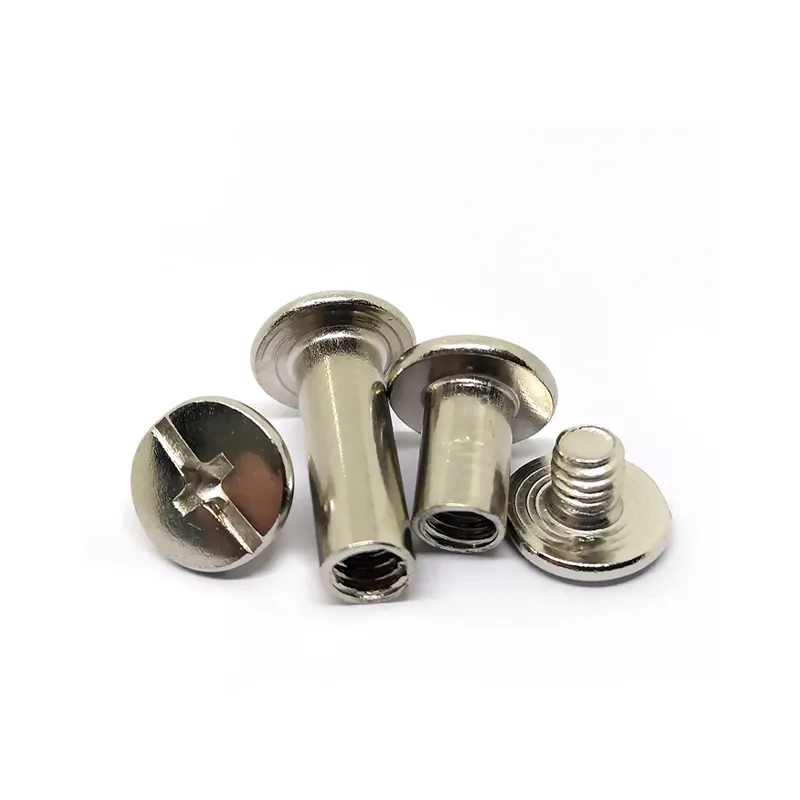
Table of Contents
- What Defines the Structural Integrity of a Riveted Joint?
- How Does the Two-Piece Interlocking Structure of Male-Female Rivets Work?
- When Are Blind Rivets the Most Efficient Solution?
- Technical Comparison: Load Performance and Aesthetics
- How to Choose the Right Fastener for Your Application?
1. What Defines the Structural Integrity of a Riveted Joint?
Structural integrity depends on even load distribution and mechanical engagement. When a joint experiences dynamic loads, the fastener must resist shear and tensile forces without loosening. Male-Female rivets excel here because their solid barrel and stud design physically lock together, creating a highly uniform clamping force.
The Impact of Dynamic Loads
In industrial applications, fasteners rarely experience simple static loads. They face cyclic fatigue, thermal expansion, and constant vibration. The integrity of the joint is determined by how well the fastener fills the drilled hole and how evenly it clamps the mating surfaces.
A joint fails when the fastener allows micro-movements between the plates. Therefore, the core of structural integrity lies in the fastener’s ability to maintain tight, unyielding compression over years of service.
2. How Does the Two-Piece Interlocking Structure of Male-Female Rivets Work?
Male-Female rivets utilize a male stud and a female barrel to form a stable mechanical bite. This two-piece interlocking structure ensures even load distribution, making them ideal for applications requiring exceptional resistance to shear and tensile forces.
Maximizing Shear and Tensile Capacity
The design of a Male-Female rivet (sometimes referred to in the industry as binding posts or architectural bolts) inherently provides a massive shear plane. Because the female barrel passes entirely through the joined materials, the shear load rests on a thick, solid metal cylinder rather than a hollow or expanded shell.
These fasteners are manufactured in various materials—including carbon steel, stainless steel, and aluminum alloy—allowing engineers to match the fastener’s metallurgical properties to the environmental and structural demands of the assembly.
Case 1: High-Load Metal Structural Components
Consider the assembly of heavy-duty metal frames or mechanical support brackets. These structures must endure continuous vibration and cyclic tensile loads.
In a recent project involving industrial racking systems, relying on single-piece expansion fasteners resulted in premature joint loosening under heavy pallet loads. By transitioning the design to Male-Female Rivets, the dual-component mechanical lock provided a vastly superior, long-term stable connection. The even load distribution across the solid barrel eliminated the micro-shearing that was degrading the frame.
3. When Are Blind Rivets the Most Efficient Solution?
Blind rivets rely on a pulling mandrel to expand the blind end, creating a bulge that secures the materials. This single-piece expansion structure allows for rapid, single-sided installation, making it highly efficient for closed assemblies despite having slightly lower ultimate strength.
The Advantage of Single-Sided Access
The primary limitation of Male-Female rivets is that they require an operator (or automated tooling) to access both sides of the workpiece simultaneously. In many modern designs, this is physically impossible.
Blind rivets solve the geometry problem. The structural integrity of a blind rivet joint is heavily dependent on the quality of the blind-side expansion. If the mandrel breaks cleanly and the material bulges uniformly, the joint is secure for medium-duty applications. However, in high-vibration environments, the expanded tail can eventually fatigue and loosen.
Case 2: Closed Cavity Structural Assembly
In applications involving tubular components, extruded aluminum profiles, or closed box structures, you simply cannot reach the back of the drilled hole.
For a manufacturer producing sealed HVAC distribution boxes, accessing the interior to hold a female barrel was impossible without redesigning the entire unit. Blind Rivets became the most efficient and necessary solution. Even though their ultimate tensile and shear strength limits are lower than two-piece fasteners, they comfortably met the medium structural requirements of the sheet metal box while allowing rapid, single-sided assembly.
4. Technical Comparison: Load Performance and Aesthetics
Male-Female rivets require two-sided access and offer a neat aesthetic on both sides, whereas blind rivets need only single-sided access but leave an uneven blind end. The choice directly impacts both the final appearance and the assembly line process.
Engineering Data Breakdown
To make an informed decision, engineers must evaluate the physical characteristics of both fastener families. The table below outlines the extracted technical characteristics based on our production logic.
Table 1: Technical and Structural Comparison Matrix
| Fastener Characteristic | Male-Female Rivets | Blind Rivets |
| Structural Form | Two-piece mechanical locking structure (Stud + Barrel) | Single-piece mandrel-pulling expansion structure |
| Shear Performance | Exceptional capacity due to solid barrel cross-section | Medium capacity; hollow body after mandrel snaps |
| Tensile Performance | Highly stable and consistent clamping force | Moderate; highly dependent on blind-end forming quality |
| Installation Requirement | Must have access to both sides of the assembly | Requires access to only one side (Single-sided) |
| Vibration Resistance | Superior; mechanical threads/interlock resist loosening | Good, but blind tail can fatigue under extreme dynamics |
| Aesthetic Result | Neat, low-profile, and attractive on both sides | Clean on the front; uneven, expanded bulge on the blind side |
| Available Materials | Carbon steel, Stainless steel, Aluminum alloy | Carbon steel, Stainless steel, Aluminum alloy |
5. How to Choose the Right Fastener for Your Application?
Choose Male-Female rivets for load-critical joints with dual-sided access, and select blind rivets for production-critical or enclosed assemblies. Matching the fastener to the exact structural demand prevents premature failure and optimizes assembly line efficiency.
The Decision Matrix
From our field experience at Jiliang, the decision tree is straightforward:
- Is the joint enclosed? If yes, you must use a Blind Rivet.
- Is the joint exposed to heavy shear loads and constant vibration? If yes, and both sides are accessible, specify a Male-Female Rivet.
- Does the product require a premium cosmetic finish on both sides (e.g., consumer electronics, architectural glass fittings)? Male-Female Rivets provide a finished, symmetrical look that blind rivets cannot match.
If you are currently experiencing joint failure due to vibration, or if you are trying to optimize your assembly line for faster throughput, evaluating your fastener choice is the most cost-effective first step.
Are you unsure which fastening logic applies to your current CAD design?
Send your blueprint to the engineering team at Dongguan Jiliang Machinery Hardware. We can evaluate your load requirements and accessibility constraints to recommend the optimal structural fastener.
Frequently Asked Questions (FAQ)
1. Can Male-Female rivets be installed using automated equipment?
Yes, but it is more complex than automating blind rivets. It requires dual-axis automation where one robotic arm or fixture holds the female barrel in place while the other drives or presses the male stud into position.
2. Are blind rivets waterproof?
Standard open-end blind rivets are not waterproof because the mandrel leaves a small hole through the center of the rivet body. If structural integrity and waterproofing are both required, you must specify a “Closed-End” blind rivet.
3. Do Male-Female rivets loosen over time?
If they are threaded (like Chicago screws), they can loosen under extreme vibration unless secured with a thread-locking compound. If they are the press-fit/interference style, the mechanical bite is highly permanent and extremely resistant to vibration loosening.
4. Why did my blind rivet fail under a shear load?
Blind rivets have a hollow core once the mandrel snaps off. If the shear load exceeds the rating of that thin-walled tubular body, it will shear like a guillotine. Upgrading to a structural blind rivet (where the mandrel remains locked inside the shear plane) or switching to a Male-Female rivet solves this.
5. Can I use Male-Female rivets on fragile materials like plastic or glass?
Yes. Because they provide a controlled mechanical lock rather than relying on explosive radial expansion (like some blind rivets), they are excellent for brittle materials. You can precisely control the clamping force to avoid cracking the substrate.
6. What materials are best for preventing galvanic corrosion?
Always try to match the fastener material to the host material. If fastening aluminum sheets, use aluminum alloy rivets. If using stainless steel Male-Female rivets in an aluminum frame, you must use non-conductive isolating washers to prevent the dissimilar metals from corroding in wet environments.