Choosing between a semi tubular rivet vs solid rivet directly impacts manufacturing efficiency and joint integrity. Ignoring this balance leads to equipment wear, distorted components, or costly structural failures. Our perspective: if the joint is load-critical, choose solid rivets; if production-critical, choose semi tubular.
In our fastening solutions business at Dongguan Jiliang Machinery Hardware, one of the most frequent engineering questions we receive is whether a semi tubular rivet can replace a solid rivet in high-volume assemblies without sacrificing joint reliability. From our manufacturing and supply experience, the decisive factor is almost always installation force and production efficiency, not ultimate tensile strength. Here is a comprehensive analysis to guide your procurement and engineering decisions.
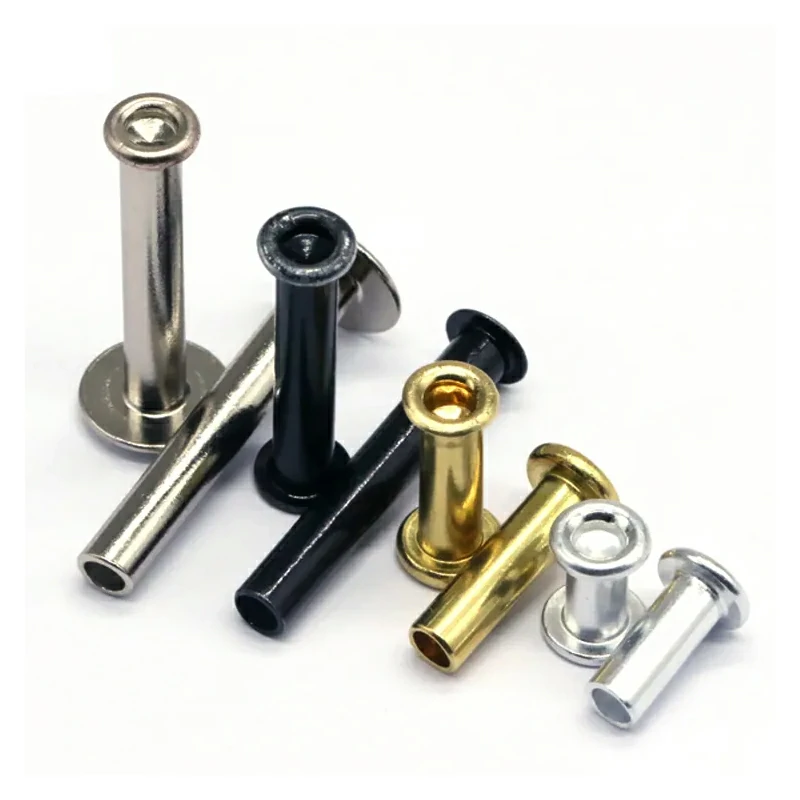
Table of Contents
- What is the Fundamental Difference Between Semi Tubular and Solid Rivets?
- How Much Does a Semi Tubular Rivet Reduce Installation Force?
- Why Do Solid Rivets Remain Essential for Structural Load-Bearing Joints?
- How Do Semi Tubular Rivets Prevent Damage to Thin or Soft Materials?
- Can Switching to Semi Tubular Rivets Improve Production Cycle Times?
- What Are the Tooling and Equipment Cost Differences?
- Case Study: How Did Automotive Interior Bracket Assembly Optimization Succeed?
1. What is the Fundamental Difference Between Semi Tubular and Solid Rivets?
Understanding the structural geometry of each fastener is the first step in proper selection. The physical design dictates exactly how the metal flows and deforms during the setting process on your production line.
A solid rivet features a solid, uniform cylindrical shank that requires massive compressive force to swell and form a head. Conversely, a semi tubular rivet has a hollow hole at the tail end, allowing the material to roll outward with significantly less force while leaving the main shank intact.
Structural Mechanics and Deformation Principles
The fundamental difference lies in how the material behaves under the rivet set tool.
- Example 1: In appliance hinges (using semi tubular rivets), the rivet acts as a pivot point. The shank must remain undeformed so the hinge can move freely, which is possible because only the hollow tail is rolled over.
- Example 2: In heavy-duty truck chassis assembly (using solid rivets), the rivet is driven so hard that the shank expands to fill the entire hole perfectly, creating an interference fit that handles massive shear loads.
When a solid rivet is installed, the force is transferred axially through the entire shank, causing it to bulge radially before the formed head is completed. When a semi tubular rivet is installed, the tooling specifically targets the thin walls of the hollow tail, curling them back over the substrate.
Deformation Characteristics Comparison:
| Feature | Semi Tubular Rivet | Solid Rivet |
| Shank Expansion | Minimal to None | Full Radial Expansion |
| Hole Fill | Clearance Fit | Interference Fit |
| Primary Forming Area | Tubular tip only | Entire shank and tail |
| Pivot Joint Suitability | Excellent | Poor (binds in the hole) |
Practical Advice: If your design requires a moving joint (like a folding ladder or scissors), you cannot use a standard solid rivet, as the radial expansion will lock the joint tight. Semi tubular rivets are engineered specifically for these articulating assemblies.
2. How Much Does a Semi Tubular Rivet Reduce Installation Force?
Excessive press tonnage is a primary cause of machine wear and factory downtime. Managing the required setting force is critical for maintaining sustainable, high-volume manufacturing operations without constantly rebuilding your press equipment.
Semi tubular rivets typically require only twenty to thirty percent of the installation force needed for a comparable solid rivet. This drastic reduction is due to the hollow tail design, which minimizes deformation resistance and eliminates the need to upset the entire fastener shank during the assembly process.
Analyzing Tonnage and Equipment Requirements
Lowering the installation force changes the entire dynamics of an assembly line.
- Example 1: Assembling a thin electronic enclosure. A 1/4″ solid aluminum rivet might require over 5,000 lbs of force to set. A 1/4″ semi tubular rivet can be set with roughly 1,200 lbs of force.
- Example 2: HVAC ducting and damper assemblies rely heavily on semi tubular designs because applying high tonnage to thin galvanized steel would instantly crush the ductwork.
The physics here is straightforward: yielding a thin-walled tube requires a fraction of the energy needed to yield a solid cylinder of the same outer diameter. This is why semi tubular rivets are the fastener of choice for production-critical environments.
Testing Method: To validate this on your floor, place a load cell under your lower anvil. Run a sample batch of solid rivets, then a sample batch of semi tubular rivets of the exact same material and diameter. The peak tonnage readouts will immediately confirm why your machines endure less strain with the semi tubular option.
3. Why Do Solid Rivets Remain Essential for Structural Load-Bearing Joints?
Despite the efficiency gains of hollow-tail designs, certain applications demand maximum mechanical strength. Understanding shear and tensile limits ensures you do not under-engineer a critical joint that protects human safety or heavy machinery.
Solid rivets provide maximum shear and tensile capacity because their full cross-sectional structure swells to create a tight interference fit. This makes them strictly necessary for structural, load-bearing applications involving high shear loads or continuous cyclic fatigue stress where ultimate joint integrity is the primary requirement.
Shear Strength and Interference Fit Dynamics
You cannot sacrifice safety for assembly speed. In structural engineering, the core rule applies: if the joint is load-critical, choose strength.
- Example 1: Aircraft fuselages rely on solid rivets because the constant pressurization cycles demand a joint that will not experience micro-movements, which lead to fatigue cracking.
- Example 2: Structural steel bridges and heavy construction equipment utilize solid rivets (though often replaced by high-tensile bolts today) because the sheer mass of the solid steel shank prevents the mating plates from sliding.
Why the Solid Shank Matters:
- Cross-Sectional Area: A solid rivet has 100% material across its shear plane. A semi tubular rivet, if the shear plane falls across the hollow portion, has significantly less material to resist cutting forces.
- Vibration Resistance: The radial expansion of a solid rivet locks it into the microscopic imperfections of the drilled hole, creating a friction fit that is highly resistant to vibration loosening.
Practical Advice: Always calculate the primary load vector. If the fastener is subjected to high shear (forces sliding the plates apart), and the shear plane intersects the tail of the rivet, a solid rivet is mandatory.
4. How Do Semi Tubular Rivets Prevent Damage to Thin or Soft Materials?
Applying tons of pressure to brittle plastics or thin sheet metal almost always results in scrap. Controlling how the fastener interacts with the substrate is paramount to maintaining high quality yield rates.
Because deformation is localized strictly at the tubular end, semi tubular rivets significantly reduce stress transfer to surrounding materials. This controlled flaring prevents crushing, cracking, or distorting delicate substrates like thin sheet metal, plastics, and layered assemblies, preserving the aesthetic and functional integrity of the components.
Managing Material Stress During Assembly
The “squeeze” of a rivet must not exceed the compressive yield strength of the parts being joined.
- Example 1: Fastening a PCB (Printed Circuit Board) to a plastic chassis. Using a solid rivet would shatter the FR-4 fiberglass board and crack the injection-molded plastic due to the massive radial expansion.
- Example 2: Securing a leather strap to a thin aluminum buckle. The semi tubular rivet rolls over the soft leather cleanly without cutting or tearing the fibers.
When we analyze material stress, we look at the direction of the force. Solid riveting pushes outward (radially) against the hole walls. Semi tubular riveting primarily pulls the materials together (axially) as the tail rolls backward, creating a clamping force rather than an expansion force.
Design Advice: When designing for very soft materials like silicone or rubber gaskets, pair a semi tubular rivet with a backing washer on the tubular side. The rolled tail will press against the washer, distributing the clamping load over a wide area and preventing the rivet from pulling through the soft substrate.
5. Can Switching to Semi Tubular Rivets Improve Production Cycle Times?
In high-volume environments, fractions of a second per fastening operation compound into massive cost savings. The fastener’s geometry directly influences the maximum speed at which your automated assembly machines can reliably operate.
In automated assembly lines, semi tubular rivets consistently improve riveting cycle times by fifteen to twenty-five percent. This acceleration is driven primarily by the lower press load required and the faster, more predictable material forming process compared to the slow, heavy compression needed for solid rivets.
Automation Integration and Efficiency Gains
Throughput is the ultimate metric for line managers.
- Example 1: In automotive interior tracks, automated orbital riveters can form a semi tubular head in under 0.5 seconds because the tool only needs to displace a small volume of metal.
- Example 2: Consumer appliance manufacturing (e.g., washing machine drum baffles) uses multi-head pneumatic presses that set 10 semi tubular rivets simultaneously in a single, rapid stroke.
Cycle Time Impact Factors:
- Ram Speed: Because less force is required, lighter pneumatic cylinders can be used, which actuate and retract much faster than high-tonnage hydraulic rams.
- Feeding Reliability: Semi tubular rivets are highly uniform and feed perfectly down vibratory track systems. The lack of extreme force means the alignment tooling doesn’t wear out and jam as frequently.
If your production line is bottlenecked at the riveting station, switching from a solid impact process to a semi tubular pneumatic or orbital process is the fastest way to increase Units Per Hour (UPH).
6. What Are the Tooling and Equipment Cost Differences?
Capital expenditure and ongoing maintenance budgets dictate your manufacturing strategy. The fastener you choose directly dictates the specific type of machinery you must purchase, operate, and maintain over the lifespan of the product.
Solid rivet installation demands heavy, expensive hydraulic systems and highly rigid tooling. Conversely, semi tubular rivets can be reliably installed using lighter, more affordable pneumatic or servo-driven equipment, drastically reducing both the initial capital investment and the long-term maintenance costs associated with high-tonnage press machinery.
Capital Investment vs. Long-Term Maintenance
The cost of the fastener is pennies; the cost of the machine is tens of thousands of dollars.
- Example 1: Setting up a new automated cell for solid riveting might require a custom 15-ton hydraulic C-frame press, costing upwards of $40,000, plus the cost of hydraulic fluid maintenance and leak management.
- Example 2: The same joint, engineered for a semi tubular rivet, could be accomplished with a standard 3-ton pneumatic toggle press costing under $10,000, running cleanly on standard shop air.
Cost Comparison Matrix:
| Expense Category | Solid Riveting System | Semi Tubular System |
| Capital Equipment | High (Hydraulic/Heavy Mechanical) | Low (Pneumatic/Light Servo) |
| Tooling Wear (Anvils) | Rapid (Requires frequent replacement) | Slow (Low pressure extends tool life) |
| Energy Consumption | High (Hydraulic pumps run continuously) | Low (Compressor air per stroke) |
| Maintenance Burden | High (Oil leaks, rigid frame stress) | Low (Simple seal replacements) |
Practical Advice: Calculate your Total Cost of Ownership (TCO) not just on the price per thousand rivets, but on the amortized cost of the machine maintenance and the energy bill required to generate the installation tonnage.
7. Case Study: How Did Automotive Interior Bracket Assembly Optimization Succeed?
Theoretical advantages must translate into measurable factory floor results. Real-world application data from high-volume production environments proves the immense value of matching the fastener geometry to the exact mechanical and production requirements.
By replacing solid rivets with custom semi tubular rivets on an automotive seat bracket, the manufacturer reduced installation force by seventy percent and improved cycle time by eighteen percent. This change entirely eliminated sheet distortion and extended equipment maintenance intervals without compromising the required functional performance.
Real-World Application and Metrics
A Tier-1 manufacturer producing interior seat adjustment mechanisms initially utilized solid rivets for hinge and bracket assemblies. While the joints were structurally robust, the manufacturing floor was battling severe inefficiencies.
The Initial Challenges:
- Excessive press force caused severe distortion and warping in the thin stamped metal components.
- The heavy hydraulic presses required high maintenance frequency, causing line downtime.
- Flare quality was inconsistent due to the unpredictable springback of the heavily deformed solid material.
The Jiliang Solution:
After a comprehensive engineering evaluation, we determined the joint was not primary load-bearing. We redesigned the assembly using custom semi tubular rivets matched precisely to the material thickness and grip range.
Measurable Results Achieved:
- Installation force reduced by ~70%, allowing the factory to step down to lighter press equipment.
- Riveting cycle time improved by 18%, boosting daily output.
- Scrap rate related to sheet deformation reduced by 22%, as the radial stress on the thin brackets was eliminated.
- Load testing confirmed that the semi tubular rivet comfortably met all safety and functional performance requirements for the seat track.
This case perfectly demonstrates the core philosophy: the semi tubular rivet vs solid rivet decision is not purely about maximum strength—it is about aligning mechanical performance with manufacturing efficiency and real-world application demands.
Frequently Asked Questions (FAQ)
1. Can a semi tubular rivet replace a solid rivet in every application?
No. If the joint acts as a primary structural support bearing high shear loads or heavy cyclic fatigue (e.g., building structures, heavy chassis), a solid rivet must be used for safety and integrity.
2. Are semi tubular rivets waterproof?
By themselves, no. Because the tail is hollow and rolls over, it does not create a completely gas-tight or water-tight seal like a perfectly upset solid rivet might. However, they can be made weather-resistant by using sealants, nylon washers, or closed-end caps during assembly.
3. Do I need to buy a new machine to switch to semi tubular rivets?
Not necessarily. If you currently use a press for solid rivets, it will easily have enough tonnage for semi tubular rivets. However, you will absolutely need to change the rivet set (the upper and lower tooling/anvils) to a “roll clinch” design specifically contoured to flare the hollow tail.
4. How do I determine the correct length for a semi tubular rivet?
The rule of thumb is that the rivet length should equal the total thickness of the materials being joined (the grip length) plus a “clinch allowance.” For semi tubular rivets, this allowance is typically 50% to 60% of the rivet’s shank diameter.
5. What materials are semi tubular rivets made from?
They are available in almost all standard cold-heading materials, including Aluminum (highly common for its ease of flaring), Brass, Copper, Carbon Steel, and Stainless Steel (304/316).
6. Why is my semi tubular rivet splitting or cracking when I install it?
Splitting usually occurs for three reasons: the material chosen is too hard/brittle for flaring (e.g., an unannealed stainless steel), the tubular hole is drilled off-center (poor manufacturing quality), or the setting tool is worn out and applying uneven pressure to the rim.
7. Can semi tubular rivets be used as pivot points?
Yes, this is one of their greatest advantages. By utilizing a “shoulder” design or controlling the clinch pressure, you can fasten two plates together while allowing them to rotate freely around the rivet shank, making them perfect for hinges and linkages.