Many procurement managers focus strictly on the unit price of fasteners, overlooking the hidden labor and processing costs that constitute the majority of the expense. Choosing the right machine screw features—such as drive style, thread pitch, and pre-assembled washers—can reduce assembly time by over 50% and significantly lower the Total Installed Cost (TIC). This analysis explores how engineering decisions at the fastener level directly impact manufacturing efficiency.
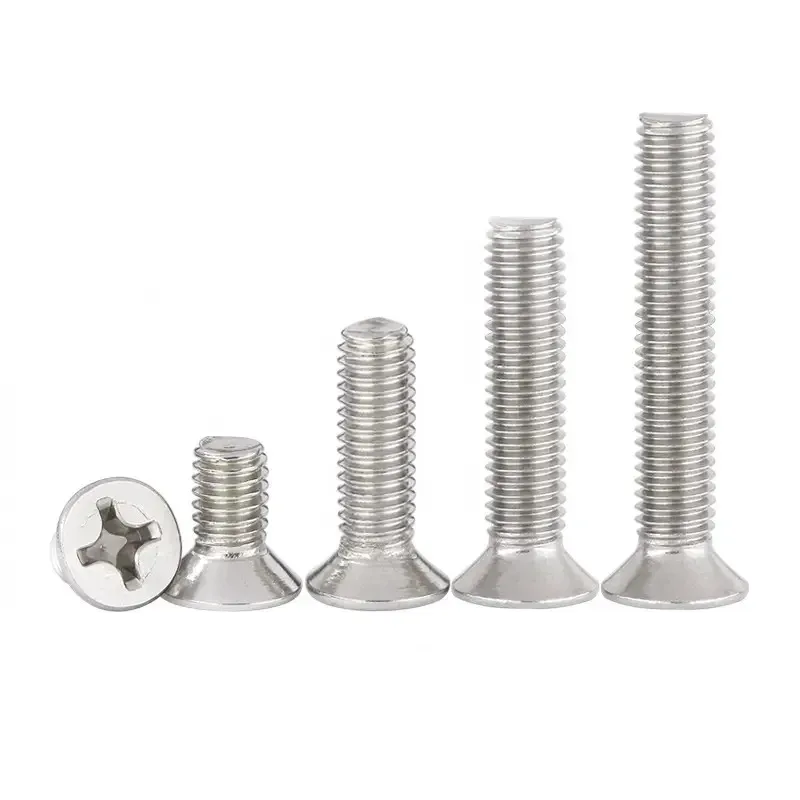
Table of Contents
- What is the True Cost of a Machine Screw?
- How Does Drive Style Influence Torque Transfer and Fatigue?
- Can SEMS Screws Really Cut Assembly Time in Half?
- Coarse vs. Fine Threads: Which is Better for Speed?
- How Do Head Styles Affect Tool Accessibility?
- Why is Material Compatibility Critical for Prevention of Galling?
- How Does Screw Geometry Impact Automated Feeding?
1. What is the True Cost of a Machine Screw?
The purchase price of a screw typically represents only 15-20% of the total fastening cost, with the remaining 80% attributed to labor, preparation, and overhead. Optimizing machine screw selection for assembly efficiency reduces the “in-place” cost, often yielding savings that far outweigh a fraction-of-a-penny increase in unit price.
The “Hidden Factory” of Fastening
When a cheap screw fails, the cost escalates immediately.
- The Scenario: A standard slotted screw costs $0.005 less than a Torx screw. However, the slotted screw causes the operator’s driver to slip (cam-out) 1 in every 50 times, scratching the workpiece.
- The Consequence: The cost of scrapping or reworking that one scratched unit wipes out the savings on 10,000 screws.
- Recommendation: Shift the KPI from “Price Variance (PPV)” to “Total Installed Cost.”
2. How Does Drive Style Influence Torque Transfer and Fatigue?
Drive styles like TORX (6-lobe) or Hex Socket provide positive engagement, virtually eliminating cam-out and allowing for higher torque transmission. Unlike Phillips or Slotted drives, which require significant end-load pressure to maintain contact, optimized drives reduce operator fatigue and increase assembly rates on manual lines.
Drive System Comparison
The geometry of the recess determines how efficiently power is transferred from the tool to the screw.
| Drive Style | Torque Efficiency | Cam-Out Risk | Impact on Operator |
| Slotted | Low | Very High | High fatigue; requires alignment focus. |
| Phillips | Moderate | High | Designed to cam-out; limits torque. |
| Torx (6-Lobe) | High | Zero | Low fatigue; tool sticks to screw. |
| Hex Socket | High | Low | Good for tight spaces; risk of stripping if soft. |
Practical Application: In high-volume electronics assembly, switching from Phillips to Torx often allows operators to increase RPMs on electric drivers without fear of stripping the head, directly boosting output.
3. Can SEMS Screws Really Cut Assembly Time in Half?
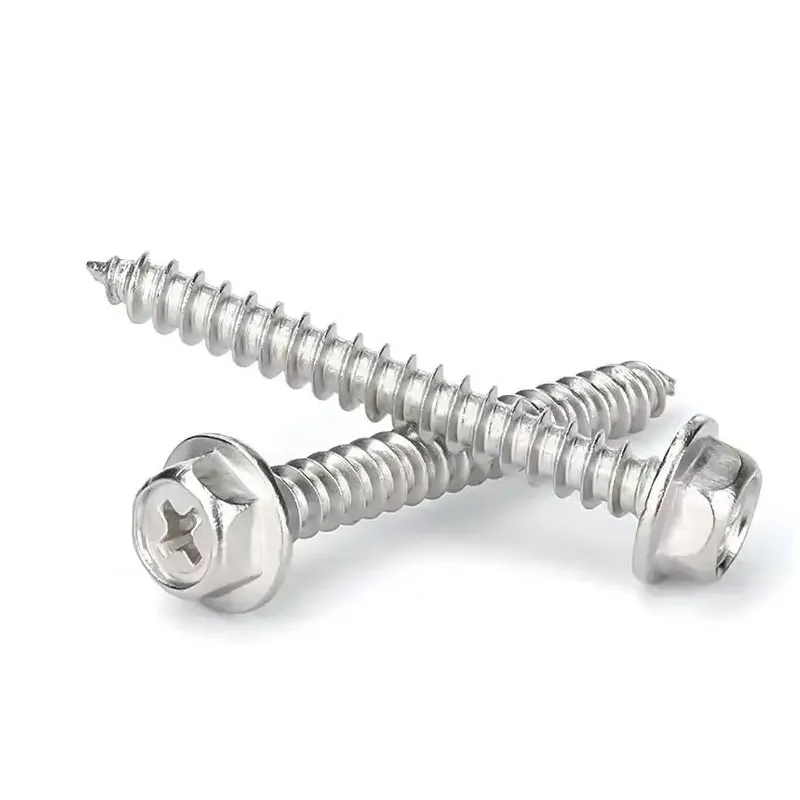
SEMS screws (pre-assembled washer and screw combinations) eliminate the manual step of placing a washer on a screw. By integrating these components, manufacturers can reduce the cycle time for each fastening operation by more than 50%, while ensuring that a washer is never forgotten during the assembly process.
The Math of Motion
In a time-and-motion study, the act of picking up a washer, orienting it, and sliding it onto a screw takes approximately 3 to 5 seconds.
- The SEMS Advantage: With a SEMS screw, the washer is captive (held in place by the rolled threads) and free-spinning. The operator handles one part instead of two.
- Case Example: A client in the automotive dashboard sector switched to Pan Head SEMS screws.
- Previous Process: Operator picked screw + lock washer + flat washer. (Time: 8 sec/joint).
- New Process: Operator picks double-washer SEMS. (Time: 3 sec/joint).
- Result: Throughput increased, and “missing washer” quality defects dropped to zero.
4. Coarse vs. Fine Threads: Which is Better for Speed?
Coarse threads require fewer rotations to fully seat, making them the standard choice for rapid assembly in soft materials or aluminum. While fine threads offer better vibration resistance and higher tensile strength, the trade-off is a slower installation time due to the higher number of turns required to reach clamp load.
Choosing the Pitch for the Application
Machine screws feature uniform threads designed for pre-tapped holes or nuts. The selection depends on the substrate and the vibration environment.
- Coarse Threads (UNC/Metric Coarse):
- Pros: Faster assembly; less likely to cross-thread; better fatigue resistance.
- Best For: General assembly, aluminum die-castings, plastics.
- Fine Threads (UNF/Metric Fine):
- Pros: Higher strength; fine adjustment capability; self-locking tendency.
- Best For: High-vibration environments (aerospace), thin-walled tapping.
At Jiliang, we usually recommend coarse threads for general industrial assembly unless specific torque-tension requirements dictate otherwise.
5. How Do Head Styles Affect Tool Accessibility?
Head style dictates the tool clearance required around the fastener. Internal drives like Socket Caps or Flat Countersunk heads allow for tighter component spacing, whereas external Hex Heads require a wrench or socket that needs significant radial clearance, potentially limiting design density.
Design for Manufacturability (DFM)
Designers must visualize the tool, not just the screw.
- Pan / Button Head: Ideal for general retention where the head sits above the surface. Commonly used with Torx/Phillips.
- Flat / Countersunk: Essential for flush surfaces (sliding mechanisms). Requires a precise countersink operation in the mating part, which adds a machining step but improves aerodynamics/aesthetics.
- Hex Head: Allows for very high torque but requires space for a socket.
6. Why is Material Compatibility Critical for Prevention of Galling?
Matching the screw material to the mating substrate is vital to prevent galvanic corrosion and thread galling. Stainless steel screws into stainless holes are prone to “cold welding” (galling), which causes immediate line stoppages and necessitates drilling out the seized fastener.
Solutions for Difficult Materials
- The Stainless Issue: If you must use Stainless 304 screws in a Stainless 304 hole, we recommend applying a pre-applied anti-seize patch or using a specific plating (like wax or PTFE) to lubricate the threads during high-speed installation.
- Hardness Matching: The screw should generally be harder than the material it is fastening to prevent thread deformation.
7. How Does Screw Geometry Impact Automated Feeding?
For automated assembly lines, the screw’s aspect ratio (Length over Head Diameter) determines feed reliability. Screws that are too short relative to their head size tend to tumble in blow-feed tubes, causing jams. Optimizing the L/D ratio ensures consistent orientation and prevents costly machine downtime.
The “Tumble” Factor
Automation engineers generally look for a screw where the total length is at least 1.5 times the head diameter.
- The Risk: If a screw is “stubby” (length $\approx$ head diameter), it can flip inside the feed hose.
- The Fix: If the design requires a short screw, we often redesign the head (e.g., changing from Pan to Cheese head) or add a “dog point” to the end of the screw to increase length without affecting the thread engagement.
Conclusion
Efficiency isn’t about working faster; it’s about engineering the friction out of the process. By selecting machine screws with the right drive for torque transfer, coarse threads for speed, and features like SEMS to reduce part count, you protect your total project budget.
At Dongguan Jiliang Machinery Hardware, we don’t just sell screws; we review your assembly workflow to suggest the most efficient fastening solution.