Semi-tubular rivets prevent damage to delicate materials like PCBs and plastic housings by requiring significantly lower installation force compared to solid rivets. Their controlled deformation ensures a secure, vibration-resistant joint without stressing the substrate, making them the superior choice for high-speed, lightweight electronics manufacturing.
The trend toward miniaturization in consumer electronics puts immense pressure on fastening systems. A split-second error in torque or impact force can crack a printed circuit board (PCB) or shatter a thin injection-molded housing, resulting in expensive scrap. As manufacturers, we see this daily: the challenge isn’t just holding parts together; it’s doing so without destroying them. This article breaks down the engineering mechanics behind why semi-tubular rivets are the industry standard for these applications.
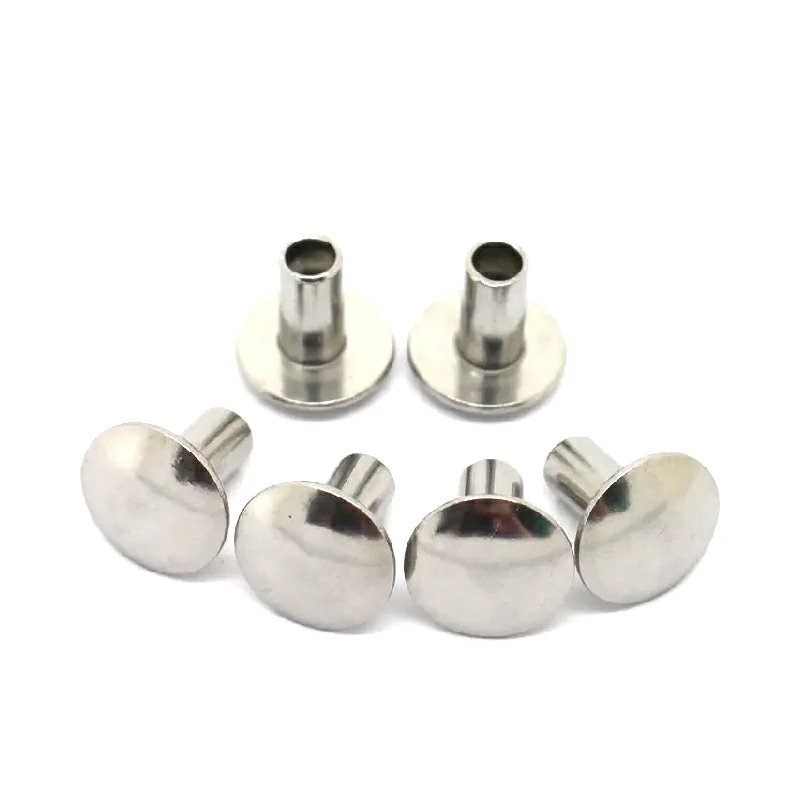
Table of Contents
- What is the Mechanical Advantage of Low Installation Force?
- How Do Semi-Tubular Rivets Protect Sensitive Circuit Boards?
- Which Materials Offer the Best Weight-to-Strength Ratio?
- How Does Hole Depth and Clinch Allowance Affect Joint Integrity?
- Can Semi-Tubular Rivets Support High-Speed Automation?
- How Do Dimensional Tolerances Impact Assembly Yield?
- When Should You Choose Semi-Tubular Over Blind Rivets?
1. What is the Mechanical Advantage of Low Installation Force?
The tubular hole at the rivet end allows for easier deformation, requiring only about 25% of the force needed for a solid rivet of the same diameter. This reduction minimizes axial load on the assembly, preventing buckling or cracking in brittle electronic components while still achieving high shear strength.
The Mechanics of Controlled Deformation
In solid riveting, the force required to swell the entire shank can deform the base materials, especially if they are softer than the rivet. In semi-tubular rivets, the force is directed solely at the tubular end.
- Force Distribution: The rivet set (tooling) rolls the tubular wall outward and backward. This “roll clinch” creates a uniform head without expanding the rivet shank aggressively against the hole walls.
- Design Trade-off: While solid rivets offer slightly higher shear strength, the installation force required makes them impractical for polymer or fiberglass substrates used in electronics. The semi-tubular design creates a secure joint with a fraction of the energy.
Comparison of Force Requirements:
| Rivet Type | Force Required (Relative) | Risk to Substrate | Typical Application |
| Semi-Tubular | Low (1x) | Minimal | PCBs, Plastic Housings |
| Solid | High (4x) | High | Structural Steel, Chassis |
| Full Tubular | Very Low (0.5x) | Low | Leather, Fabric |
2. How Do Semi-Tubular Rivets Protect Sensitive Circuit Boards?
Controlled expansion prevents radial stress from shattering fiberglass substrates (FR-4). By expanding only at the tail, the rivet shaft maintains alignment without exerting excessive outward pressure on the hole walls of the circuit board, preserving the integrity of conductive traces and solder pads.
Mitigating the Risk of “Crazing”
When fastening FR-4 or CEM-1 circuit boards, “crazing” (micro-cracking of the resin) is a primary failure mode.
- Case Example: In a recent project involving LED driver boards, using screws resulted in a 3% scrap rate due to torque stress cracking the board near the mounting hole. Switching to semi-tubular rivets eliminated this defect because the rivet exerts clamping force (axial) rather than radial expansion force.
- Grounding Applications: Because the rivet creates a tight gas-tight seal without damaging the hole plating, it is excellent for establishing chassis grounds on PCBs.
3. Which Materials Offer the Best Weight-to-Strength Ratio?
For electronics, aluminum (5050/5052) is preferred for its high conductivity and lightweight profile, while brass provides superior solderability for grounding applications. Selecting the right material ensures corrosion resistance and electrical continuity without adding unnecessary mass to portable devices.
Material Selection Guide
At Jiliang, we manufacture rivets in a wide range of materials to suit specific electronic environments. The choice often comes down to the galvanic compatibility with the mating material.
- Aluminum (Grades 5050, 5052, 6061):
- Why: Extremely lightweight. Excellent corrosion resistance.
- Use: Handheld devices, drones, wearables.
- Brass & Copper:
- Why: High electrical conductivity and easy to solder.
- Use: Electrical contacts, grounding points, battery terminals.
- Stainless Steel (302/304):
- Why: High strength and hygiene (medical electronics).
- Use: Medical devices, outdoor sensor housings.
Available Specification Range:
- Body Diameters: 1/16” to 3/8”
- Lengths: 1/16” to 2‑15/16”
4. How Does Hole Depth and Clinch Allowance Affect Joint Integrity?
Proper clinch length is critical; the tubular portion must extend just enough to roll over without cracking. Standard body diameters range from 1/16” to 3/8”, allowing designers to scale holding power relative to the limited real estate on miniaturized electronic devices and ensuring the clinched head clears internal components.
Calculating the Right Length
A common mistake in procurement is ordering standard lengths without accounting for the “clinch allowance”—the amount of rivet protruding beyond the material that will be rolled over.
- The Formula: Rivet Length = Total Material Thickness + Clinch Allowance
- Rule of Thumb: The clinch allowance is typically 50-60% of the rivet shank diameter.
- Consequences:
- Too Short: Weak pull-out resistance; the roll doesn’t fully form.
- Too Long: The rivet may buckle in the middle (shank bulge) before the head forms, potentially damaging the electronics stack.
5. Can Semi-Tubular Rivets Support High-Speed Automation?
Self-piercing capabilities and hopper-fed compatibility make semi-tubular rivets ideal for automated insertion. This design supports cycle times as fast as 0.5 seconds, significantly lowering labor costs and increasing throughput in high-volume consumer electronics production lines.
Efficiency in Assembly
In electronics manufacturing, Time-Per-Unit (TPU) is the primary cost driver.
- Feeding Systems: Semi-tubular rivets are symmetrical (axis-wise) and robust, making them unlikely to jam in vibratory bowl feeders or track feeds.
- Cycle Speed: Unlike screws, which require time to align threads and torque down, a rivet sets in a single stroke.
- Jiliang Experience: We have supplied rivets for automated lines producing server racking hardware where the switch from threaded fasteners to riveting reduced assembly time by 40%.
6. How Do Dimensional Tolerances Impact Assembly Yield?
Tight tolerances on the shank diameter and head height are required to prevent “rivet lean” during the setting process. Precision manufacturing ensures the tubular wall thickness is concentric, guaranteeing the clinch rolls evenly without splitting or damaging the rivet set tooling.
The Cost of Inconsistency
If the tubular hole is slightly off-center (non-concentric), the rivet will roll unevenly.
- Tooling Wear: Uneven pressure wears out the rivet set quickly, leading to machine downtime.
- Weak Joints: One side of the clinch will be thin and weak, failing pull-out tests.
- Our Standard: We maintain strict ISO-compliant tolerances on body diameter (typically ±0.002″ or better depending on size) to ensure every rivet feeds and sets identically. This consistency is non-negotiable for automated lines.
7. When Should You Choose Semi-Tubular Over Blind Rivets?
Semi-tubular rivets are superior when access to both sides of the assembly is available, offering lower material costs and a lower-profile finished head. While blind rivets are useful for closed sections, semi-tubular options provide a smoother, more aesthetic finish often required for external consumer-facing surfaces.
Comparison Analysis
Many designers default to blind (pop) rivets, but they are often over-engineered and overpriced for accessible assemblies.
| Feature | Semi-Tubular Rivet | Blind Rivet |
| Cost per Unit | Lower | Higher (Complex 2-part assembly) |
| Head Profile | Low / Flush / Aesthetic | Often protrudes, mandrels remain |
| Installation Speed | Fastest (Auto-feed) | Moderate (Requires mandrel pull) |
| Structural Rigidity | Solid Shank (High Shear) | Hollow body (Lower Shear) |
Conclusion
For lightweight electronics, the margin for error is microscopic. Semi-tubular rivets offer the perfect synergy of low installation force, high shear strength, and automation readiness. They protect your substrates—whether FR-4 boards or thin aluminum chassis—while keeping assembly lines moving at speed.
If you are optimizing a new electronic assembly or facing scrap issues with current fastening methods, the geometry and material of your rivet are likely the variables that need adjusting.