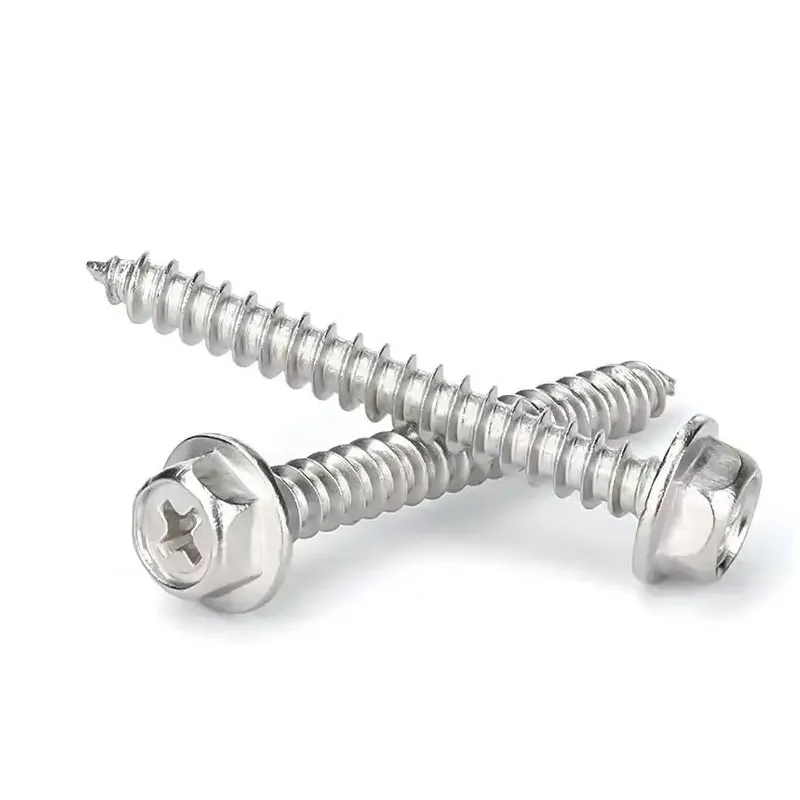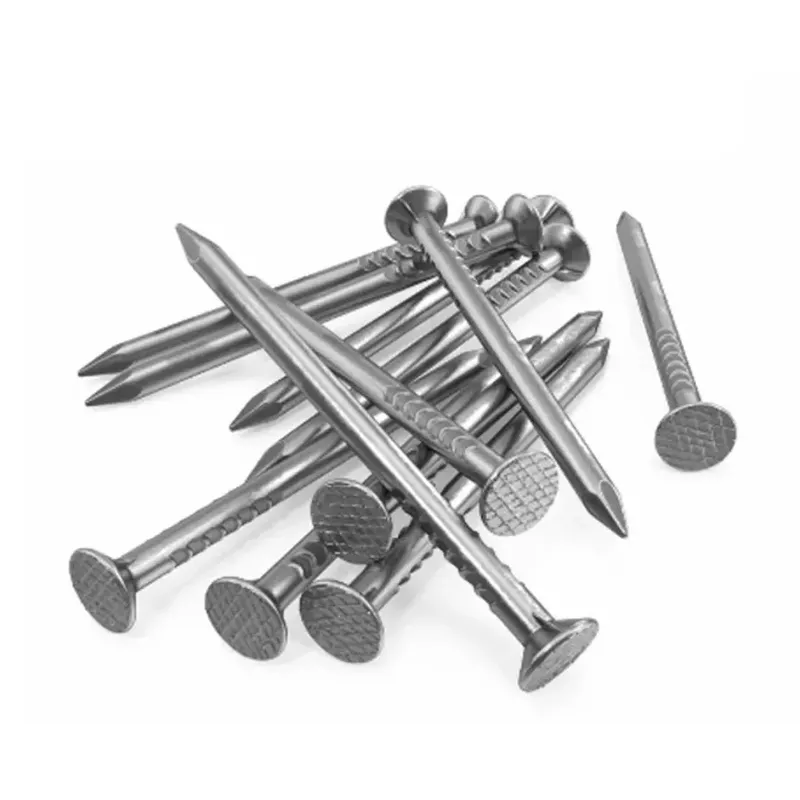
Nail screws are conditionally suitable for certain load-bearing applications, primarily those where withdrawal resistance is more critical than sheer shear strength, such as in subflooring, decking, and wall sheathing. However, for critical structural connections like framing joists, rafters, or beams, you must use fasteners specifically rated for that load, which typically means code-compliant nails or engineered structural screws, not general-purpose nail screws. The suitability of any nail screw is entirely dependent on its specific design, the manufacturer’s engineering data, and adherence to local building codes.
Table of Contents
- What Exactly Are Nail Screws? A Hybrid Fastener Explained
- The Critical Science of Loads: Shear Strength vs. Withdrawal Resistance
- When Are Nail Screws an Excellent Choice for Load-Bearing Tasks?
- When Must You Avoid Nail Screws in Structural Applications?
- Comparative Analysis: Nail vs. Screw vs. Nail Screw
- How to Choose the Right Fastener for Your Load-Bearing Project
- Conclusion: Prioritizing Safety and Structural Integrity
What Exactly Are Nail Screws? A Hybrid Fastener Explained
In the world of fasteners, innovation continually seeks to blend the best qualities of different products. A nail screw, also known as a collated screw or screw-shank nail, is a prime example of such a hybrid. It’s designed to offer the installation speed of a nail with the superior holding power of a screw. These fasteners are typically collated in plastic or paper strips, allowing them to be driven by a pneumatic nail gun, dramatically increasing efficiency on the job site compared to driving individual screws.
The Anatomy of a Nail Screw
What distinguishes a nail screw from its traditional counterparts is its unique shank. Unlike a smooth-shank nail, a nail screw features a helical or threaded shank, much like a screw. This thread is engineered to rotate the fastener as it’s driven into the wood, effectively cutting its own threads. This action creates a much tighter grip within the wood fibers. The head is typically flatter, similar to a nail head, to sit flush with the material surface, and the tip is sharp for easy penetration.
How Do They Differ from Traditional Nails and Screws?
The primary difference lies in the balance of properties.
- Traditional Nails: Possess excellent shear strength. Their solid, thicker core is highly resistant to forces that try to slice them sideways. However, their smooth shank offers minimal resistance to being pulled straight out (low withdrawal strength).
- Traditional Screws: Offer exceptional withdrawal resistance. Their deep threads create immense friction and grip, making them very difficult to pull out. However, their threaded design, with a thinner core diameter at the root of the thread, can make them more brittle and susceptible to snapping under intense shear forces compared to a nail of the same diameter.
- Nail Screws: Attempt to bridge this gap. They provide significantly better withdrawal resistance than a smooth nail, thanks to their threaded shank. They install with the speed of a nail, but their shear strength may not be equivalent to a solid-body nail of the same size. Their performance is a trade-off between holding power and shear capacity.
The Critical Science of Loads: Shear Strength vs. Withdrawal Resistance
To properly evaluate if nail screws are suitable for any load-bearing application, it’s essential to understand the two primary forces a fastener must resist. These forces dictate which type of fastener is appropriate for a given connection and are the foundation of safe construction practices.
What is Shear Strength?
Shear strength is a fastener’s ability to resist forces applied perpendicular to its length, essentially trying to cut it in half. Imagine two overlapping 2x4s connected by a fastener. When you try to slide the boards past each other, the fastener is placed in “shear.” This is the dominant force in many structural framing applications, such as connecting floor joists to a rim joist or fastening rafters to a top plate. Nails, with their solid, ductile steel bodies, are historically prized for their high shear capacity.
Why Does Withdrawal Resistance Matter?
Withdrawal resistance, or holding power, is a fastener’s ability to resist being pulled straight out of the material. Think of a fastener holding a deck board down to a joist. Forces like foot traffic, and the natural expansion and contraction of the wood, will try to “pop” the fastener upward. Screws, with their deep threads, excel in this area. Low withdrawal resistance is why smooth-shank nails can lead to squeaky floors and raised nail heads (“nail pops”) over time, as they are gradually worked loose from the material.
When Are Nail Screws an Excellent Choice for Load-Bearing Tasks?
Given their unique properties, nail screws shine in specific load-bearing scenarios where the primary concern is preventing separation and movement, rather than resisting extreme shear forces. These are often called “non-critical” or “serviceability” load-bearing applications.
Ideal Applications: Decking, Subflooring, and Sheathing
The most common and appropriate uses for load-bearing nail screws are in sheet materials.
- Subflooring: This is a perfect application. Nail screws are driven quickly to attach plywood or OSB subfloor panels to the floor joists. Their high withdrawal resistance is crucial here, as it effectively eliminates the movement that causes floor squeaks. A glued-and-screwed subfloor is the gold standard, and nail screws offer a much faster way to achieve that “screwed” level of holding power.
- Decking: When fastening deck boards to the underlying joists, the main force is withdrawal. Nail screws prevent boards from cupping, twisting, and popping up over time due to weather and foot traffic. They offer a significant upgrade over nails for deck longevity.
- Wall and Roof Sheathing: Securing OSB or plywood sheathing to wall studs or roof trusses is another suitable use. The nail screws hold the sheathing tight to the frame, contributing to the overall rigidity of the structure and resisting uplift forces from wind.
When Must You Avoid Nail Screws in Structural Applications?
While useful, nail screws have significant limitations. Using them in the wrong place can compromise the structural integrity of a building and lead to catastrophic failure. The rule of thumb is simple: if the connection is critical to holding the building up, you must use a fastener explicitly approved for that task.
Critical Structural Framing: Joists, Rafters, and Beams
Do not use general-purpose nail screws for the following connections unless you are using a specifically engineered and code-approved structural screw designed for these tasks:
- Joist-to-Beam Connections: The fasteners holding floor joists in joist hangers or connecting them to a main beam are almost entirely in shear. This connection requires the shear capacity of a specified nail (e.g., a 16d nail) or a tested structural connector screw.
- Rafter-to-Top Plate Connections: This joint resists downward gravity loads and upward wind-uplift forces. It is governed by strict building code nailing schedules.
- Assembling Beams and Headers: Laminated beams and multi-ply headers must be fastened together according to an engineer’s specification, which will call for a specific size and pattern of nails or structural bolts/screws.
The Importance of Building Codes and Engineer Specifications
The International Residential Code (IRC) and other local building codes provide prescriptive “fastening schedules.” These tables dictate the exact type, size, and spacing of fasteners for nearly every connection in a wood-frame building. These schedules have been developed through decades of engineering, testing, and real-world performance. Never substitute a fastener unless the alternative is explicitly tested and approved as an equivalent by a body like the ICC-ES (International Code Council Evaluation Service). Always check the manufacturer’s technical data for any nail screw to see if it carries an evaluation report (ESR) for your intended structural use.
Comparative Analysis: Nail vs. Screw vs. Nail Screw
To simplify the decision, here is a breakdown of the key characteristics of each fastener type in a typical construction context.
| Attribute | Traditional Nail | Traditional Screw | Nail Screw (General Use) |
|---|---|---|---|
| Shear Strength | Excellent | Good to Fair (can be brittle) | Good |
| Withdrawal Resistance | Poor (Fair for ring-shank) | Excellent | Very Good |
| Installation Speed | Fastest (with pneumatic gun) | Slowest (driven individually) | Fast (with pneumatic gun) |
| Removability/Adjustability | Difficult | Easy | Can be removed with a drill |
| Best Use Cases | Structural framing, shear walls | Cabinetry, furniture, attaching fixtures | Subflooring, decking, sheathing |
How to Choose the Right Fastener for Your Load-Bearing Project
Making the correct choice is a systematic process that ensures both safety and performance. Follow these steps to guarantee you are using the right fastener for the job.
Step 1: Identify the Load Type
First, analyze the connection you are making. Is the primary force trying to slide the connected members apart (shear), or is it trying to pull them apart (withdrawal)? If the answer is shear, a nail or a heavy-duty structural screw is likely required. If the answer is withdrawal, a nail screw or traditional screw is a better choice.
Step 2: Consult Local Building Codes
For any structural work, your first and most important reference is the local building code. Look up the fastening schedule for your specific application (e.g., “Wall Framing,” “Floor Joists,” etc.). The code will provide a prescriptive path, telling you exactly what fastener to use. This is the non-negotiable baseline for safe construction.
Step 3: Read the Manufacturer’s Technical Data Sheet
If you are considering using a non-traditional fastener like a nail screw, you must consult the manufacturer’s literature. Look for a Technical Data Sheet or an ICC-ES Evaluation Report (ESR). This document will list the tested shear and withdrawal values for the fastener and, most importantly, will list the specific applications for which it is approved. If your application isn’t on that list, do not use the fastener for that purpose.
Conclusion: Prioritizing Safety and Structural Integrity
So, are nail screws suitable for load-bearing applications? The answer is a qualified “yes.” They are an outstanding choice for specific load-bearing applications like subflooring, roof sheathing, and deck boards, where their combination of fast installation and high withdrawal resistance provides a clear benefit. However, they are not a universal substitute for the code-mandated nails and engineered structural screws used in critical frame-to-frame connections.
The ultimate responsibility lies with the builder to ensure every connection is safe, durable, and code-compliant. By understanding the difference between shear and withdrawal forces, respecting the authority of building codes, and carefully reading manufacturer specifications, you can leverage the advantages of innovative fasteners like nail screws without ever compromising the structural integrity of your project.