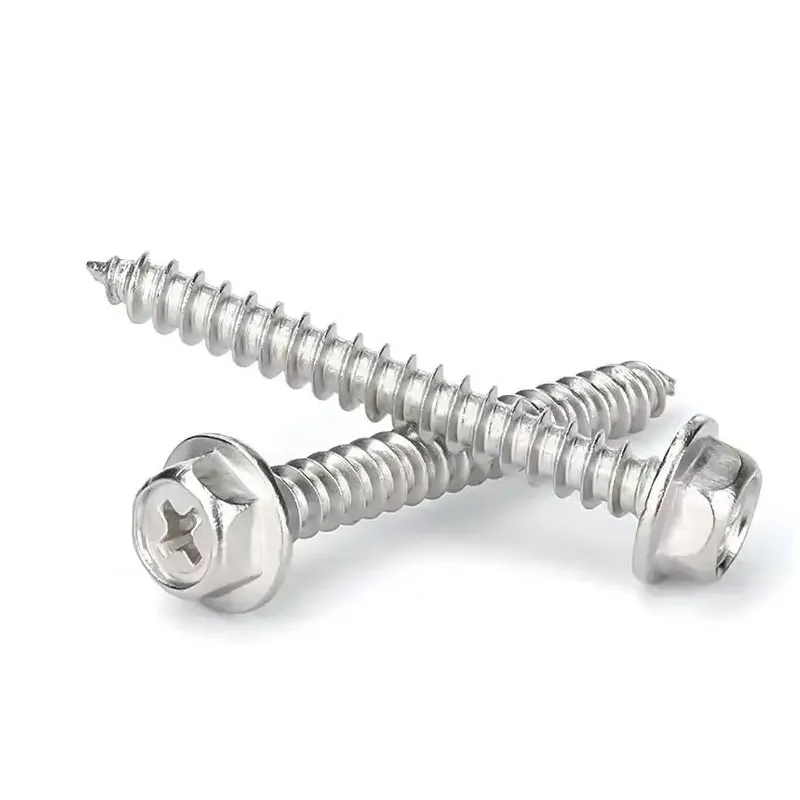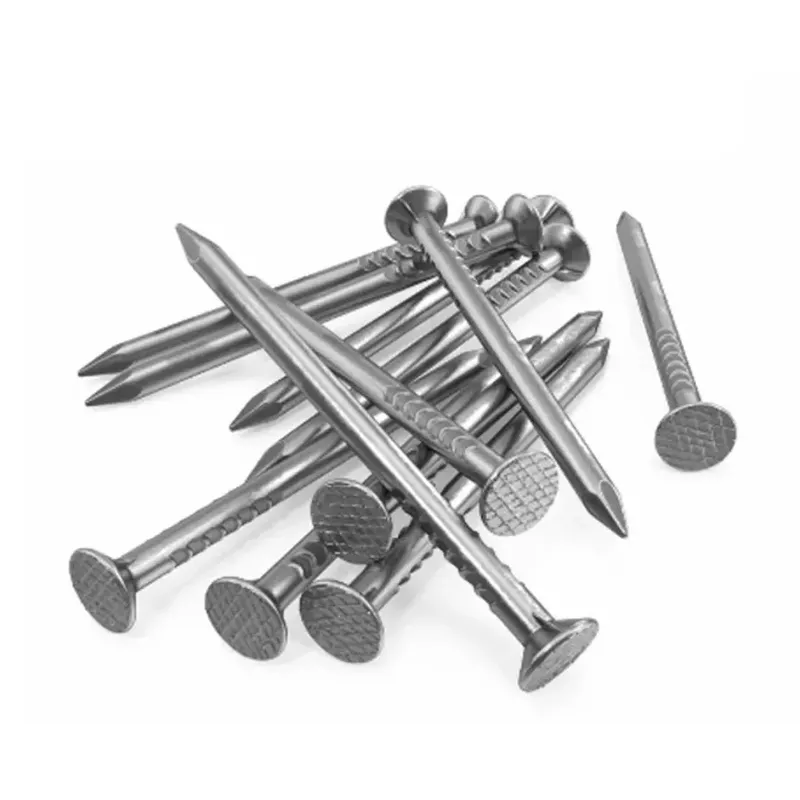
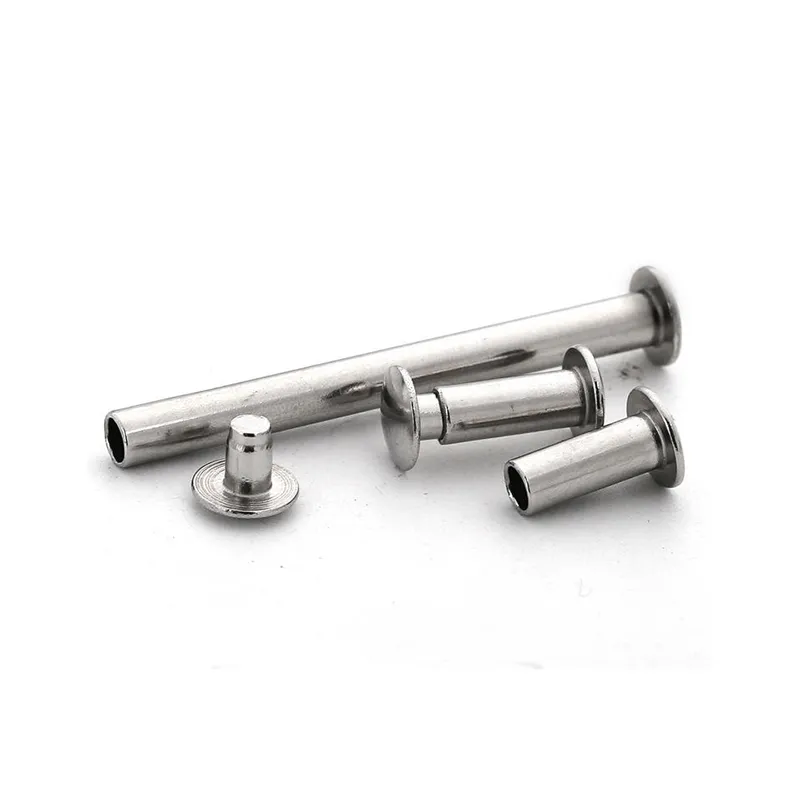
You should use nail screws instead of standard screws or nails for applications where you need both the rapid installation speed of a nail and the superior holding power and removability of a screw. Nail screws, also known as collated screw nails or Scrails®, are revolutionary hybrid fasteners ideal for projects like subflooring, decking, and crating. By using a pneumatic nailer for installation, they significantly reduce labor time compared to traditional screwing, while their threaded shank provides excellent withdrawal resistance, preventing common issues like floor squeaks and allowing for future adjustments or repairs.
Table of Contents
- What Exactly Are Nail Screws? The Anatomy of a Hybrid Fastener
- The Core Dilemma: Speed, Strength, or Cost?
- When Should You Use Nail Screws? Top Applications for Maximum Efficiency
- When Are Traditional Nails or Screws the Better Choice?
- A Practical Guide: Installing and Removing Nail Screws
- The RivetJL Commitment: Engineering the Perfect Fastener Solution
- Conclusion: Making the Smart Fastener Choice for Your Project
What Exactly Are Nail Screws? The Anatomy of a Hybrid Fastener
In the world of fasteners, innovation often means combining the best attributes of existing technologies. The nail screw is a prime example of this, a cleverly engineered hybrid designed to bridge the gap between the common nail and the standard screw. Understanding its unique anatomy is key to appreciating its value on the job site.
Defining the “Nail Screw”
At its core, a nail screw is a fastener with the body of a nail and the soul of a screw. It features a sharp point and a slender shank, allowing it to be driven rapidly with a pneumatic nail gun, just like a nail. However, a significant portion of its shank is wrapped in aggressive, screw-like threads. These threads are the game-changer, designed to rotate the fastener as it drives into the material, creating a powerful interlock that provides withdrawal resistance far superior to a smooth-shank nail. You will often hear them referred to by brand names like Scrails® or more descriptive terms like collated screw nails or screw-shank nails.
The Key Components: Head, Thread, and Point
Every part of a nail screw is designed for a dual purpose. The head typically features a recess, such as a Phillips or square drive, which is not used for installation but is crucial for removal. This allows you to back the fastener out with a standard drill or impact driver. The threads are the heart of its holding power, engineered to cut into wood fibers and lock the fastener in place. The point is diamond-shaped and sharp, ensuring a clean and rapid entry into the wood, minimizing the risk of splitting, especially when compared to the blunter tips of some screws.
How They Work: The Pneumatic Advantage
The true genius of nail screws lies in their delivery system. They come collated in plastic or wire strips, ready to be loaded into a compatible pneumatic nailer (often a framing nailer). This allows a contractor to fire fasteners as quickly as they can move the tool—a rate that is simply impossible to match when installing individual screws, even with an autofeed screw gun. This combination of high-speed pneumatic installation and screw-like performance is what makes nail screws such a compelling choice for labor-intensive projects.
The Core Dilemma: Speed, Strength, or Cost?
Choosing the right fastener is a balancing act between three critical factors: installation speed, holding strength, and material cost. Each fastener type—nails, screws, and nail screws—occupies a unique position in this triangle, and the best choice depends entirely on the priorities of your specific project.
Analyzing the Strengths and Weaknesses of Each Fastener
To make an informed decision, it’s essential to compare these fasteners side-by-side. While a nail offers unmatched speed and low cost, it sacrifices holding power and serviceability. A screw provides the ultimate grip and reversibility but at the cost of time. A nail screw attempts to give you the best of both, but it’s important to understand the specific trade-offs, particularly regarding shear strength and price.
| Feature | Nails | Standard Screws | Nail Screws |
|---|---|---|---|
| Installation Speed | Fastest | Slowest | Very Fast |
| Holding Power (Withdrawal) | Low | Highest | High |
| Shear Strength | Highest | Low | Moderate |
| Removability/Adjustability | Difficult/Damaging | Easy | Easy |
| Cost per Fastener | Lowest | Moderate | High |
| Required Tools | Hammer / Nail Gun | Drill / Impact Driver | Pneumatic Nail Gun (Specific) |
| Squeak Prevention | Poor | Excellent | Excellent |
When Should You Use Nail Screws? Top Applications for Maximum Efficiency
The decision to use nail screws comes down to a simple calculation: will the immense savings in labor time offset the higher cost per fastener? For large-scale projects where both speed and secure fastening are paramount, the answer is a resounding yes. Nail screws shine brightest in applications where nails are too weak and screws are too slow.
Subflooring: The #1 Use Case for Eliminating Squeaks
This is the killer application for nail screws. Floor squeaks are almost always caused by the vertical movement of the subfloor against smooth-shank nails that have loosened over time. While gluing and screwing the entire subfloor provides the best result, it is incredibly time-consuming. Nail screws offer a near-perfect solution. Fired from a pneumatic gun, they are installed at nailing speed, but their threads lock the OSB or plywood sheathing tightly to the floor joists. This powerful connection prevents the micro-movements that lead to squeaks, delivering a high-performance, quiet floor with a massive reduction in labor.
Decking: Speed and Serviceability Combined
Building a deck involves driving thousands of fasteners. Using nail screws for attaching deck boards—both wood and composite—can cut installation time in half compared to traditional decking screws. More importantly, they provide excellent holding power to prevent boards from popping up over time. The greatest advantage, however, is serviceability. If a deck board becomes damaged years later, its nail screws can be easily backed out with a drill, allowing for a simple replacement. This is nearly impossible with ring-shank nails, which often require destroying the board to remove it.
Framing and Sheathing: A Question of Code and Strength
Can you use nail screws for framing? The answer is nuanced. For attaching wall sheathing or roof decking, they are an excellent choice, providing superior uplift resistance compared to nails in high-wind areas. However, for critical structural connections that are subject to shear forces (like fastening studs to plates or joists to beams), traditional nails are often superior and mandated by building codes. Always consult local building codes before substituting nail screws in any structural framing application.
Other High-Value Applications
The utility of nail screws extends beyond floors and decks. They are an excellent choice for any application that benefits from speed and a strong, reversible connection. This includes building wood fences, assembling pallets and shipping crates, constructing furniture frames, and attaching furring strips to concrete or block walls.
When Are Traditional Nails or Screws the Better Choice?
Despite their advantages, nail screws are not a universal replacement for their traditional counterparts. There are specific scenarios where the unique properties of a standard nail or a standard screw make them the undisputed best choice for the job.
When to Reach for a Standard Nail
The primary reason to choose a nail is for its superior shear strength. Shear force is a lateral, side-to-side pressure that attempts to slice a fastener in half. Nails, made from softer, more ductile steel, are designed to bend under extreme shear loads without breaking. Screws and nail screws, made from harder, more brittle steel to create threads, are more likely to snap. Therefore, you should always use nails for:
- Critical Structural Framing: Connecting joists, rafters, and wall studs where the load is perpendicular to the fastener.
- Code-Mandated Applications: When your local building code specifically calls for a nail of a certain size (e.g., 16d common nail).
- Cost-Driven Projects: When budget is the most important factor and superior holding power is not required.
When to Insist on a Standard Screw
A standard screw offers the absolute best performance in two key areas: withdrawal resistance and clamping force. The fully threaded shank of a screw provides the maximum possible grip, making it nearly impossible to pull out. This makes screws the ideal choice for:
- Maximum Holding Power: Hanging heavy objects, constructing cabinetry, and installing hardware where pull-out failure is not an option.
- Precision and Clamping: Any application where you need to draw two pieces of material tightly together, such as fine woodworking or attaching finished trim.
- Projects Without Pneumatics: When you are working with basic hand tools or a standard drill, screws are the accessible, high-strength option.
A Practical Guide: Installing and Removing Nail Screws
Using nail screws is straightforward, but success depends on the right tools and technique. Proper installation ensures you get the full benefit of their speed and strength, while the simple removal process is one of their most celebrated features.
Choosing the Right Tool and Settings
Installation requires a pneumatic nailer that is compatible with the specific collation and size of the nail screws you are using. In many cases, a standard framing nailer will work. The most critical step is to set the correct air pressure on your compressor. You want to drive the fastener so its head is perfectly flush with the wood surface. If the pressure is too low, it will stand proud; if it’s too high, it will overdrive and “blow through” the surface, compromising its holding power. Always test on a scrap piece of wood first to dial in the perfect depth.
The Simple Process of Removal
This is where the hybrid design truly shines. To remove a nail screw, simply locate the drive recess on the head (e.g., Phillips or square drive), fit it with the appropriate bit in your drill or impact driver, and reverse the fastener out just like a standard screw. This clean, non-destructive process is a world away from the prying, pulling, and wood-damaging effort required to remove a driven nail, especially a ring-shank nail.
The RivetJL Commitment: Engineering the Perfect Fastener Solution
Choosing the right type of fastener is only half the battle. The quality of the fastener itself—its material, manufacturing precision, and coating—is what ensures long-term performance and durability. At RivetJL, we understand that every fastener is a critical component responsible for the integrity and longevity of the final structure. That is why we are committed to engineering excellence in everything we produce.
The performance of a fastener like a nail screw depends on complex material science. The steel must be hard enough to form strong, sharp threads, yet ductile enough to withstand the impact of pneumatic installation without fracturing. For exterior applications like decking and fencing, a robust protective coating is essential. We utilize advanced galvanization, polymer, and stainless steel technologies to provide superior corrosion resistance that stands up to the elements. As your partner in construction and manufacturing, RivetJL provides the expertise and quality products you can trust. Explore our full range of high-performance fasteners to find the perfect solution for your project.
Conclusion: Making the Smart Fastener Choice for Your Project
The nail screw is more than just a novelty; it is a powerful problem-solver and productivity booster for the modern construction site. It effectively combines the rapid-fire installation of a nail with the tenacious grip and serviceability of a screw, making it a game-changing option for specific, high-volume tasks.
Your final decision should always be guided by the unique demands of your project. If you need to secure a subfloor quickly and permanently eliminate squeaks, a nail screw is the clear winner. If you are framing a structural wall, the shear strength of a nail is non-negotiable. And if you are building fine cabinets, the precision and clamping force of a screw are paramount. By understanding the distinct strengths of each fastener, you empower yourself to work more efficiently, build more durable structures, and choose the right tool for every job.