For large construction projects, nail screws are often unequivocally worth their higher initial cost. This is because their rapid, pneumatic installation drastically reduces labor hours, and their superior holding power minimizes costly rework and enhances structural integrity, ultimately leading to a lower Total Cost of Ownership (TCO) and a more profitable project. As a leading supplier of industrial fastening solutions, we at RivetJL have seen firsthand how a strategic investment in the right fastener can yield significant returns.

In the world of large-scale construction, every decision is a calculation of cost versus benefit. From the choice of structural steel to the brand of drywall, project managers are constantly weighing upfront expenses against long-term value, durability, and efficiency. One of the most granular, yet impactful, of these decisions lies in the choice of fasteners. The debate between traditional nails, screws, and their hybrid counterpart—the nail screw—is a critical one. While nail screws, or “scrails,” carry a higher price tag per unit, a superficial cost analysis is dangerously misleading. The true value is uncovered when we look beyond the box price and analyze the complete financial and operational picture.
Table of Contents
- What Exactly Are Nail Screws? A Hybrid Powerhouse
- The Core Debate: Analyzing the True Cost of Nail Screws
- When Do Nail Screws Deliver the Highest ROI?
- What Are the Potential Downsides and Considerations?
- A Practical Calculation: A Hypothetical Project Scenario
- The RivetJL Perspective: Partnering for Project Efficiency
- Conclusion: Making the Final, Informed Decision
- Frequently Asked Questions (FAQ)
What Exactly Are Nail Screws? A Hybrid Powerhouse
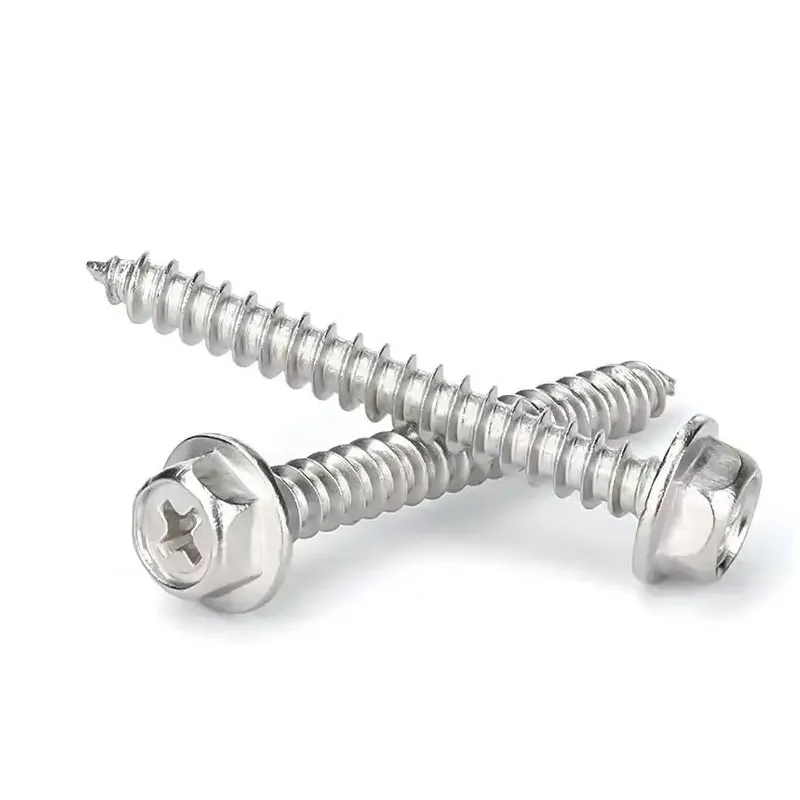
Before diving into a cost analysis, it’s essential to understand what nail screws are and why they were developed. A nail screw is a specialized fastener designed to be installed with a pneumatic nail gun but featuring a threaded shank like a screw. They are typically collated (held together in plastic or paper strips) for rapid firing, blending the primary advantages of both nails and screws into a single, highly efficient solution.
The Hybrid Advantage: Combining Speed and Strength
The genius of the nail screw lies in its dual-purpose design. The sharp point and collated format allow it to be driven into wood and other materials at the incredible speed of a nail gun—often multiple fasteners per second. However, once installed, the aggressive threading on the shank bites into the material, providing a level of withdrawal resistance and holding power that is far superior to a smooth-shank nail and comparable to a traditional screw. This combination means you get the installation efficiency of a nailer with the long-term performance and security of a screw.
How Do They Differ from Traditional Nails and Screws?
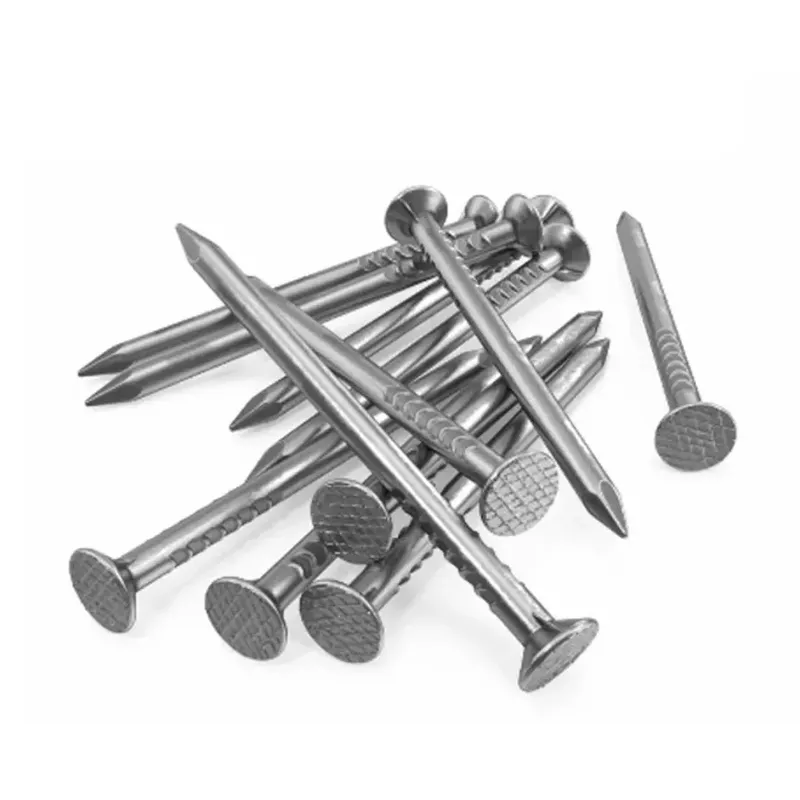
Understanding the key differences is crucial for any project manager or contractor. While all three fasteners hold materials together, their performance metrics, installation methods, and ideal use cases vary dramatically. Here’s a clear breakdown:
| Feature | Traditional Nails | Traditional Screws | Nail Screws (Scrails) |
|---|---|---|---|
| Installation Speed | Very Fast (Pneumatic) | Slow (Manual or Power Driver) | Very Fast (Pneumatic) |
| Holding Power / Withdrawal Resistance | Low to Moderate | High | High |
| Cost Per Unit | Lowest | Moderate | Highest |
| Labor Cost for Installation | Low | High | Lowest |
| Adjustability / Removability | Difficult, often damaging material | Easy, non-damaging | Easy, non-damaging (with a driver) |
| Vibration Loosening | Prone to backing out over time | Resistant | Highly Resistant |
The Core Debate: Analyzing the True Cost of Nail Screws
The question “are they worth it?” is fundamentally a financial one. A simple glance at the price per fastener will always favor traditional nails. However, this is a dangerously incomplete picture for any large-scale project where labor is the single largest expense.
Upfront Investment: The Per-Unit Price Factor
There is no denying that on a per-fastener basis, nail screws are more expensive than nails. They are a more complex product to manufacture, requiring threading and precise collation. A box of nail screws might cost significantly more than a box of similarly-sized framing nails. For a small DIY project, this cost difference might be the deciding factor. But in a commercial setting, the fastener itself represents a tiny fraction of the overall budget. The true cost driver is the labor required to install it.
The Real Savings: Calculating the Impact on Labor Costs
This is where nail screws deliver their most compelling value proposition. Consider the process of installing traditional screws: each one must be individually placed and driven, a process that takes several seconds per screw. Now compare that to a pneumatic nailer firing collated nail screws, which can install multiple fasteners in the same amount of time. Industry studies and on-site experience show that using a pneumatic system for nail screws can be 5 to 8 times faster than installing traditional screws.
On a large project with tens of thousands, or even hundreds of thousands, of fastening points (think subflooring, sheathing, or decking), this time savings translates directly into thousands of dollars saved on labor. Paying a crew for one day instead of three to lay subfloor because you chose a faster fastening system is an enormous win for the project’s budget and timeline.
Mitigating Risk: How Quality Fasteners Reduce Rework and Liability
Beyond direct labor savings, superior fasteners reduce the risk of costly future problems. A classic example is subfloor squeaking. Squeaks are often caused by smooth-shank nails slightly backing out over time as the wood structure settles, expands, and contracts. This allows for micro-movements between the subfloor and the joists. The resulting callbacks are not just an annoyance; they are a direct hit to profitability and reputation. The threaded shank of a nail screw locks the subfloor to the joist, virtually eliminating this issue and the associated rework costs. This same principle applies to decking, where nail pops create hazards and maintenance issues, and in shear walls, where consistent holding power is critical for structural integrity.
When Do Nail Screws Deliver the Highest ROI?
While beneficial in many situations, nail screws provide the most significant return on investment (ROI) in specific applications that are common in large construction projects.
High-Volume Repetitive Tasks: Subflooring, Decking, and Sheathing
These applications are the “bread and butter” for nail screws. Installing OSB or plywood for subfloors and roof/wall sheathing involves thousands of fasteners over a large area. The speed of pneumatic installation in these scenarios generates maximum labor savings. For decking, nail screws offer the speed of nailing with the holding power to prevent boards from cupping or lifting over time, ensuring a longer-lasting, higher-quality finish.
Projects Demanding Superior Withdrawal Resistance
Any application where forces are likely to pull a fastener out is a prime candidate for nail screws. This includes securing furring strips to concrete or block, building shipping crates that will be handled roughly, or assembling components in high-vibration environments (e.g., platforms for industrial machinery). The screw-like threads provide the necessary grip that a simple nail cannot.
Crating, Pallet Assembly, and Industrial Manufacturing
In manufacturing and logistics, speed and durability are paramount. Nail screws are heavily used in the assembly of high-quality wooden crates, pallets, and other shipping containers. They can be driven rapidly on an assembly line, but they also offer the strength to withstand the rigors of global shipping. Furthermore, the ability to back them out with a drill allows for easy disassembly or repair, a feature known as *reversibility*, which is impossible with nails and adds significant value.
What Are the Potential Downsides and Considerations?
To make a fully informed decision, it’s important to acknowledge the potential drawbacks. A balanced perspective is key to aligning the right product with the right job.
Tooling and Equipment Investment
To use nail screws, you need a pneumatic coil or strip nailer that is specifically compatible with them. While many modern nail guns can handle these fasteners, older models may not. For a company transitioning to nail screws, there may be an upfront investment in new tools. However, for most large construction firms, these pneumatic tools are already standard equipment, making this a minimal barrier to entry.
Training and Proper Installation Technique
Like any professional tool, a pneumatic nailer requires a brief learning curve to use effectively. Setting the correct air pressure is critical to ensure the nail screw is driven to the proper depth—flush with the surface, not overdriven or left proud. Over-driving can reduce holding power and damage the material. This requires minimal training but is a crucial step for quality control on the job site.
A Practical Calculation: A Hypothetical Project Scenario
Let’s put numbers to the theory. Imagine a commercial building with 20,000 square feet of subflooring.
- Fastener Density: Approx. 4 fasteners per square foot = 80,000 total fasteners.
- Labor Rate (Burdened): $60/hour per worker.
Scenario A: Traditional Screws
- Installation Time: Avg. 8 seconds per screw (includes handling and driving).
- Total Time: 80,000 fasteners * 8 seconds/fastener = 640,000 seconds = 177.8 labor hours.
- Total Labor Cost: 177.8 hours * $60/hour = $10,668.
Scenario B: Nail Screws (Pneumatic)
- Installation Time: Avg. 1.5 seconds per fastener (includes rapid firing and reloading).
- Total Time: 80,000 fasteners * 1.5 seconds/fastener = 120,000 seconds = 33.3 labor hours.
- Total Labor Cost: 33.3 hours * $60/hour = $1,998.
In this simplified but realistic scenario, using nail screws results in a labor savings of $8,670 on a single application. This saving will almost certainly dwarf the higher upfront cost of the nail screws, proving their financial worth decisively.
The RivetJL Perspective: Partnering for Project Efficiency
As experts in the fastening industry, we at RivetJL see our role as more than just a supplier. We are partners in your project’s success. We understand that choosing the right fastener is a strategic decision. That’s why we offer a comprehensive range of high-quality nail screws suitable for a variety of demanding applications. Our team is dedicated to helping you analyze the Total Cost of Ownership and selecting a fastening system that maximizes your efficiency, reduces your labor costs, and improves the final quality of your build.
Conclusion: Making the Final, Informed Decision
So, are nail screws worth the cost in large construction projects? The evidence is overwhelmingly clear: yes. By shifting the focus from the per-unit price to the Total Cost of Ownership—factoring in the massive labor savings, reduced rework, and enhanced structural quality—nail screws emerge as a smart, strategic investment. They are not an expense; they are a tool for boosting productivity and profitability. For any project manager or contractor looking to gain a competitive edge, embracing the speed and strength of nail screws is no longer a question of “if,” but “when.”
Frequently Asked Questions (FAQ)
Can you remove nail screws?
Yes. One of the significant advantages of nail screws is that most are designed with a screw head (like a Phillips or square drive) that allows them to be backed out with a standard drill or driver, making adjustments, repairs, or disassembly easy.
Do I need a special tool for nail screws?
You need a pneumatic nail gun (either coil or strip, depending on the collation) that is rated for the size and type of nail screw you are using. Many modern framing or sheathing nailers are compatible. Always check the tool’s specifications against the fastener’s requirements.
Are nail screws as strong as regular screws?
In terms of withdrawal resistance (pull-out strength), they are very comparable to traditional screws and vastly superior to nails. Their shear strength is also excellent, often on par with the nails they are designed to replace.
Which is better for subflooring: nails, screws, or nail screws?
For a combination of speed, strength, and prevention of floor squeaks, nail screws are widely considered the superior choice for subflooring in professional construction. They provide the installation speed of nails with the holding power of screws, offering the best of both worlds.