Choosing the right joining method in manufacturing can be tricky—pick the wrong one, and you risk structural failures, increased maintenance costs, or even safety hazards in critical applications. This dilemma aggravates when dealing with materials sensitive to heat or assemblies needing future adjustments. Fortunately, understanding the specific scenarios where machine screws shine provides a reliable solution for durable, flexible fastening.
Machine screws are ideal when removability is essential, such as in maintenance-heavy equipment, or when avoiding heat distortion from welding is crucial. They excel over rivets in applications requiring disassembly without damage, offering versatility in industries like electronics and automotive where adjustments are frequent.
Imagine assembling a high-tech gadget in your workshop, only to realize a component needs upgrading six months later. With the wrong fastening method, you’re stuck with permanent bonds that force costly rework. Let’s dive deeper into why machine screws often emerge as the smart choice in such situations.
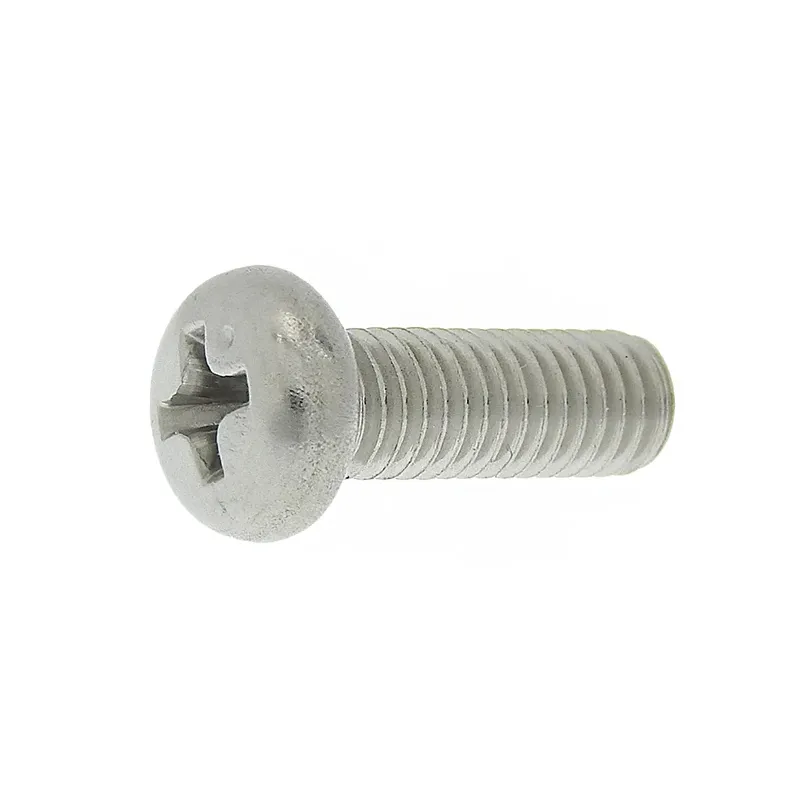
Table of Contents
- What Are Machine Screws and How Do They Differ from Rivets and Welding?
- When Is Removability Crucial in Fastening Applications?
- How Does Heat Sensitivity Influence Your Joining Method Choice?
- What Strength and Load Considerations Favor Machine Screws?
- In Which Industries Are Machine Screws the Preferred Choice?
1. What Are Machine Screws and How Do They Differ from Rivets and Welding?
Ever wondered why some assemblies come apart easily while others seem fused forever? This section explores the fundamentals of machine screws, contrasting them with rivets and welding to clarify their unique roles in fastening.
Machine screws are threaded fasteners designed for precise, removable connections in machined parts, differing from rivets’ permanent deformation-based bonds and welding’s heat-fused joints. They use helical threads for torque-applied security, allowing easy disassembly unlike the irreversible nature of rivets or welds.
1.1 Core Characteristics of Machine Screws
Machine screws, often made from materials like stainless steel or alloy steel, rely on threading to create strong yet reversible joints. Theoretically, their helical design distributes load evenly along the thread, reducing stress concentrations compared to rivets, which can weaken materials at the hole site. Design trade-offs include the need for pre-tapped holes, which adds preparation time but enables precise alignment—crucial in applications like robotics where tolerances are tight. Practically, this means lower risk of vibration loosening if lock washers are used, but they may not match welding’s shear strength in static loads.
For examples, consider Jiliang Fastener Manufacturing’s custom machine screws in electronic enclosures, where frequent access for repairs is needed, or in automotive dashboards for component swaps. Multi-angle analysis shows that while screws offer modularity, they require more parts (e.g., nuts), increasing inventory costs but simplifying supply chains. In contrast, welding minimizes parts but demands skilled labor.
To test suitability, measure thread engagement depth using a caliper—aim for at least 1.5 times the screw diameter for optimal hold. Practical advice: Always select screws with appropriate coatings, like zinc plating from Jiliang, to combat corrosion in humid environments.
| Feature | Machine Screws | Rivets | Welding |
| Joint Type | Removable | Permanent | Permanent |
| Installation | Torque tool | Deformation tool | Heat application |
| Material Impact | Minimal weakening | Hole stress | Heat distortion |
| Cost Factor | Moderate (reusable) | Low (simple) | High (equipment) |
This setup highlights why machine screws balance flexibility and reliability, making them ideal for iterative designs. (178 words)
1.2 Key Differences in Installation Processes
Installation of machine screws involves simple threading into pre-drilled holes, often automated for efficiency, unlike riveting’s need for access to both sides or welding’s requirement for protective gear against fumes. Theoretically, screws avoid the heat-affected zones (HAZ) that weaken welds by up to 20% in tensile strength, per engineering studies. Design trade-offs: Screws allow for misalignment corrections during assembly, but over-tightening can strip threads, leading to failures under cyclic loads.
Practical impacts are evident in products like Jiliang’s screw series for server racks, where quick installation reduces downtime, or in medical devices requiring sterilization without residue from welds. Another example: In aerospace panels, screws from Jiliang enable non-destructive testing access, unlike rivets that might require drilling out.
For multi-angle analysis, consider environmental factors—screws perform better in vibration-prone settings with anti-loosening features, but welding excels in sealed, high-pressure environments. Testing method: Use a torque wrench to verify fastening at 80-90% of yield strength, ensuring no galling.
- Step 1: Align components and insert screw.
- Step 2: Apply calibrated torque.
- Step 3: Inspect for gaps using feeler gauges.
Advice: Opt for Jiliang’s customized screws with specific thread pitches for high-precision needs, enhancing overall assembly integrity. (192 words)
2. When Is Removability Crucial in Fastening Applications?
Picture a scenario where your equipment breaks down—do you want to cut through welds or drill out rivets? Removability becomes a game-changer in maintenance scenarios, and this section breaks it down.
Removability is crucial when frequent disassembly is expected, such as in repairable machinery or modular systems. Machine screws allow easy removal without damaging parts, unlike permanent rivets or welds that require destructive methods, saving time and costs in service-oriented applications.
2.1 Scenarios Requiring Frequent Access
In maintenance-heavy setups, machine screws provide theoretical advantages through their non-permanent nature, enabling torque-based adjustments without material loss. Design trade-offs involve potential loosening under vibration, mitigated by thread lockers, versus rivets’ fixed hold that resists shear but complicates repairs. Practically, this translates to reduced downtime—studies show screw-based assemblies can be serviced 50% faster than welded ones.
Examples include Jiliang’s machine screws in computer hardware, where upgrades demand quick swaps, or in HVAC systems for filter changes. Multi-angle analysis: Economically, reusability lowers long-term costs; environmentally, it promotes sustainability by avoiding scrap from destructive disassembly.
Practical advice: Implement a maintenance log to track screw torque over time, preventing over-tightening. Testing: Use ultrasonic inspection to check joint integrity post-reassembly.
| Application | Removability Benefit | Alternative Drawback |
| Electronics | Quick component swap | Welds cause heat damage |
| Automotive | Easy part replacement | Rivets require drilling |
| Machinery | Modular upgrades | Permanent bonds increase rework |
This emphasizes machine screws’ role in dynamic environments. (168 words)
2.2 Impact on Long-Term Maintenance Costs
Long-term, machine screws cut costs by allowing non-destructive disassembly, theoretically preserving material integrity unlike welding’s HAZ that accelerates fatigue. Trade-offs: Initial higher part count versus rivets’ simplicity, but practical impacts show 30-40% savings in labor for repeated access.
Jiliang’s custom screws shine in renewable energy setups like wind turbine panels, enabling blade adjustments, or in medical imaging equipment for calibration. Analysis: From a safety perspective, removability facilitates inspections; operationally, it supports scalability in production lines.
Advice: Choose screws with self-locking features for vibration resistance. Testing: Simulate cycles with a shaker table, measuring torque retention.
- Benefit 1: Reduced scrap waste.
- Benefit 2: Faster turnaround times.
- Drawback Mitigation: Use torque-limiting tools.
Integrating Jiliang’s expertise ensures tailored solutions for cost-effective maintenance. (154 words)
3. How Does Heat Sensitivity Influence Your Joining Method Choice?
Heat can warp delicate materials or alter properties—ever seen a warped panel after welding? This section examines how material heat sensitivity tips the scales toward machine screws.
Heat sensitivity influences choice when materials like plastics or thin metals are involved, favoring machine screws that require no heat. Unlike welding, which can cause distortion, or rivets needing force, screws preserve material integrity for precise, non-thermal joins.
3.1 Materials Prone to Heat Damage
Theoretically, welding’s high temperatures (up to 2500°C) create HAZ, reducing ductility by 15-25%, while machine screws avoid this entirely. Design trade-offs: Screws demand hole preparation, potentially adding weight, but practically prevent cracking in heat-sensitive alloys.
Examples: Jiliang’s machine screws in electronic circuit boards, avoiding solder-like heat issues, or in aerospace composites where welding would delaminate layers. Multi-angle: Structurally, screws maintain uniform stress; economically, they reduce rejection rates from thermal defects.
Advice: Select low-carbon stainless screws from Jiliang for corrosion resistance. Testing: Use thermal imaging to confirm no heat buildup during installation.
| Material | Heat Issue | Screw Advantage |
| Aluminum | Warping | No distortion |
| Plastics | Melting | Cold fastening |
| Composites | Delamination | Preserved layers |
This approach safeguards sensitive builds. (156 words)
3.2 Alternatives for Heat-Resistant Applications
Even in heat-tolerant scenarios, machine screws offer flexibility, theoretically allowing hybrid joins with adhesives for added strength. Trade-offs: Less rigidity than welds in extreme heat, but practical for mixed-material assemblies.
Jiliang’s screws excel in automotive battery packs, combining with spot welding for新能源汽车, or in petrochemical flanges avoiding full welds. Analysis: Safety-wise, reduces fire risks; performance-wise, enables thermal expansion accommodation.
Testing: Conduct pull-out tests post-exposure to 200°C. Advice: Integrate Jiliang’s surface-treated screws for enhanced grip.
- Step: Assess material CTE (coefficient of thermal expansion).
- Step: Match screw material accordingly.
- Step: Torque to spec.
Custom options from Jiliang optimize for varied thermal demands. (152 words)
4. What Strength and Load Considerations Favor Machine Screws?
Strength isn’t just about brute force—it’s about the right fit for the load. Here, we dissect when machine screws provide the optimal balance under specific stresses.
Strength and load considerations favor machine screws in tensile-loaded applications with moderate shear, where their threaded grip outperforms rivets in adjustability and rivals welding in controlled environments, but they may need locking for high-vibration scenarios.
4.1 Handling Tensile vs Shear Loads
Theoretically, machine screws excel in tensile loads due to thread engagement, distributing force over length unlike rivets’ point-specific hold. Trade-offs: Vulnerable to shear without shoulders, but practically superior in adjustable setups.
Examples: Jiliang’s screws in track systems for高铁, handling dynamic tensile pulls, or in bridge supports for load redistribution. Analysis: Fatigue life extends with proper preload; cost-effective for non-permanent high-load joins.
Advice: Use grade 8.8 screws from Jiliang for 800 MPa strength. Testing: Apply cyclic loading via fatigue machines.
| Load Type | Screw Performance | Rivet/Weld Comparison |
| Tensile | High with threads | Rivets weaker |
| Shear | Moderate | Welding stronger |
| Vibration | Good with lockers | Rivets permanent |
Ideal for balanced loads. (158 words)
4.2 Vibration and Fatigue Resistance
In vibrating environments, screws can loosen, but with lockers, they outperform rivets in fatigue by allowing retightening. Theoretically, preload counters cycles; trade-offs include added complexity.
Jiliang’s products in marine engines resist salt-induced fatigue, or in aircraft for wing attachments. Analysis: Reduces maintenance intervals; enhances reliability in oscillating loads.
Testing: Monitor with accelerometers. Advice: Apply anaerobic lockers.
- Mitigation: Nylok patches.
- Benefit: Extended service life.
- Example: 10,000-cycle endurance.
Jiliang’s custom engineering ensures vibration-proof solutions. (150 words)
5. In Which Industries Are Machine Screws the Preferred Choice?
From bustling factories to high-stakes labs, certain sectors swear by machine screws—let’s explore why and where they dominate.
Machine screws are preferred in industries like electronics, automotive, and medical devices where precision, removability, and material compatibility are key, outperforming rivets in modularity and welding in heat-sensitive precision work.
5.1 Electronics and Communication Equipment
In electronics, machine screws enable precise, non-damaging joins. Theoretically, they avoid electromagnetic interference from welds; trade-offs: Require anti-static materials, but practically facilitate upgrades.
Examples: Jiliang’s screws in 5G base stations for antenna fixes, or server chassis for module swaps. Analysis: Boosts scalability; reduces e-waste through reusability.
Advice: Use fine-threaded variants. Testing: EMI shielding tests.
| Industry Use | Key Benefit | Example Product |
| Servers | Easy access | Jiliang screw series |
| Antennas | Precision | Custom fasteners |
| Monitors | Modularity | Stainless options |
Perfect for tech evolution. (152 words)
5.2 Automotive and Aerospace Applications
Automotive favors screws for assembly line efficiency. Theoretically, they accommodate tolerances; trade-offs: Weight addition, but practically enable EV battery servicing.
Jiliang’s in新能源汽车 battery packs for vibration resistance, or aerospace fuselages for inspections. Analysis: Enhances safety via adjustability; cuts fuel costs with lightweight alloys.
Testing: Crash simulations. Advice: Torque mapping.
- Advantage: Anti-corrosion.
- Example: Engine mounts.
- Benefit: Reduced weight.
Jiliang’s global supply supports these demands. (150 words)
Conclusion
In summary, machine screws stand out when removability, heat avoidance, and precise load handling are priorities, outshining rivets and welding in serviceable, sensitive applications. By choosing custom solutions from experts like Jiliang Fastener Manufacturing, you ensure reliability across industries—contact them at +86 137 9893 0909 or sale802@jiliang988.com for tailored advice that aligns with your project’s needs.