Choosing the right rivet material is crucial. The wrong choice leads to failure. Imagine confidently selecting the perfect rivet for your project. This article compares aluminum and stainless steel rivets, outlining their pros, cons, and best applications for informed decisions.
Aluminum rivets offer lightweight properties, good corrosion resistance, and easy installation, ideal for aerospace, marine, and general fabrication where weight matters. Stainless steel rivets provide superior strength, high temperature resistance, and exceptional corrosion resistance in harsh environments, best for heavy-duty construction, chemical processing, and high-stress applications.
At Jiliang Fastener Manufacturing, we’ve crafted precision custom fasteners since 2008. Our expertise helps you find the optimal solution.
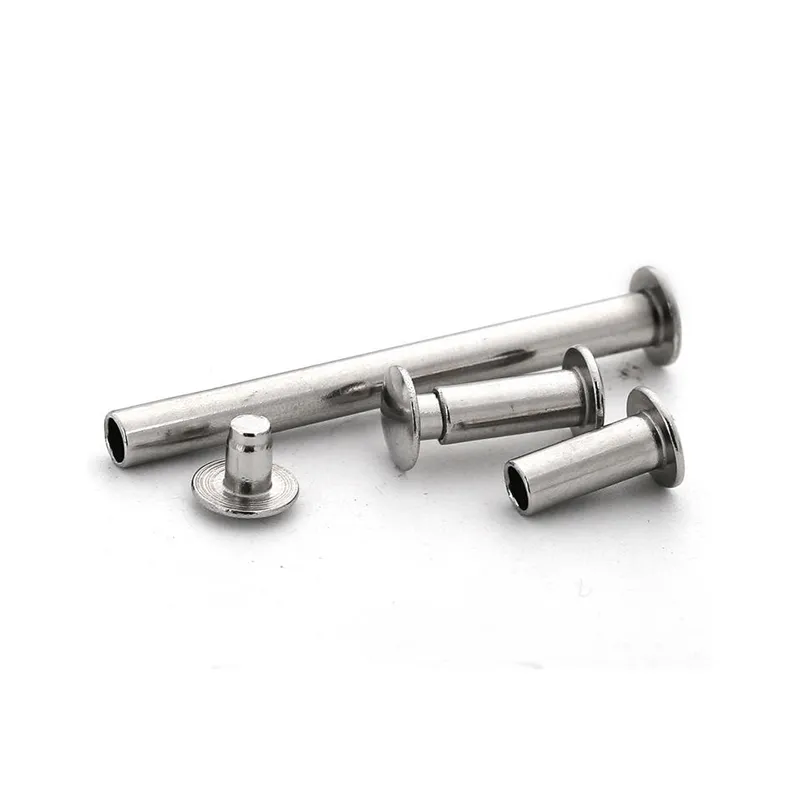
Table of Contents
- Understanding Aluminum Rivets
- Understanding Stainless Steel Rivets
- Comparing Key Properties: Aluminum vs. Stainless Steel
- Advantages and Disadvantages of Aluminum Rivets
- Advantages and Disadvantages of Stainless Steel Rivets
- Best Applications for Aluminum Rivets
- Best Applications for Stainless Steel Rivets
1. Understanding Aluminum Rivets
What are aluminum rivets, and why are they so widely used?
Aluminum rivets are mechanical fasteners made from aluminum alloys, valued for their lightweight nature, good corrosion resistance, and ease of installation. They are versatile for applications where weight reduction and environmental resilience are critical.
These rivets, produced by Jiliang Fastener Manufacturing from alloys like 1100, 5052, and 2117, offer low density for weight reduction and natural resistance to rust. They are installed by deforming the tail, creating a permanent joint for light to medium-duty applications.
Material and Corrosion
Aluminum rivet performance depends on its alloy. Pure aluminum (1100) offers ductility and corrosion resistance; 5052 provides good strength and marine corrosion resistance; 2117-T4 is for high-strength aerospace use.
| Aluminum Alloy | Key Characteristics | Common Applications |
| 1100 | High ductility, excellent corrosion resistance | General purpose |
| 5052 | Good strength, excellent marine corrosion | Boats, outdoor structures |
Aluminum forms a protective oxide layer, resisting corrosion in moist or mild chemical environments, like marine settings. However, watch for galvanic corrosion with dissimilar metals. Jiliang guides on material compatibility.
2. Understanding Stainless Steel Rivets
What makes stainless steel rivets robust, and where do they excel?
Stainless steel rivets are mechanical fasteners made from stainless steel alloys, known for superior strength, exceptional corrosion resistance, and high temperature tolerance. They are indispensable for demanding applications in harsh environments and critical load-bearing structures.
Jiliang produces these rivets from alloys like 304 (A2) or 316 (A4), which contain chromium for a self-repairing oxide layer. Their high strength, rust resistance, and temperature tolerance make them a premium choice for durability and hygiene, despite higher cost and weight.
Grades and Performance
Stainless steel grade impacts properties. 304 (A2) is common for general corrosion resistance; 316 (A4) adds molybdenum for enhanced resistance to chlorides and acids, ideal for marine and chemical use.
| Stainless Steel Grade | Key Characteristics | Common Applications |
| 304 (A2) | Good general corrosion resistance | Food processing, general industrial |
| 316 (A4) | Excellent corrosion resistance (chlorides) | Marine, chemical, medical |
Stainless steel rivets excel in strength, temperature, and corrosion resistance. They offer higher tensile/shear strength, maintain integrity at high temperatures, and resist rust and aggressive agents. Jiliang ensures maximum performance for demanding environments.
3. Comparing Key Properties: Aluminum vs. Stainless Steel
How do aluminum and stainless steel rivets compare across critical performance metrics?
Aluminum rivets are lightweight, electrically conductive, and offer moderate strength. Stainless steel rivets provide superior strength, higher temperature resistance, and exceptional corrosion resistance, suiting different application demands.
The choice balances weight, strength, cost, and environmental performance. Each material has a distinct profile for specific applications.
Weight and Strength-to-Weight
Aluminum is significantly lighter (approx. 2.7 g/cm³) than stainless steel (approx. 7.8-8.0 g/cm³). This weight difference is crucial for aerospace and automotive, where aluminum rivets reduce overall assembly weight.
| Property | Aluminum Rivets | Stainless Steel Rivets |
| Density | Low | High |
| Strength | Moderate to High | Very High |
| Cost | Lower | Higher |
While stainless steel is stronger, aluminum often has a superior strength-to-weight ratio, providing comparable strength for less weight. Jiliang offers both for diverse requirements.
Conductivity
Aluminum is an excellent conductor of electricity and heat, useful for electrical circuits or heat dissipation. Stainless steel is a poor conductor, making it suitable where heat transfer needs to be minimized. Jiliang provides custom rivets to leverage these distinct properties.
4. Advantages and Disadvantages of Aluminum Rivets
What are the pros and cons of aluminum rivets?
Aluminum rivets offer lightweight construction, good corrosion resistance, and easy installation, making them cost-effective. However, they have lower ultimate strength and temperature resistance than stainless steel, limiting use in heavy-duty or high-stress environments.
Their widespread use comes from their unique properties, but limitations must be considered.
Advantages of Aluminum Rivets
- Lightweight: Reduces assembly weight, critical for aerospace and automotive.
- Excellent Corrosion Resistance: Forms a protective oxide layer, resisting rust in outdoor/marine environments.
- Ease of Installation: Softer metal, requires less force, speeds up assembly.
- Cost-Effective: Generally less expensive than stainless steel.
- Good Electrical/Thermal Conductivity: Useful for grounding or heat dissipation.
- Non-Magnetic: Important for sensitive electronics.
Disadvantages of Aluminum Rivets
- Lower Ultimate Strength: Unsuitable for heavy-duty structural applications.
- Lower Temperature Resistance: Softens at lower temperatures than stainless steel.
- Susceptibility to Galvanic Corrosion: Can degrade when in contact with more noble metals.
- Lower Abrasion Resistance: Softer, more prone to wear.
Jiliang provides technical support to weigh these pros and cons for optimal selection.
5. Advantages and Disadvantages of Stainless Steel Rivets
What are the pros and cons of stainless steel rivets?
Stainless steel rivets offer superior strength, exceptional corrosion resistance, and high temperature tolerance, ideal for demanding, heavy-duty, and harsh environments. However, they are heavier, more expensive, and require greater installation force than aluminum.
Their premium performance is indispensable for critical applications, but trade-offs exist.
Advantages of Stainless Steel Rivets
- Superior Strength: Higher tensile/shear strength for heavy-duty structural applications.
- Exceptional Corrosion Resistance: Outstanding resistance to rust, acids, and chlorides (316 grade).
- High Temperature Resistance: Maintains strength at much higher temperatures than aluminum.
- Excellent Abrasion/Wear Resistance: Harder, more resistant to friction.
- Good Fatigue Life: Contributes to long-term durability.
- Aesthetic Appeal: Bright, clean finish for architectural use.
Disadvantages of Stainless Steel Rivets
- Higher Cost: More expensive material and manufacturing.
- Heavier Weight: Approximately three times denser than aluminum.
- Greater Installation Force Required: Needs more powerful tools, slower assembly.
- Lower Electrical/Thermal Conductivity: Disadvantage for grounding or heat dissipation.
- Potential for Galling: Can cold weld under pressure.
Jiliang offers expert consultation to navigate these trade-offs.
6. Best Applications for Aluminum Rivets
Where are aluminum rivets the optimal choice?
Aluminum rivets are best for applications where lightweight construction, excellent corrosion resistance, and ease of installation are paramount, including aerospace, marine vessels, general outdoor fabrication, and electronic enclosures.
Their low density, corrosion resistance, and ductility make them versatile and cost-effective for light to medium-duty applications.
Key Applications
- Aerospace and Automotive (Non-Structural): Aircraft interior panels, automotive body panels for weight reduction.
- Marine and Outdoor Structures: Boat hulls, deck fittings, signs, HVAC ducts due to saltwater and weather resistance.
- Electronic Enclosures and General Fabrication: Portable devices (lightweight), grounding (conductivity), joining sheet metal.
| Industry/Application | Key Requirements | Specific Use Cases |
| Aerospace | Lightweight, corrosion resistance | Interior panels |
| Marine | Saltwater corrosion resistance | Boat hulls, deck fittings |
Jiliang provides custom aluminum rivets tailored for these diverse applications.
7. Best Applications for Stainless Steel Rivets
Where do stainless steel rivets truly shine?
Stainless steel rivets are best for heavy-duty structural applications, harsh corrosive environments (marine, chemical), high-temperature settings, and hygienic applications (food processing, medical), where maximum strength, durability, and reliability are critical.
Their robust properties make them indispensable where fastener failure is not an option.
Key Applications
- Heavy-Duty Construction and Infrastructure: Bridges, structural frameworks, heavy machinery for high strength and long-term integrity.
- Marine and Chemical Processing (Harsh Environments): Offshore platforms, chemical tanks, pipelines due to resistance to chlorides and acids.
- High-Temperature and Hygienic Applications: Exhaust systems, industrial furnaces, food processing equipment, medical devices for heat resistance and cleanliness.
| Industry/Application | Key Requirements | Specific Use Cases |
| Heavy Construction | High strength, long-term durability | Bridges, structural frameworks |
| Marine/Chemical | Extreme corrosion resistance | Offshore platforms, chemical tanks |
Jiliang provides custom stainless steel rivets engineered for the most stringent requirements.
Conclusion
Choosing between aluminum and stainless steel rivets depends on your project. Aluminum rivets excel for lightweight construction, good corrosion resistance, and cost-effectiveness in aerospace, marine, and general fabrication. Stainless steel rivets are superior for maximum strength, exceptional corrosion resistance in harsh environments, and high temperature tolerance, ideal for heavy-duty construction, chemical processing, and hygienic industries.
At Jiliang Fastener Manufacturing, our expertise since 2008 guides you to the optimal material. We ensure the right rivet for your product’s longevity, safety, and performance. Contact us today for the perfect aluminum or stainless steel rivet solution.