Choosing the right fastener for structural applications is crucial for safety and durability. The wrong choice can lead to costly failures. This article will simplify the decision, guiding you through the strengths of solid and semi-tubular rivets for superior structural integrity.
Solid rivets generally offer superior structural strength due to their complete material fill, providing higher shear and tensile resistance. Semi-tubular rivets balance strength with easier installation, suitable for moderate strength and cost-effective applications.
At Jiliang Fastener Manufacturing, we’ve specialized in custom fasteners since 2008. We’re here to help you make informed choices for your projects.
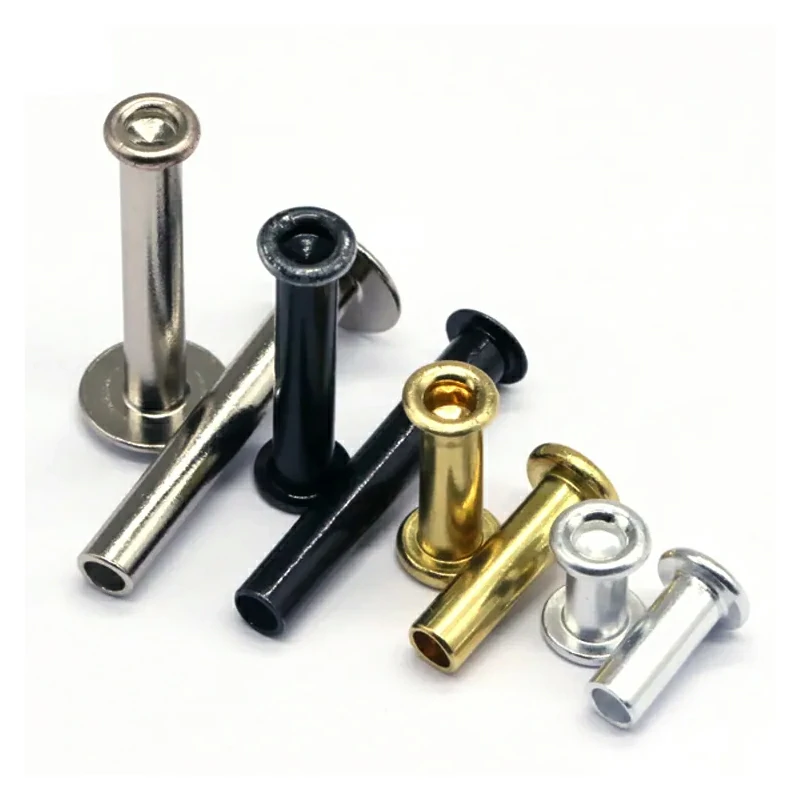
Table of Contents
- Understanding Solid Rivets
- Understanding Semi-Tubular Rivets
- Comparing Structural Strength: Solid vs. Semi-Tubular Rivets
- Advantages and Disadvantages of Solid Rivets
- Advantages and Disadvantages of Semi-Tubular Rivets
- Selecting the Best Rivet Type for Specific Applications
1. Understanding Solid Rivets
Solid rivets are a fundamental choice for robust fastening. Let’s explore their core characteristics and why they’re so strong.
Solid rivets are permanent mechanical fasteners with a solid shaft and a head, installed by deforming the tail to create a second head. This provides exceptional shear and tensile strength for critical structural connections.
These unthreaded, single-piece metal pins are produced by Jiliang Fastener Manufacturing from materials like stainless steel or aluminum alloys. Installation involves inserting the rivet into a pre-drilled hole and deforming the tail to create a “shop head,” permanently locking components. Their simple design belies their immense strength, making them vital where failure is unacceptable.
Material and Manufacturing
Material choice is key for solid rivet performance. For example, aerospace uses high-strength aluminum alloys (e.g., 2017-T4), while heavy machinery prefers carbon or stainless steel (e.g., 304, 316L) for corrosion resistance and strength.
| Material Type | Common Applications | Key Properties |
| Aluminum Alloys | Aircraft, lightweight structures | High strength-to-weight, corrosion resistance |
| Carbon Steel | General construction, automotive | High strength, cost-effective |
Jiliang’s manufacturing uses precision cold heading or hot forging. Cold heading is for smaller rivets, offering accuracy, while hot forging is for larger, high-strength rivets, optimizing material structure. Each step ensures quality for industries like automotive and aerospace.
Installation Techniques
Proper installation of solid rivets ensures joint integrity. “Bucking” is common, using a rivet gun and bucking bar to deform the tail. For instance, aircraft fuselage riveting requires precise control to avoid damage.
Squeeze riveting, using hydraulic or pneumatic force, is quieter and more consistent, often preferred for larger rivets or limited access. This method ensures strong, uniform joints, like in railway car assembly. Jiliang’s solid rivets are designed for these methods, guaranteeing secure connections.
2. Understanding Semi-Tubular Rivets
Semi-tubular rivets offer a balance of strength and easy installation. Let’s explore their unique design and applications.
Semi-tubular rivets feature a partial hole at the tail end, allowing for easier, less forceful installation than solid rivets. They are ideal for applications needing moderate strength and efficient assembly.
These rivets have a shallow, concentric hole at the tail, reducing the force needed for deformation. Jiliang produces them in materials like steel, brass, and aluminum. They are often installed with automated riveting machines for high-volume production. While not as strong as solid rivets, their ease of installation and cost-effectiveness make them versatile.
Design and Materials
The partial hole in semi-tubular rivets guides material to flare and clinch, requiring less setting force. This is beneficial for delicate materials or automated processes, such as in electronic enclosures using aluminum or brass rivets.
| Material Type | Common Applications | Key Design Considerations |
| Steel | Automotive, appliances | High strength, good wear resistance |
| Aluminum | Electronics, lightweight assemblies | Lightweight, corrosion resistance |
Jiliang offers various head styles (flat, oval, countersunk) for aesthetic and functional needs. Material selection is also crucial; for medical equipment, 316L stainless steel semi-tubular rivets are chosen for biocompatibility. Our custom fasteners are tailored to client needs.
Installation and Automation
Semi-tubular rivets are highly efficient for automated assembly due to their low setting force. A riveting machine applies pressure, flaring the hollow tail to clinch materials. This is common in automotive brake lining production for speed and consistency.
Automation benefits include increased speed, reduced labor, and consistent quality. Lower setting force also prevents material damage, important for softer materials. Jiliang’s semi-tubular rivets are engineered for these automated processes, providing reliable solutions.
3. Comparing Structural Strength: Solid vs. Semi-Tubular Rivets
The choice between solid and semi-tubular rivets is critical for structural integrity. Understanding their strength differences is essential.
Solid rivets generally offer superior structural strength due to their complete material cross-section, providing higher resistance to shear and tensile forces. They are preferred for critical load-bearing applications.
The key difference is material volume. A solid rivet’s full cross-section withstands maximum shear and tensile stresses, making it robust for high loads and vibrations. A semi-tubular rivet’s partial hole reduces its effective cross-section, lowering its ultimate strength. For maximum structural integrity, solid rivets are superior.
Shear Strength
Solid rivets excel in shear strength because their entire cross-section resists parallel forces. For example, aircraft wings use solid rivets to withstand immense shear stresses.
| Rivet Type | Shear Resistance | Typical Applications |
| Solid Rivet | Very High | Aircraft, Bridges, Heavy Machinery |
| Semi-Tubular Rivet | Moderate | Appliances, Electronics, Light Structures |
Semi-tubular rivets have a smaller effective area for shear resistance, typically 70-80% of a solid rivet’s strength. They suit applications with moderate shear forces, like office furniture. Jiliang advises considering maximum shear loads for safety.
Tensile Strength
Solid rivets also demonstrate superior tensile strength, resisting forces that pull joints apart. A properly installed solid rivet’s shop head distributes tensile load effectively, preventing separation under stress, as seen in pressure vessels.
Semi-tubular rivets have lower tensile strength. The partial hole can be a stress riser, potentially failing at the clinch point. They are better for moderate tensile loads or holding components, like in luggage. Jiliang’s custom fasteners optimize both shear and tensile performance.
4. Advantages and Disadvantages of Solid Rivets
Considering solid rivets? It’s vital to weigh their benefits against their drawbacks for your project.
Solid rivets offer unparalleled structural strength, high vibration resistance, and long-term durability for critical applications. However, they require significant installation force, specialized tools, and are harder to remove, leading to higher installation costs.
Solid rivets are chosen for their strength and reliability where safety is paramount. Their full material ensures maximum resistance to forces. Jiliang Fastener Manufacturing helps clients balance these performance requirements with practical constraints.
Key Advantages of Solid Rivets
Solid rivets offer several compelling advantages for demanding structural applications.
- Superior Structural Strength: Full material body provides maximum resistance to shear and tensile forces, crucial for bridges and heavy machinery.
- High Vibration Resistance: Creates a tight, permanent joint resistant to loosening under vibration, vital for aircraft engines.
- Excellent Fatigue Life: Fewer stress concentration points lead to longer life in structures with cyclic loading, like wind turbine towers.
- Corrosion Resistance (Material Dependent): Stainless steel or aluminum alloys offer excellent resistance for harsh environments. Jiliang provides custom solid rivets in various corrosion-resistant materials.
- Tamper-Proof and Permanent: Difficult to remove without destruction, beneficial for security-sensitive applications.
Key Disadvantages of Solid Rivets
Despite their strengths, solid rivets have challenges.
- High Installation Force Required: Needs heavy-duty pneumatic or hydraulic tools and skilled operators, increasing labor.
- Specialized Equipment and Skill: Requires specific tools and trained personnel, increasing initial investment.
- Limited Access Requirements: “Bucking” often needs access to both sides, limiting use in confined spaces.
- Higher Installation Time and Cost: Slower process due to force and precision, leading to higher labor and assembly costs.
- Potential for Material Damage: High forces can deform surrounding material if not installed correctly, requiring careful control.
5. Advantages and Disadvantages of Semi-Tubular Rivets
Considering semi-tubular rivets? Understand their specific benefits and limitations for your project.
Semi-tubular rivets offer significant advantages in ease and speed of installation, requiring less force and suitable for automation, making them cost-effective for high-volume production. However, they provide lower structural strength and vibration resistance compared to solid rivets.
Semi-tubular rivets balance strength and manufacturability, popular where moderate strength and assembly efficiency are priorities. Their partial hole design eases deformation but limits ultimate strength. Jiliang helps clients evaluate these trade-offs for optimal custom fasteners.
Key Advantages of Semi-Tubular Rivets
Semi-tubular rivets offer several benefits, especially in high-volume manufacturing.
- Easier and Faster Installation: Reduced force needed for setting, making installation quicker, ideal for consumer electronics.
- Suitable for Automation: Easy deformation makes them perfect for automated riveting machines, increasing speed and reducing labor.
- Reduced Risk of Material Damage: Lower setting force minimizes damage to softer materials or delicate components, crucial for circuit boards.
- Cost-Effective: Generally cheaper to manufacture and faster to install, leading to lower overall assembly costs for mass-produced goods.
- Versatility in Materials: Available in steel, brass, aluminum, and stainless steel, allowing customization for specific needs. Jiliang offers custom semi-tubular rivets.
- Aesthetic Options: Various head styles provide a clean finish for visible components in products like luggage.
Key Disadvantages of Semi-Tubular Rivets
Semi-tubular rivets also have limitations.
- Lower Structural Strength: Reduced shear and tensile strength due to the partial hole, unsuitable for maximum load-bearing applications.
- Reduced Vibration Resistance: Less resistant to loosening under extreme vibration compared to solid rivets, a concern for high dynamic loads.
- Less Suitable for High-Stress Applications: Not recommended for critical applications where failure poses safety risks. Best for non-load-bearing or moderately loaded joints.
- Potential for Head Deformation: Incorrect setting force or tooling can deform the head, compromising joint integrity.
- Limited Joint Thickness: Effectiveness limited by material thickness; improper flaring can lead to weak connections.
- Not Tamper-Proof: Can be removed with less destructive effort than solid rivets, less ideal for high tamper resistance.
6. Selecting the Best Rivet Type for Specific Applications
Choosing between solid and semi-tubular rivets significantly impacts product performance and cost. The “better” choice depends on your application’s specific demands.
The best rivet type depends on the application’s specific requirements: solid rivets are superior for high-strength, critical load-bearing structures demanding maximum durability and vibration resistance, while semi-tubular rivets are ideal for applications requiring moderate strength, high-volume production, and cost-effective, automated assembly.
Jiliang Fastener Manufacturing, with expertise since 2008, understands the nuances of each rivet type. We analyze load, environment, assembly, and budget to recommend optimal fastening solutions.
Applications for Solid Rivets
Solid rivets are ideal where strength, durability, and safety are paramount.
- Aerospace Industry: Aircraft fuselages and wing structures use solid rivets (aluminum alloys, titanium) for strength, fatigue resistance, and vibration tolerance.
- Heavy Machinery and Equipment: Construction and industrial machinery use solid steel rivets for load-bearing frames, ensuring longevity under heavy loads and vibration.
- Bridge and Structural Steel Construction: Bridges and high-rises use solid steel rivets for girders, providing long-term stability.
- Railway Rolling Stock: Train cars and locomotives use solid rivets in critical assemblies for safety and durability under immense forces.
- Shipbuilding: Large vessels use solid rivets for hull plating and bulkheads, providing strong, watertight joints in harsh marine environments.
| Industry/Application | Key Requirements | Preferred Solid Rivet Material |
| Aerospace | High strength-to-weight, fatigue resistance | Aluminum alloys, Titanium |
| Heavy Machinery | Extreme load bearing, vibration resistance | Carbon Steel, Alloy Steel |
Applications for Semi-Tubular Rivets
Semi-tubular rivets excel where efficiency, cost-effectiveness, and moderate strength are key.
- Automotive Interior and Non-Structural Components: Fastening interior trim or light body panels uses semi-tubular rivets for quick, economical solutions.
- Consumer Electronics and Appliances: Chassis assembly and component mounting in TVs, refrigerators, and computers use semi-tubular rivets (aluminum, steel) for high-volume production.
- Luggage and Leather Goods: Attaching handles and straps uses semi-tubular rivets, joining softer materials without excessive force.
- Office Furniture and Fixtures: Assembling chairs and desks uses semi-tubular rivets for efficient fastening of metal and plastic.
- Medical Devices (Non-Critical Structural): Stainless steel semi-tubular rivets are used in certain medical equipment for moderate strength and easy assembly.
- Toys and Sporting Goods: Assembly of toys and sporting equipment uses semi-tubular rivets for moderate strength and cost-effective manufacturing.
| Industry/Application | Key Requirements | Preferred Semi-Tubular Rivet Material |
| Automotive (Non-Structural) | Cost-effective, quick assembly | Steel, Aluminum |
| Consumer Electronics | High-volume, gentle on materials | Aluminum, Brass, Steel |
Jiliang Fastener Manufacturing offers a comprehensive range of custom-engineered solid and semi-tubular rivets. Our expertise ensures you receive a high-quality, reliable fastening solution for your specific application.
Conclusion
Choosing between solid and semi-tubular rivets is crucial for structural integrity and cost-effectiveness. Solid rivets offer superior strength, vibration resistance, and fatigue life, making them ideal for critical, high-load applications, despite higher installation costs and complexity. Conversely, semi-tubular rivets provide moderate strength with significant advantages in ease, speed, and cost of installation, perfect for high-volume, automated assembly where extreme loads are not the primary concern.
At Jiliang Fastener Manufacturing, we are a professional custom fastener manufacturer since 2008, offering a wide array of precision-engineered components. We provide tailored solutions that meet the highest industry standards. Whether you need the robust performance of solid rivets or the efficient assembly of semi-tubular rivets, our experts are ready to assist. Contact us today to find the perfect fastening solution for your next project.