Choosing between a solid shoulder rivet and a semi-tubular shoulder rivet depends entirely on your application’s specific needs for strength, installation speed, and cost. Solid shoulder rivets are the ideal choice for high-stress, load-bearing applications where maximum shear strength and durability are critical, while semi-tubular shoulder rivets excel in high-volume assemblies where lower installation force, faster cycle times, and reduced material cost are the primary drivers. This guide will delve into the critical differences, advantages, and ideal use cases for each type, empowering you to make the most informed decision for your project’s success.

Table of Contents
- What Exactly is a Shoulder Rivet? Understanding the Core Function
- Deep Dive: The Solid Shoulder Rivet
- Exploring the Semi-Tubular Shoulder Rivet
- Head-to-Head Comparison: Solid vs. Semi-Tubular Shoulder Rivets
- How to Choose the Right Shoulder Rivet for Your Application: 5 Key Factors
- Common Applications: Where Each Rivet Shines
- Partnering with rivetjl for Your Fastening Needs
- Conclusion: Making the Final Decision with Confidence
What Exactly is a Shoulder Rivet? Understanding the Core Function
Before comparing solid and semi-tubular variants, it’s essential to understand the unique role of a shoulder rivet. Unlike standard rivets that simply clamp materials together, a shoulder rivet (also known as a shoulder bolt or stripper bolt) is a precision fastener designed with three distinct sections: the head, an unthreaded shoulder, and the shank (or tail). The key component is the shoulder, which has a larger diameter than the shank. This design allows it to act as a pivot point, axle, or shaft for moving parts. The shoulder maintains a precise distance between components, allowing them to rotate or slide freely without being clamped tightly, making it indispensable in mechanical assemblies.
Deep Dive: The Solid Shoulder Rivet
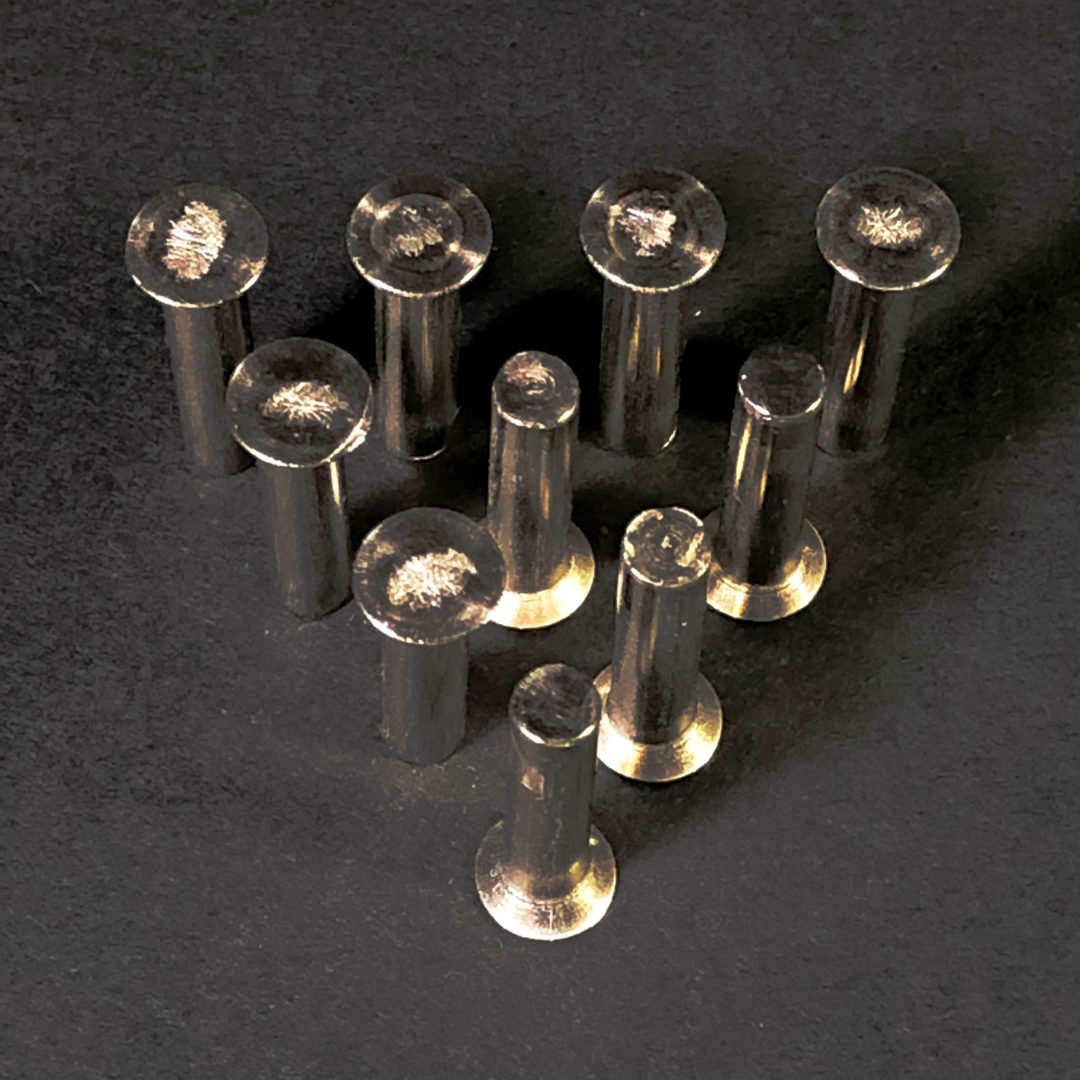
The solid shoulder rivet is the original and most robust form of this fastener. It is characterized by a completely solid shank from the head to the tail, offering unparalleled strength and integrity. It is the workhorse of heavy-duty fastening solutions.
Anatomy and Key Characteristics
A solid shoulder rivet consists of a pre-formed head, a smooth, precision-ground shoulder, and a solid tail or shank. During installation, significant force is applied to deform the solid tail, forming a second head (the “shop head” or “buck-tail”) that securely fastens the assembly. This process, known as upsetting, requires access to both sides of the joint and substantial force, typically from hydraulic or pneumatic presses. The result is a permanent, vibration-resistant joint with exceptional strength.
Advantages: When Strength is Non-Negotiable
The primary advantage of a solid shoulder rivet lies in its immense strength. Because the shank is a solid piece of metal, it provides maximum resistance to shear forces—the forces that try to slide the joined parts past each other. This makes them the go-to choice for critical, load-bearing joints in industries like aerospace, heavy machinery, and structural engineering. Their solid construction also ensures superior durability and resistance to fatigue over long periods of stress and vibration.
Disadvantages: The Trade-offs to Consider
The strength of solid rivets comes with a few trade-offs. The installation process is more demanding, requiring significantly higher setting forces compared to their semi-tubular counterparts. This necessitates heavier, more powerful, and often more expensive installation equipment. The cycle time for installation is also longer, which can impact production efficiency in high-volume manufacturing environments. Furthermore, the upsetting process can sometimes cause slight material deformation in the components being joined if not performed with precision.
Exploring the Semi-Tubular Shoulder Rivet
The semi-tubular shoulder rivet represents an evolution in rivet design, engineered to balance good strength with superior manufacturing efficiency. It provides the same pivot-point functionality as a solid rivet but with a key structural difference.
Anatomy and Defining Features
A semi-tubular shoulder rivet looks very similar to a solid one, featuring a head and a shoulder. The critical difference is in the tail, which is partially hollowed out. The depth of this hole, according to industry standards, typically does not exceed 112% of the shank’s diameter. This small hollow section is the key to its functionality. During installation, the force required to roll the tubular portion outwards to form the clinch is drastically reduced.
Advantages: The Case for Speed and Efficiency
The most significant benefit of semi-tubular rivets is the low installation force required. This allows for the use of smaller, lighter, and less expensive riveting machines, and it significantly speeds up assembly cycle times. This makes them highly desirable for automated and high-volume production lines common in the automotive, electronics, and consumer goods industries. The lower force also minimizes the risk of damaging delicate or brittle materials during assembly, such as plastics or circuit boards.
Disadvantages: Understanding the Limitations
The trade-off for easier installation is reduced ultimate strength. The hollow tail means a semi-tubular rivet has less material to resist shear and tensile forces compared to a solid rivet of the same diameter. While they are more than adequate for a vast range of applications, they are generally not suitable for the same high-stress, critical structural joints where solid rivets are mandated. Their performance is best suited for joints that require a reliable pivot but do not bear extreme loads.
Head-to-Head Comparison: Solid vs. Semi-Tubular Shoulder Rivets
To clarify the decision-making process, here is a direct comparison of the key attributes of each rivet type in a simple table format.
| Attribute | Solid Shoulder Rivet | Semi-Tubular Shoulder Rivet |
|---|---|---|
| Shear Strength | Very High | Good to High |
| Tensile Strength | High | Moderate |
| Installation Force | High | Low |
| Installation Speed | Slower | Fast |
| Tooling Cost | Higher (Heavy-duty equipment) | Lower (Lighter equipment) |
| Risk to Materials | Moderate (High force can deform parts) | Low (Gentler on brittle materials) |
| Ideal Application | Structural, load-bearing joints | High-volume, non-structural pivot points |
How to Choose the Right Shoulder Rivet for Your Application: 5 Key Factors
Selecting the correct rivet is a critical engineering decision. Answering the following questions will guide you to the optimal choice for your project.
1. Analyzing Load Requirements: Shear vs. Tensile Strength
What kind of forces will the joint experience? If the primary force is shear (parts trying to slide) and the joint is structurally critical, a solid shoulder rivet is the safer, more robust option. If the joint serves primarily as a pivot with low to moderate loads, a semi-tubular shoulder rivet offers sufficient strength with added manufacturing benefits.
2. Material Compatibility and Thickness
What materials are you joining? For delicate, brittle, or thin materials like plastics, composites, or thin sheet metal, the lower setting force of a semi-tubular rivet is highly advantageous as it prevents cracking or deformation. For joining thick, robust steel plates in a heavy-duty frame, the high clamp load of a solid rivet is necessary.
3. Production Volume and Assembly Speed
How many assemblies do you need to produce? For mass production and automated assembly lines where cycle time is measured in seconds, the fast, low-force installation of semi-tubular rivets is unmatched. For lower volume, specialized, or heavy-duty products where absolute reliability outweighs speed, the more deliberate installation of solid rivets is acceptable.
4. Tooling and Installation Process
What equipment do you have available? If your facility is equipped with lighter presses or you need to invest in new tooling, opting for semi-tubular rivets can lead to significant cost savings on capital equipment. If you already have heavy-duty hydraulic or pneumatic riveting machines, you have the flexibility to use solid rivets for demanding applications.
5. Budget and Overall Project Cost
What is the total cost picture? While the unit cost of the rivets themselves may be similar, the total cost of fastening is influenced by labor, equipment, and cycle time. Semi-tubular rivets often result in a lower overall cost per assembly due to faster installation and less expensive tooling, making them a cost-effective choice for many commercial products.
Common Applications: Where Each Rivet Shines
Typical Uses for Solid Shoulder Rivets
Thanks to their exceptional strength and reliability, solid shoulder rivets are found in the most demanding environments:
- Aerospace: Aircraft frames, control surface hinges, landing gear mechanisms.
- Heavy Machinery: Linkages in construction equipment like excavators and bulldozers.
- Automotive: Brake assemblies, chassis components, and suspension systems.
- Structural Steel: Bridges, buildings, and large-scale architectural elements.
Typical Uses for Semi-Tubular Shoulder Rivets
The efficiency and versatility of semi-tubular shoulder rivets make them ubiquitous in a wide range of products:
- Consumer Electronics: Pivot points in laptop hinges, printer mechanisms, and disk drives.
- Automotive Interiors: Glove box hinges, folding seat mechanisms, and other moving trim parts.
- Appliances: Moving parts in washing machines, dishwashers, and other white goods.
- Medical Devices: Hinges and pivot points in hospital beds, wheelchairs, and diagnostic equipment.
Partnering with rivetjl for Your Fastening Needs
Making the right component choice is crucial for product performance, reliability, and cost-effectiveness. At rivetjl, we bring decades of expertise in precision manufacturing and material science to every project. Our engineering team understands the subtle yet critical differences between fastener types and can provide expert guidance tailored to your unique application. Whether you require the uncompromising strength of a solid shoulder rivet or the manufacturing efficiency of a semi-tubular design, we can help you specify and source the perfect component. We specialize in providing high-quality, custom-molded and machined parts that meet the most stringent industry standards.
Conclusion: Making the Final Decision with Confidence
The choice between solid and semi-tubular shoulder rivets is not a matter of which is “better,” but which is *right* for the job. Solid shoulder rivets are the clear choice for strength-critical, load-bearing applications where failure is not an option. Semi-tubular shoulder rivets are the optimal solution for high-volume manufacturing where efficiency, speed, and cost-effectiveness are paramount for non-structural or lightly loaded pivot points. By carefully evaluating your project’s load requirements, materials, production volume, and budget, you can select a fastener that ensures both product integrity and manufacturing success. If you’re still unsure, consulting with an expert is the best next step. Contact the rivetjl team today to discuss your project requirements and find the perfect fastening solution.