For thin-sheet metal assembly, rivets are generally more reliable in applications subject to high vibration and shear stress, offering a permanent, tamper-resistant joint. Conversely, self-tapping screws provide superior reliability where serviceability and strong tensile (pull-out) resistance are required. The ultimate choice is not about which fastener is universally “better,” but which is optimally engineered for the specific functional demands of the assembly, including load type, environmental exposure, and lifecycle maintenance needs.
In the world of manufacturing and product design, the method used to join thin-gauge metal can dictate a product’s longevity, safety, and performance. Both blind rivets and self-tapping screws are ubiquitous solutions, yet they function on fundamentally different principles. A rivet is a permanent mechanical fastener that creates a clamped joint by deforming its tail, while a self-tapping screw forms or cuts its own mating threads as it is driven into a pre-drilled hole. Understanding the nuanced differences in their performance under various stresses is critical for engineers, designers, and manufacturers aiming for maximum reliability. This comprehensive guide will dissect the strengths and weaknesses of each, providing the expert insights needed to make an informed decision for your specific application.
Table of Contents
- What Are Rivets and How Do They Secure Thin Metal?
- What Are Self-Tapping Screws and Their Mechanism?
- The Core Comparison: A Head-to-Head Analysis of Reliability
- Which Fastener Should You Choose? Key Application Scenarios
- Beyond the Basics: Critical Factors Influencing Fastener Choice
- Conclusion: Making the Right Engineering Decision for Your Assembly
What Are Rivets and How Do They Secure Thin Metal?
A rivet is a mechanical fastener that consists of a smooth, cylindrical shaft with a head on one end. To join materials, the plain end of the shaft, known as the tail or buck-tail, is plastically deformed, creating a second head that securely clamps the workpieces together. The reliability of a riveted joint comes from its ability to completely fill the hole and create a powerful, locked-in clamping force.
The Mechanics of a Riveted Joint: Clamping Force and Hole-Fill
When a rivet is installed, its body expands to fill the hole entirely. This *hole-fill* characteristic is crucial for reliability in thin sheet metal. It prevents any micromovement or shifting between the joined sheets, creating a unified structure that acts as a single piece. This tight fit is exceptional at resisting shear loads—forces that act parallel to the surface of the materials. The rivet essentially becomes a solid metal dowel locked in place, distributing shear stress across its entire cross-section. The clamping force exerted by the two heads also adds significant frictional resistance between the metal sheets, further enhancing the joint’s integrity and strength.
Common Types for Thin Metal: The Role of Blind Rivets
While solid rivets require access to both sides of the assembly, blind rivets (commonly known as “pop rivets”) are perfect for thin-sheet metal where access is often restricted to one side. A blind rivet consists of the rivet body and a mandrel. A special riveting tool grips the mandrel and pulls it, causing the rivet body to deform on the “blind” side, creating the second head. Once the joint is tight, the mandrel breaks off at a predetermined point. This process is incredibly fast and consistent, making blind rivets ideal for high-volume production lines in industries like automotive, HVAC, and aerospace.
What Are Self-Tapping Screws and Their Mechanism?
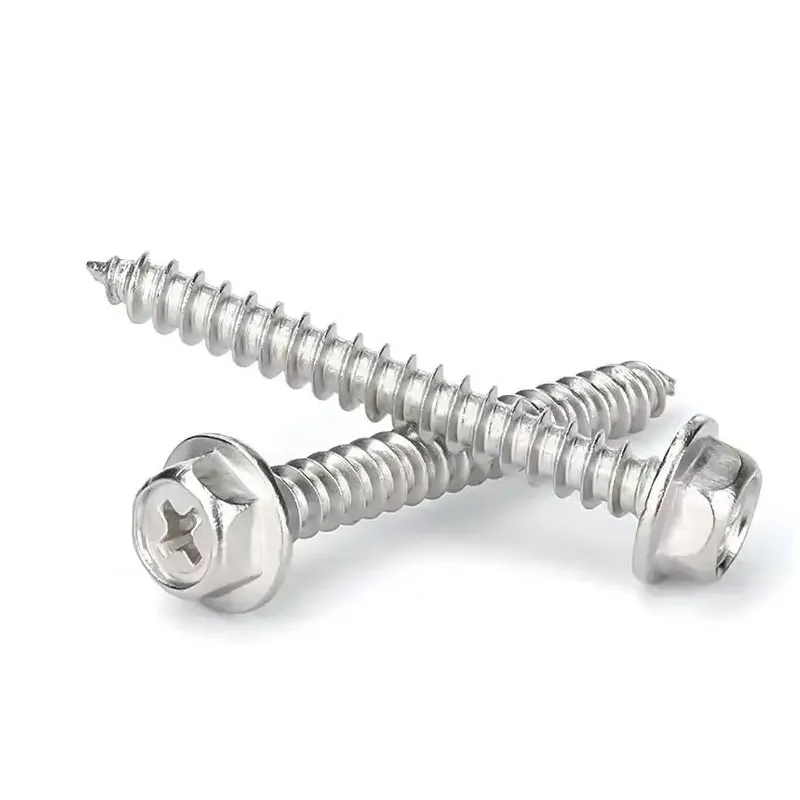
Self-tapping screws, as the name suggests, are designed to create their own internal threads within a pre-drilled or punched hole as they are driven into a material. This eliminates the need for a separate tapping operation, streamlining the assembly process. Their reliability is entirely dependent on the quality and integrity of the threads they form in the base material.
The Science of Creating Threads: Thread-Forming vs. Thread-Cutting
There are two primary types of self-tapping screws used in thin metal:
- Thread-forming screws: These screws displace material rather than removing it. They push the metal aside to form threads, resulting in a stronger, more secure engagement because the grain structure of the metal is not cut. This process also creates a zero-clearance fit, which offers good resistance to vibrational loosening.
- Thread-cutting screws: These screws have flutes and cutting edges that act like a tap, removing small amounts of material to create threads. They require less torque to install but can be more susceptible to stripping in very thin or soft metals.
For thin-sheet metal, thread-forming screws are often the more reliable choice as they create a stronger thread engagement without generating metal chips.
Key Variations for Sheet Metal Applications
Self-tapping screws come in various head styles (pan, hex, flat), drive types (Phillips, Torx), and thread patterns. Specific designs, like those with a twin-lead thread or a serrated underside on the head, are engineered to improve installation speed and resist loosening, respectively. The choice of screw is critical, as an improperly selected screw can easily strip the newly formed threads in thin metal if over-torqued.
The Core Comparison: A Head-to-Head Analysis of Reliability
To truly understand which fastener is more reliable, we must compare them across several key performance metrics crucial for thin-sheet metal applications. Reliability isn’t a single attribute; it’s a combination of strength, durability, and resistance to failure under specific conditions.
| Performance Factor | Rivets | Self-Tapping Screws | Which is More Reliable? |
|---|---|---|---|
| Shear Strength | Excellent. The rivet body fills the hole, distributing load across its full diameter. This creates an extremely strong joint against lateral forces. | Good. Strength is limited to the screw’s minor diameter and can be compromised by thread-to-hole clearance. | Rivets are generally more reliable under shear stress. |
| Tensile (Pull-Out) Strength | Good. Reliant on the strength of the formed head. Can fail if the head pulls through thin material. | Excellent. Reliant on the thread engagement. A screw with sufficient thread length provides superior resistance to being pulled out. | Self-tapping screws offer higher reliability against direct pull-out forces. |
| Vibration Resistance | Excellent. The permanent, clamped joint with complete hole-fill has no threads to loosen, making it highly resistant to vibration. | Fair to Good. Prone to loosening over time unless supplemented with thread-locking compounds, lock washers, or special thread designs. | Rivets are significantly more reliable in high-vibration environments. |
| Joint Permanence & Tamper-Resistance | High. Considered a permanent fastener. Removal requires drilling or grinding, which deters tampering. | Low. Designed for disassembly. Can be easily removed with standard tools, making it unsuitable for security-critical applications. | Rivets are the clear choice for permanent and tamper-resistant assemblies. |
| Installation Consistency | High. Rivet installation tools ensure a consistent clamping force and formation every time, reducing operator error. | Variable. Highly dependent on operator skill and torque control. Over-torquing can strip threads and destroy the joint. | The riveting process is inherently more repeatable and reliable. |
| Serviceability | None. The joint must be destroyed to be disassembled. | Excellent. Allows for easy removal and re-assembly for maintenance, repairs, or access. | Screws are the only reliable option for serviceable joints. |
Which Fastener Should You Choose? Key Application Scenarios
The data from our comparison clearly shows that the “best” fastener is application-dependent. The correct engineering choice hinges on a clear understanding of the product’s operational environment and lifecycle requirements.
When to Use Rivets: For Permanent, High-Vibration Environments
Choose rivets when the assembly is intended to be permanent and will be exposed to significant vibration, shaking, or shear forces. The integrity of the joint must be maintained without fail throughout the product’s lifespan.
- Automotive & Transportation: Securing body panels, chassis components, and internal brackets where vibration is constant and joint failure is not an option.
- Aerospace: Assembling aircraft fuselages and wing structures, where the combination of high shear strength and vibration resistance is paramount for safety.
- HVAC Ducting: Creating permanent, air-tight seams in sheet metal ductwork that must withstand air pressure and system vibrations.
- Industrial Equipment: Fastening machine guards and structural frames that need to be tamper-proof and robust.
When to Use Self-Tapping Screws: For Serviceable and High Pull-Out Force Assemblies
Opt for self-tapping screws when the design requires future access for maintenance, repair, or component replacement. They are also superior when the primary force is trying to pull the two sheets of metal apart.
- Electronics Enclosures: Attaching access panels, covers, and internal components that may need to be serviced or replaced.
- Appliance Manufacturing: Assembling washing machines, dryers, and refrigerators where service panels need to be removed by technicians.
- Signage and Architectural Panels: Mounting panels that might need to be replaced or where tensile loads from wind are a key consideration.
- Prototyping and Low-Volume Assembly: When flexibility in design and ease of assembly/disassembly with standard tools are more important than vibration resistance.
Beyond the Basics: Critical Factors Influencing Fastener Choice
A truly reliable joint requires looking beyond the fastener itself and considering the entire system.
Material Thickness and Hardness
The thinner the sheet metal, the more challenging it becomes for a self-tapping screw to form robust threads. There’s a higher risk of stripping or pull-through. In these cases, a rivet, which relies on clamping force, can be more reliable. The rivet’s “grip range” must be correctly matched to the total material thickness for a proper joint.
Corrosion and Material Compatibility
A critical, often overlooked aspect of reliability is preventing galvanic corrosion. This occurs when two dissimilar metals are in contact in the presence of an electrolyte (like moisture). For example, using a stainless steel screw on an aluminum sheet can cause the aluminum to rapidly corrode. It is essential to choose a fastener made from a compatible material or one with a protective coating to ensure long-term joint integrity.
Cost Analysis: Per-Unit vs. Total Assembly Cost
While a single self-tapping screw might be cheaper than a blind rivet, the total assembly cost must be considered. Riveting is often a faster process in an automated or high-volume setting, reducing labor costs. Conversely, screws require less specialized tooling. A comprehensive cost-benefit analysis should factor in fastener cost, tool investment, and assembly cycle time.
Conclusion: Making the Right Engineering Decision for Your Assembly
In the debate of Rivets vs. Self-Tapping Screws for thin-sheet metal, there is no single champion of reliability. Instead, reliability is achieved through deliberate engineering design. Rivets offer unmatched security in permanent, high-vibration, and shear-loaded applications. Self-tapping screws provide essential serviceability and superior strength against pull-out forces.
The most reliable joint is one where the fastener’s characteristics are perfectly aligned with the product’s functional and environmental demands. By carefully analyzing factors like load type, vibration, serviceability, and material compatibility, you can confidently select the fastening solution that ensures the safety, durability, and performance of your assembly. At Rivetjl, we understand that every component choice impacts the final product’s success, and making these informed decisions is at the heart of quality manufacturing.