What is the Fundamental Difference Between a Rivet and a Bolt?
Before diving into seismic performance, it’s crucial to understand the distinct mechanical principles behind these two fasteners. They may look similar from a distance, but how they are installed and how they carry load are fundamentally different, which directly impacts their behavior during an earthquake.
The Mechanics of a Hot-Driven Rivet
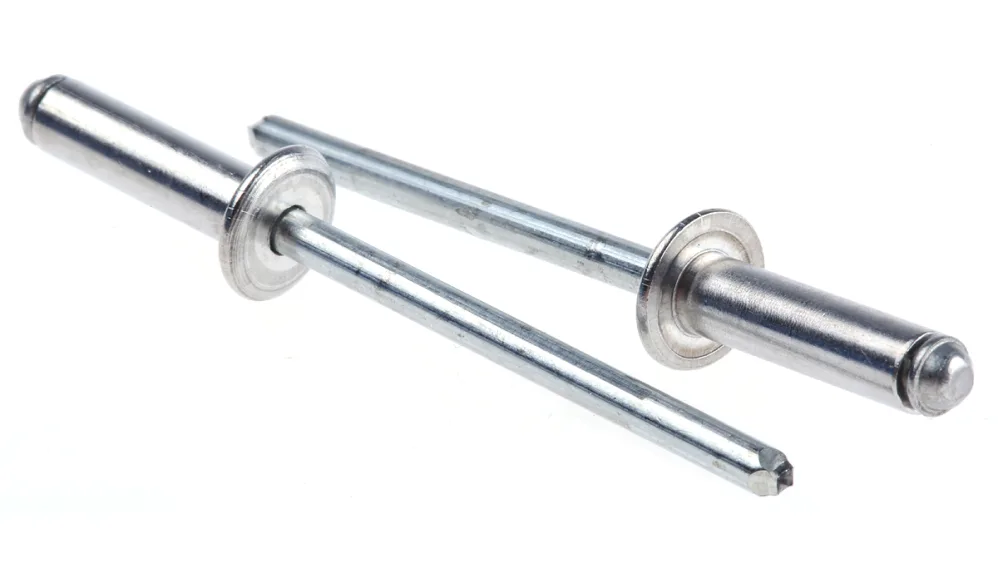
A rivet is a permanent mechanical fastener. In structural applications, this was traditionally a hot-driven rivet. The process involved heating a solid steel rivet to a glowing orange-red (around 1000-1100°C), inserting it into aligned holes in steel plates, and then forming the second head (the “shop head” is pre-formed, the “field head” is formed on-site) with a pneumatic hammer. As the rivet cooled, it contracted, creating a powerful clamping force that pressed the steel plates tightly together. This clamping force was its primary strength, creating immense friction between the plates. Additionally, the hot rivet expanded to completely fill the hole, providing excellent resistance to shear forces.
The Engineering of a High-Strength Bolt
A high-strength structural bolt, in contrast, is a threaded fastener that works in tandem with a nut. Unlike the variable force from a cooling rivet, a bolt achieves its clamping force through a precisely controlled tightening process. This force, known as preload or pretension, is calculated and applied using calibrated tools like torque wrenches or through methods like the turn-of-nut method. This creates a slip-critical connection, where the friction generated by the predictable clamping force is the primary mechanism for transferring loads between members. The bolt itself essentially acts as a highly tensioned spring, holding the plates together so they can’t slip under service loads.
Comparing Seismic Performance: A Head-to-Head Analysis
An earthquake subjects a structure to violent, cyclical, and multi-directional forces. The ideal fastener connection must not only be strong but also possess ductility and the ability to dissipate energy to prevent catastrophic failure. Here’s how rivets and bolts stack up in these critical areas.
| Performance Metric | Hot-Driven Rivets | High-Strength Bolts (Slip-Critical) |
|---|---|---|
| Energy Dissipation | Low to moderate. Acts rigidly until shear failure. Less predictable energy dissipation. | Excellent. Designed to allow for minute, controlled slippage under extreme loads, which dissipates seismic energy as heat. This acts as a structural “fuse.” |
| Ductility | Considered ductile but failure is typically in shear, which can be sudden. Performance is less quantifiable. | Highly ductile and predictable. The connection is designed to yield in a controlled manner, providing visual warning of distress without sudden collapse. |
| Clamping Force (Preload) | High but highly variable and unpredictable. Depends on cooling temperature and installation skill. | Precise and verifiable. Can be measured and confirmed on-site, ensuring the design clamping force is achieved. |
| Failure Mode | Primarily shear failure of the rivet shank. | Designed to fail in a ductile manner. In a slip-critical connection, slippage occurs first, followed by the bolt acting in shear or tension if overloaded. |
| Quality Control | Subjective. Relied on visual inspection and the sound of a hammer tap. Hard to quantify. | Objective and systematic. Tension can be verified with torque wrenches, direct tension indicators (DTIs), or turn-of-nut method. |
Ductility and Energy Dissipation
This is arguably the most critical factor in seismic design. A structure needs to be able to flex and move without breaking. High-strength bolted connections, specifically slip-critical ones, are engineered for this. During a severe seismic event, the force may overcome the frictional resistance, causing the plates to slip ever so slightly. This slippage dissipates an enormous amount of energy, much like the crumple zone of a car. This prevents the energy from being transferred to other critical structural members. Riveted connections are far more rigid; they resist the load until the rivet itself shears, offering less capacity for energy dissipation before failure.
Clamping Force and Predictability
Modern engineering relies on predictability. We need to know that a connection will behave exactly as the computer models predict. The preload in a high-strength bolt can be specified to a precise value (e.g., 70% of its ultimate tensile strength) and verified on-site. This is the foundation of modern connection design. The clamping force of a cooled rivet, however, is a product of thermodynamics and is influenced by ambient temperature, installation speed, and operator skill. This variability makes it impossible to model its behavior with the same degree of confidence as a bolted connection.
Why Did the Construction Industry Shift from Rivets to Bolts?
The transition from rivets to high-strength bolts was not instantaneous but a gradual evolution driven by significant advantages in safety, cost, and performance. Iconic structures like the Golden Gate Bridge are marvels of riveted construction, but modern projects have universally adopted bolting for compelling reasons.
Advancements in Metallurgy and Manufacturing
The development of high-strength, heat-treated alloy steels, such as those used in ASTM A325 and A490 bolts, was a game-changer. These materials offered superior and, more importantly, consistent mechanical properties (tensile and shear strength) that could be reliably produced on a mass scale. This reliability formed the bedrock upon which modern structural codes could be built.
Installation Efficiency and Safety
Installing hot rivets was a labor-intensive and hazardous process. It required a four-person crew: one to heat the rivets in a forge, a “catcher” to catch the thrown hot rivet, a “bucker” to hold it in place, and a “gun man” to form the final head with a heavy pneumatic hammer. The process was noisy, dangerous, and slow. In contrast, installing high-strength bolts typically requires a two-person crew, is significantly faster, quieter, and eliminates the severe burn hazards associated with open forges on a construction site.
Quality Control and Inspection
The ability to easily verify the integrity of a connection is paramount. Inspecting a rivet was an art, often involving tapping it with a hammer and listening for the correct “ring” to ensure it was tight. Inspecting a high-strength bolt is a science. An inspector can use a calibrated torque wrench or simply check that the match-marks from the turn-of-nut method are correctly aligned. This objective, verifiable quality control provides a much higher level of assurance and trust in the finished structure.
Are Rivets Still Used Today? Modern Applications and Retrofitting
While high-strength bolts are the standard for new construction, rivets haven’t disappeared entirely. Their use today is primarily in niche applications. In the restoration and preservation of historic steel bridges and buildings, using rivets is often essential to maintain historical and aesthetic authenticity. Furthermore, understanding the behavior of existing riveted connections is a critical field of study for engineers tasked with retrofitting older structures to meet modern seismic standards. Often, a seismic retrofit involves supplementing existing riveted joints with new high-strength bolts to increase the connection’s overall capacity and ductility.
Choosing the Right Fastener for Your Next Seismic Project
For any new bridge or building project in a seismically active area, the choice is clear and is dictated by modern engineering principles and building codes.
Consulting Engineering Codes and Standards (AISC, Eurocode)
The decision is not left to opinion. Structural engineering codes, such as those from the American Institute of Steel Construction (AISC) or Eurocode 3, provide explicit guidelines and design procedures for bolted connections in seismic force-resisting systems. These codes are the result of decades of extensive research, testing, and analysis of how structures perform in real-world earthquakes. Adherence to these standards is non-negotiable for ensuring public safety.
The Role of Precision Manufacturing in Fastener Reliability
Ultimately, the performance of a bolted connection is only as good as the bolt itself. This is where the importance of quality manufacturing comes into focus. Every bolt, nut, and washer used in a seismic application must be produced to exacting standards. This involves precise control over material composition, heat treatment processes, thread geometry, and dimensional tolerances. High-quality, precision manufacturing ensures that each fastener will behave as designed, providing the predictable strength and ductility that engineers rely on to design safe, resilient structures.
The Verdict: Bolts Lead in Modern Seismic Design
In the direct comparison of rivets vs. bolts for seismic performance, high-strength bolts are the unequivocal winner for modern construction. Their superiority lies not just in strength, but in the predictability, ductility, and quality assurance they offer. The ability of a slip-critical bolted connection to dissipate seismic energy in a controlled manner is a sophisticated engineering feature that rivets simply cannot match. While we honor the legacy of the riveted structures that have stood for over a century, the future of safe, seismically resilient construction is firmly and securely fastened with high-strength bolts.