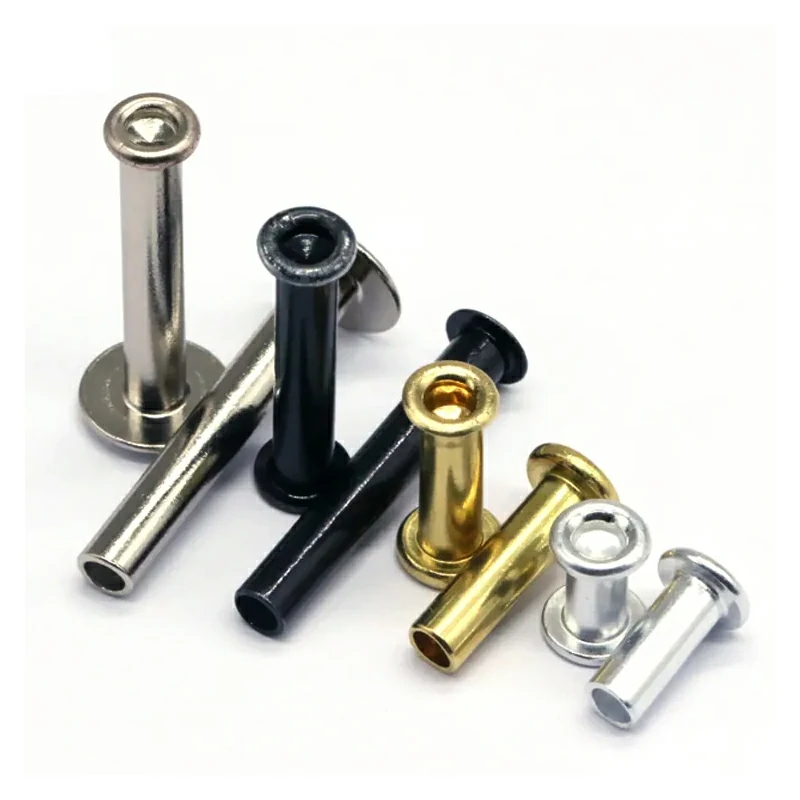
When engineering a mechanical joint, selecting between semi-tubular and solid rivets is a critical trade-off between ultimate shear strength and automated assembly ROI. At Jiliang Fastener Manufacturing, we produce millions of custom OEM fasteners annually. This guide bypasses the basic theory and provides the direct mechanical and economic data engineers need to make the right procurement decision.
| Engineering Metric | Solid Rivets | Semi-Tubular Rivets |
| Shear & Tensile Strength | Maximum (Full cross-sectional material volume) | Moderate (Reduced by the tail-end hole) |
| Setting Force Required | Extremely High (Requires heavy-duty presses/guns) | Low (Requires approx. 1/4 the force of solid rivets) |
| Base Material Suitability | Heavy steel, rigid aluminum, structural metals | Plastics, composites, PCBs, thin sheet metals |
| Assembly Automation | Low (Slower, manual or heavy hydraulic processes) | High (Ideal for high-speed automated feed machines) |
| Total Cost Per Joint | Higher (Slower cycle times, heavier equipment) | Lower (Rapid installation, reduced labor costs) |
1. Solid Rivets: Maximizing Shear Strength for Critical Structural Loads
Solid rivets are engineered for permanence. Because the shank is completely unperforated, the full material cross-section provides the highest possible resistance against shear and cyclic fatigue.
- Engineering Advantage: When driven, the shank swells to completely fill the drilled hole, creating an incredibly tight, vibration-proof joint.
- Primary Use Cases: Heavy machinery frames, commercial structural assemblies, and applications where failure would be catastrophic.
- Cost Consideration: While the unit price of a solid rivet is low, the Total Installed Cost is higher due to the massive tonnage required to upset the rivet and the slower, more labor-intensive setting process.
2. How Do Semi-Tubular and Solid Rivets Compare in Terms of Strength and Performance?
The internal design directly dictates how each rivet type performs under stress, making strength a primary differentiator.
In terms of strength and performance, solid rivets generally offer superior shear and tensile strength due to their full material cross-section, making them ideal for high-load, critical structural applications. Semi-tubular rivets, while having a lower ultimate strength due to their partial hole, provide sufficient strength for many lighter-duty applications, often excelling in fatigue resistance in certain scenarios and offering a cleaner, less damaging installation, which can be a performance benefit for delicate materials.
2.1 Shear and Tensile Strength
Understanding the forces they can withstand.
- Solid Rivets:
- Shear Strength: Solid rivets exhibit maximum shear strength because the entire cross-sectional area of the shank resists forces parallel to the joint. This makes them incredibly robust for applications where components might try to slide past each other.
- Tensile Strength: They also offer high tensile strength, resisting forces that try to pull the joint apart, as the full material volume must be stretched or fractured.
- Semi-Tubular Rivets:
- Shear Strength: The hole in a semi-tubular rivet reduces the effective cross-sectional area, meaning its shear strength is inherently lower than a solid rivet of the same outer diameter and material.
- Tensile Strength: Similarly, their tensile strength is reduced because the material around the hole is weaker under pulling forces.
- Example 1: Jiliang’s Strength Testing for Solid Rivets. For a client in heavy machinery, we performed rigorous shear strength testing on our custom solid rivets. The results consistently showed their ability to withstand extreme forces, making them suitable for critical load-bearing linkages where failure is not an option.
- Example 2: Semi-Tubular Rivets in HVAC Ducting. In HVAC ducting, semi-tubular rivets provide sufficient shear strength to hold sheet metal panels together, resisting the moderate forces from air pressure and vibration, without the need for the extreme strength of a solid rivet.
- Analysis: The theoretical basis is direct stress calculation based on cross-sectional area. The practical impact is that solid rivets are chosen when maximum load-bearing capacity is non-negotiable, while semi-tubular rivets are suitable when moderate strength is sufficient and installation efficiency is a priority.
This table directly compares strength.
| Strength Aspect | Solid Rivet | Semi-Tubular Rivet |
| Shear Strength | Highest for given diameter | Lower due to reduced cross-section |
| Tensile Strength | High, resists pulling forces effectively | Lower, material around hole is weaker |
| Fatigue Resistance | Generally good, but can be stress concentrators if poorly set | Can be good, less material to deform, but hole can be stress point |
| Joint Integrity | Extremely robust, permanent | Robust for intended loads, less material deformation |
| Impact Resistance | High, due to full material volume | Moderate, hole can be a point of weakness |
2.2 Fatigue Resistance and Joint Integrity
Durability under repeated stress.
- Solid Rivets: When properly installed, solid rivets create a very strong, permanent joint with good fatigue resistance. However, if the setting process creates internal stresses or imperfections, these can become stress concentration points, potentially reducing fatigue life.
- Semi-Tubular Rivets: The flaring action of a semi-tubular rivet can create a more uniform stress distribution in the joint, potentially offering good fatigue resistance in certain applications, especially where the material being joined is softer. The hole itself, however, can also be a stress riser if not properly designed for the application.
- Practical Advice: For both types, proper installation is paramount. For solid rivets, ensure sufficient force and correct tooling to fully upset the shank without over-stressing the material. For semi-tubular rivets, ensure the hole is properly flared to create a secure, consistent second head without cracking the material.
- Analysis: The practical impact is that while solid rivets offer higher ultimate strength, semi-tubular rivets can be surprisingly durable in applications with dynamic loads, provided the joint is designed within their strength limits and installed correctly.
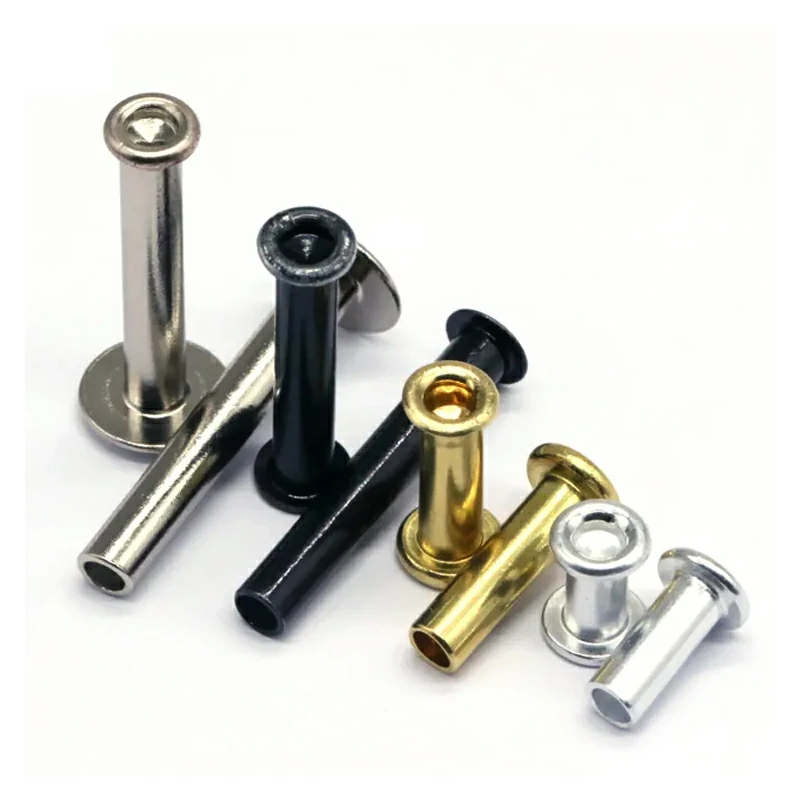
3. What are the Key Differences in Installation Methods and Efficiency?
The installation process is where semi-tubular and solid rivets diverge significantly, impacting assembly speed, required equipment, and labor costs.
The key differences in installation methods and efficiency are that solid rivets require substantial force to upset their entire shank, typically using heavy-duty tools like rivet guns or presses, leading to a slower, more labor-intensive process. In contrast, semi-tubular rivets, with their pre-drilled hole, require significantly less force to flare or roll over the tail, making them ideal for faster, more efficient automated installation with lighter-duty machinery, thus reducing assembly time and overall manufacturing costs for suitable applications.
3.1 Force Required and Tooling
Matching the muscle to the fastener.
- Solid Rivets:
- Force: Setting a solid rivet requires a high amount of force to plastically deform the entire solid shank. This force must be sufficient to upset the material without damaging the components being joined.
- Tooling: Typically requires heavy-duty pneumatic rivet guns, hydraulic presses, or even impact hammers for larger sizes. The tooling must be robust and capable of delivering consistent, high force.
- Semi-Tubular Rivets:
- Force: Due to the pre-drilled hole, semi-tubular rivets require significantly less force to set. The material around the hole simply flares or rolls over to form the second head.
- Tooling: Can be set with lighter-duty pneumatic or electric rivet machines, manual presses, or even simple hand tools for very small sizes. This makes them more versatile for various production environments.
- Example 1: Jiliang’s Automated Riveting for Semi-Tubular Rivets. For a client producing high volumes of small electronic enclosures, we recommended semi-tubular rivets and helped them integrate automated riveting machines. The low force requirement allowed for rapid, consistent setting, dramatically increasing their production throughput.
- Example 2: Manual Installation of Solid Rivets. In custom metal fabrication or repair work, solid rivets might be installed manually using a bucking bar and a pneumatic hammer, a skilled and labor-intensive process, but necessary for the required strength.
- Analysis: The theoretical basis involves material plasticity and mechanical advantage. The practical impact is that semi-tubular rivets offer a significant advantage in terms of installation speed and reduced equipment cost, making them highly attractive for high-volume manufacturing where ultimate strength is not the absolute top priority.
This table compares installation aspects.
| Installation Aspect | Solid Rivet | Semi-Tubular Rivet |
| Force Required | High, to upset entire shank | Low, to flare/roll over hole |
| Tooling | Heavy-duty rivet guns, hydraulic presses | Lighter pneumatic/electric machines, manual presses |
| Installation Speed | Slower, more labor-intensive | Faster, highly suitable for automation |
| Material Stress | Higher stress on joined materials during setting | Lower stress on joined materials |
| Hole Preparation | Requires precise hole diameter | More forgiving of slight hole variations |
| Skill Level | Higher skill for consistent setting | Lower skill for consistent setting |
3.2 Speed and Automation Potential
Streamlining the assembly line.
- Solid Rivets: The high force and precise alignment required for solid rivets make them less suitable for rapid, fully automated assembly. While automated systems exist, they are typically slower and more complex than those for semi-tubular rivets.
- Semi-Tubular Rivets: The low force and simpler deformation mechanism of semi-tubular rivets make them exceptionally well-suited for automated riveting machines. These machines can feed and set rivets very quickly, significantly increasing production speed and reducing labor costs.
- Practical Advice: When considering automation, evaluate the total cost of equipment, setup time, and maintenance for both rivet types. For high-volume production, the efficiency gains from semi-tubular rivets can quickly outweigh their lower individual strength.
- Analysis: The practical impact is that semi-tubular rivets are a go-to choice for manufacturers seeking to optimize their assembly lines for speed and cost-effectiveness, provided the application’s strength requirements are met.
4. How Do Material Compatibility and Application Environments Influence Rivet Choice?
The materials being joined and the environment in which the assembly will operate are critical factors in selecting the correct rivet type.
Material compatibility and application environments significantly influence rivet choice; solid rivets are generally preferred for joining harder, thicker materials like structural steel or heavy aluminum, especially in harsh, high-stress environments due to their superior strength. Semi-tubular rivets are better suited for softer, thinner materials such as plastics, composites, or thin sheet metal, and in environments where less force is desired during installation to prevent material damage, or where moderate strength and high-volume assembly are priorities.
4.1 Joining Hard vs. Soft Materials
Protecting your components during assembly.
- Solid Rivets:
- Hard Materials: Solid rivets are excellent for joining hard, thick materials like steel plates, heavy aluminum extrusions, or castings. Their high setting force ensures a strong, permanent bond without damaging the robust parent materials.
- Thick Materials: They are also preferred for joining multiple layers of thick material where the full shank must fill the hole and create a strong joint.
- Semi-Tubular Rivets:
- Soft Materials: The lower setting force of semi-tubular rivets makes them ideal for joining softer or more brittle materials such as plastics, wood, composites, or thin sheet metal. The flaring action is less likely to crack, deform, or damage these delicate materials.
- Thin Materials: They are very effective for joining thin sheets where excessive force could cause buckling or distortion.
- Example 1: Jiliang’s Rivets for Aerospace Composites. For a client joining composite panels in aerospace interiors, we recommended semi-tubular rivets made from a specific aluminum alloy. The low setting force prevented delamination of the composite, while the rivet provided sufficient structural integrity for the application.
- Example 2: Heavy Steel Fabrication. In the fabrication of heavy steel frames for industrial machinery, solid rivets are used to join thick steel members, providing the necessary strength to withstand operational stresses.
- Analysis: The theoretical basis involves material properties (hardness, ductility, yield strength) and stress distribution during riveting. The practical impact is preventing damage to the joined components during assembly, ensuring the integrity of the final product, and optimizing the fastening process for specific material combinations.
This table compares material compatibility.
| Factor | Solid Rivet | Semi-Tubular Rivet |
| Material Hardness | Ideal for hard, thick materials (steel, heavy aluminum) | Ideal for softer, thinner materials (plastics, composites, thin sheet metal) |
| Material Thickness | Excellent for thick, multi-layer joints | Good for thin to moderate thickness |
| Damage Prevention | Higher risk of damage to delicate materials | Lower risk of damage to delicate materials |
| Corrosion Resistance | Depends on material and coating | Depends on material and coating |
| Temperature Extremes | Excellent for high-temp applications (material dependent) | Good for moderate temps (material dependent) |
| Vibration/Shock | Excellent for high vibration/shock loads | Good for moderate vibration/shock loads |
4.2 Environmental Conditions
Building for the long haul.
- Solid Rivets: When made from appropriate materials (e.g., stainless steel, specific alloys) and properly sealed, solid rivets create extremely robust and permanent joints that can withstand harsh environmental conditions, including extreme temperatures, high vibration, and corrosive atmospheres. Their full shank provides maximum material to resist environmental degradation.
- Semi-Tubular Rivets: While also available in various materials, the presence of the hole in a semi-tubular rivet can potentially create a pathway for moisture or corrosive agents if not properly sealed or if the application involves direct exposure to aggressive environments. They are generally well-suited for indoor, moderate environments, or where the joint is otherwise protected.
- Practical Advice: For corrosive environments, always specify appropriate materials (e.g., 316L stainless steel) and consider additional sealing methods for both rivet types. For high-vibration applications, ensure the rivet is properly sized and installed to prevent loosening.
- Analysis: The practical impact is ensuring the long-term durability and safety of the assembly in its intended operating environment, preventing premature failure due to material degradation or joint loosening.
5. What are the Cost and Automation Considerations for Each Rivet Type?
Beyond strength and installation, the economic and manufacturing efficiency aspects play a significant role in the final decision.
Cost and automation considerations heavily favor semi-tubular rivets for high-volume production due to their lower installation force, which enables faster, more efficient automated riveting processes with less expensive machinery, significantly reducing labor and overall assembly costs. Solid rivets, while often having a lower unit cost, incur higher total costs due to slower, more labor-intensive installation and the need for heavier, more expensive setting equipment, making them more suitable for lower-volume, high-strength applications where cost-per-joint is secondary to ultimate performance.
5.1 Unit Cost vs. Total Installed Cost
Looking beyond the price tag.
- Solid Rivets:
- Unit Cost: Often, the individual solid rivet might have a slightly lower unit cost than a comparable semi-tubular rivet, as it’s a simpler manufacturing process (no drilling required).
- Total Installed Cost: However, the total installed cost is typically higher. This is due to the slower installation time, the need for more powerful and expensive setting equipment, and higher labor costs associated with the more demanding installation process.
- Semi-Tubular Rivets:
- Unit Cost: The individual semi-tubular rivet might have a slightly higher unit cost due to the additional drilling step in manufacturing.
- Total Installed Cost: The total installed cost is generally lower. This is a direct result of faster installation times, the ability to use less expensive and lighter-duty setting equipment, and the potential for significant labor savings through automation.
- Example 1: Jiliang’s Cost Analysis for Appliance Manufacturing. For an appliance manufacturer, our cost analysis showed that while semi-tubular rivets had a marginally higher unit price, their ability to be rapidly installed by automated machines reduced the total installed cost per joint by over 30% compared to solid rivets, leading to substantial overall savings in high-volume production.
- Example 2: Custom Aircraft Repair. In a specialized aircraft repair, the unit cost of a custom solid rivet might be high, but the total installed cost is accepted because the strength and permanence of the joint are paramount, and the volume is low.
- Analysis: The theoretical basis is manufacturing economics and process optimization. The practical impact is that for high-volume production, semi-tubular rivets often offer a more cost-effective solution despite a potentially higher individual rivet price, due to significant savings in labor and assembly time.
This table compares cost and automation.
| Factor | Solid Rivet | Semi-Tubular Rivet |
| Unit Cost | Potentially lower (simpler manufacturing) | Potentially higher (drilling step) |
| Total Installed Cost | Higher (slower, more labor, heavier equipment) | Lower (faster, automation-friendly, lighter equipment) |
| Automation Potential | Limited, slower, more complex | High, fast, efficient, simpler machines |
| Equipment Cost | Higher (heavy-duty rivet guns, presses) | Lower (lighter-duty machines) |
| Labor Cost | Higher (more manual, skilled labor) | Lower (less manual, faster cycles) |
| Production Volume Suitability | Lower to moderate volume, specialized | High volume, mass production |
5.2 Suitability for Mass Production and Automation
Driving manufacturing efficiency.
- Solid Rivets: Due to their high setting force and the need for precise control, solid rivets are less suited for high-speed, fully automated mass production. They are typically used in lower-volume, specialized applications where maximum strength is the overriding factor.
- Semi-Tubular Rivets: The ease of setting and lower force requirements make semi-tubular rivets ideal for mass production and automated assembly lines. They can be fed and set rapidly by automated riveting machines, significantly boosting production throughput and reducing per-unit manufacturing costs.
- Practical Advice: When planning for mass production, always factor in the long-term operational costs, including energy consumption for setting equipment, maintenance, and the flexibility of the assembly line.
- Analysis: The practical impact is that semi-tubular rivets are a cornerstone of modern, efficient manufacturing, enabling rapid assembly and cost-effective production for a wide range of consumer and industrial goods.
6. When is a Semi-Tubular Rivet the Right Choice for Your Project?
Choosing a semi-tubular rivet is often a strategic decision to balance strength with manufacturing efficiency and material considerations.
A semi-tubular rivet is the right choice for your project when moderate joint strength is sufficient, the materials being joined are softer or thinner (e.g., plastics, composites, thin sheet metal), and high-volume, cost-effective, or automated assembly is a priority. They are ideal for applications like consumer electronics, appliances, automotive interiors, and furniture, where their easier installation, reduced material stress, and faster setting times offer significant advantages in production efficiency and overall manufacturing cost, without compromising the required performance.
6.1 Applications Prioritizing Speed and Cost-Effectiveness
Optimizing the assembly line.
- Consumer Electronics: In devices like laptops, smartphones, or small appliances, semi-tubular rivets are used to join plastic housings, mount small circuit boards (with appropriate spacing), or create pivot points for access doors. Their fast, low-force installation protects delicate components and enables high-volume production.
- Appliance Manufacturing: From washing machine control panels to refrigerator door components, semi-tubular rivets provide secure, efficient fastening. They are ideal for joining sheet metal, plastics, and other materials common in appliances, where speed and cost are critical.
- Example 1: Jiliang’s Solution for Automotive Interior Trim. An automotive client needed to fasten interior trim panels made of plastic and thin metal. We recommended custom semi-tubular rivets that could be rapidly set by their automated assembly line, preventing damage to the plastic while providing a secure, vibration-resistant joint.
- Example 2: Office Furniture Assembly. In office chairs or desks, semi-tubular rivets are used to join various components, offering sufficient strength for everyday use while allowing for efficient, high-volume assembly.
- Analysis: The theoretical basis is manufacturing efficiency and cost optimization. The practical impact is significantly reduced production time and labor costs, making semi-tubular rivets a cornerstone of modern mass production.
This table summarizes when to choose semi-tubular rivets.
| When to Choose Semi-Tubular Rivets | Key Reasons | Ideal Applications |
| Moderate Strength Needed | Sufficient for intended loads, not extreme | Consumer electronics, appliances, furniture |
| Softer/Thinner Materials | Prevents damage, less stress on components | Plastics, composites, thin sheet metal |
| High-Volume Production | Fast, automated installation | Automotive interiors, general assembly |
| Cost-Effectiveness is Key | Lower total installed cost, reduced labor | Any project prioritizing efficiency |
| Automated Assembly | Compatible with lighter, faster machines | Modern manufacturing lines |
| Reduced Material Stress | Less likely to deform or crack delicate parts | Sensitive components, decorative elements |
6.2 Joining Delicate or Thin Materials
Protecting integrity during fastening.
- Plastics and Composites: The controlled, low-force deformation of semi-tubular rivets makes them excellent for joining plastics, fiberglass, and other composite materials without causing stress cracks, delamination, or cosmetic damage.
- Thin Sheet Metal: For thin gauge sheet metal, semi-tubular rivets provide a secure joint without the risk of buckling or distortion that can occur with the higher forces of solid riveting.
- Practical Advice: When riveting plastics or composites, consider using rivets with a larger head diameter to distribute the load over a wider area, further reducing stress on the material.
- Analysis: The practical impact is the ability to securely fasten delicate or thin materials without compromising their structural or aesthetic integrity, expanding the range of applications for riveting.
7. When is a Solid Rivet the Right Choice for Your Project?
Opting for a solid rivet is a decision driven by the absolute need for maximum strength, durability, and a permanent, unyielding connection.
A solid rivet is the right choice for your project when maximum shear and tensile strength are paramount, the materials being joined are hard and thick (e.g., structural steel, heavy aluminum), and the application demands an extremely robust, permanent, and vibration-resistant joint. They are ideal for heavy-duty structural applications in aerospace, bridge construction (secondary elements), heavy machinery, and military equipment, where ultimate performance, safety, and long-term reliability under extreme loads and harsh environments outweigh considerations for installation speed or automation.
7.1 High-Strength, Permanent Structural Joints
Where failure is not an option.
- Aerospace Structures: While modern aircraft use many advanced fasteners, solid rivets are still critical in specific areas of aircraft structures, particularly in older designs or where maximum strength and fatigue resistance are required for joining aluminum alloys in non-primary load paths.
- Heavy Machinery and Equipment: In the construction of excavators, cranes, or industrial presses, solid rivets are used to join thick steel plates and structural members, providing the immense strength needed to withstand heavy dynamic loads, shock, and vibration.
- Example 1: Jiliang’s Custom Solid Rivets for Military Vehicles. We’ve manufactured custom solid rivets from high-strength alloy steel for the chassis and armor plating of military vehicles. Their superior shear strength ensures the structural integrity and ballistic protection required in extreme combat conditions.
- Example 2: Bridge Construction (Secondary Structures). As discussed, while not for primary load-bearing, solid rivets can be used in robust secondary structures of bridges, such as heavy access platforms or support brackets, where their strength and permanence are valued.
- Analysis: The theoretical basis is fundamental structural engineering and material strength. The practical impact is the creation of incredibly durable and safe structures that can withstand extreme forces and provide long-term reliability in critical applications.
This table summarizes when to choose solid rivets.
| When to Choose Solid Rivets | Key Reasons | Ideal Applications |
| Maximum Strength Required | Uncompromising shear and tensile strength | Aerospace, heavy machinery, military equipment |
| Hard/Thick Materials | Joins robust components effectively | Structural steel, heavy aluminum |
| Permanent Joint Essential | Unyielding, non-removable connection | Critical structural assemblies |
| High Vibration/Shock | Excellent resistance to loosening | Automotive chassis, industrial equipment |
| Extreme Environments | Material-dependent durability | Outdoor structures, high-temperature zones |
| Safety-Critical Applications | Ultimate reliability is paramount | Any application where failure is catastrophic |
7.2 High Vibration and Extreme Environments
Building for resilience and longevity.
- Automotive Chassis and Frames: In certain areas of automotive chassis or heavy truck frames, solid rivets provide extremely strong, vibration-resistant joints that can withstand the constant stresses of road conditions and engine vibration, contributing to vehicle safety and longevity.
- High-Temperature Applications: When made from appropriate high-temperature alloys, solid rivets can maintain their strength and integrity in environments where other fasteners might fail, such as in furnace components or exhaust systems.
- Practical Advice: For solid rivets in high-vibration environments, ensure the rivet material is compatible with the joined materials to prevent galvanic corrosion, and consider using a sealant if moisture ingress is a concern.
- Analysis: The practical impact is the creation of highly resilient and long-lasting assemblies that can perform reliably under the most challenging operational and environmental conditions, ensuring safety and reducing maintenance over the product’s lifespan.
Conclusion
The choice between semi-tubular vs solid rivets is a fundamental decision that significantly impacts your project’s performance, cost, and manufacturing efficiency. While solid rivets stand as the undisputed champions of ultimate strength and permanence, ideal for heavy-duty, safety-critical structural applications, semi-tubular rivets offer a compelling balance of sufficient strength with unparalleled installation speed and cost-effectiveness, making them perfect for high-volume production and more delicate materials.
Understanding these distinct advantages and carefully matching the rivet type to your specific application’s strength requirements, material compatibility, and production goals is key to optimal design. At Jiliang Fastener Manufacturing, we possess the expertise and manufacturing capabilities to provide both custom semi-tubular and solid rivets, ensuring you get the precise fastener solution that’s right for your project, every time.