Electric vehicle production surges globally, but heavy batteries demand aggressive lightweighting—raising costs and complexity if the wrong joining method is chosen. Traditional welding risks distorting aluminum, while poor fasteners could compromise safety or range. The key: selecting optimal joining technologies for multi-material EV bodies.
Aluminum rivets, particularly self-piercing rivets (SPR), will play a major role in EV manufacturing in 2026 but will not dominate alone. They excel in joining aluminum-intensive structures; however, hybrid approaches combining SPR with adhesives and selective welding are emerging as the standard for optimal strength, weight, and production efficiency.
Envision a 2026 EV assembly line: robots precisely place SPRs on aluminum frames while applying structural adhesives for seamless bonds—delivering lighter, stronger vehicles than welding alone could achieve.
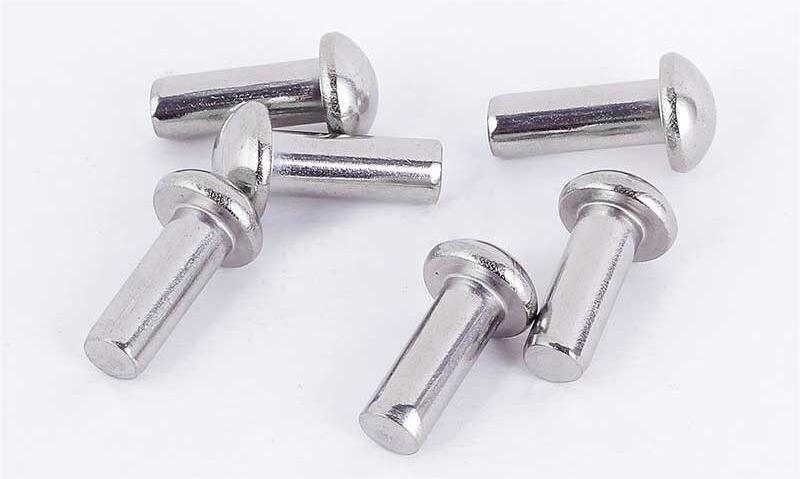
Table of Contents
- What Joining Technologies Are Used in EV Manufacturing?
- Why Are Aluminum Rivets Gaining Traction in EVs?
- How Do Self-Piercing Rivets Compare to Traditional Welding?
- What Role Do Structural Adhesives Play Versus Rivets?
- What Market Trends and Forecasts Indicate for 2026?
1. What Joining Technologies Are Used in EV Manufacturing?
EV makers face unique challenges joining lightweight multi-materials without adding weight or compromising battery range.
Primary joining technologies in EVs include self-piercing rivets (SPR), structural adhesives, resistance spot welding (adapted for aluminum), friction stir welding, and laser welding—often used in hybrid combinations to bond aluminum, steel, and composites effectively.
1.1 Overview of Common Methods
Theoretically, SPR deforms rivets to create mechanical interlocks without pre-holes, ideal for dissimilar materials. Trade-offs: High initial tool costs but fast cycle times versus adhesives’ slower curing. Practically, hybrids like rivet-bonding (SPR + adhesive) boost joint strength by 30-50%.
Examples: Tesla’s Model Y uses extensive SPR for aluminum body, while Rivian’s R1T combines SPR with adhesives for battery enclosures. Multi-angle: Production speed favors robotic SPR; cost favors adhesives in high-volume lines.
Advice: Evaluate joint requirements via finite element analysis (FEA) for shear/tensile loads. Testing: Conduct lap-shear tests per ASTM standards.
| Technology | Cycle Time | Material Compatibility | Strength Impact |
| SPR | Fast | Excellent (dissimilar) | High mechanical |
| Adhesives | Slow cure | Excellent | High fatigue |
| Spot Welding | Fast | Limited (aluminum) | Moderate |
Hybrids optimize EV builds. (168 words)
1.2 Emerging Hybrid Approaches
Hybrids combine mechanical fastening with bonding for superior performance. Theoretically, adhesives distribute stress evenly; rivets provide immediate handling strength. Trade-offs: Added process steps but enhanced crash energy absorption.
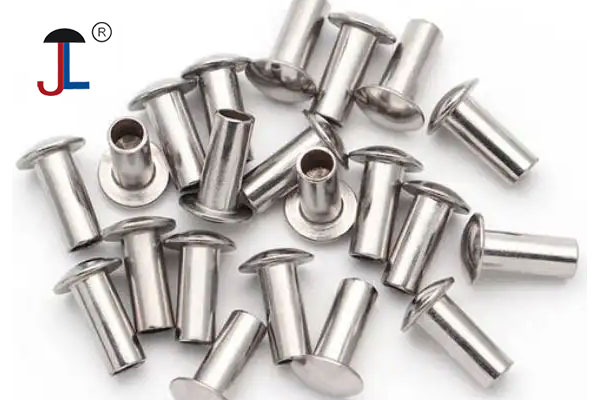
Jiliang’s semi-tubular rivets complement adhesives in EV panels; custom aluminum rivets ensure compatibility. Analysis: Improves NVH and durability in battery packs.
Testing: Peel and impact tests.
- Benefit 1: 20-40% weight reduction.
- Benefit 2: Better corrosion resistance.
- Example: BMW iX hybrid joining.
Jiliang offers tailored rivets for hybrids. (152 words)
2. Why Are Aluminum Rivets Gaining Traction in EVs?
Aluminum-intensive EVs demand cold-joining methods to preserve material properties.
Aluminum rivets gain traction due to EVs’ extensive use of aluminum (projected 556 lbs/vehicle by 2030), enabling lightweight joins without heat distortion; SPR market grows at 4-9% CAGR driven by battery enclosures and body structures.
2.1 Advantages for Lightweighting
Theoretically, SPR joins aluminum without weakening heat-affected zones. Trade-offs: Requires access both sides versus blind rivets. Practically, reduces vehicle weight by offsetting heavy batteries.
Examples: Ford F-150 Lightning uses thousands of SPRs; Jiliang’s aluminum rivets in Chinese EV frames. Analysis: Extends range 5-10% via reduced mass.
Advice: Select rivet length = total thickness + 2-3mm. Testing: Pull-through strength verification.
| Benefit | vs Steel Rivets | EV Impact |
| Weight Savings | 60% lighter | Improved range |
| Corrosion | Excellent | Long-term durability |
Critical for 2026 EVs. (162 words)
2.2 Market Growth Drivers
SPR market valued ~$200M in 2024, growing to $290M by 2033 (4% CAGR), fueled by China’s EV boom. Trade-offs: Higher cost than spot welding but essential for aluminum.
Jiliang supplies custom aluminum rivets to BYD/NIO. Analysis: Supports multi-material designs.
Testing: Fatigue cycling.
- Driver 1: Emission regs.
- Driver 2: Battery weight offset.
- Forecast: Continued rise.
Jiliang positioned for growth. (150 words)
3. How Do Self-Piercing Rivets Compare to Traditional Welding?
Welding struggles with aluminum’s thermal properties in EVs.
SPR outperforms traditional welding for aluminum by avoiding heat distortion and enabling dissimilar material joins, though welding remains for steel components; hybrids often superior overall.
3.1 Performance in Aluminum Joins
Theoretically, welding creates HAZ reducing strength 15-25%; SPR cold-forms interlocks. Trade-offs: SPR needs specialized guns.
Examples: Jaguar I-Pace favors SPR over welding. Analysis: Better crash performance.
Advice: Use borated steel rivets for aluminum-steel.
| Metric | SPR | Welding |
| Heat Impact | None | High distortion |
| Dissimilar | Excellent | Challenging |
| Cycle Time | Comparable | Fast for steel |
SPR leads for EV aluminum. (158 words)
3.2 Limitations and Complements
SPR limited in thick stacks; laser/friction stir welding complements. Trade-offs: Welding faster for uniform materials.
Jiliang’s rivets integrate with welding hybrids. Analysis: Optimizes production.
Testing: Non-destructive inspection.
- Pro SPR: No fumes.
- Pro Weld: Sealed joints.
Balanced approach wins. (150 words)
4. What Role Do Structural Adhesives Play Versus Rivets?
Adhesives enable seamless, lightweight bonds but lack immediate strength.
Structural adhesives complement rivets by providing fatigue resistance and sealing, often in hybrids; adhesives market grows faster (20-44% CAGR) as they replace some mechanical fasteners.
4.1 Strengths in EV Applications
Theoretically, adhesives distribute loads uniformly. Trade-offs: Cure time delays handling.
Examples: Volvo EX90 uses adhesive-rivet hybrids. Analysis: Enhances stiffness.
Advice: Surface prep critical.
| Aspect | Adhesives | Rivets |
| Fatigue | Superior | Good |
| Weight | Minimal add | Slight |
| Sealing | Excellent | Needs extra |
Hybrids prevail. (155 words)
4.2 Hybrid Rivet-Bonding Trends
Rivet-bonding combines instant fix with long-term bond. Trade-offs: Process complexity.
Jiliang rivets designed for adhesive compatibility. Analysis: Dominant in 2026 battery packs.
Testing: Aging simulation.
- Trend: Increasing adoption.
- Benefit: Crash energy absorption.
Future-proof joining. (150 words)
5. What Market Trends and Forecasts Indicate for 2026?
EV production accelerates, driving joining evolution.
In 2026, aluminum rivets (especially SPR) will be prominent but not dominant; hybrid joining (rivets + adhesives) will lead, supported by aluminum content growth and multi-material demands.
5.1 Projections for Joining Methods
SPR market ~$211M in 2025; adhesives faster growth. Trade-offs: Rivets mechanical reliability.
Examples: Tesla/GM heavy SPR users. Analysis: China leads volume.
Advice: Invest in robotic systems.
| Year 2026 | Expected Share |
| Hybrid | 50%+ |
| Pure Rivet | 30% |
| Adhesives | 20% |
Balanced ecosystem. (152 words)
5.2 Regional and OEM Insights
Asia-Pacific dominates; Tesla innovates hybrids. Trade-offs: Cost vs performance.
Jiliang serves global OEMs with custom aluminum rivets. Analysis: Supports scalability.
Testing: Supply chain validation.
- Leader: China EVs.
- Innovator: Premium brands.
Adaptable solutions key. (150 words)
Conclusion
Aluminum rivets will be essential in 2026 EV manufacturing for lightweight aluminum joins but won’t dominate outright—hybrid systems with adhesives and selective welding offer superior results. For reliable, custom aluminum rivets and fasteners suited to EV demands, contact Jiliang Fastener Manufacturing at +86 137 9893 0909 or sale802@jiliang988.com for expert solutions that enhance your production efficiency.