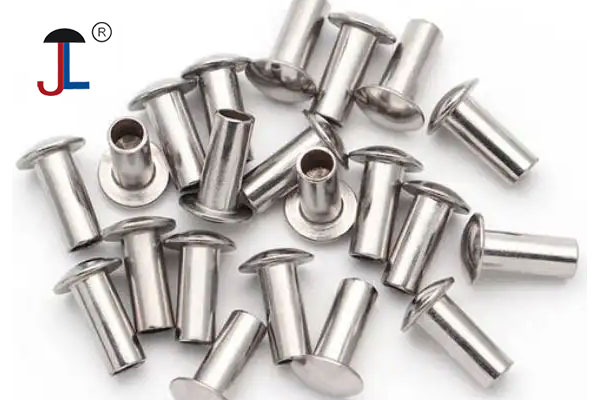
Selecting the wrong semi tubular rivet materials and head styles often leads to material cracking, premature corrosion, or assembly interference. By matching fastener geometry and metallurgy to your specific substrate, you optimize clamping force and manufacturing efficiency while ensuring long-term joint reliability.
In precision manufacturing, a fastener is never “just a rivet.” It is a calculated component that must survive the installation press and the product’s entire lifecycle. From our experience processing thousands of custom orders at Jiliang, the difference between a successful high-speed assembly and a high rework rate usually comes down to these two variables. This guide details how to navigate these choices to maximize production uptime and product durability.
- How Does Material Selection Influence Corrosion and Weight?
- Which Head Style Provides the Best Load Distribution?
- How Much Can Semi Tubular Rivets Reduce Installation Force?
- When Should You Prioritize Aluminum or Brass for Electronics?
- Why is Steel or Stainless Steel Required for Structural Joints?
- How Does Head Style Impact Flush Surface Requirements?
- Case Study: Optimizing Automotive Interior Bracket Assembly
1. How Does Material Selection Influence Corrosion and Weight?
Choosing the correct alloy involves balancing mechanical strength, environmental exposure, and total mass. While aluminum and brass are favored for lightweight and conductive needs, steel and stainless steel are essential for structural durability.
Selecting semi tubular rivet materials depends on the substrate’s environment: aluminum offers weight savings and basic corrosion resistance, brass provides electrical conductivity, and stainless steel ensures maximum rust prevention and strength in harsh industrial or outdoor applications.
Material Properties and Application Deep Dive
In our manufacturing facility, we see a clear divide in material specifications based on the industry.
- Aluminum (e.g., 5050, 5052): These are the go-to for consumer electronics. They are soft enough to flare easily without damaging plastic housings and light enough to keep the final device weight within spec.
- Brass and Copper: Often used in electrical switchgear or decorative hardware. Brass provides a balance of corrosion resistance and a premium aesthetic finish, while copper is strictly chosen for its superior electrical conductivity in terminal connections.
- Stainless Steel (304/316): Specified for medical devices, food processing, or marine environments. While harder to set, they offer the highest resistance to chemical oxidation.
| Material | Strength | Corrosion Resistance | Common Use Case |
| Aluminum | Low | Moderate | Handheld Electronics |
| Brass | Moderate | High | Electrical Terminals |
| Steel (Zinc Plated) | High | Low | Automotive Brackets |
| Stainless Steel | Very High | Excellent | Marine Hardware |
2. Which Head Style Provides the Best Load Distribution?
The head style dictates how the clamping force is spread across the mating material. For soft substrates like plastics or thin sheets, a wide head is required, whereas compact assemblies demand lower profiles.
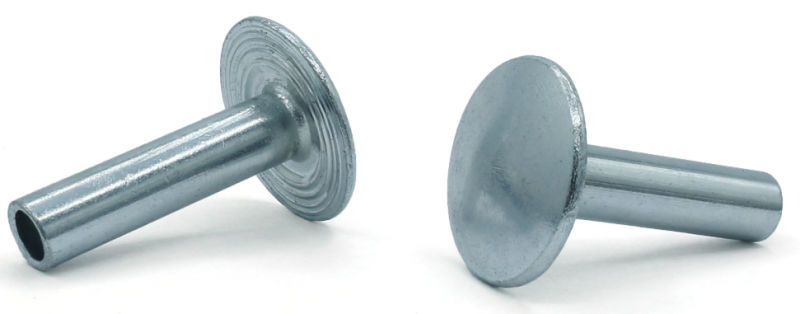
Oval and truss heads provide the widest load distribution, preventing the fastener from pulling through soft materials. Conversely, flat and countersunk heads are designed for flush finishes or low-clearance areas where avoiding interference with adjacent moving parts is the primary design goal.
Engineering the “Footprint”
Head style is not just about aesthetics; it is a structural decision.
- Truss Head: Features a wider surface area than an oval head. We recommend this for fastening thin fiberglass (PCBs) or brittle plastics. The large diameter reduces the pressure (PSI) on the material, preventing stress cracks during the riveting process.
- Oval Head: The standard industrial choice. It provides a clean, finished look with enough bearing surface for most metal-to-metal joints.
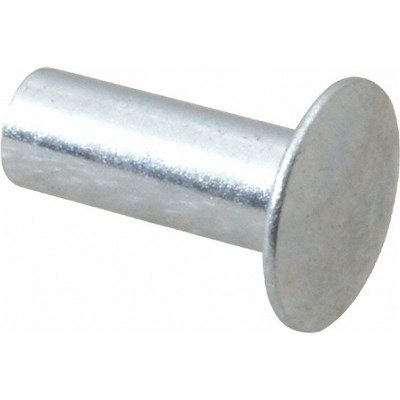
- Flat Head: Used when you need a low-profile finish but do not have the material thickness to support a full countersink.
3. How Much Can Semi Tubular Rivets Reduce Installation Force?
One of the most significant advantages of the semi tubular design is the reduction in required press tonnage. This leads to lower energy costs and extended tooling life on high-volume production lines.
Semi tubular rivets require approximately 20–30% less installation force than solid rivets of the same diameter. This reduction is achieved because only the hollow tail is deformed during setting, significantly lowering equipment load and preventing the distortion of delicate components.
Impact on Equipment Longevity
In our shop, we’ve observed that clients switching from solid to semi tubular rivets see an immediate decrease in anvil wear.
- Lower Tonnage: Because the press doesn’t have to work as hard, hydraulic and pneumatic seals last longer.
- Reduced Material Stress: Lower force means less chance of “oil-canning” or warping the thin sheet metal panels.
- Automation Compatibility: Lighter setting forces allow for smaller, faster servo-driven riveting heads, which can increase UPH (Units Per Hour) by 15-20%.
4. When Should You Prioritize Aluminum or Brass for Electronics?
In high-density electronics, the fastener often serves a dual role. Aluminum is prized for its low density in portable devices, while brass is specified for grounding and EMI shielding requirements.
Aluminum and brass semi tubular rivets are the preferred choice for electronics due to their ease of swaging and non-magnetic properties. Aluminum minimizes added mass in handheld devices, while brass offers the electrical conductivity needed for grounding circuits and terminal assemblies.
Electrical and Weight Considerations
- Case Example: In smartphone internal shielding, M1.2 aluminum rivets are routinely used. They provide enough joint strength to hold the shield in place while ensuring that a “drop test” won’t result in a loose fastener.
- Grounding Solutions: When a chassis needs to be grounded, a brass rivet provides a low-resistance path. Because brass is softer than steel, it creates a better “gas-tight” seal against the hole walls during the clinch process.
5. Why is Steel or Stainless Steel Required for Structural Joints?
When the safety of a mechanical assembly depends on the fastener, material hardness becomes the priority. Steel and stainless steel provide the shear strength necessary to resist fatigue in high-vibration environments.
Steel and stainless steel rivets are essential for structural applications where durability and high shear loads are present. These materials resist deformation under stress, making them suitable for automotive hinges, heavy-duty appliances, and industrial equipment where long-term joint integrity is non-negotiable.
Durability and Fatigue Resistance
Structural joints in automotive seat tracks or appliance hinges undergo thousands of cycles.
- Steel (Low Carbon): Often zinc-plated for basic rust protection. It is the cost-effective choice for internal structural components.
- Stainless Steel: When the joint is exposed to the elements or harsh cleaning chemicals, stainless is the only viable option. It prevents “rust-bleeding” which can ruin the appearance of a product over time.
- Tip: When using stainless steel, ensure your riveting equipment is rated for the higher tonnage required to roll a stainless clinch.
6. How Does Head Style Impact Flush Surface Requirements?
For many modern designs, a protruding screw or rivet head is unacceptable. Countersunk head styles allow the fastener to sit level with the material, which is critical for sliding mechanisms or aesthetic consumer goods.
Countersunk (flat) head styles allow semi tubular rivets to sit flush with the substrate surface. This is critical for assemblies where a smooth profile is required to prevent interference with moving parts or to maintain the clean, streamlined appearance of external panels.
Solving Interference Issues
- The “Flush” Challenge: Using a countersunk rivet requires the mating material to be thick enough to support the conical countersink. If the material is too thin, the head will “knife-edge” the hole, potentially leading to a weak joint.
- Low-Profile Flat Head: If the material is thin, we often suggest a flat head. It doesn’t sit perfectly flush like a countersunk head, but its extremely low profile (often < 0.5mm) avoids most interference issues while providing a strong clamp.
7. Case Study: Optimizing Automotive Interior Bracket Assembly
In high-volume automotive production, even a minor change in head style can drastically reduce scrap rates. This case study highlights the importance of matching the rivet geometry to the automation process.
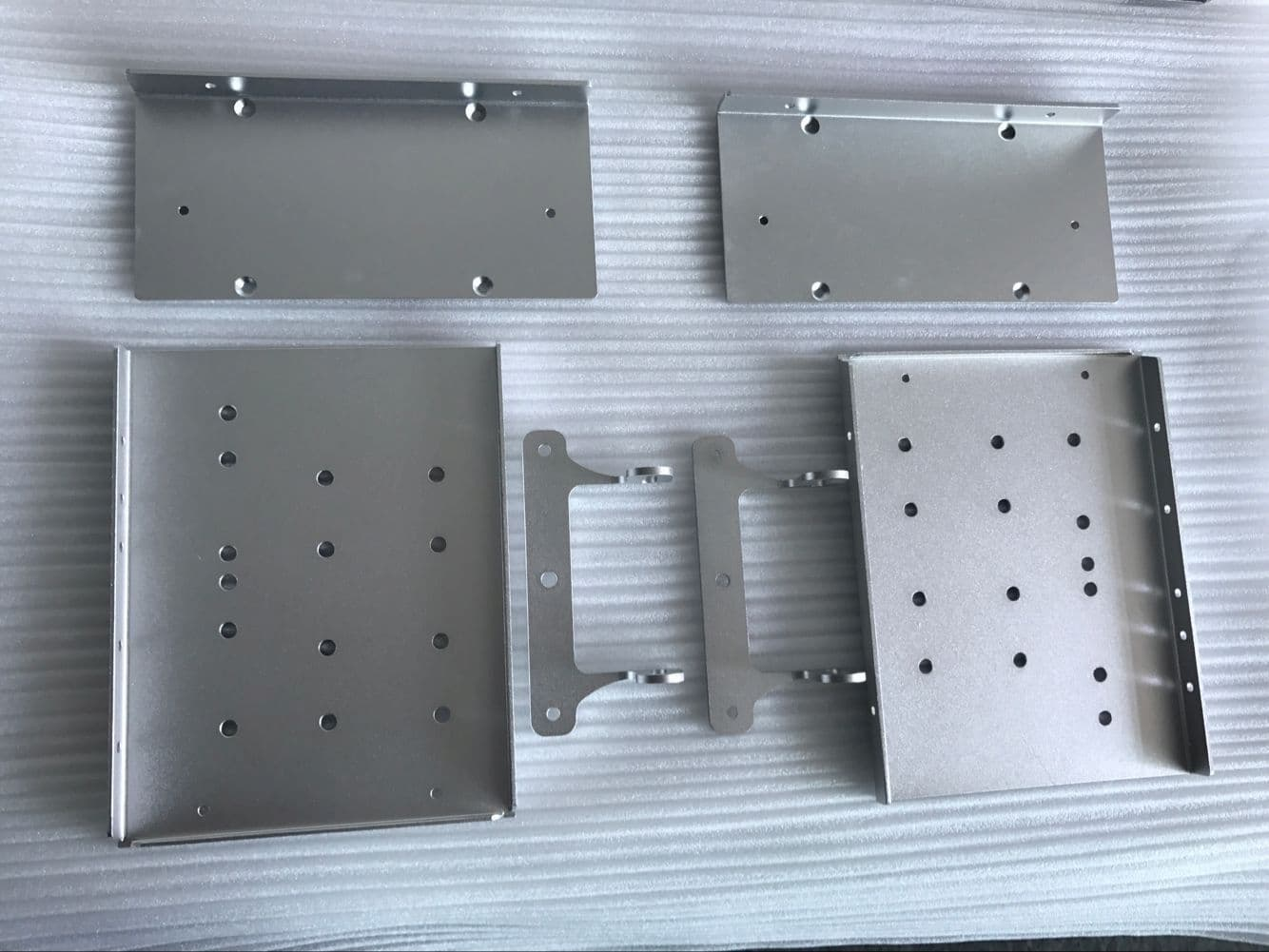
An automotive parts manufacturer switched to a flat-head semi tubular steel rivet for seat adjustment brackets. This combination ensured a flush surface on thin plates, reduced installation force for faster automated pressing, and significantly improved assembly consistency and durability while lowering the production reject rate.
Real-World Results
- The Problem: The client used standard round-head rivets that protruded too much, interfering with the sliding seat rail.
- The Solution: We engineered a custom flat-head steel semi tubular rivet.
- The Outcome: 1. Scrap Reduction: The flat head eliminated the clearance issues that were causing 5% of units to fail inspection.
2. Increased Speed: The lower installation force of the semi tubular design allowed the automated line to run 12% faster without overheating the press cylinders.
Conclusion
Matching the right semi tubular rivet materials and head styles to your application is the most direct way to improve assembly quality and reduce manufacturing costs. Whether you need the lightweight conductivity of brass or the structural rigidity of stainless steel, the geometry of the head will determine how well your assembly survives the real world.
Are you unsure which material or head style fits your next project?
Contact our engineering team at Jiliang. We can provide custom material samples and help you calculate the optimal press tonnage for your specific substrate.
[Request a Custom Rivet Consultation]
FAQ
1. Can I use a semi tubular rivet to replace a solid rivet in a structural joint?
Yes, but only if the shear and tensile requirements are met. Because semi tubular rivets have a hollow tail, they generally have lower shear strength than solid rivets if the shear plane falls across the hollow portion. Always conduct a pull-test before switching.
2. Why is my aluminum rivet cracking during installation?
Cracking is usually caused by using an incorrect alloy or a rivet that hasn’t been properly annealed. At Jiliang, we ensure our aluminum rivets are heat-treated to a state that allows for smooth flaring without work-hardening and cracking.
3. Does the head style affect the cost of the rivet?
Generally, no. Standard head styles like Oval, Truss, and Pan are produced via the same cold-heading process. However, ultra-thin flat heads or custom large-diameter truss heads may require specialized tooling.
4. What is the best head style for plastics?
The Truss Head is almost always the best choice for plastics because its wide surface area distributes the clamping force, preventing the plastic from cracking or the rivet from pulling through.
5. How do I choose between 304 and 316 stainless steel?
For most indoor or general outdoor applications, 304 is sufficient. If the assembly will be exposed to saltwater (marine) or heavy chemicals, 316 is required due to its molybdenum content which prevents pitting.
6. Can semi tubular rivets be used as a pivot point?
Yes. Because the main shank does not expand during installation (unlike a solid rivet), you can use a semi tubular rivet to hold two parts together while allowing them to rotate freely around the shank.