Navigating the world of industrial and DIY projects often brings you face-to-face with a myriad of fasteners, each designed for a specific purpose. Understanding the fundamental distinctions between bolts, screws, and rivets is crucial for ensuring the strength, safety, and longevity of your connections. Choosing the wrong fastener can lead to structural failure, costly repairs, or even safety hazards.
Bolts, screws, and rivets are distinct types of mechanical fasteners, each with unique connection methods, removability, and ideal applications. Bolts typically use a nut for a strong, removable connection; screws create their own threads or engage pre-tapped holes for often removable, direct fastening; while rivets form a permanent, non-removable joint by deforming one end.
The subtle differences in their design, installation, and performance characteristics mean that while they all serve to join materials, their suitability varies greatly depending on the demands of the application. Let’s delve into the specifics of each fastener to clarify their roles and help you make informed choices for your next project.
Table of Contents
- What Defines a Bolt and Its Primary Applications?
- How Do Screws Function and Where Are They Best Used?
- What Makes a Rivet Unique and When Is It the Right Choice?
- What Are the Core Differences in Connection and Removability?
- How Do You Choose the Right Fastener for Your Project?
1. What Defines a Bolt and Its Primary Applications?
Are you working on a heavy-duty assembly or a structure that might need future disassembly? Then understanding the role of a bolt is paramount. Bolts are the workhorses of many industries, known for their robust and often reusable connections.
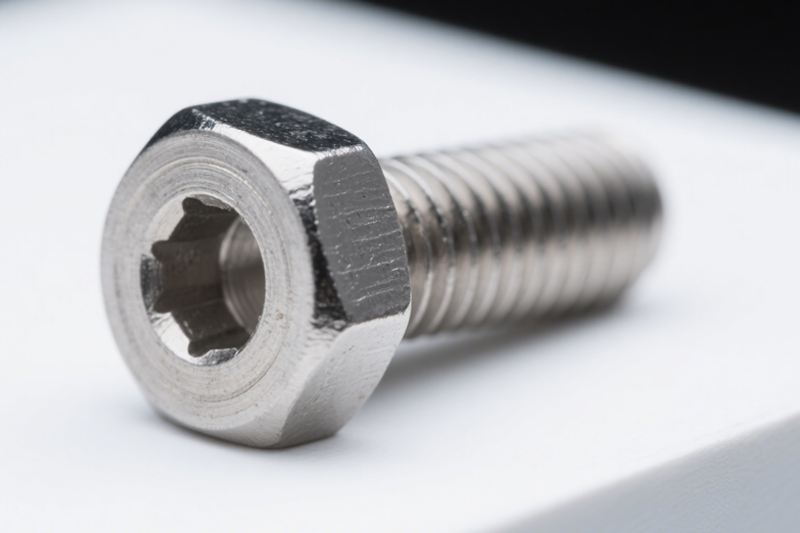
A bolt is a threaded mechanical fastener designed to pass through pre-drilled holes in two or more components, typically secured by a corresponding nut on the opposite side. Bolts create strong, high-strength connections that are generally removable, making them ideal for structural assemblies and applications requiring future maintenance or disassembly.
1.1 Key Characteristics of Bolts
Bolts are engineered for specific performance, making them distinct from other fasteners.
- Example 1: External Threads and Nut Requirement. The defining feature of a bolt is its external thread, which is designed to mate with an internal thread of a nut. This nut-and-bolt combination creates a clamping force that holds components together. A hex bolt is a common example, often paired with a hex nut.
- Example 2: Unthreaded Shank. Many bolts, especially those used in structural applications, feature an unthreaded portion of the shank between the head and the threaded section. This unthreaded part, known as the grip length, is designed to bear shear loads more effectively than threads, preventing stress concentrations.
- Analysis: The theoretical basis for a bolt’s design is to achieve high clamping force and shear strength. By using a nut, the clamping force can be precisely controlled, and the unthreaded shank helps distribute shear forces across the joint, making structural bolts incredibly reliable.
This table highlights the key characteristics of bolts, showcasing their design for robust and often reusable connections.
| Feature | Description | Impact on Application |
| External Threads | Designed to mate with a nut | Creates high clamping force, allows for precise torque control |
| Nut Requirement | Always used with a nut (and often washers) | Enables removable, strong, and adjustable connections |
| Unthreaded Shank (Grip) | Often present between head and threads | Improves shear strength, reduces stress concentration in joint |
| High Strength Grades | Available in various strength classes (e.g., Grade 8, Class 10.9) | Suitable for heavy-duty and critical structural applications |
1.2 Common Applications of Bolts
The robust nature and removability of bolts make them indispensable across numerous industries.
- Example 1: Structural Steel Construction. In large-scale construction, bolts are the primary method for connecting steel beams, columns, and trusses. High-strength bolts are crucial for ensuring the integrity of bridges, skyscrapers, and industrial facilities, where they must withstand immense static and dynamic loads.
- Example 2: Automotive Assemblies. From engine blocks to suspension systems, bolts are extensively used in vehicle manufacturing. They allow for the secure assembly of components that may require future maintenance or replacement, such as engine head bolts or wheel lug bolts.
- Analysis: The ability of bolts to form strong, reliable, and yet removable connections is their greatest advantage. This makes them ideal for applications where components need to be precisely aligned, subjected to heavy loads, or where future servicing is anticipated.
1.3 Types of Bolts
The world of bolts is diverse, with specific designs for various needs.
- Example 1: Hex Bolts. Characterized by their hexagonal heads, hex bolts are the most common type, offering easy gripping with wrenches. They are widely used in general construction, machinery, and automotive applications.
- Example 2: Carriage Bolts. These bolts feature a smooth, rounded head and a square section underneath that locks into wood or metal, preventing rotation during tightening. They are often used in timber construction or where a flush, tamper-resistant finish is desired on one side.
- Analysis: Each bolt type is designed to address specific installation challenges or performance requirements, from ease of tightening to aesthetic considerations or anti-rotation features.
2. How Do Screws Function and Where Are They Best Used?
Are you looking for a fastener that can create its own threads or secure components directly without a separate nut? Then screws are likely your go-to solution. They offer immense versatility for a wide range of materials and applications.
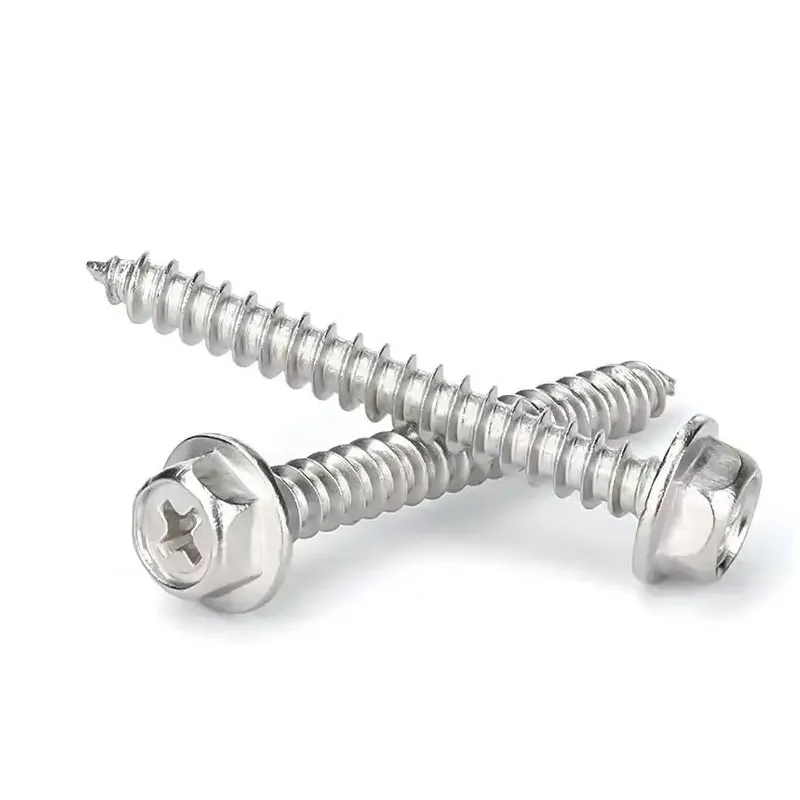
A screw is a threaded fastener designed to be driven into a material, creating its own mating thread (self-tapping) or engaging with a pre-tapped hole, typically without the need for a separate nut. Screws are highly versatile, offering easy installation and removal, making them suitable for wood, plastic, thin metal, and applications requiring frequent adjustments or disassembly.
2.1 Key Characteristics of Screws
Screws are distinguished by their ability to form a direct connection with the material.
- Example 1: Self-Tapping Capability. Many screws, such as wood screws and sheet metal screws, feature sharp, pointed tips and aggressive threads that allow them to cut their own threads into the material as they are driven. This eliminates the need for pre-tapping, simplifying installation.
- Example 2: Varied Thread Designs. Unlike the more uniform threads of many bolts, screws come with diverse thread patterns optimized for different materials. Coarse thread screws are ideal for wood, while fine thread screws are better for metals and plastics, providing a stronger grip in denser materials.
- Analysis: The design of a screw prioritizes direct engagement with the substrate. This direct threading action provides excellent pull-out resistance and simplifies the fastening process, making self-drilling screws and self-tapping screws incredibly efficient.
This table outlines the key characteristics of screws, highlighting their direct fastening capabilities and versatility.
| Feature | Description | Impact on Application |
| Self-Tapping/Direct Threading | Creates own threads or engages pre-tapped holes | Eliminates need for nut, simplifies installation |
| Varied Thread Designs | Coarse for wood, fine for metal/plastic | Optimized grip and pull-out resistance for specific materials |
| No Nut Required | Typically driven directly into one component | Faster installation, often allows for single-sided access |
| Ease of Removal | Most screws can be easily removed and reinstalled | Ideal for applications requiring adjustments or maintenance |
2.2 Common Applications of Screws
The adaptability of screws makes them ubiquitous in both professional and domestic settings.
- Example 1: Woodworking and Furniture Assembly. Wood screws are fundamental in carpentry, used for joining timber, assembling furniture, and securing decking. Their tapered shanks and coarse threads provide excellent grip in wood fibers, preventing splitting.
- Example 2: Electronics and Appliance Repair. Machine screws are frequently used in electronics, appliances, and small machinery, where they fasten components into pre-tapped holes or with small nuts. Self-tapping screws are also common for securing plastic casings.
- Analysis: The ability of screws to provide a secure, direct, and often removable connection in a wide array of materials makes them incredibly versatile. From a drywall screw to a deck screw, there’s a specialized screw for almost every task.
2.3 Types of Screws
The range of screws available is vast, each tailored for specific materials and uses.
- Example 1: Wood Screws. Designed with a smooth shank near the head and coarse threads, these screws are optimized for gripping wood and pulling components tightly together.
- Example 2: Machine Screws. These screws have uniform threads along their entire length and are intended for use in pre-tapped holes in metal or with nuts, similar to small bolts.
- Example 3: Self-Tapping Screws. These screws have sharp threads that cut into the material as they are driven, suitable for metal, plastic, and sometimes wood. Sheet metal screws are a common type of self-tapping screw.
- Analysis: The specialized design of each screw type ensures optimal performance for its intended material, whether it’s the strong hold of a lag screw in heavy timber or the precise fit of a machine screw in electronics.
3. What Makes a Rivet Unique and When Is It the Right Choice?
Are you looking for a permanent, high-strength connection that can withstand vibration and provide a flush finish? Then rivets might be the ideal fastener for your project. Unlike bolts and screws, rivets form a bond that is not easily undone.
A rivet is a permanent mechanical fastener used to join two or more materials by inserting it through pre-drilled holes and then deforming one or both ends to create a strong, non-removable joint. Rivets are chosen for applications requiring high shear strength, excellent vibration resistance, and where a permanent, tamper-proof, or flush connection is desired.
3.1 Key Characteristics of Rivets
Rivets stand apart due to their method of permanent deformation.
- Example 1: Permanent Connection. The defining characteristic of a rivet is its permanent nature. Once installed, a rivet cannot be easily removed without destroying the fastener itself or damaging the joined materials. This makes them ideal for critical, long-term assemblies.
- Example 2: Shear Strength. Rivets are exceptionally strong in shear, meaning they resist forces that try to slide the joined materials past each other. This makes them excellent for applications subjected to significant lateral loads or vibration.
- Analysis: The theoretical basis for rivet strength lies in the material deformation. By expanding the tail of the rivet, a tight, interference fit is created, which resists both tensile (pulling apart) and shear (sliding) forces, making a blind rivet or solid rivet a very reliable choice.
This table highlights the key characteristics of rivets, emphasizing their permanent nature and strength.
| Feature | Description | Impact on Application |
| Permanent Connection | Cannot be easily removed without destruction of fastener/material | Ideal for critical, long-term, tamper-proof assemblies |
| Deformation Method | Installed by deforming one or both ends (e.g., bucking, pulling mandrel) | Creates a tight, interference fit for strong joints |
| High Shear Strength | Excellent resistance to forces trying to slide materials apart | Suitable for high-vibration and structural applications |
| Flush Finish Options | Can be installed to be flush with the surface | Aesthetic appeal, reduced snagging in aerospace/automotive |
3.2 Common Applications of Rivets
The unique properties of rivets make them essential in industries where reliability and permanence are paramount.
- Example 1: Aerospace Industry. Aircraft construction heavily relies on rivets for assembling fuselage sections, wings, and other structural components. Their high shear strength, vibration resistance, and ability to create smooth, aerodynamic surfaces are critical for flight safety. Aircraft rivets are a specialized category.
- Example 2: Automotive Manufacturing. In car bodies and chassis, rivets are used to join panels and structural elements, especially in areas where welding might cause distortion or where dissimilar materials are joined. Blind rivets are particularly useful for single-sided access.
- Analysis: The permanent, high-strength, and vibration-resistant nature of rivets makes them indispensable for applications where structural integrity cannot be compromised and where a long-lasting, secure bond is required.
3.3 Types of Rivets
Rivets come in various forms, each designed for specific installation methods and performance requirements.
- Example 1: Solid Rivets. These are the oldest and strongest type, requiring access to both sides of the joint for installation (one side is bucked or hammered). They are common in aircraft and structural applications.
- Example 2: Blind Rivets (Pop Rivets). Installed from only one side of the joint using a rivet gun, blind rivets are incredibly versatile for applications with limited access. They are widely used in automotive, HVAC, and general fabrication.
- Example 3: Tubular Rivets. Featuring a partial hole at the tail end, tubular rivets require less force to set and are often used in lighter-duty applications or for pivoting joints.
- Analysis: The choice of rivet type depends on factors like access to the joint, required strength, material thickness, and desired finish, highlighting the versatility of rivet fasteners.
4. What Are the Core Differences in Connection and Removability?
Understanding the fundamental distinctions in how bolts, screws, and rivets form connections and whether those connections can be undone is crucial for proper fastener selection. This comparison clarifies their functional roles.
The core differences lie in their connection method and removability: bolts create a removable, clamped joint with a nut; screws form a direct, often removable threaded connection with the material; and rivets establish a permanent, non-removable joint through material deformation.
4.1 Connection Method
The way each fastener secures materials is fundamentally different.
- Example 1: Bolt’s Clamping Action. A bolt works by creating a clamping force between the head and the nut, compressing the joined materials together. The threads on the bolt and nut convert rotational torque into axial tension, pulling the components tightly. This is a bolted joint.
- Example 2: Screw’s Direct Thread Engagement. A screw directly engages with the material’s fibers or a pre-tapped hole. For a self-tapping screw, it cuts its own threads, relying on the friction and interlocking of these threads for holding power.
- Example 3: Rivet’s Material Deformation. A rivet forms a connection by physically deforming its tail end, creating a “shop head” that permanently locks the components together. This process creates an interference fit, making it a riveted joint.
- Analysis: These distinct mechanisms dictate the types of loads each fastener can best withstand and the integrity of the joint over time.
This table provides a clear comparison of bolts, screws, and rivets based on their connection method, removability, and typical applications.
| Feature | Bolts | Screws | Rivets |
| Connection Method | Clamping force via nut and bolt | Direct thread engagement with material (self-tapping or pre-tapped) | Permanent deformation of fastener material |
| Removability | Removable, reusable, adjustable | Generally removable, reusable (though threads can wear) | Permanent, non-removable (requires destruction to remove) |
| Typical Strength | High tensile and shear strength, excellent clamping | Good pull-out resistance, moderate shear strength | High shear strength, excellent vibration resistance |
| Installation | Requires access to both sides (for nut), wrench/socket | Often single-sided access, screwdriver/drill | Requires access (one or both sides), rivet gun/hammer |
| Applications | Structural, heavy machinery, automotive (engine, suspension) | Woodworking, electronics, plastic, light metal, furniture | Aerospace, automotive (body), construction (permanent panels) |
4.2 Removability and Reusability
The ease with which a fastener can be removed is a critical factor in many design decisions.
- Example 1: Bolts for Disassembly. Bolts are designed for easy removal and reinstallation. This makes them ideal for machinery that requires regular maintenance, inspection, or component replacement, such as an engine assembly or a modular shelving unit. A fastener bolt allows for flexibility.
- Example 2: Screws for Adjustments. Most screws can also be removed, though repeated removal can wear down the threads in the material, especially in softer woods or plastics. This makes them suitable for items that might need occasional adjustment or repair, like a cabinet door hinge.
- Example 3: Rivets for Permanent Bonds. Rivets are intended to be permanent. Removing a rivet typically involves drilling it out, which destroys the rivet and can potentially damage the surrounding material. This makes them suitable for applications where a tamper-proof or long-term, unalterable connection is required.
- Analysis: The choice between a removable and permanent fastener directly impacts the long-term serviceability and maintenance requirements of an assembly.
5. How Do You Choose the Right Fastener for Your Project?
Selecting the optimal fastener from the vast array of bolts, screws, and rivets can seem daunting, but by considering key project parameters, you can make an informed decision that ensures safety, durability, and efficiency.
Choosing the right fastener involves evaluating the required strength (tensile, shear, pull-out), whether the connection needs to be permanent or removable, the materials being joined, environmental conditions (corrosion, vibration), and installation access. Matching these project needs to the specific characteristics of bolts, screws, or rivets is crucial for success.
5.1 Project Requirements and Material Compatibility
The nature of your project and the materials involved are primary drivers for fastener selection.
- Example 1: Heavy Structural Loads. For applications involving heavy loads, high stresses, or critical structural integrity (e.g., bridge construction, heavy machinery), high-strength bolts are typically the preferred choice due to their superior tensile and shear strength and the ability to achieve precise clamping forces.
- Example 2: Joining Dissimilar Materials. When joining dissimilar materials, such as metal to plastic or thin metal sheets, screws (like self-tapping screws or sheet metal screws) or rivets (especially blind rivets) might be more suitable than bolts, as they can often accommodate different material properties or single-sided access.
- Analysis: Understanding the mechanical properties of the materials being joined and the forces they will experience is fundamental. A fastener selection guide would always prioritize material compatibility and load requirements.
This table provides a practical guide for choosing between bolts, screws, and rivets based on common project considerations.
| Consideration | Choose Bolts If… | Choose Screws If… | Choose Rivets If… |
| Connection Type | Removable, high-strength, precise clamping | Removable, direct fastening, good pull-out resistance | Permanent, high shear strength, vibration resistant |
| Materials | Heavy steel, thick components, structural elements | Wood, plastic, thin metal, composites | Thin metal sheets, aerospace alloys, where welding is not feasible |
| Strength Needs | High tensile & shear, critical load-bearing | Moderate pull-out, light to moderate shear | High shear, excellent vibration dampening |
| Installation Access | Requires access to both sides (for nut) | Often single-sided access | Can be single-sided (blind rivets) or double-sided (solid rivets) |
| Environmental Factors | High vibration (with locking nuts), extreme temperatures | General purpose, some corrosion resistance (coated screws) | High vibration, corrosion resistance (material dependent), tamper-proof |
| Cost/Efficiency | Higher initial cost, but reusable, precise | Lower cost, fast installation, versatile | Moderate cost, fast installation (blind rivets), permanent |
5.2 Removability vs. Permanence
The need for future access or a tamper-proof connection heavily influences fastener choice.
- Example 1: Maintenance and Upgrades. For machinery, vehicles, or modular structures that require periodic maintenance, inspection, or upgrades, bolts are the clear choice due to their easy removability and reusability. This allows for efficient servicing without damaging components.
- Example 2: Permanent Assemblies. In applications where a connection is intended to last the lifetime of the product and should not be tampered with or disassembled (e.g., aircraft fuselage, certain automotive body panels), rivets provide the necessary permanent and secure bond.
- Analysis: This trade-off between flexibility and permanence is a critical design decision. A removable fastener offers adaptability, while a permanent fastener ensures long-term, unalterable integrity.
5.3 Environmental Conditions and Special Requirements
The operating environment can significantly impact fastener performance and longevity.
- Example 1: Corrosion Resistance. For outdoor applications, marine environments, or chemical processing, fasteners made from corrosion-resistant materials like stainless steel are essential. This applies to stainless steel bolts, stainless steel screws, and stainless steel rivets. Coatings like galvanization can also enhance resistance.
- Example 2: Vibration and Fatigue. In environments with high vibration (e.g., engines, heavy machinery), bolts often require locking mechanisms (lock washers, locking nuts) to prevent loosening. Rivets, due to their interference fit, offer inherent vibration resistance, making them a strong contender for such conditions.
- Analysis: Factors like temperature extremes, moisture, chemical exposure, and dynamic loads must be considered. Choosing a fastener that can withstand these conditions is crucial for preventing premature failure and ensuring long-term reliability.
Conclusion
The world of mechanical fasteners, encompassing bolts, screws, and rivets, is diverse and specialized. While all three serve the fundamental purpose of joining materials, their distinct designs for connection, removability, and strength dictate their ideal applications. Bolts excel in high-strength, removable, and structural assemblies, offering precise clamping. Screws provide versatile, direct, and often removable fastening for a wide range of materials, from wood to thin metal. Rivets, on the other hand, create permanent, high-shear, and vibration-resistant joints, critical for aerospace and automotive industries.
By carefully evaluating your project’s specific requirements—including the materials, required strength, need for removability, and environmental conditions—you can confidently select the most appropriate fastener. Making the right choice between a bolt, a screw, or a rivet is not just about assembly; it’s about ensuring the safety, durability, and optimal performance of your entire construction.