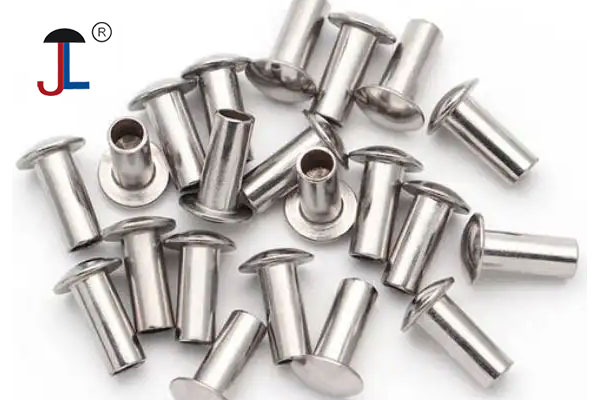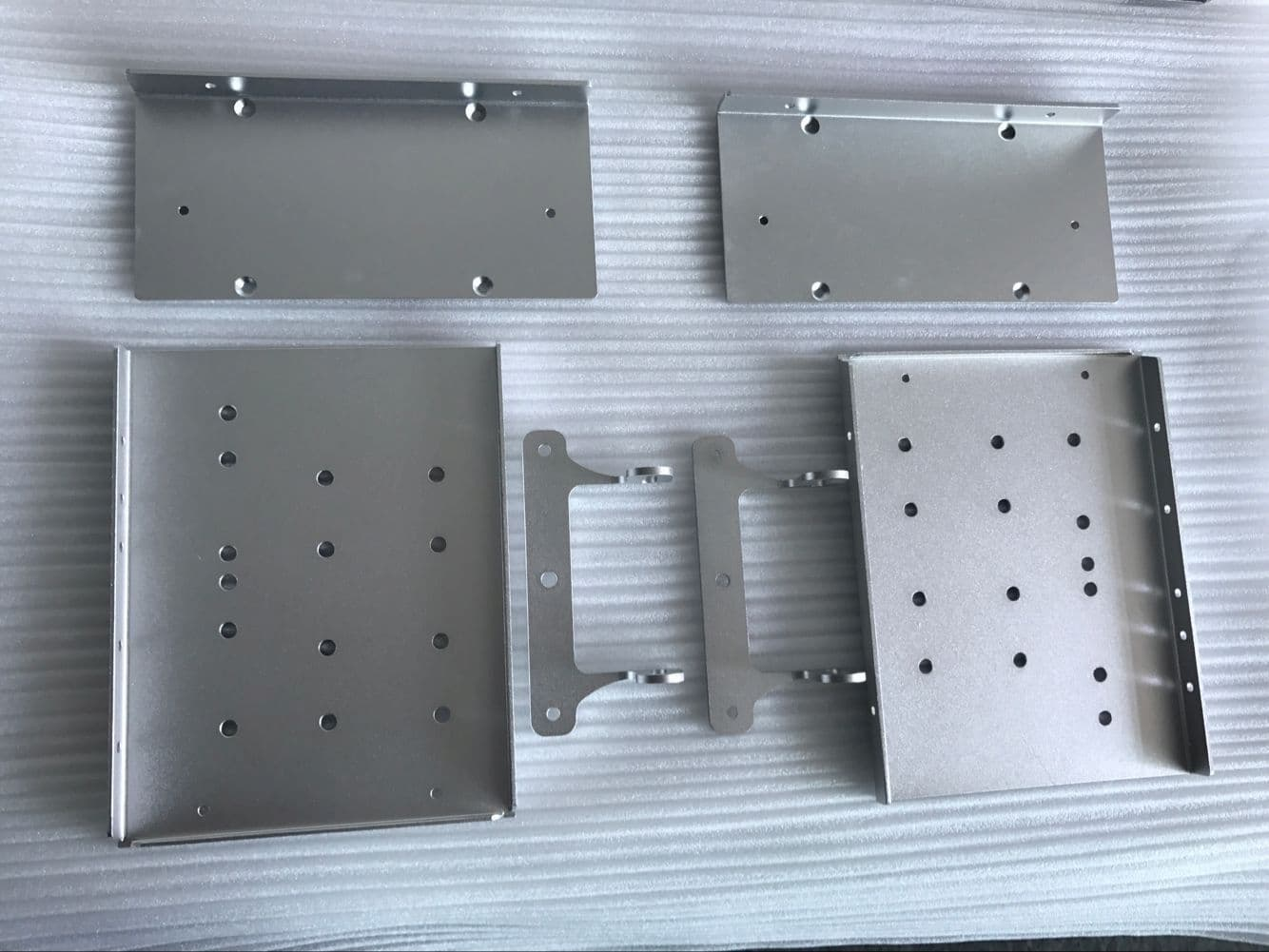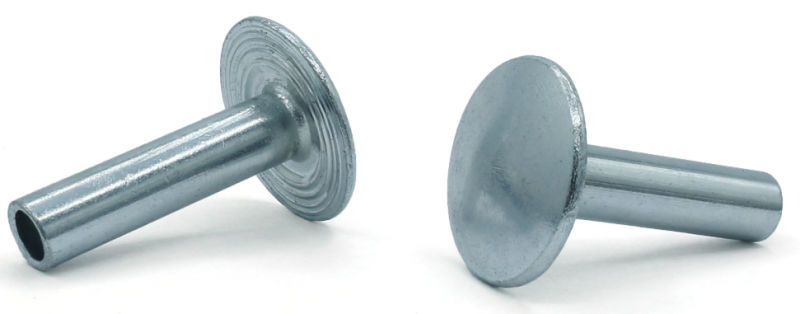
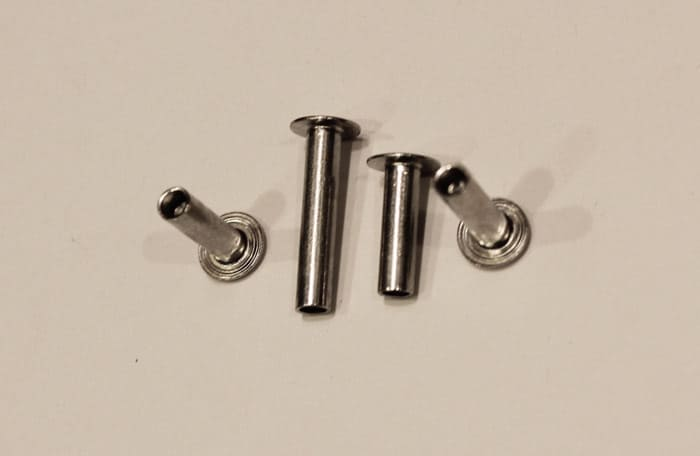
Semi tubular shoulder rivets, also known as step rivets, are specialized fasteners that are fundamental to modern manufacturing. They are not just simple connectors; they are engineered components designed to act as a pivot point, axle, or precisely spaced standoff. Unlike standard rivets, their unique “shoulder” design allows parts to rotate freely without being clamped, ensuring smooth mechanical movement and consistent alignment. Making the correct choice from the outset prevents joint failure, reduces wear and tear, and guarantees the longevity and performance of the final product. This guide will walk you through everything you need to know to select the perfect semi tubular shoulder rivet for your specific needs.
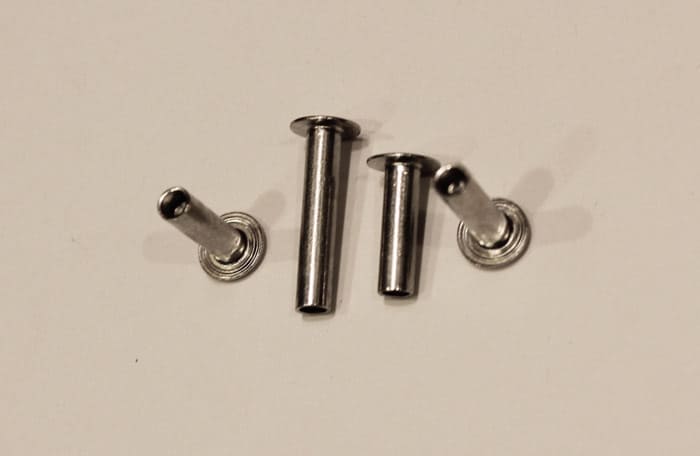
Table of Contents
- What Exactly is a Semi Tubular Shoulder Rivet?
- Why Choose a Semi Tubular Shoulder Rivet for Your Assembly?
- The Critical 5-Step Guide to Selecting the Perfect Shoulder Rivet
- Understanding Key Dimensions: The Anatomy of a Shoulder Rivet
- Material and Finish: The Foundation of Strength and Durability
- Common Applications: Where Do Shoulder Rivets Excel?
- Installation Essentials: Achieving a Perfect Clinch
- Partnering with an Expert for Custom Shoulder Rivet Solutions
What Exactly is a Semi Tubular Shoulder Rivet?
A semi tubular shoulder rivet is a type of mechanical fastener characterized by two distinct diameters: a larger, unthreaded “shoulder” and a smaller, hollow “shank” or tail. The head sits atop the shoulder, providing a solid bearing surface. The crucial design feature is the shoulder, which acts as a load-bearing axle or spacer. When installed, the components being joined rest against this shoulder. The semi tubular shank is then “clinched” or rolled over using a specialized tool, forming a second head (the clinch head) that secures the assembly. This design uniquely allows the connected parts to rotate or pivot around the smooth, solid shoulder without the compressive force that a standard rivet or screw would apply, ensuring free movement and precise spacing.
Why Choose a Semi Tubular Shoulder Rivet for Your Assembly?
The decision to use a semi tubular shoulder rivet over other fasteners like screws, bolts, or solid rivets comes down to its unique combination of benefits. They are an incredibly efficient and cost-effective solution for a wide range of applications. The primary advantage is their ability to create a reliable pivot point. The shoulder provides a smooth, consistent bearing surface for rotating components like levers, gears, and linkages, minimizing friction and wear.
Furthermore, they serve as excellent spacers, maintaining a fixed distance between two or more components with high precision. From a manufacturing standpoint, their installation is rapid and easily automated, leading to lower assembly costs and increased production throughput. The semi tubular design requires less force to set than a solid rivet, reducing stress on the components and the tooling. This combination of functional versatility, manufacturing efficiency, and robust performance makes them a superior choice for creating strong, durable, and functional joints.
The Critical 5-Step Guide to Selecting the Perfect Shoulder Rivet
Selecting the ideal semi tubular shoulder rivet is a methodical process. By carefully considering these five factors, you can ensure your assembly is both strong and perfectly functional.
Step 1: Define the Application’s Primary Function
First, answer the question: What is the rivet’s main job? Is it primarily a pivot point for a moving part, like in a multi-tool or a brake caliper? If so, the shoulder diameter’s tolerance and surface smoothness are critical for performance. Or, is its main function to act as a permanent fastener that also provides precise spacing between circuit boards or panels? In this case, clinch strength and material compatibility might be more important. Understanding the primary role will guide your subsequent choices in material and dimensions.
Step 2: Determine the Required Strength and Environment
Next, evaluate the forces the rivet will endure. Will it be subject to high shear stress (forces perpendicular to the shank) or tensile stress (forces pulling the assembly apart)? This will heavily influence your material choice. Steel offers high strength, while aluminum is lighter for less demanding loads. Equally important is the operational environment. Will the assembly be exposed to moisture, chemicals, or extreme temperatures? For corrosive environments, materials like stainless steel or a rivet with a protective finish like zinc plating are essential to prevent rust and degradation.
Step 3: Specify Critical Dimensions
Precision is key. You must define all the key dimensions of the rivet to match your components. This includes the shoulder diameter, which must fit the hole of the pivoting component snugly, and the shoulder length, which must precisely match the thickness of the component(s) it supports. The shank diameter and length are also crucial; the shank must fit through the hole of the stationary component and be long enough to form a proper clinch. We’ll explore these dimensions in more detail below.
Step 4: Choose the Right Finish for Protection
The raw material provides the base strength, but the finish or plating provides critical surface protection. A finish can enhance corrosion resistance, improve lubricity for pivot applications, or alter the aesthetic appearance. Common options include zinc plating for good, cost-effective rust protection, nickel for wear resistance and appearance, and chemical treatments like black oxide for mild corrosion resistance and a dark finish. The choice depends entirely on the end-use environment and desired lifespan of the product.
Step 5: Consider the Installation Process
Finally, how will the rivet be installed? The material and dimensions you choose can affect the required setting force. Softer materials like aluminum and brass require less force to clinch than hardened steel. Ensure your manufacturing setup has the correct riveting machines and tooling (anvils and drivers) designed for semi tubular rivets. Improper tooling can lead to cracked clinches, loose joints, or damage to the surrounding components, compromising the entire assembly.
Understanding Key Dimensions: The Anatomy of a Shoulder Rivet
To specify a shoulder rivet correctly, you must understand its anatomy. Each dimension serves a specific purpose, and getting them right is non-negotiable for a successful assembly. The diagram and table below break down these critical features.
| Dimension | Description | Selection Criteria |
|---|---|---|
| Head Diameter (A) & Head Height (B) | The dimensions of the pre-formed head. It provides the primary bearing surface and prevents the rivet from pulling through the material. | Must be large enough to distribute the load and secure the material without pull-through. Standard head styles include oval, truss, and flat. |
| Shoulder Diameter (C) | The diameter of the solid, load-bearing portion of the rivet. This is the most critical dimension for pivot applications. | Should match the inner diameter of the hole in the rotating or moving component for a precise, low-friction fit. |
| Shoulder Length (D) | The length of the shoulder, measured from under the head to the start of the shank. | Must be slightly longer than the total thickness of the material(s) that will pivot on it to ensure free movement after clinching. |
| Shank Diameter (E) | The diameter of the semi tubular portion that will be clinched. | Determined by the hole size in the stationary component. It must be a close fit to prevent lateral movement. |
| Hole Depth (F) & Hole Diameter (G) | The dimensions of the hollow portion at the end of the shank. | These are engineered by the manufacturer to facilitate a proper roll clinch with minimal force. Deeper holes require less setting force. |
| Total Length (H) | The overall length of the rivet from the top of the head to the end of the shank. The shank must extend beyond the assembly thickness to allow for clinching. | Shank length = (Thickness of stationary material) + (Clinch allowance). The clinch allowance is typically 50-70% of the shank diameter. |
Material and Finish: The Foundation of Strength and Durability
The material and finish are the bedrock of a rivet’s performance, dictating its strength, corrosion resistance, and suitability for the operating environment. A poor choice here can lead to premature failure, regardless of how well the dimensions are specified.
Common Rivet Materials
Each material offers a unique balance of properties. The most common choices include:
- Steel (Low Carbon): The most common and cost-effective choice. It offers excellent strength and formability, making it ideal for general-purpose applications where high stress and shear forces are present. It must be plated or finished to prevent rust.
- Stainless Steel: Provides inherent corrosion resistance without needing a protective coating. It is the perfect choice for applications exposed to moisture, chemicals, or for use in medical and food-grade equipment. It is stronger than low-carbon steel but also more costly.
- Aluminum: Lightweight, naturally corrosion-resistant, and easy to form. It is best suited for light-duty applications where weight is a primary concern, such as in electronics or aerospace components.
- Brass & Copper: These materials are chosen for their excellent electrical conductivity and thermal properties. They are also corrosion-resistant and have a desirable aesthetic appearance, often used in electrical assemblies and decorative applications.
Protective Platings and Finishes
For materials like steel that are prone to rust, a protective finish is essential.
- Zinc Plating: The industry standard for corrosion resistance. It offers a sacrificial coating that protects the underlying steel. Available in clear, yellow, or black chromate for varying levels of protection.
- Nickel Plating: Provides a hard, wear-resistant surface with a bright, decorative appearance. It is often used where both durability and aesthetics are important.
- Black Oxide: A conversion coating that provides mild corrosion resistance and a deep black finish. It is primarily used for aesthetic purposes and does not add any thickness to the part.
- Phosphate: A porous coating that provides good paint adhesion and some corrosion resistance.
Common Applications: Where Do Shoulder Rivets Excel?
The unique design of semi tubular shoulder rivets makes them indispensable in countless industries. Their ability to combine fastening with free movement is unmatched. You will commonly find them in:
- Automotive: In brake assemblies, latch mechanisms, and seat adjustment hardware where reliable pivoting is a safety-critical function.
- Electronics: Used as standoffs for mounting printed circuit boards (PCBs), ensuring precise spacing for cooling and electrical isolation.
- Consumer Goods: In folding knives, luggage casters, multi-tools, and kitchen gadgets—anywhere a lever or hinge needs to move smoothly and reliably.
- Industrial Equipment: For linkages in machinery, conveyor belt rollers, and control levers that require robust and durable pivot points.
- Aerospace: In various non-structural assemblies where lightweight and secure pivot points are necessary.
Installation Essentials: Achieving a Perfect Clinch
Proper installation is just as important as proper selection. The goal is to roll the semi tubular tail outwards to form a clinch head that is secure, neat, and free of cracks. This requires a riveting machine equipped with the correct tooling. The driver supports the rivet head, while the anvil (or roll set) engages the tubular end. As pressure is applied, the anvil’s shape forces the shank walls to flare out and curl over, securing the joint. It is critical that the shoulder length is correct; if it’s too short, the pivoting component will be clamped and unable to move. If it’s too long, the assembly will be loose and sloppy. A perfectly set rivet results in a strong, permanent joint with the intended mechanical freedom.
Partnering with an Expert for Custom Shoulder Rivet Solutions
While standard, off-the-shelf rivets can meet many needs, complex or high-performance applications often require a custom solution. A slight change in head style, shoulder tolerance, or material can make a significant difference in product performance and longevity. This is where partnering with an experienced manufacturer like Rivetjl becomes invaluable.
With deep expertise in cold forming and fastener engineering, we can help you design and produce semi tubular shoulder rivets tailored to your exact specifications. From material selection and prototyping to full-scale production, our team ensures that every rivet delivers the strength, precision, and reliability your assembly demands. If you’re facing a challenging application or need to optimize an existing design, contact our engineering team today to discuss your project and discover the perfect custom rivet solution.