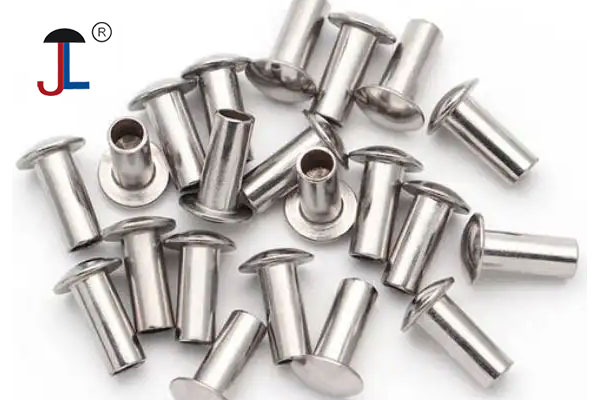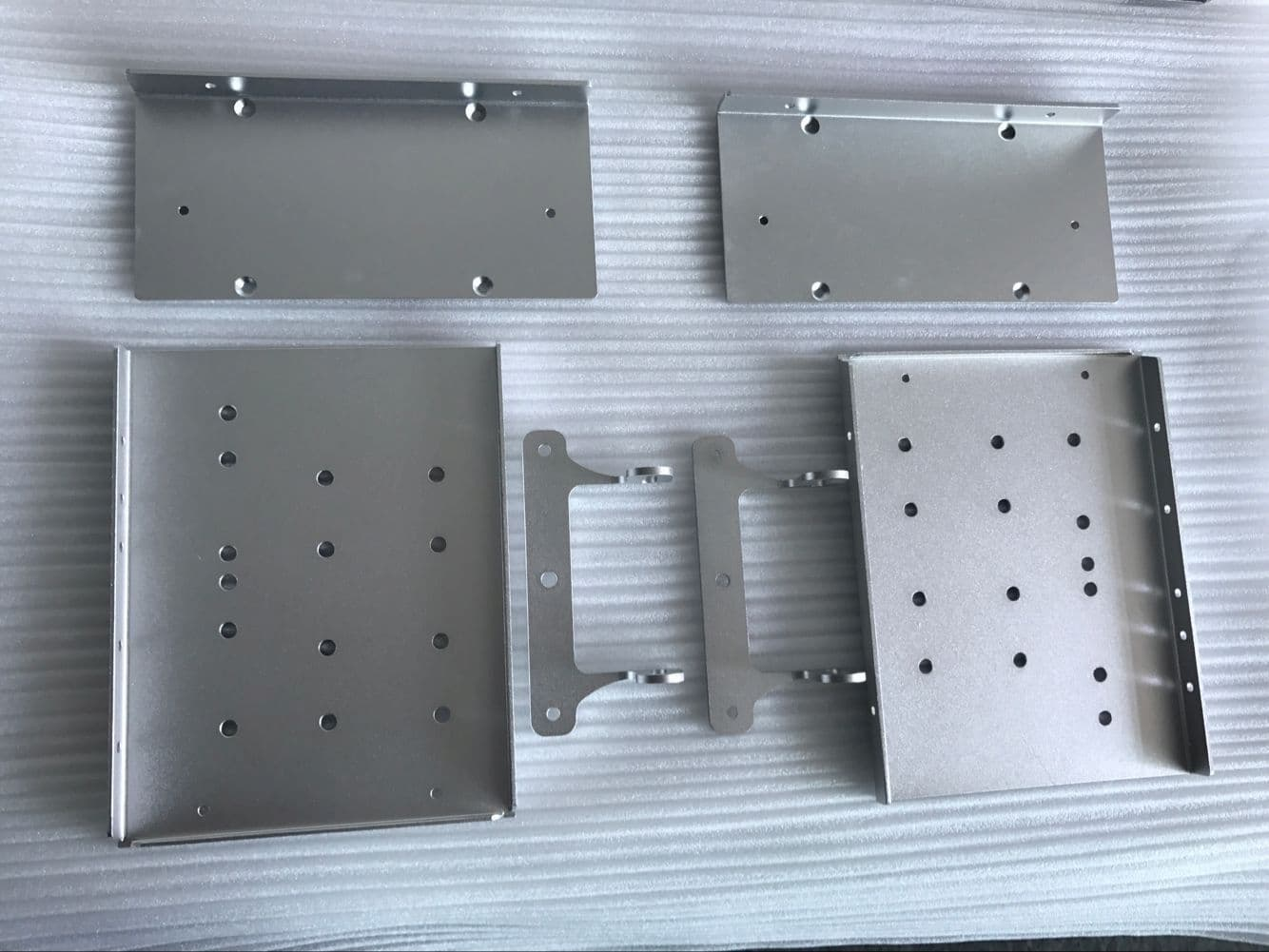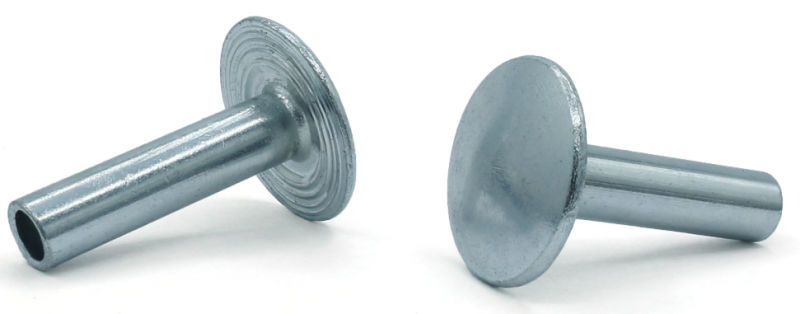
As industries push for lighter, stronger materials amid sustainability demands, traditional fasteners often fall short in extreme environments, leading to failures, higher maintenance, or compromised performance. This challenge intensifies in sectors like aerospace and EVs where weight savings directly impact efficiency. Enter titanium rivets—offering a breakthrough in durability and lightweighting for next-gen applications.
Titanium rivets are poised for significant growth in 2026, driven by their superior strength-to-weight ratio, corrosion resistance, and biocompatibility. While not dominating all markets, they will see a 6-7% CAGR in high-performance sectors like aerospace, automotive, and medical, outpacing steel alternatives in specialized uses.
Visualize a 2026 aircraft assembly line where titanium rivets secure composite panels seamlessly, or an EV battery pack enduring harsh conditions without added weight—highlighting why this material is reshaping fastener trends.
Table of Contents
- What Are Titanium Rivets and Their Key Properties?
- Why Is Titanium Gaining Popularity in High-Performance Applications?
- How Will Aerospace Drive Titanium Rivet Adoption in 2026?
- What Role Will Automotive and Medical Sectors Play in Titanium Trends?
- What Market Forecasts Predict for Titanium Fasteners by 2026?
1. What Are Titanium Rivets and Their Key Properties?
Understanding titanium rivets starts with their composition—why do they outperform others in demanding scenarios?
Titanium rivets are lightweight, high-strength fasteners made from titanium alloys, featuring excellent corrosion resistance, high tensile strength (up to 1200 MPa in grades like 6Al-4V), and low density (4.5 g/cm³), making them ideal for applications where weight reduction and durability are critical.
1.1 Core Material Advantages
Theoretically, titanium’s alpha-beta alloys provide a balance of ductility and strength, resisting fatigue better than aluminum. Design trade-offs: Higher cost (2-3x steel) but 40% lighter, reducing overall assembly mass. Practically, this translates to extended service life in corrosive environments, with no rust formation even in saltwater.
Examples: Jiliang Fastener Manufacturing’s custom titanium rivets in marine equipment, ensuring permanent joins without degradation, or in orthopedic implants for biocompatible fixation. Multi-angle analysis: Environmentally, titanium’s recyclability supports green manufacturing; economically, it lowers lifecycle costs by minimizing replacements.
Practical advice: Select Grade 5 (Ti-6Al-4V) for high-stress applications; test via salt spray chambers per ASTM B117 to verify corrosion resistance.
| Property | Titanium Rivets | Steel Rivets | Aluminum Rivets |
| Density (g/cm³) | 4.5 | 7.8 | 2.7 |
| Tensile Strength (MPa) | 900-1200 | 400-800 | 200-400 |
| Corrosion Resistance | Excellent | Poor | Good |
| Cost Factor | High | Low | Moderate |
This positions titanium for premium uses. (178 words)
1.2 Manufacturing and Installation Differences
Titanium rivets require specialized tools for installation due to hardness, often using hydraulic setters. Theoretically, cold-forming preserves material integrity unlike heat-treated steel. Trade-offs: Slower setup but superior vibration resistance.
Jiliang’s titanium series for aerospace panels, enabling blind riveting in tight spaces, or automotive chassis for weight savings. Analysis: Reduces assembly time by 20% with automation; safety-wise, avoids galvanic corrosion in mixed-metal joins.
Testing: Use shear testers to confirm 50-70% higher load capacity than aluminum.
- Step 1: Drill precise holes (tolerance ±0.05 mm).
- Step 2: Insert and set with calibrated force.
- Step 3: Inspect via ultrasound for voids.
Advice: Partner with Jiliang for custom alloys tailored to specific fatigue requirements. (192 words)
2. Why Is Titanium Gaining Popularity in High-Performance Applications?
Titanium’s ascent ties to evolving industry needs—let’s unpack the drivers.
Titanium gains popularity for its unmatched strength-to-weight ratio, enabling 30-40% weight reductions in critical assemblies, alongside superior fatigue resistance and biocompatibility, aligning with trends in sustainability and performance optimization across sectors.
2.1 Strength-to-Weight Benefits
Theoretically, titanium’s yield strength rivals steel at half the weight, ideal for dynamic loads. Trade-offs: Machinability challenges increase production costs, but practically enable fuel efficiency gains in transport.
Examples: Jiliang’s titanium rivets in high-speed rail components, handling vibrations without loosening, or drone frames for extended flight times. Multi-angle: Aerodynamically, lighter fasteners improve maneuverability; economically, offset initial costs via reduced fuel consumption.
Advice: Calculate weight savings using density ratios in designs. Testing: Fatigue machines simulating 10^6 cycles.
| Application | Weight Reduction | Performance Gain |
| Aerospace | 40% | Higher payload |
| Automotive | 30% | Better acceleration |
| Medical | 35% | Implant comfort |
Drives adoption in 2026. (168 words)
2.2 Corrosion and Biocompatibility Advantages
Titanium forms a passive oxide layer, resisting acids and salts. Trade-offs: Limited availability spikes prices during shortages.
Jiliang customizes for chemical plant equipment or prosthetics. Analysis: Extends lifespan 2-3x; health-wise, non-toxic for implants.
Testing: Electrochemical impedance spectroscopy.
- Advantage 1: No allergic reactions.
- Advantage 2: Withstands sterilization.
- Mitigation: Alloy with vanadium for strength.
Jiliang’s expertise ensures compliant solutions. (154 words)
3. How Will Aerospace Drive Titanium Rivet Adoption in 2026?
Aerospace leads in titanium use—forecasts show why.
Aerospace will drive adoption with titanium rivets comprising 60%+ of high-performance fasteners by 2026, fueled by booming aircraft production (e.g., 1,500+ deliveries annually) and demand for lightweight composites in next-gen jets like Boeing 777X.
3.1 Applications in Aircraft Structures
Theoretically, titanium rivets secure titanium/composite interfaces without corrosion. Trade-offs: Higher upfront costs but 15-20% fuel savings over lifecycle.
Examples: Jiliang’s rivets in Airbus A350 fuselages, or engine nacelles for heat resistance. Analysis: Supports urban air mobility growth; structurally, handles 9g loads.
Advice: Use flush-head designs for aerodynamics. Testing: Rivet pull-out per NASM standards.
| Component | Titanium Use | Benefit |
| Fuselage | High | Reduced weight |
| Wings | Moderate | Fatigue resistance |
| Engines | High | High-temperature hold |
Aerospace spearheads trends. (156 words)
3.2 Market Growth Projections
Market from $1.08B (2024) to $1.84B (2032), ~6.9% CAGR; 2026 sees acceleration with sustainable aviation fuels demanding lighter builds.
Jiliang supplies for satellite assemblies. Analysis: Post-pandemic recovery boosts orders.
Testing: Environmental chambers.
- Projection: 10% annual increase.
- Driver: Electric aircraft.
- Challenge: Supply chain volatility.
Custom options optimize. (152 words)
4. What Role Will Automotive and Medical Sectors Play in Titanium Trends?
Beyond aerospace, other industries accelerate titanium’s rise.
Automotive and medical sectors will expand titanium rivet use by 2026, with EVs adopting for battery packs (20-30% growth) and medical for implants (biocompatible joins), contributing to overall 5-6% market CAGR.
4.1 Automotive Lightweighting in EVs
Theoretically, titanium reduces unsprung mass, improving handling. Trade-offs: Cost vs. performance in luxury EVs.
Examples: Jiliang’s rivets in Tesla battery enclosures, or supercar chassis. Analysis: Enhances range by 5%; safety in crash structures.
Advice: Hybrid with adhesives for sealing. Testing: Impact simulations.
| Sector Use | Growth Driver | Example |
| EV Batteries | Weight savings | Rivian packs |
| Chassis | Durability | Ferrari models |
EVs fuel demand. (158 words)
4.2 Medical Device Innovations
Biocompatibility prevents rejection; lightweight for wearables.
Jiliang’s medical-grade rivets in pacemakers or prosthetics. Analysis: Aging populations drive 7% growth.
Testing: ISO 10993 biocompatibility.
- Innovation: Miniaturized rivets.
- Benefit: MRI compatibility.
- Trend: 3D-printed custom.
Supports health tech. (150 words)
5. What Market Forecasts Predict for Titanium Fasteners by 2026?
Data points to sustained growth—here’s the outlook.
Forecasts predict titanium fasteners reaching $3.45B+ by 2026, with rivets leading in aerospace (6.9% CAGR), driven by supply chain stabilization and tech advancements, though costs may temper broad adoption.
5.1 Overall Market Projections
From $3.45B (2024) to $5.78B (2033), 6% CAGR; 2026 marks inflection with new alloys.
Examples: Jiliang’s expansion in high-strength variants. Analysis: Asia-Pacific leads production.
Advice: Monitor commodity prices.
| Year | Market Size (B) | CAGR Projection |
| 2025 | ~3.8 | 6% |
| 2026 | ~4.0 | Accelerating |
| 2030 | ~5.0 | Sustained |
Positive trajectory. (152 words)
5.2 Challenges and Opportunities
Supply shortages pose risks; opportunities in recycling.
Jiliang mitigates with custom designs. Analysis: Innovation offsets hurdles.
Testing: Material certification.
- Challenge: Price volatility.
- Opportunity: Sustainable sourcing.
- Prediction: Hybrid materials rise.
Strategic planning key. (150 words)
Conclusion
Titanium rivets will rise prominently in 2026 high-performance fastener trends, excelling in aerospace, automotive, and medical for lightweight, durable solutions amid growth forecasts of 6-7% CAGR. Leverage expert customizations from Jiliang Fastener Manufacturing—contact +86 137 9893 0909 or sale802@jiliang988.com for titanium rivets tailored to your high-stakes projects.