The optimal choice between a stud rod and a threaded bar for heavy-duty equipment fixing depends on the specific application’s stress profile. For applications involving high tensile stress, shear forces, and dynamic loads—such as securing engine heads, pressure vessel flanges, or vibrating machinery—a stud rod is the superior engineering choice due to its unthreaded shank. Conversely, for static load applications like general anchoring, structural bracing, and suspension systems, the versatility and cost-effectiveness of a fully threaded bar (or all-thread rod) make it the ideal solution. Understanding the fundamental design differences is crucial for ensuring the safety, reliability, and longevity of your critical industrial equipment.

In the world of industrial manufacturing and heavy machinery, the fasteners holding everything together are the unsung heroes. Seemingly simple components like stud rods and threaded bars are fundamental to structural integrity. However, treating them as interchangeable can lead to premature failure, costly downtime, and significant safety risks. This comprehensive guide will dissect the differences between these two essential fasteners, explore their specific applications, and provide the expert knowledge needed to make the right choice for your heavy-duty fixing requirements. We will delve into their mechanical properties, material grades, and the engineering principles that dictate their use, empowering you to select the optimal fastener every time.
Table of Contents
- Foundational Understanding: What are Stud Rods and Threaded Bars?
- Head-to-Head Comparison: The Critical Differences
- Application is Key: When Should You Use a Stud Rod?
- The Case for Threaded Bars: Where Do They Excel?
- Beyond the Basics: Material, Grades, and Manufacturing Matter
- Making the Right Choice for Your Equipment: A Final Verdict
- Partnering with an Expert for Your Fastening Needs
Foundational Understanding: What are Stud Rods and Threaded Bars?
Before comparing them, it’s essential to establish a clear definition for each component. While both are headless, externally threaded fasteners, their design nuances are significant and directly impact their performance under load. Mistaking one for the other is a common but potentially critical error in industrial maintenance and assembly.
Defining the Stud Rod (or Stud Bolt): Precision and Strength
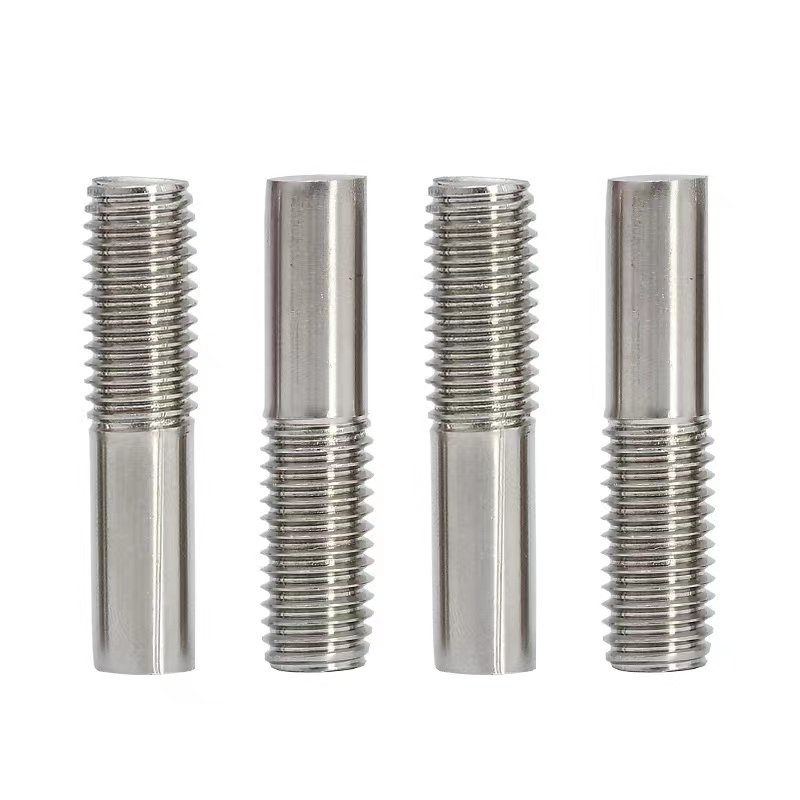
A stud rod, often called a stud bolt, is a rod that is threaded on both ends, with a plain, unthreaded shank or shoulder in the middle. This unthreaded section is the key to its superior strength. The diameter of the shank is typically equal to the major diameter of the threaded portions, creating a continuous cross-section that is not compromised by the stress concentrations inherent in thread roots. This design makes studs exceptionally resilient to shear forces and fatigue from vibration and cyclic loading. They are engineered for specific, high-stress applications where precise clamping force (preload) and reliability are paramount.
Defining the Threaded Bar (or All-Thread Rod): Versatility and Adaptability
A threaded bar, more commonly known as an all-thread rod, is a metal rod that is continuously threaded from one end to the other. Its primary advantage is its versatility. It can be cut to any desired length on-site and used with nuts on both ends to create custom-length bolts or anchors. While highly useful, the continuous threading means the entire rod’s strength is limited by the minor diameter (the root of the thread). The sharp corners at the thread roots act as stress risers, making threaded bars more susceptible to fatigue failure under dynamic loads compared to stud rods.
Head-to-Head Comparison: The Critical Differences
To truly understand which fastener is right for your job, a direct comparison of their key attributes is necessary. The following table breaks down the crucial distinctions that influence performance in heavy-duty applications.
| Feature | Stud Rod (Stud Bolt) | Threaded Bar (All-Thread Rod) |
|---|---|---|
| Shank Design | Features a solid, unthreaded central shank. | Fully threaded from end to end. |
| Tensile & Shear Strength | Superior. The unthreaded shank has a larger cross-sectional area, making it significantly stronger in both tension and shear. | Good. Strength is limited by the smaller cross-sectional area at the thread root (minor diameter). More susceptible to shear failure at the threads. |
| Fatigue Resistance | Excellent. The smooth shank eliminates stress concentration points, providing high resistance to failure from vibration and cyclic loads. | Lower. The continuous threads act as stress risers, making it more prone to fatigue cracking over time in dynamic environments. |
| Primary Application | High-stress, high-pressure, and high-vibration connections (e.g., flanges, engines, pumps, turbines). | General-purpose static applications (e.g., anchoring, bracing, suspending pipes/trays, temporary fixtures). |
| Customization | Manufactured to specific lengths and thread specifications for a precise fit. Less on-site modification. | Highly versatile. Can be bought in long lengths and easily cut to size on-site for various needs. |
| Cost | Generally higher due to more complex manufacturing and application-specific design. | More cost-effective and readily available for general use. |
Application is Key: When Should You Use a Stud Rod?
The engineering superiority of the stud rod makes it the non-negotiable choice in several critical scenarios commonly found in manufacturing plants and on heavy equipment. Using a threaded bar in these situations compromises the integrity and safety of the assembly.
High-Pressure & High-Temperature Environments (Flanges, Pressure Vessels)
In applications like pipe flanges, heat exchangers, and pressure vessels, stud bolts (often to ASTM A193 Grade B7 specification) are essential. They provide the high, uniform clamping force required to compress gaskets and create a reliable seal. The unthreaded shank allows for controlled stretching (elasticity) during torquing, ensuring a consistent preload that can withstand thermal expansion and contraction without failing.
High-Vibration & Dynamic Loads (Engines, Pumps, Heavy Machinery)
This is where the stud rod truly shines. The constant vibration from engines, large pumps, stamping presses, and injection molding machines creates cyclic loads that can quickly fatigue a threaded rod. The stress risers along an all-thread rod become initiation points for microscopic cracks that can propagate and lead to catastrophic failure. The smooth, solid shank of a stud rod distributes these stresses evenly, dramatically increasing its fatigue life and ensuring the connection remains secure over millions of cycles.
Applications Requiring Precise Alignment and Preload
When assembling critical components like cylinder heads on an engine block or a complex mold assembly, precise alignment is key. Studs are often permanently installed in one component, acting as dowels to guide the mating part into the correct position. This simplifies assembly and prevents damage to threads. Furthermore, the ability to achieve and maintain a precise preload (the tension in the fastener) is much greater with a stud, which is crucial for joint performance.
The Case for Threaded Bars: Where Do They Excel?
Despite the stud rod’s advantages in high-stress scenarios, the threaded bar is an indispensable and highly effective fastener when used within its intended design parameters. Its versatility makes it a staple in construction and industrial settings for non-critical or static-load applications.
General Anchoring and Structural Support
Threaded bars are the go-to solution for anchoring equipment to concrete floors, securing base plates, and creating structural hold-downs. When embedded in epoxy or used with expansion anchors, they provide excellent pull-out strength for static machinery. In these roles, the primary force is tensile, and dynamic or shear forces are minimal, making the all-thread rod a safe and economical choice.
Bracing, Suspending, and Mounting Systems
Look up in any industrial facility, and you will see threaded bars at work. They are perfect for suspending HVAC ductwork, electrical cable trays, lighting fixtures, and piping from ceilings. Their ability to be cut to length and used with couplers and nuts makes them incredibly efficient for creating custom-length hangers and support structures where the load is primarily static and in tension.
Prototyping and Temporary Fixtures
The adaptability of the all-thread rod makes it invaluable during the prototyping, setup, and maintenance phases. It can be used to create temporary jigs, fixtures, and support frames quickly and cost-effectively. Its ease of use and availability allow for rapid adjustments and modifications before a permanent, purpose-built solution is implemented.
Beyond the Basics: Material, Grades, and Manufacturing Matter
Choosing between a stud and a bar is only the first step. The material composition and manufacturing process play an equally vital role in the fastener’s performance, especially in heavy-duty applications.
Common Materials and ASTM Grades
The material must be selected based on the demands of the environment, including temperature, pressure, and exposure to corrosive elements.
- ASTM A193 Grade B7: The workhorse for high-temperature, high-pressure applications. It is a chromium-molybdenum alloy steel that is quenched and tempered for high strength.
- ASTM A320 Grade L7: An alloy steel designed for low-temperature service, maintaining its strength and ductility in cryogenic conditions.
- Stainless Steel (304, 316): Chosen for applications requiring corrosion resistance. Grade 316 offers superior resistance to chlorides and acids, making it ideal for chemical processing or marine environments.
The Impact of Manufacturing: Roll Threading vs. Cut Threading
How the threads are formed has a significant impact on strength.
- Roll Threading: This is a cold-forming process where steel dies press into the blank to form the threads. This process compresses the material’s grain structure, making the threads stronger and more resistant to fatigue. Most high-quality studs and threaded rods are roll-threaded.
- Cut Threading: This process involves cutting away material with a lathe or die to form the threads. It severs the grain structure of the steel, which can create potential failure points. While easier for custom or small-batch production, it generally results in a weaker thread compared to rolling.
Making the Right Choice for Your Equipment: A Final Verdict
The decision between a stud rod and a threaded bar is not a matter of which is “better” overall, but which is engineered to be superior for a specific task. To make the correct choice, you must analyze the forces at play in your application.
Ask yourself these questions:
- Is the joint subject to vibration, shock, or frequent load changes? If yes, a stud rod is the only safe choice.
- Are high shear forces present? The solid shank of a stud rod provides far greater resistance to shear.
- Is the primary load static and tensile, such as hanging or anchoring? A threaded bar is a suitable and cost-effective solution.
- Do I need to create a custom-length fastener for a non-critical support application? The versatility of a threaded bar is ideal here.
Ultimately, for securing any critical, heavy-duty equipment where dynamic forces are present, the investment in a properly specified stud rod is a crucial investment in operational safety and reliability.
Partnering with an Expert for Your Fastening Needs
At rivetjl, our expertise extends beyond mold manufacturing to a deep understanding of the machinery that powers modern industry. We recognize that the reliability of a multi-million dollar piece of equipment can depend on the integrity of a few critical fasteners. Our experience in high-pressure injection molding and precision CNC machining gives us firsthand knowledge of the immense stresses placed on industrial components.
If you have questions about the proper fixing methods for your heavy-duty equipment or require custom-engineered fastening solutions for a unique application, our team has the expertise to guide you. We can help you analyze your needs and source the correct grade and type of fastener to ensure maximum safety, performance, and peace of mind. Contact us today to discuss your industrial fastening challenges.