For high-vibration machinery, stud rods are generally the superior connection method compared to standard bolts. This is because studs provide more accurate and reliable clamping force (preload) by separating tensile and torsional stresses during tightening, offering greater elasticity to absorb vibrations and a significantly higher resistance to fatigue-related loosening. While bolts are suitable for many applications, the unique stresses of vibrating environments demand the enhanced engineering of a stud-and-nut system to ensure joint integrity, safety, and long-term reliability.
Table of Contents
- Understanding the Fundamentals: What’s the Real Difference Between a Stud and a Bolt?
- The Physics of Loosening: Why Does Vibration Wreak Havoc on Fastened Joints?
- The Case for Stud Rods in High-Vibration Environments
- When Are Standard Bolts the Right Choice?
- Practical Applications: Where Studs Make a Critical Difference
- Beyond Studs vs. Bolts: Complementary Anti-Vibration Strategies
- The Verdict: Making the Right Fastener Choice for Your Machinery
Understanding the Fundamentals: What’s the Real Difference Between a Stud and a Bolt?
To the untrained eye, studs and bolts might seem interchangeable. Both are threaded fasteners used to join components. However, their fundamental design differences dictate their performance, especially under the relentless stress of vibration. Understanding these distinctions is the first step in selecting the correct fastener for a critical application.
What is a Standard Bolt?
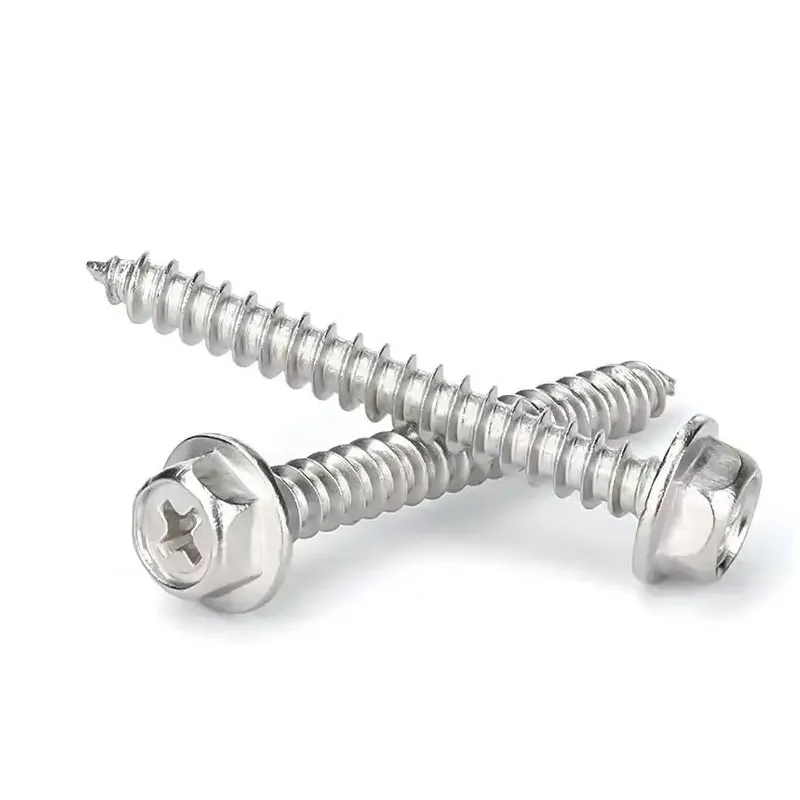
A standard bolt is a one-piece fastener characterized by an integral head on one end and external threads on the other. The bolt is inserted through clearance holes in the parts being joined and is typically secured by a nut or by engaging with an internally threaded (tapped) hole. The head, which comes in various forms like hex, square, or socket, is used to apply torque, simultaneously twisting and stretching the bolt to create clamping force.
What is a Stud Rod?
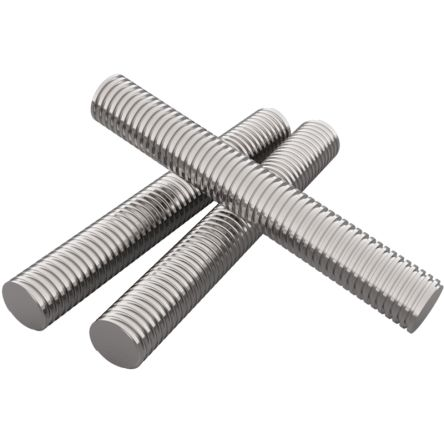
A stud rod, or simply a stud, is a headless fastener. It is essentially a rod threaded on one or both ends. There are several common types:
- Fully-Threaded Studs: Threaded along their entire length.
- Tap-End Studs: Have a short thread on one end designed to be semi-permanently installed into a tapped hole, and a longer thread on the other end to accept a nut.
- Double-End Studs: Feature threads of equal length on both ends with an unthreaded shank in the middle.
Unlike a bolt, a stud is first installed into a component, and the part to be fastened is then positioned over the stud. A nut is then threaded onto the exposed end and tightened to create the clamping force.
Key Distinctions at a Glance
This table summarizes the core differences that influence their performance:
| Feature | Standard Bolt | Stud Rod |
|---|---|---|
| Design | Integral head and threaded shank | Headless rod threaded on one or both ends |
| Tightening Action | Torque applied to the head, inducing both torsion and tension in the bolt shank | Torque applied to the nut, inducing pure tension (stretch) in the stud |
| Stress Distribution | Combined torsional and tensile stresses | Primarily tensile stress |
| Preload Accuracy | Less accurate due to friction and torsional stress | More accurate and repeatable |
| Assembly/Disassembly | Requires clearance to turn the entire bolt. Can cause wear in tapped holes. | Acts as an alignment guide. Reduces wear on tapped holes in main components. |
The Physics of Loosening: Why Does Vibration Wreak Havoc on Fastened Joints?
To appreciate why studs excel, we must first understand why bolted joints fail under vibration. It’s not a matter of the fastener simply “shaking loose.” It’s a complex interaction between forces, friction, and elasticity.
The Critical Role of Preload and Clamping Force
A tightened fastener acts like a very stiff spring. The process of tightening stretches the fastener, creating tension. This tension, known as preload, generates a powerful clamping force that presses the joint members together. It is this immense friction between the clamped surfaces—not the shear strength of the fastener itself—that primarily resists side-to-side (transverse) movement and keeps the joint secure. An insufficiently preloaded joint is the number one cause of failure in vibrating environments.
How Vibration Causes Transverse Movement and Preload Loss
Vibration introduces cyclic transverse loads. If these loads are strong enough to overcome the friction generated by the clamping force, a microscopic slip occurs between the joint surfaces. During this brief moment of slippage, the friction under the nut or bolt head is reduced, allowing it to rotate slightly in the loosening direction. This process repeats with each vibration cycle, incrementally reducing the fastener’s stretch and, therefore, its preload. Once a critical amount of preload is lost, the loosening process accelerates rapidly, leading to joint failure.
The Case for Stud Rods in High-Vibration Environments
A stud-and-nut system directly counteracts the mechanisms of vibrational loosening through superior engineering principles. Its advantages are rooted in how it achieves and maintains preload.
Advantage 1: Superior Preload Accuracy
When you tighten a bolt, you apply torque to its head. A significant portion of this torque (up to 90%) is used simply to overcome friction under the head and in the threads. The remaining torque generates the useful preload. However, this process also twists the bolt’s shank, introducing torsional stress alongside the desired tensile stress (stretch). This combined stress state makes it difficult to convert torque readings into an accurate and repeatable preload value. With a stud, the stud itself is held stationary. Torque is applied only to the nut. This isolates the twisting action to the nut, subjecting the stud almost exclusively to pure tensile stress. This separation allows for a much more precise and reliable correlation between applied torque and achieved clamping force, ensuring the joint is properly secured from the start.
Advantage 2: Enhanced Elasticity and “Spring” Action
Think of the fastener as the spring holding the joint together. A longer, more flexible spring can absorb more energy and movement before losing its clamping ability. Studs, often featuring a longer effective grip length (the distance between the threads engaged in the component and the nut), can stretch more than a comparable bolt. This greater elasticity allows the stud to better absorb the energy from vibrations and maintain a consistent clamping force even as the joint experiences microscopic movements. It effectively acts as a better shock absorber for the joint, preventing the critical loss of preload.
Advantage 3: Improved Fatigue Resistance
Fatigue is failure under repeated or cyclic loading, which is the exact definition of a high-vibration environment. The combined torsional and tensile stresses in a tightened bolt create a more complex and higher peak stress condition, making it more susceptible to fatigue cracks over time. By eliminating the torsional component, a stud operates under a simpler, purely tensile stress state. This results in a significantly longer fatigue life and a higher resistance to failure under the relentless cycling of industrial machinery.
When Are Standard Bolts the Right Choice?
Despite the clear advantages of studs in demanding applications, standard bolts remain the most common fastener for good reason. Their use is appropriate and often preferred in many scenarios.
Applications with Low or No Vibration
For static joints that bear a load without significant vibration or thermal cycling, a standard bolt provides a perfectly adequate and secure connection. In applications like framework, static guards, or access panels, the complex failure modes addressed by studs are not a concern, making bolts a reliable and cost-effective choice.
Considerations of Cost and Simplicity
Bolts are a single component (or two, with a nut) and are generally manufactured in higher volumes, making them less expensive than an equivalent stud-and-nut system. Their installation is straightforward and well-understood, requiring common tools. For non-critical applications, the lower cost and simplicity of bolts make them the logical economic choice.
Scenarios with Clearance and Accessibility Constraints
The assembly process for studs requires enough clearance above the hole to slide the entire component over the pre-installed stud. In some compact machine designs, this Z-axis clearance may not be available. In such cases, a bolt that can be inserted laterally into the assembly is the only feasible option.
Practical Applications: Where Studs Make a Critical Difference
The theoretical benefits of studs translate into tangible gains in safety and reliability in the world’s most demanding machinery.
Engine Cylinder Heads and Exhaust Manifolds
This is the classic example. Internal combustion engines are a brutal combination of intense vibration and extreme thermal cycling. Studs are used to secure cylinder heads because they provide the consistent, high-integrity clamping force needed to maintain a head gasket seal under combustion pressure. Their resistance to fatigue is paramount here.
High-Pressure Flanges and Pipeline Connections
In the oil & gas and chemical processing industries, flange connections on high-pressure pipelines are critical safety components. Studs (often called “stud bolts” in this context) are used exclusively because they allow for even, predictable tightening, ensuring the gasket is uniformly compressed to prevent dangerous leaks.
Mounting Heavy Industrial Machinery
Large pumps, powerful compressors, turbines, and heavy manufacturing equipment like injection molding machines generate significant operational vibrations. Using studs to mount these machines to their foundations ensures that the connection remains secure over years of service, preventing misalignment that could damage the equipment or create safety hazards.
Securing Molds and Dies
At rivetjl, we understand the precision required in the molding process. Molds are subjected to immense clamping pressures and cyclic stresses during operation. Using studs to clamp mold halves into the machine platens ensures a more rigid and reliable connection. This minimizes platen deflection and ensures part consistency, quality, and safety by preventing any potential for mold separation under pressure.
Beyond Studs vs. Bolts: Complementary Anti-Vibration Strategies
Choosing the right primary fastener is crucial, but a holistic approach yields the best results. Consider these additional methods to further secure your joints:
- Thread-locking Adhesives: Anaerobic adhesives like Loctite cure in the absence of air, filling the gaps between threads. This not only prevents loosening but also seals the threads against corrosion.
- Mechanical Locking Devices: Prevailing torque nuts (e.g., nylon insert lock nuts), castellated nuts with cotter pins, and specialized lock washers can add a physical barrier to rotation.
- Proper Tightening Procedures: The most advanced fastener is useless if installed incorrectly. Always use a calibrated torque wrench and follow specified torque sequences and values to achieve the correct initial preload.
The Verdict: Making the Right Fastener Choice for Your Machinery
The debate between stud rods and standard bolts isn’t about which is universally “better,” but which is appropriate for the application. For general, low-vibration, and cost-sensitive assemblies, standard bolts are a proven and effective solution.
However, when the application involves high vibration, thermal cycling, or critical safety joints, the engineering advantages of stud rods are undeniable. Their ability to deliver a more accurate preload, their superior elasticity to absorb vibration, and their enhanced fatigue life make them the clear choice for ensuring the long-term integrity and reliability of your most valuable machinery. Investing in the right fastening technology isn’t an expense; it’s an investment in performance, safety, and reduced downtime.