
In the relentless pursuit of manufacturing efficiency, every second saved on the assembly line translates into lower costs and higher output. The choice of fastener is a critical, yet often overlooked, component in this equation. Two of the most common fastening solutions, solid rivets and blind rivets, offer distinct advantages and disadvantages that directly impact production speed. Understanding the fundamental differences in their design, installation process, and ideal applications is key to optimizing any assembly line. This comprehensive guide will dissect the characteristics of both rivet types to provide a clear answer on which fastener is the champion of high-speed production.

Table of Contents
- What Are Solid Rivets? A Look at the Traditional Powerhouse
- What Are Blind Rivets? The Modern Solution for Speed
- The Head-to-Head Comparison: Speed, Strength, and More
- Quick Comparison: Solid Rivets vs. Blind Rivets
- Application Showdown: When Should You Use Each Rivet?
- How to Choose the Right Rivet for Your Assembly Line
- Conclusion: Speed vs. Strength in Modern Manufacturing
What Are Solid Rivets? A Look at the Traditional Powerhouse
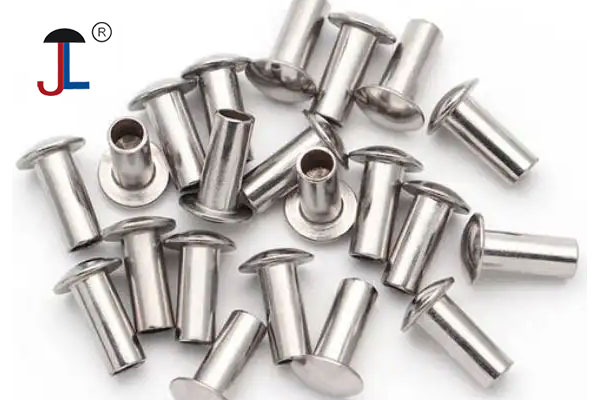
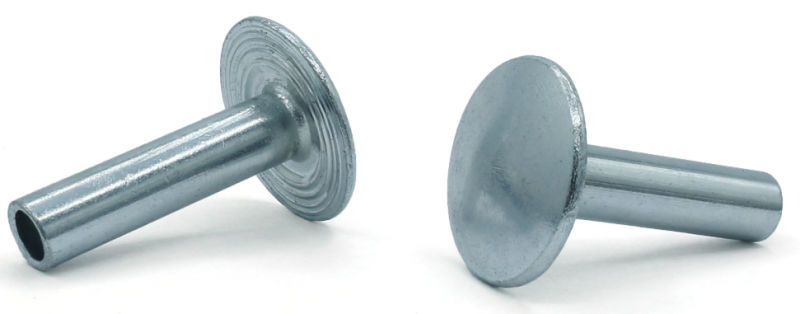
Solid rivets are one of the oldest and most reliable forms of permanent mechanical fasteners. As their name implies, they consist of a solid cylindrical shaft with a pre-formed head on one end. The installation process, known as bucking, is what sets them apart. To install a solid rivet, it must be passed through pre-drilled holes in the materials being joined. Then, a specialized tool called a rivet gun is used on the manufactured head while a heavy, dense “bucking bar” is held against the tail end. The rivet gun’s pneumatic force deforms the tail, forming a second head (called the shop head or buck-tail) that securely clamps the materials together.
This method creates an incredibly strong, vibration-resistant joint. The solid, deformed metal of the rivet completely fills the hole, providing exceptional shear strength. Because of this unparalleled structural integrity, solid rivets are mandated in high-stress applications, such as aircraft fuselages, bridges, and heavy machinery. However, this strength comes at the cost of speed and complexity. The process requires access to both sides of the workpiece and often involves two skilled operators—one for the rivet gun and one for the bucking bar. This makes it inherently slower and more labor-intensive compared to more modern fastening methods.
What Are Blind Rivets? The Modern Solution for Speed
Blind rivets, commonly known by the trade name Pop Rivets, were engineered specifically to overcome the limitations of solid rivets. Their ingenious design allows them to be installed from only one side of the assembly—hence the term “blind.” A blind rivet consists of two parts: the rivet body (a hollow shell with a head) and a mandrel (a pin that runs through the body). The installation is remarkably simple and fast. The rivet is inserted into the pre-drilled hole, and a special riveting tool grips the mandrel.
When the tool is activated, it pulls the mandrel’s head into the rivet body, causing the body to expand and flare on the blind side. This expansion clamps the materials together tightly. Once the joint is secure, the mandrel reaches its predetermined breaking point and snaps off, leaving a clean, fastened joint. This entire process can be completed by a single operator in just a few seconds. The simplicity, speed, and single-sided access have made blind rivets a cornerstone of modern high-volume manufacturing in industries like automotive, electronics, and appliance assembly.
The Head-to-Head Comparison: Speed, Strength, and More
To determine which rivet truly accelerates an assembly line, we must compare them across several critical manufacturing metrics. While speed is the primary focus, factors like accessibility, strength, and cost are interconnected and influence the final decision.
Installation Speed: The Decisive Factor
There is no contest in this category: blind rivets are significantly faster to install than solid rivets. A single operator with a powered blind rivet tool can install a rivet in 2-3 seconds. The process is simple: insert, actuate, and move to the next. In contrast, installing a solid rivet requires more steps: inserting the rivet, positioning the rivet gun, placing the bucking bar, driving the rivet, and then visually inspecting the formed shop head. This multi-step process, often requiring two workers, can take several times longer, creating a major bottleneck in a fast-paced assembly environment.
Accessibility: The ‘Blind’ Advantage
The core design innovation of the blind rivet is its single-sided installation capability. This is a game-changer for product design and assembly efficiency. It allows for the fastening of components where the backside is inaccessible, such as in box sections, tubes, or complex enclosures. Solid rivets, by their very nature, require a clear line of sight and physical access to both the front and back of the joint, which can severely limit design possibilities and complicate the assembly jig and fixture design.
Strength and Durability: Where Solid Rivets Shine
While blind rivets are the champion of speed, solid rivets are the undisputed champion of strength. A properly installed solid rivet forms a solid, shear-resistant pin that completely fills the hole, creating a joint with immense shear and tensile strength. This is why they remain the standard in aerospace and structural engineering. Blind rivets, being hollow, are inherently weaker. While high-strength structural blind rivets exist, they generally cannot match the load-bearing capacity and fatigue resistance of a comparable solid rivet. The mandrel breaking off also leaves a hollow core, which can be a potential entry point for moisture and corrosion if not properly sealed.
Tooling and Labor Requirements
Blind riveting requires a relatively simple, often portable tool and can be performed by an operator with minimal training. This lowers the barrier to entry and reduces labor costs. Solid riveting, on the other hand, requires more complex and heavy equipment (pneumatic rivet guns, bucking bars of various shapes and sizes) and, more importantly, demands a higher level of operator skill to form a perfect shop head consistently. Improper bucking can lead to a weak or faulty joint, making quality control a more intensive process.
Cost Analysis: Per-Piece vs. Total Installed Cost
On a per-piece basis, a simple solid rivet is typically cheaper than a more complex two-piece blind rivet. However, this is a misleading metric. The true cost of a fastener is the total installed cost, which includes the price of the fastener plus the labor required to install it. Because of the massive savings in labor time and skill requirements, the total installed cost of a blind rivet is almost always lower than that of a solid rivet in high-volume production scenarios. The speed of assembly directly translates to significant cost reductions over the course of a production run.
Quick Comparison: Solid Rivets vs. Blind Rivets
| Feature | Solid Rivets | Blind Rivets |
|---|---|---|
| Installation Speed | Slow | Very Fast |
| Accessibility | Requires access to both sides | Only requires access to one side |
| Strength (Shear/Tensile) | Very High | Moderate to High (Varies by type) |
| Labor Requirement | High skill, often 2 operators | Low skill, 1 operator |
| Vibration Resistance | Excellent | Good to Excellent |
| Total Installed Cost | High (due to labor) | Low (due to speed) |
| Common Applications | Aerospace, structural steel, bridges | Automotive, electronics, sheet metal |
Application Showdown: When Should You Use Each Rivet?
The choice between these fasteners is not about one being universally “better” but about selecting the right tool for the job. The application’s demands will dictate the optimal choice.
Ideal Scenarios for Solid Rivets
Despite the speed disadvantage, solid rivets are non-negotiable in certain fields. Use solid rivets when:
- Structural integrity is the absolute top priority. This includes primary aircraft structures, load-bearing building components, and heavy-duty industrial equipment.
- The joint will be subjected to extreme vibration or cyclical stress. The tight, hole-filling nature of a bucked rivet provides superior fatigue life.
- There is full access to both sides of the joint and the production volume is low enough that the labor time is not the primary cost driver.
Ideal Scenarios for Blind Rivets
Blind rivets are the go-to fastener for most modern, high-speed assembly lines. Use blind rivets when:
- Production speed and throughput are the primary goals. This is true for automotive assembly, appliance manufacturing, and electronics.
- Access to the back of the workpiece is limited or impossible. This is common in sheet metal fabrication and assembly of enclosed products.
- The joint does not require the absolute maximum strength of a solid rivet. Most commercial and consumer products fall into this category.
- Reducing labor costs and skill requirements is a key objective.
How to Choose the Right Rivet for Your Assembly Line
When designing a new product or optimizing an existing assembly line, ask the following questions to guide your fastener selection:
- What are the load requirements? Will the joint experience significant shear or tensile forces? If yes, a solid rivet or a specialized structural blind rivet should be considered.
- What is the production volume? For high-volume manufacturing, the speed of blind rivets offers a compelling cost advantage.
- What are the access constraints of the design? Can operators easily reach both sides of the joint? If not, blind rivets are the only viable option.
- What is the skill level of the workforce? Can you rely on operators skilled in bucking rivets, or is a simpler, more foolproof process needed?
Conclusion: Speed vs. Strength in Modern Manufacturing
For the specific question of which rivet speeds up production assembly lines, the answer is unequivocally the blind rivet. Its design is purpose-built for rapid, single-operator, single-sided installation, making it the fastener of choice for countless modern manufacturing operations where time is money. By dramatically reducing labor time and simplifying the assembly process, blind rivets directly contribute to higher throughput and lower total installed costs.
However, this speed comes with a trade-off in ultimate strength. Solid rivets remain the gold standard for applications where safety and structural integrity cannot be compromised. The truly optimized manufacturing process isn’t about choosing one over the other universally, but about intelligently applying the right fastener for the right application. At rivetjl, we understand that every component choice, from custom molds to standard fasteners, impacts the efficiency and quality of your final product. Partnering with experts who understand the nuances of different manufacturing processes is key to achieving both speed and reliability in your production line. Contact our experts today to discuss how we can help optimize your component design and manufacturing challenges.