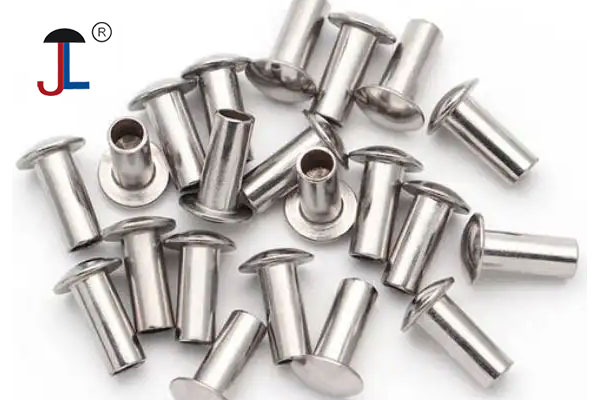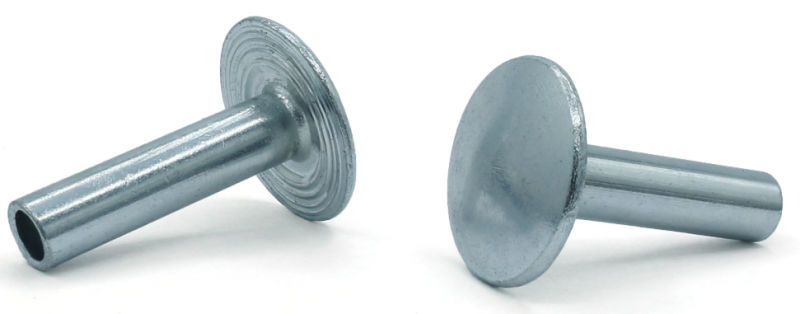
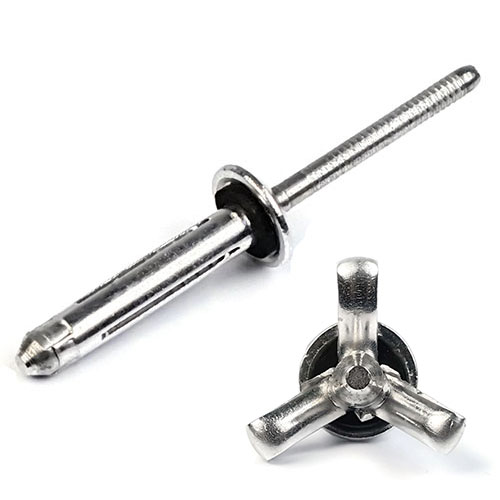
The primary difference between rivets with seal washers and plain rivets lies in their ability to create a watertight and airtight seal. Sealed rivets, equipped with an integrated or separate EPDM or neoprene washer, are specifically engineered to prevent the passage of liquids, gases, and contaminants, offering superior leak protection where plain rivets, which provide only a mechanical bond, would fail. This crucial distinction makes sealed rivets the indispensable choice for applications where environmental integrity is paramount, while plain rivets remain a cost-effective solution for simple structural fastening.
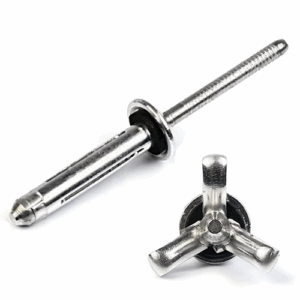
Table of Contents
- What Are Plain Rivets? A Foundational Fastener
- Introducing Rivets with Seal Washers: The Ultimate in Leak-Proof Fastening
- Head-to-Head Comparison: Sealed Rivets vs. Plain Rivets
- When Should You Choose Rivets with Seal Washers? Key Applications
- Critical Factors to Consider When Selecting Your Rivet
- Partnering with rivetjl for Your Fastening Needs
- Frequently Asked Questions (FAQ)
What Are Plain Rivets? A Foundational Fastener
Plain rivets, often referred to as standard or conventional blind rivets, are one of the most common and versatile fasteners in modern manufacturing and construction. Their design is simple yet effective: a rivet body (or shank) with a head on one end and a mandrel (a nail-like pin) running through it. When installed with a rivet gun, the tool grips the mandrel and pulls it, causing the end of the rivet body to deform and create a second head, known as the “buck-tail.” This action clamps the two or more pieces of material together securely.
The primary function of a plain rivet is to provide a strong, vibration-resistant mechanical joint. They are excellent for applications where shear and tensile strength are the main concerns. You’ll find them extensively used in aerospace, automotive bodywork, metal fabrication, and general assembly where joining thin sheets of metal or plastic is required. However, their limitation is clear: the joint they create is not inherently sealed. Gaps can exist around the rivet head and the buck-tail, leaving the assembly vulnerable to the ingress of moisture, dust, and air.
Introducing Rivets with Seal Washers: The Ultimate in Leak-Proof Fastening
Rivets with seal washers, also known as sealing rivets or waterproof rivets, are a specialized evolution of the plain rivet, designed to overcome the challenge of leakage. These fasteners perform the same structural function as a plain rivet but add a critical element: an integrated sealing component. This is typically a washer made from a resilient, compressible material like EPDM (Ethylene Propylene Diene Monomer) or Neoprene, which is pre-assembled onto the rivet, sitting flush against the underside of the head.
The purpose of this addition is to create a barrier that actively prevents environmental intrusion. When the rivet is set, the sealing washer is compressed between the rivet head and the surface of the workpiece. This compression forces the washer material to expand and fill any microscopic gaps, creating a durable, long-lasting seal against external elements. This dual-functionality—providing both a strong mechanical lock and an environmental seal—makes them a superior choice for a wide range of demanding applications.
How Do Sealing Rivets Achieve a Watertight Seal? The Science of Compression
The magic behind a sealing rivet’s effectiveness is the controlled compression of its washer. The process is a simple but brilliant piece of engineering. As the rivet gun pulls the mandrel, the force not only forms the buck-tail but also applies significant downward pressure on the rivet head. This pressure is transferred directly to the EPDM or neoprene washer.
The elastomeric properties of the washer material are key. Under compression, the washer deforms and flows into every imperfection and crevice between the rivet head and the application’s surface, as well as into the clearance of the drilled hole. This creates a 360-degree, positive seal. It effectively blocks the pathways through which water, humidity, dust, air, or other contaminants could penetrate the joint. This is a far more reliable method than applying post-assembly sealants, which can be inconsistent, time-consuming, and prone to failure over time.
The Anatomy of a Sealed Rivet Assembly
Understanding the components of a sealed rivet helps appreciate its design and function:
- Rivet Body: The main shank of the fastener, typically made from aluminum, steel, or stainless steel for varying strength and corrosion resistance.
- Rivet Head: The pre-formed head that remains on the visible side of the assembly. Common styles include dome, countersunk, and large flange.
- Mandrel: The pin that is pulled to set the rivet. It breaks off at a predetermined point once the proper clamping force is achieved. In some sealed rivet designs, the mandrel head is retained within the body to create a “closed-end” rivet, further enhancing its sealing capability.
- Seal Washer: The star of the show. Most commonly made from EPDM for its excellent resistance to weathering, UV rays, and temperature extremes, or Neoprene for its resistance to oils and chemicals. The choice of washer material is critical and depends entirely on the application’s environment.
Head-to-Head Comparison: Sealed Rivets vs. Plain Rivets
To make the choice clearer, let’s compare these two fasteners across several critical performance metrics. This table provides a quick, at-a-glance reference for engineers, designers, and technicians.
| Feature | Rivets with Seal Washers | Plain Rivets |
|---|---|---|
| Leak Protection | Excellent. Creates a watertight and airtight seal against liquids, gases, and dust. | Poor. Provides no inherent sealing properties; gaps can allow leakage. |
| Pressure Resistance | Good to Excellent. The compressed washer can withstand moderate internal and external pressures. | Poor. Not designed to hold pressure. |
| Vibration Damping | Good. The elastomeric washer helps absorb micro-vibrations, reducing noise and wear. | Fair. The mechanical joint is vibration-resistant but offers no damping. |
| Cost | Higher initial cost per unit due to the additional washer component. | Lower initial cost; a highly economical fastener. |
| Installation | One-step process. The seal is created simultaneously with the joint, saving labor time. | One-step process for fastening. Requires a separate, secondary process (e.g., applying sealant) to achieve a seal. |
| Ideal Applications | HVAC ductwork, automotive (underbody, firewalls), marine equipment, electronic enclosures, roofing, and outdoor signage. | General sheet metal fabrication, internal structures, non-critical assemblies, dry-environment applications. |
When Should You Choose Rivets with Seal Washers? Key Applications
The decision to use a rivet with a seal washer is driven by the application’s environment and performance requirements. If your product or assembly will be exposed to the elements or needs to contain fluids or gases, a sealed rivet is not a luxury—it’s a necessity. Here are some key industries and applications where they excel:
-
- Automotive & Transportation: Used in vehicle bodies, firewalls, and underbody components to prevent water, salt, and road grime from entering sensitive areas and causing corrosion.
- HVAC Systems: Essential for assembling ductwork and air handling units to ensure an airtight seal, preventing air loss and maximizing system efficiency.
- Marine and Boating: Perfect for fastening hardware, panels, and fixtures on boats where constant exposure to water (both fresh and salt) makes a waterproof seal critical to prevent leaks and corrosion.
– Electronics Enclosures: Protects sensitive electronic components from moisture, dust, and humidity, ensuring reliability and longevity, particularly for outdoor or industrial-grade equipment.
- Construction and Roofing: Ideal for securing metal roofing panels, gutters, and flashing, providing a long-lasting, weather-resistant seal that prevents water damage to the building structure.
Critical Factors to Consider When Selecting Your Rivet
Choosing the right fastener goes beyond just sealed vs. plain. To ensure optimal performance and longevity for your assembly, you must consider several technical factors.
Material Compatibility and Environmental Exposure
The materials of the rivet, washer, and the substrates being joined must be compatible to prevent galvanic corrosion. For example, using an aluminum rivet on steel panels in a moist environment can lead to rapid degradation. For maximum corrosion resistance, a stainless steel rivet with an EPDM washer is often the best choice for harsh outdoor or marine applications. Consider the specific chemicals, UV exposure, and temperature range the assembly will face to select the appropriate washer material.
Understanding Grip Range and Hole Size
Every rivet has a specified “grip range,” which is the minimum and maximum total material thickness it can effectively fasten. Using a rivet with the wrong grip range will result in a weak or failed joint. Similarly, the hole size is critical. A hole that is too large will lead to a loose fit and may compromise the seal, while a hole that is too small will make installation impossible. Always adhere to the manufacturer’s specifications for both grip range and recommended hole diameter.
Installation Tools and Process
Both plain and sealed rivets are installed using standard rivet guns (manual, pneumatic, or battery-powered). The process is nearly identical, making the transition to sealed rivets seamless for assembly teams. The key advantage of sealed rivets is the efficiency gained by eliminating the secondary sealing step. This not only saves time and labor costs but also removes the potential for human error associated with manual sealant application, resulting in a more consistent and reliable final product.
Partnering with rivetjl for Your Fastening Needs
Choosing the right fastener is a critical engineering decision that impacts the quality, durability, and performance of your final product. At rivetjl, we understand the nuances of fastening technology. Our expertise extends beyond simply supplying parts; we provide comprehensive solutions tailored to your specific application challenges. Whether you need the cost-effective simplicity of plain rivets for a high-volume assembly or the uncompromising leak protection of specialized rivets with seal washers, our team can provide expert guidance.
We can help you navigate the complexities of material selection, grip range calculation, and installation best practices to ensure the integrity and longevity of your assembly. Contact rivetjl today to discuss your project and discover how our high-quality fastening solutions can elevate your product’s performance.
Frequently Asked Questions (FAQ)
1. Can I just add a loose washer to a plain rivet to make it waterproof?
While technically possible, it is not recommended. Rivets with pre-assembled sealing washers are designed for a specific compression rate to ensure a proper seal. Using a loose washer may not provide a consistent or reliable seal and adds an extra, inefficient step to your assembly process.
2. What materials are the sealing washers typically made from?
The most common materials are EPDM (Ethylene Propylene Diene Monomer) and Neoprene. EPDM is favored for its superior resistance to weather, ozone, UV light, and a wide range of temperatures. Neoprene is often chosen for applications requiring resistance to oils, fuels, and various chemicals.
3. Are rivets with seal washers significantly more expensive than plain rivets?
They have a higher per-unit cost. However, it’s essential to consider the total installed cost. Sealed rivets eliminate the need for secondary sealing operations (labor and material costs for sealants), which often makes them the more cost-effective solution for applications requiring a seal.
4. Are sealed rivets removable?
Like plain rivets, they are considered permanent fasteners. They can be removed by drilling out the head, but they cannot be reused after removal.